Plot Explained Spoilers guaranteed!
Plot Explained

Browse by genre

The Other Side (2016) movie poster

Plot Summary

The Other Side (2016) Plot Summary & Ending Explained

Release, runtime and language
2016 · 92 min · English
JustWatch #23,141 10
Directed by
Roberto Minervini

Within a marginalized community, individuals face systemic neglect and diminishing civil rights. The narrative explores the lives of diverse characters including traumatized veterans, defiant young people, those battling addiction and seeking connection, hardened mercenaries, women navigating difficult circumstances, and elderly individuals holding onto hope. Their stories intertwine, revealing the struggles and resilience of those living on the fringes of society.

On this page (7)
  1. 1 Where to watch
  2. 2 What happens: full plot
  3. 3 Plot questions answered
  4. 4 How it ends
  5. 5 Movie threads
  6. 6 Movies like The Other Side
  7. 7 Every angle

Where to watch

Where to Watch The Other Side (2016)

Where can you watch The Other Side? Stream, rent or buy it in the US, including on ALLBLK, Philo and Fawesome: current JustWatch availability with up-to-date prices.

Streaming availability powered by JustWatch

Full plot summary · contains spoilers

What Happens in The Other Side: Full Plot Summary

The whole story of The Other Side (2016) explained, from the opening scene to the final frame: every key event, every twist and what it all adds up to. Read it as a quick recap before the sequel, to check a scene you missed, or to finally understand what really happened.

The film opens with a vivid scene in Mumbai, India, where the bustling market is alive with sound, leading us to a quaint restaurant. Here we meet the married couple, Maria and Michael, played by Sarah Wayne Callies and Jeremy Sisto respectively. The conversation between them reveals the joys and trials of their relationship, highlighted when Maria surprises Michael with the news of her pregnancy. Their serene moment quickly shifts as they share a beautiful day at the beach. Maria expresses her contentment with the location, leading to an important discussion about relocating to Mumbai to start their family. Michael reassures her and joyfully agrees to the idea, prompting Maria to respond affirmatively. However, their blissful moment is abruptly shattered when a small child approaches them, and Michael, speaking in Marathi, asks a question that sends chills down the spine—immediately followed by a disturbing, demonic scream from the child that jolts Maria awake.

What appeared to be a pleasant dream was merely a nightmare, but the reality that awaits her is far more tragic and heart-wrenching. Fast forward six years; we find Maria grappling with unresolved grief as she wakes next to Michael, consumed by anger and sadness. This moment leads her to lash out at him in a fit of rage, but it culminates in a tender moment where Michael tries to comfort his distraught wife. A poignant family photo of the four of them reveals the dark shadow cast over their lives—their son, Oliver, is tragically absent.

As the days unfold, we witness their daughter Lucy thriving under the care of their nanny, Piki, portrayed by Suchitra Pillai-Malik. Their seemingly normal life is a facade, masking the raw emotional grief stemming from the loss of Oliver. Maria's anguish reaches a boiling point one night when Michael discovers she has attempted to take her own life, desperate to escape the guilt that haunts her since the tragic accident that claimed their son’s life.

In a horrifying flashback, Maria recounts the fateful day of the accident—a car crash that submerged their vehicle in water, drowning Oliver while Maria manages to save Lucy. The weight of this trauma crushes her spirit, filling her with insurmountable sorrow. In the hospital, Maria learns from her doctor that she narrowly escaped death. When she awakens, Piki, who offers her some hope, reveals a mystical solution: a final goodbye to Oliver through an ancient ritual held at a sacred temple where the veil between life and death is said to be thin.

Together, they embark on a morbid quest, and under Piki's guidance, Maria prepares to disperse Oliver's ashes at the temple, promising herself to remain steadfast against the inevitable darkness that looms ahead. But as the ritual begins, things spiral terribly out of control. The temple’s eerie quiet and the silence of the forest surrounding her grips Maria with dread. Inside, she encounters a series of haunting manifestations that blur the lines between her memories and nightmarish realities.

As night falls, Maria hears her son’s voice calling out to her, leading to a desperate decision to open the temple door despite Piki’s ominous warning against it. In that moment of weakness, Oliver’s spirit is unleashed, returning not as the innocent boy she remembers, but as a dark, malevolent force. The entities of the temple awaken a cursed influence that begins to ripple through their home life, affecting Lucy, who becomes an unwitting pawn in Oliver's twisted return.

The film expertly balances the themes of loss, guilt, and the supernatural with sequences that resonate deeply with the viewer. Through each unsettling event—be it through haunted toys or unexplainable phenomena—Maria’s world collapses as she fights to reclaim her family from the grasp of sinister forces. The chilling ambiance heightens tension until it culminates in a harrowing climax where familial bonds are tested against the backdrop of ancient rites and spirits seeking vengeance.

In the final act, Maria confronts the horrifying truths behind her choices as she battles not just for her life, but for the soul of her daughter. The story tragically intertwines love and horror, leading to a devastating conclusion that poses deep questions about motherhood, sacrifice, and the consequences of tampering with life and death. The poignant scenes are accented by a score that heightens the emotional stakes, pulling the audience into a world where the price of unresolved grief can lead to a catastrophe that extends beyond the grave.

The film closes with an agonizing twist, forcing viewers to confront the cycle of despair. As the scene fades to black, we are left to ponder the chilling implications of Michael’s actions, reiterating the story’s warning about the perilous connection between love and loss. As Maria's fate remains sealed within the temple’s cursed grip, the film leaves us questioning how far one would go to hold onto the ones they love, and at what cost.
Last updated: December 24, 2024 at 10:01

Was this helpful?

Plot questions answered

The Other Side Plot Explained: Your Questions Answered

The questions people ask most about The Other Side (2016): what happens in the confusing scenes, why the characters do what they do, the twists, hidden details and what the ending means. Each answer contains spoilers.

Q1

Why did Maria attempt suicide in the film?

Maria attempted suicide because she was consumed by unbearable guilt over her son Oliver's death. In the car accident, she managed to save her daughter Lucy but heard Oliver's desperate pleas for help as he drowned. This traumatic memory haunted her for six years, leading to her desperate attempt to escape the overwhelming grief and guilt.

  • maria suicide
  • oliver death
  • grief
  • guilt
  • car accident
Q2

How did Oliver die in the car accident?

Oliver drowned when the family car submerged in water during an accident. Maria managed to escape with Lucy, but she was unable to save Oliver in time. She heard his desperate cries for help from the sinking vehicle, which became the traumatic memory that haunted her throughout the film.

  • oliver death
  • drowning
  • car accident
  • flashback
Q3

Why did Maria open the temple door despite Piki's warning?

Maria opened the temple door because she heard her son Oliver's voice calling out to her, begging to be let out. Overwhelmed by her desperate longing to see him again and believing she was finally connecting with his spirit, she disregarded Piki's ominous warning that the door must remain closed.

  • maria
  • temple door
  • oliver voice
  • ritual mistake
Q4

Why did Oliver's spirit return as a malevolent force?

Oliver's spirit returned as a dark, malevolent entity because the ritual fundamentally corrupted his soul. By opening the temple door against Piki's warning, Maria unleashed her son's spirit before it was properly guided. Rather than returning as the innocent boy she remembered, Oliver came back as a cursed, vengeful force that began terrorizing the family.

  • oliver spirit
  • possessed
  • dark force
  • cursed
Q5

What happened to Lucy at the end of the film?

Lucy became possessed by Oliver's corrupted spirit. Under his influence, she fatally stabbed her father Michael, becoming an unwitting pawn in Oliver's twisted return. The film suggests she was freed when Maria offered herself as a sacrifice, though the exact outcome remains ambiguous.

  • lucy possession
  • stabs michael
  • oliver possesses lucy
Q6

How did Michael die in The Other Side?

Michael was fatally stabbed by his own daughter Lucy, who was being possessed by Oliver's corrupted spirit. This tragic death occurred as part of the curse Maria unleashed when she opened the temple door, with Oliver using Lucy's body to commit the violent act.

  • michael death
  • lucy kills michael
  • stabbing
Q7

What was the ritual Piki told Maria about?

Piki revealed an ancient ritual performed at an abandoned temple where the veil between life and death is thin. The ritual was meant to allow Maria to say a final goodbye to Oliver's spirit. However, it required remaining inside the temple without opening the door, a rule Maria ultimately violated.

  • temple ritual
  • final goodbye
  • veil between life and death
  • piki
Q8

Why did the ritual go wrong?

The ritual failed because Maria violated the critical rule: she opened the temple door when she heard Oliver's voice. Piki had warned her that the door must stay closed. By opening it, Maria unleashed Oliver's corrupted spirit instead of properly concluding the goodbye, transforming what was meant to be closure into a catastrophic release of dark forces.

  • ritual fails
  • temple door opens
  • curse unleashed
Q9

What happened to Maria at the end of the film?

Maria died during her attempt to save her family. She confronted the shamans and offered herself as the ultimate sacrifice to release Oliver's spirit and save Lucy. However, her sacrifice led to a greater evil, and her spirit remained trapped within the temple's cursed grip, forced to witness Michael's desperate attempt to repeat the ritual, continuing the cycle.

  • maria death
  • sacrifice
  • temple trapped
  • cycle continues
Q10

Does the cycle continue at the end of the film?

Yes, the film ends with the cycle beginning again. After Maria's death, Michael attempts the same ritual to bring her back, desperately trying to reopen the temple door. This suggests that like Maria, Michael will unleash similar darkness, creating a new loop of tragedy and reinforcing the film's warning about tampering with life and death.

  • ending
  • michael ritual
  • cycle continues
  • sequel hint
Q11

Why did Piki help Maria with the ritual?

Piki helped Maria because she had experienced her own tragic loss and wanted to offer hope to someone suffering similarly. After sharing her own tragic story with Maria at the hospital, Piki revealed the ritual as a way for Maria to find closure with Oliver. However, her well-intentioned guidance inadvertently led to the catastrophic events that followed.

  • piki
  • motivation
  • housekeeper
  • helps maria
Q12

Why did Maria want to move to Mumbai in the beginning?

In the opening nightmare sequence, Maria expressed contentment with their location in Mumbai and wanted to relocate there to start their family. This peaceful moment was part of her hopeful vision of the future before the tragedy occurred, contrasting sharply with the nightmare that interrupted it.

  • mumbai
  • pregnancy
  • dream sequence
  • happy memory

Ending explained

What Happens at the End of The Other Side?

How The Other Side (2016) ends, in short: the final scene, the last twist and what it means for the characters. The full ending explained, with every spoiler, lives on its own page.

Read the full ending explained

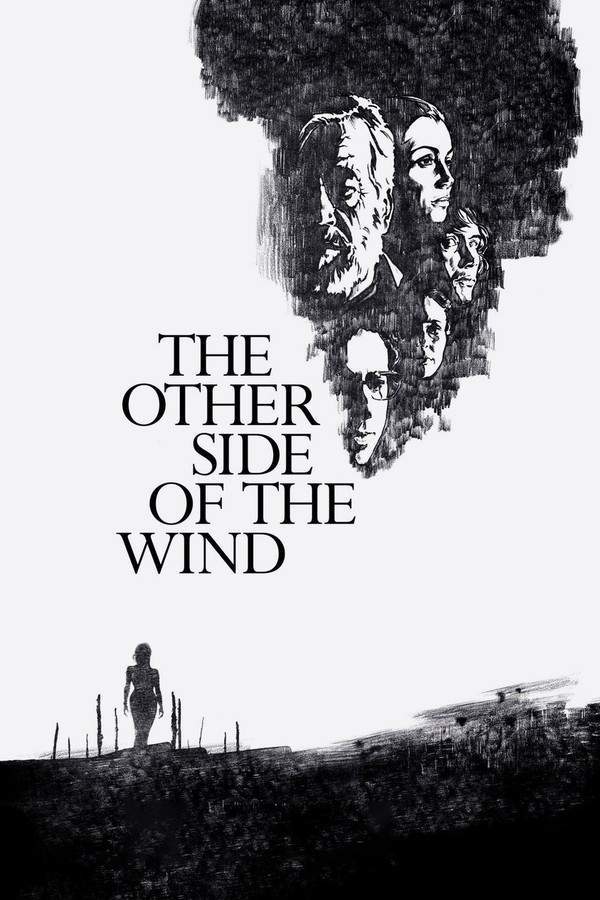
The ending of The Other Side of the Wind is deliberately ambiguous and reflective of its overall themes of fading brilliance and artistic decline. Throughout the film, we follow the final day of movie director Jake Hannaford, whose birthday party is filled with friends, critics, and industry insiders. The climax takes place at a drive-in theater, where Hannaford, heavily intoxicated and desperate, confronts the reality of his stalled career and financial insolvency. As tensions rise, he lashes out at a reporter and faces the imminent loss of his reputation and influence.

In the final moments, Hannaford drives off alone into the night, after a tense encounter with Jack Dale, his absent star—who only appears at the very end—and Jack refuses to get into the car. Hannaford’s fate after this seems to be a tragic one, and the film explicitly reveals through its opening sequence that he dies in a car crash. However, the film never shows his death directly. Instead, it leaves it as a question: did he die intentionally by suicide, or was it an accident? This uncertainty emphasizes the film’s larger commentary on the nature of artistic failure and the elusive end of creative life.

Continue reading the ending (2 more paragraphs)

The movie’s title, The Other Side of the Wind, can be seen as a metaphor for exploring the hidden or unseen aspects of Hollywood and artistic expression. It hints at the idea of revealing truths that lie beyond the glamour and success, delving into the complexities and contradictions lurking beneath the surface. The film-within-a-film serves as a reflection of Welles’ own struggles—his attempts to reinvent himself, his fights with Hollywood, and his artistic pursuits—symbolizing the “other side” of fame and creative endeavor.

Ultimately, the ending underscores the tragic but poetic layers of Welles’ commentary on aging, obsolescence, and the ephemeral nature of artistic achievement. Hannaford’s lonely drive into the night symbolizes a descent into the unknown—possibly a final act of self-destruction or an unavoidable accident—leaving viewers to ponder the true nature of his demise. The film’s fragmented structure and unresolved questions mirror the messy, uncertain process of artistic legacy and personal mortality, making the ending a fitting meditation on the elusive boundary between life and death.

The Other Side ending explained in full

Movie threads

More Movies Like The Other Side, by Mood & Story

Curated lists built around what makes The Other Side tick: the same mood, the same kind of story or the same emotional payoff. Each list explains why these movies belong together.

Documentaries of marginalization like The Other Side

Interwoven narratives revealing the human cost of living on society's margins. Explore movies like The Other Side that depict the harsh realities of marginalized communities. These powerful documentaries and dramas use interwoven narratives to show the resilience and despair of individuals facing systemic failures, perfect for viewers who appreciate socially conscious and emotionally heavy storytelling.

  • oppressive
  • grief-stricken
  • haunting
  • tense
  • melancholic
  • social realism
  • Tone: dark, bleak, melancholic
  • Pacing: variable, character-driven
Why these movies?

The story pattern: Films in this thread typically employ an ensemble cast or multiple interwoven storylines to paint a broad portrait of a community in crisis. The narrative structure often avoids a single protagonist, instead building a collective sense of struggle against a backdrop of social and economic decay, leading to a profound exploration of human resilience.

Why they belong together: These movies are grouped by their shared focus on societal malaise and the collective experience of people on the fringes. They create a similar immersive, often oppressive mood through their documentary-like realism, heavy emotional weight, and unflinching look at difficult themes.

Movies about shared trauma like The Other Side

Stories where characters are bound together by profound loss and psychological anguish. If you were moved by the collective grief in The Other Side, discover other films that explore groups of characters bound by shared trauma. These emotionally heavy dramas and horror-tinged stories examine how profound loss and psychological anguish connect people, often leading to bleak but deeply resonant conclusions.

  • grief-stricken
  • psychological trauma
  • suspenseful
  • haunting
  • nightmarish
  • mental anguish
  • Tone: dark, tense, melancholic
  • Pacing: variable, with emotional peaks
Why these movies?

The story pattern: The narrative pattern often begins with a defining tragic event that impacts multiple characters. The story then follows the divergent but interconnected ways each person processes their grief, guilt, or fear. The plot is less about solving a mystery and more about the emotional fallout and the strained bonds between those who suffered together.

Why they belong together: This thread connects films through their intense focus on the psychology of shared suffering. They share a dark tone, high emotional weight, and a mood that is consistently tense, melancholic, and suspenseful, as characters navigate a world colored by a common, unshakeable pain.

If you liked this

Movies Like The Other Side

Similar movies to The Other Side: the same genre, themes or kind of story. Each one comes with its own plot summary, timeline and ending explained.

Browse all movie summaries

Every angle

The Other Side (2016) Explained: Plot, Ending, Timeline & Characters

Everything about The Other Side in one place: what happens in the plot summary, the timeline in chronological order, the characters and meaning, the ending explained and a spoiler-free summary. What's After the Movie adds the cast, box office and post-credit scenes.

Coming soon on iOS and Android

The Plot Explained Movie Summary App

Plot summaries, endings explained and timelines on your phone. Catch up on any movie in minutes, save your favorites and never miss a twist again.

Be the first to know when we launch. Your email stays private, always.

Learn more about the app