Plot Explained Spoilers guaranteed!
Plot Explained

Browse by genre

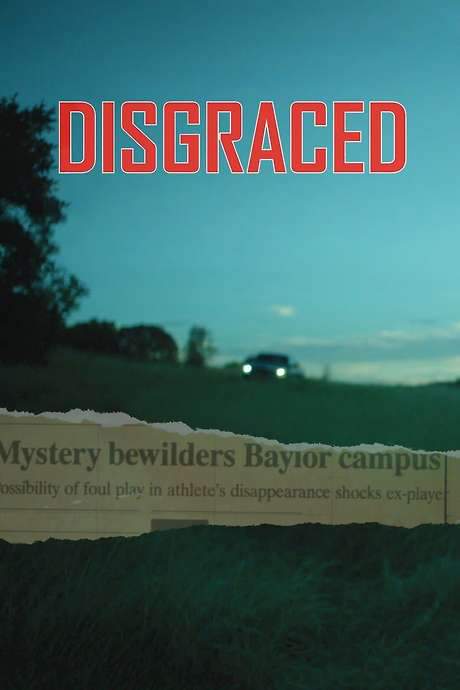
Disgraced (2017) movie poster

Plot Summary

Disgraced (2017) Plot Summary Explained

Release, runtime and language
2017 · 102 mins · English
JustWatch #23,281 4
Directed by
Pat Kondelis
Starring
Patrick Dennehy, Abar Rouse, Carlton Dotson, Dave Bliss

This is the story of a shocking scandal that engulfed Baylor University during the summer of 2003. The narrative explores murder, corruption, and deception as it reveals a desperate attempt to cover up disturbing events and the widespread corruption that led to one of the most bizarre chapters in college sports history.

On this page (6)
  1. 1 Where to watch
  2. 2 What happens: full plot
  3. 3 Plot questions answered
  4. 4 Movie threads
  5. 5 Movies like Disgraced
  6. 6 Every angle

Where to watch

Where to Watch Disgraced (2017)

Where can you watch Disgraced? Stream, rent or buy it in the US, including on fuboTV and Paramount Plus Premium: current JustWatch availability with up-to-date prices.

Streaming availability powered by JustWatch

Full plot summary · contains spoilers

What Happens in Disgraced: Full Plot Summary

The whole story of Disgraced (2017) explained, from the opening scene to the final frame: every key event, every twist and what it all adds up to. Read it as a quick recap before the sequel, to check a scene you missed, or to finally understand what really happened.

David Lurie is a white South African professor of English whose carefully ordered world unravels in a cascade of personal and public disgrace. A twice-divorced man teaching in a technical university in Cape Town, he lives in a society still haunted by its recent past and defined by changing power dynamics. His sexual life is marked by risk and impulse: he initially pursues a relationship with a prostitute who resists him, then toes the line with a secretary only to discard her, and finally pursues a vulnerable student, a move that will condemn him when the truth surfaces.

The affair with Melanie Isaacs exposes a darker, more troubling pattern. He socializes with alcohol, manipulates a student’s boundaries, and refuses to acknowledge the harm he has caused even as the danger becomes clear. When Melanie stops attending classes, he falsifies her grades rather than confront the consequences of his actions. A confrontation from Melanie’s boyfriend and her father escalates the situation, but Lurie refuses to read Melanie’s statement or offer any sincere apology. The school’s decision is swift and uncompromising: he is forced to resign. Amid the public condemnation of predatory acts, Lurie is left with a sense of personal ruin, while Byron’s life—an artistic figure navigating hedonism—runs as a thematic echo through his own failing days.

Disgrace ultimately finds him seeking refuge with his daughter Lucy on her farm in the Eastern Cape. The rural rhythms promise a kind of recovery: attending farmers markets, sharing livestock, and working alongside Petrus, a neighbor who lives near Lucy’s property and who indirectly shapes the balance of power in the landscape they inhabit. But the country’s uneasy shift in power resurfaces with brutal force. Three men, claiming they need Lucy’s phone to call for help for a sick relative, force their way into the farmhouse. Lucy is raped; David is set on fire in a bid to kill him; the intruders shoot the dogs Lucy is boarding and vanish with David’s car, which is never recovered. Newspapers misreport his name as “Lourie,” a detail that seems to shield him from direct linkage to the attack while leaving him to live with the aftermath.

The assault shatters Lucy’s sense of safety and independence. She becomes apathetic and agoraphobic, and she refuses to press charges or discuss the event with David, even as he urges her to report what happened. Their relationship frays as they process the trauma in different ways. David begins working with Bev Shaw, a friend of Lucy who runs an animal shelter and faces the ethical burden of euthanizing animals, a burden that he comes to share and even partake in, disposing of animals as needed. Suspicion falls on Petrus, and when one of the assailants, Pollux, attends a party at Petrus’s house and is described as a kinsman, the tension deepens. Lucy resists acting against Pollux, and the two of them leave the party, the distance between them widening.

Eventually, David returns to Cape Town, only to find his home broken into during his absence. He attends a theater performance featuring Melanie, but is harassed by the same ex-boyfriend who had previously threatened him. An awkward encounter with Melanie’s father—who invites him to stay for dinner—marks a turning point: forgiveness is not granted by decree, but rather something David must seek in his own terms and on his own path to redemption.

As the novel closes, David returns to Lucy’s farm. Lucy is pregnant by one of the rapists, and she refuses to terminate the pregnancy despite the advice she receives. Pollux remains close to Petrus, moving into Petrus’s orbit and spying on Lucy as she bathes. When David catches Pollux in this act, Lucy forces him to refrain from any retribution. David muses that Lucy may be compelled to marry Petrus and surrender her land, and with a weary resignation, it seems she accepts that outcome. In the final arc, Lurie resumes his work with Shaw, tending to a resilient stray dog who has escaped euthanasia for now. The novel concludes as Lurie ultimately “gives him up” to Bev Shaw’s euthanasia, a choice that echoes the broader themes of control, complicity, and the unsettling moral compromises that define life after disgrace.
Last updated: October 01, 2025 at 13:05

Was this helpful?

Plot questions answered

Disgraced Plot Explained: Your Questions Answered

The questions people ask most about Disgraced (2017): what happens in the confusing scenes, why the characters do what they do, the twists, hidden details and what the ending means. Each answer contains spoilers.

Q1

Why does David Lurie pursue risky sexual relationships despite knowing the consequences?

David Lurie's pattern of risky sexual behavior stems from a combination of personal emptiness and societal displacement. As a twice-divorced professor living in post-apartheid South Africa, he uses sexual conquests as a way to assert control and meaning in a world where his previous identity has been destabilized. His pursuit of vulnerable women, first a prostitute, then a secretary, and finally a student, reflects a deeper inability to form genuine connections, instead seeking momentary validation through power dynamics.

Foreshadowing: His early encounters with the prostitute who resists him and the secretary he discards foreshadow his later predatory pattern with Melanie.

  • david lurie
  • sexual behavior
  • professor
  • motivation
  • power dynamics
Q2

Why does David falsify Melanie Isaacs' grades after their affair ends?

David falsifies Melanie's grades as a desperate attempt to control the fallout from their affair. When Melanie stops attending classes and the situation becomes public, David chooses to manipulate her academic record rather than face the professional and personal consequences of his actions. This act demonstrates his continued pattern of using others for his own benefit and his refusal to take genuine responsibility for his behavior.

Foreshadowing: This grade-falsification directly leads to the university committee's harsh decision, showing how his deception compounds his transgressions.

  • melanie isaacs
  • grades
  • falsification
  • scandal
  • university
Q3

Why does Lucy refuse to press charges after being raped?

Lucy refuses to press charges because she views the attack as part of a larger historical pattern of violence that the legal system cannot adequately address. As a white woman living in the Eastern Cape, she recognizes the complex power dynamics at play and chooses not to engage with a justice system she sees as fundamentally compromised. Her refusal represents both trauma-induced withdrawal and a pragmatic acceptance that reporting may bring no meaningful resolution.

Foreshadowing: The attack itself was enabled by the men claiming to need a phone for a sick relative, a manipulation of trust that Lucy had extended as part of building community in her new home.

  • lucy
  • rape
  • charges
  • trauma
  • legal system
  • eastern cape
Q4

What does Lucy's pregnancy by one of the rapists signify in the story?

Lucy's pregnancy represents a profound entanglement of violation and creation that she chooses to accept rather than reject. By refusing to terminate the pregnancy despite David's urging, Lucy asserts agency over her own body in the aftermath of having that agency violently taken. The pregnancy also forces a permanent connection between Lucy and her attackers, symbolizing how trauma can irrevocably alter one's future path and relationships.

Foreshadowing: The attack itself left Lucy with more than just physical scars, it created an inescapable tie to the men who violated her.

  • lucy
  • pregnancy
  • rapist
  • baby
  • agency
  • trauma
Q5

Why does David Lurie begin working with Bev Shaw at the animal shelter?

David works with Bev Shaw as a form of penance and distraction following the traumatic farm attack. The animal shelter provides him with meaningful labor that requires no sophisticated academic pretensions, allowing him to engage in physical work that feels morally grounded. His participation in euthanasia, helping to kill unwanted animals, becomes a parallel to his own complicity in violence; he learns to perform difficult acts that bring mercy rather than justice, reflecting his broader acceptance of moral ambiguity.

Foreshadowing: His willingness to participate in euthanasia foreshadows the novel's ending, where he ultimately 'gives up' the stray dog to death, echoing themes of surrender and control.

  • bev shaw
  • animal shelter
  • euthanasia
  • penance
  • redemption
Q6

Why does suspicion fall on Petrus regarding the farm attack?

Suspicion falls on Petrus because of his suspicious behavior and connections to the attackers. When Pollux, one of the men who raped Lucy, attends a party at Petrus's house and is described as a kinsman, the circumstantial evidence points to Petrus's involvement. Additionally, Petrus's opportunism in gradually consolidating power and land around Lucy suggests he may have orchestrated or enabled the attack to further his own interests.

Foreshadowing: Pollux's presence at Petrus's party and his eventual move into Petrus's compound reveal the growing alliance between the attackers and the neighbor.

  • petrus
  • pollux
  • farm attack
  • suspicion
  • conspiracy
Q7

Why might Lucy be compelled to marry Petrus and surrender her land?

Lucy may be compelled to marry Petrus due to the precarious economic and social circumstances created by the attack. With her trauma leaving her emotionally compromised, David's inability to protect her, and Pollux watching her movements, Lucy faces limited viable options for her future. Petrus represents both a potential protector and an opportunist who may leverage her vulnerability to acquire her land. The novel suggests this marriage as a bleak but pragmatic outcome that reflects how trauma can force acceptance of compromised circumstances.

Foreshadowing: Pollux's surveillance of Lucy while she bathes demonstrates the ongoing threat and control the attackers maintain over her daily life.

  • lucy
  • petrus
  • marriage
  • land
  • vulnerability
  • future
Q8

Why does the newspaper misreport David's name as 'Lourie' after the attack?

The newspaper misreports David's name as 'Lourie', a minor detail that actually provides him strange protection from direct public scrutiny. This error shields him from being immediately linked to the attacker's identity in the public consciousness, though it also represents how the media reduces traumatic events to inaccurate footnotes. The misreporting underscores the impersonal nature of how the world processes violent events and how victims can become anonymous even in their own suffering.

Foreshadowing: The misreported name is one of several details that allow the attack to remain partially unresolved and David to exist in a state of unclear accountability.

  • newspaper
  • name
  • lourie
  • misreport
  • media
  • anonymity
Q9

What happens when David has dinner with Melanie's father?

At dinner, Melanie's father makes clear that forgiveness cannot be demanded or granted through external force, he tells David that forgiveness is not enough and that David must chart his own path to redemption. This encounter marks a turning point where David moves beyond public shaming to face genuine moral reckoning. The dinner represents the possibility of personal accountability separate from institutional punishment, though it offers no clear resolution or absolution.

Foreshadowing: This private confrontation contrasts with the public university committee that forced his resignation, showing a different model of justice and accountability.

  • melanie father
  • dinner
  • forgiveness
  • redemption
  • accountability
Q10

Why does David's Cape Town home get broken into after he leaves?

David's home is broken into during his absence on Lucy's farm, suggesting that his departure from academic life has left him vulnerable to exploitation. The burglary represents how his disgrace follows him across all spheres of his life, professional, personal, and now domestic. With his car stolen during the farm attack and now his home violated, David experiences a complete dismantling of his former life and security.

Foreshadowing: The burglary reinforces that David's past actions have created consequences that extend far beyond the immediate scandal, affecting every aspect of his existence.

  • cape town
  • home
  • burglary
  • theft
  • consequence
Q11

What does the ending signify when David gives the stray dog to Bev Shaw for euthanasia?

The ending represents David's ultimate acceptance of moral ambiguity and surrender to forces beyond his control. The stray dog he has tended and saved from euthanasia is eventually given up, David cannot protect it permanently despite his efforts. This act echoes Lucy's pregnancy, his own failed attempts at redemption, and the broader theme that grace and salvation are not achievable through individual will. The novel concludes with David accepting a world where mercy and violence coexist, and where control is always an illusion.

Foreshadowing: The dog's survival earlier despite being marked for euthanasia had offered false hope; its final surrender shows the limits of individual intervention against systemic forces.

  • dog
  • euthanasia
  • surrender
  • mercy
  • ending
  • symbolism

Movie threads

More Movies Like Disgraced, by Mood & Story

Curated lists built around what makes Disgraced tick: the same mood, the same kind of story or the same emotional payoff. Each list explains why these movies belong together.

Documentaries of Systemic Corruption like Disgraced

Unflinching documentaries that expose deep-seated corruption and institutional failure. For viewers seeking movies like Disgraced, this collection features true crime documentaries that expose institutional rot and cover-ups. These films share a dark, steady pacing and deliver a heavy emotional impact by focusing on real-world scandals and the profound consequences of power unchecked.

  • somber
  • oppressive
  • anxious
  • unsettling
  • investigative
  • grim
  • Tone: dark, sober, bleak
  • Pacing: steady, investigative
Why these movies?

The story pattern: Stories in this thread typically unfold as journalistic or investigative narratives, peeling back layers of deception to reveal a core of ethical bankruptcy. They follow a pattern of discovery, where initial incidents point to a much larger, more disturbing truth about the organizations involved, often culminating in a sense of injustice or unresolved trauma.

Why they belong together: Movies are grouped here based on their shared focus on real-life scandals, their methodical and sober tone, and their heavy emotional weight stemming from themes of betrayal by trusted institutions. They create a similar vibe of oppressive revelation and societal critique.

Bleak Stories of Moral Collapse like Disgraced

Stories where characters are stripped of their morality by traumatic events. If you liked the heavy, dark tone of Disgraced, this list compiles movies with similar stories of moral compromise and collapse. These films explore how trauma and corruption lead characters or institutions down a path of disgrace, resulting in a powerful and unsettling viewing experience.

  • dark
  • desperate
  • traumatic
  • powerless
  • unsettling
  • grim
  • Tone: dark, traumatic, bleak
  • Pacing: steady, relentless
Why these movies?

The story pattern: The narrative pattern involves a catalyst event that begins a chain reaction of ethical failures. Characters or institutions make increasingly desperate and compromised choices in an attempt to control a spiraling situation, ultimately leading to their complete moral undoing. The pacing is often steady, building a sense of inevitable doom.

Why they belong together: These films are united by their exploration of morality under extreme pressure, their consistently dark and oppressive tone, and their emotionally heavy conclusions that offer little solace. They share a vibe of tragic inevitability and the disturbing nature of human fallibility.

If you liked this

Movies Like Disgraced

Similar movies to Disgraced: the same genre, themes or kind of story. Each one comes with its own plot summary, timeline and ending explained.

Browse all movie summaries

Every angle

Disgraced (2017) Explained: Plot, Timeline & Characters

Everything about Disgraced in one place: what happens in the plot summary, the timeline in chronological order, the characters and meaning and a spoiler-free summary. What's After the Movie adds the cast, box office and post-credit scenes.

Coming soon on iOS and Android

The Plot Explained Movie Summary App

Plot summaries, endings explained and timelines on your phone. Catch up on any movie in minutes, save your favorites and never miss a twist again.

Be the first to know when we launch. Your email stays private, always.

Learn more about the app