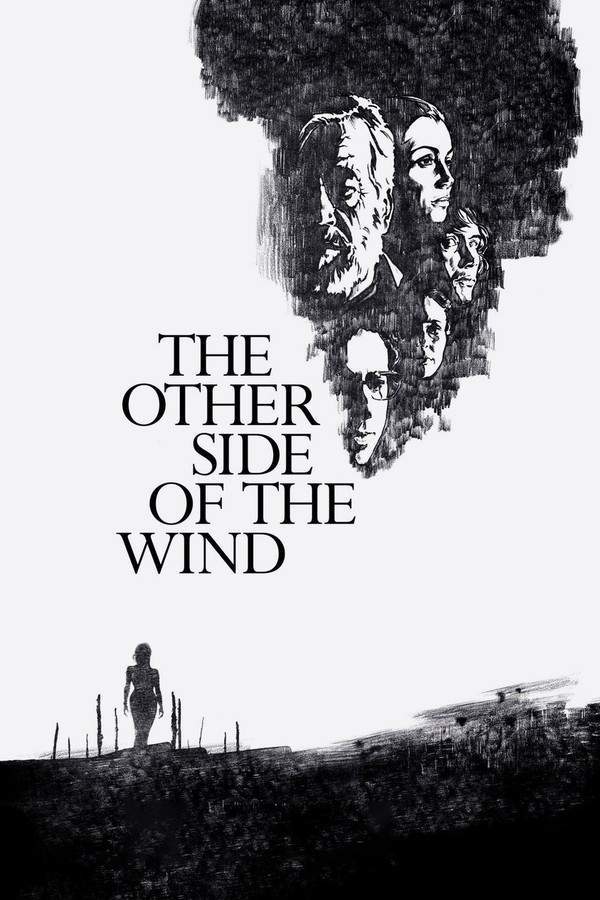
The Other Side of the Wind

The Other Side of the Wind

Year: 2018

Runtime: 122 min

Language: English

Echo Score: 77

Budget: $12M

DramaComedy

After years spent abroad, a visionary filmmaker returns to Hollywood to finish his most challenging and experimental work. "The Other Side of the Wind" is a film-within-a-film, chronicling a night of revelry and the filmmaker's provocative commentary on the industry and American culture. The project pushes cinematic boundaries and questions established norms, offering a unique and unconventional viewing experience.

Warning: spoilers below!

Haven’t seen The Other Side of the Wind yet? This summary contains major spoilers. Bookmark the page, watch the movie, and come back for the full breakdown. If you're ready, scroll on and relive the story!

The Other Side of the Wind (2018) – Full Plot Summary & Ending Explained

Read the complete plot breakdown of The Other Side of the Wind (2018), including all key story events, major twists, and the ending explained in detail. Discover what really happened, and what it all means.

Set in the early 1970s, the narrative unfolds on the final day of Jake Hannaford, portrayed by John Huston, an elderly Hollywood director whose life ends tragically in a car crash on his 70th birthday. The story is narrated by Brooks Otterlake, a former protégé, who recounts Hannaford’s last attempts to revitalize his dwindling career through an experimental film, rich in sexual content and violence, but which has failed to gain traction. This film, aptly titled The Other Side of the Wind, remains incomplete after its star unexpectedly storms off the set, leaving audiences in suspense regarding the cause.

During the festivities of Hannaford’s birthday party, a peculiar screening occurs, featuring incomprehensible excerpts from his unfinished project, aimed at securing funding from the studio head, Max David. The legendary director is notably absent, while Billy Boyle, played by Norman Foster, makes a clumsy attempt to elucidate the film’s meaning to the curious press. As the event progresses, various attendees journey towards the Arizona ranch for the celebration.

Among the guests is a young Otterlake, a successful director who credits much of his achievement to studying Hannaford closely. Journalists seize the occasion to pry into Hannaford’s personal life, particularly questioning his sexuality and suggesting he might be a closeted homosexual, despite his rugged public demeanor. Throughout his career, Hannaford has had a reputation for seducing the partners of his leading men yet shows a strong attraction towards them as well.

The conspicuous absence of John Dale, played by an unnamed actor, raises eyebrows. Hannaford, the first to discover him during a botched suicide attempt at the Pacific Ocean, soon learns that Dale’s eagerness to find him was masked by prior deception. As the party unfolds alongside various scenes from the film in a private screening room, it becomes evident why Dale stormed off—he was pushed away during a sex scene by Hannaford’s off-screen provocations.

As the evening wears on and Hannaford sinks into drunkenness, he finds himself despondent in the restroom, ultimately pleading with Otterlake for assistance to revitalize his career. A sporadic power failure throughout the event adds to the chaos, with festivities continuing under the glow of lanterns before transitioning to an empty drive-in cinema for the film’s concluding portion to be screened.

A realization dawns upon Hannaford that Otterlake may not provide the financial backing he hoped for, leading to a poignant farewell between the two, signaling the end of their friendship. Amidst this tension, journalist Juliette Rich provokes Hannaford with audacious questions, culminating in a drunken slap from Hannaford while Billy Boyle comes to his defense. As dawn breaks, a now sober John Dale arrives at the nearly deserted residence, missing the opportunity to join Hannaford as he departs in his sports car, ultimately sealing his fate in a fatal car accident.

In the meantime, the symbolic film screens to an almost-empty drive-in, with only the actress, Oja Kodar, remaining to watch the final scene, poignantly departing as Hannaford’s narrative echoes his final thoughts.

Last updated: November 16, 2024 at 17:32

Was this helpful?

The Other Side of the Wind (2018) Plot Questions Answered – Summary FAQ

Explore frequently asked questions about The Other Side of the Wind (2018) with spoiler-rich answers covering the full plot summary, major story beats, character motivations, hidden details, and ending meaning. This movie summary FAQ helps explain confusing scenes, plot twists, and narrative decisions in clear, searchable detail.

Q1

Why did John Dale leave the film set?

A.

John Dale stormed off the set during a sex scene because Jake Hannaford's off-screen provocations pushed him away. Hannaford had been physically and emotionally involved with Dale, having previously rescued him from a botched suicide attempt at the Pacific Ocean, but his possessive and manipulative behavior during the filming caused Dale to flee.

Earlier, Hannaford recalls finding Dale attempting suicide, hinting at the turbulent nature of their relationship.

john dalejake hannafordfilm setsex scenestorm off
Q2

Why does Jake Hannaford die in a car crash?

A.

Jake Hannaford dies in a fatal car accident after driving away drunk from his own birthday party at dawn. Having realized that his former protégé Otterlake would not provide the financial backing he desperately needed, and after a public confrontation with journalist Juliette Rich that ended with him slapping her, Hannaford fled in his sports car in a desperate emotional state, leading to the tragic crash.

The earlier power failure and the emotional breakdown in the restroom foreshadow Hannaford's unraveling and desperate departure.

jake hannafordcar accidentdeathbirthday partydawn
Q3

What is The Other Side of the Wind film within the movie about?

A.

The unfinished film, also titled The Other Side of the Wind, is an experimental project featuring sexual content and violence. It follows the story of a man returning to find his lover, but the screening at the birthday party shows only incomprehensible excerpts. The film was meant to revitalize Hannaford's declining career but remained incomplete after John Dale walked off the set.

The birthday party screening is designed to secure funding from studio head Max David, showing Hannaford's desperation to complete his vision.

experimental filmunfinished filmscreeninghollywoodcomeback
Q4

Why do journalists question Jake Hannaford's sexuality?

A.

Journalists probe into Hannaford's sexuality because of his reputation for seducing the partners of his leading men, despite his rugged public persona as a traditional Hollywood leading man. Throughout his career, he showed strong attraction to his leading men while also pursuing their romantic partners, creating speculation about whether he was a closeted homosexual.

This questioning occurs during the birthday festivities, adding to the public scrutiny of Hannaford's private life.

journalistssexualityspeculationhollywood directorreputation
Q5

Why does Brooks Otterlake refuse to help Jake Hannaford?

A.

Brooks Otterlake, Hannaford's former protégé who became a successful director, refuses to provide the financial backing Hannaford desperately needs to complete his film. This realization dawns on Hannaford during the party, leading to a poignant farewell between the two men and signaling the end their friendship. Otterlake had built his career studying Hannaford but chooses not to save him financially.

Otterlake's narrative framing of the story establishes his complex feelings toward his former mentor, hinting at both admiration and ultimately rejection.

brooks otterlakefinancial backingfriendshipformer protégérefused help
Q6

Why does the power failure happen during the party?

A.

The power failure during Jake Hannaford's birthday party serves as a symbolic element reflecting the instability and chaos of the evening. It occurs sporadically throughout the event, adding to the sense of disorder and unpredictability that surrounds Hannaford's crumbling career and personal life. The party continues under lantern light, creating an atmospheric setting for the unfolding drama.

The power failure coincides with Hannaford's emotional descent and the mounting tensions between guests.

power failurepartychaosatmospheresymbolic
Q7

What happens at the empty drive-in cinema at the end?

A.

At dawn, The Other Side of the Wind screens at an almost-empty drive-in cinema after the power failure forces the screening to move there. Only the actress Oja Kodar remains to watch the final scene. She then departs as the film concludes, leaving Hannaford's unfinished masterpiece to echo his final thoughts to an absent audience, emphasizing the tragic futility of his artistic pursuit.

The move from the private screening room to the empty drive-in mirrors Hannaford's own departure from the party and ultimately from life.

drive-infinal sceneoja kodarempty theaterconclusion
Q8

Why does John Dale miss saying goodbye to Hannaford?

A.

John Dale arrives at the Arizona ranch at dawn, only to find the party almost over and Hannaford already departed in his sports car. Dale's arrival is too late to reconnect with Hannaford, creating a missed opportunity for reconciliation after their conflict on the film set. This timing directly leads to Dale missing his chance to see Hannaford before his fatal car accident.

Dale's mysterious absence from the party earlier, combined with his earlier suicide attempt, foreshadows his inability to form meaningful connections.

john dalemissed opportunitydawnarrivalgoodbye
Q9

Why does Jake Hannaford slap Juliette Rich?

A.

Jake Hannaford slaps journalist Juliette Rich after she provokes him with audacious questions during the birthday party. The confrontation represents the culmination of the mounting public scrutiny, personal attacks, and Hannaford's intoxication. Billy Boyle comes to Hannaford's defense during this volatile moment, highlighting the deteriorating state of Hannaford's composure and the toxic atmosphere of the event.

This explosive moment follows Hannaford's earlier breakdown in the restroom and his Plea to Otterlake for career help.

juliette richslapjournalistconfrontationprovocation
Q10

What was the relationship between Jake Hannaford and John Dale?

A.

Jake Hannaford and John Dale had a complex, turbulent relationship. Hannaford discovered Dale during a botched suicide attempt at the Pacific Ocean and took him under his wing, casting him in his film. Their relationship involved both romantic and professional elements, but Hannaford's possessive behavior and off-screen provocations during sex scenes caused Dale to eventually walk away, leaving the film unfinished.

The mysterious absence of Dale at the party and Hannaford's peculiar eagerness to find him hint at the depth of their connection.

relationshipjohn dalesuicide attemptactormentor

Ending Explained – What Happens at the End of The Other Side of the Wind?

Still wondering what the ending of The Other Side of the Wind (2018) really means? Here’s a spoiler-heavy breakdown of the final scene, major twists, and the deeper themes that shape the film’s conclusion.

The film concludes with Jake Hannaford driving away from the ranch after a chaotic and emotionally charged birthday party celebrating his latest project, which he fears may be his last. Throughout the story, we see Hannaford’s decline—his mounting financial troubles, his inability to finish his film, and his increasing alcohol consumption—all symbolizing his fading relevance and internal struggle. The ending is deliberately ambiguous: although it’s strongly hinted that Hannaford dies in a car accident shortly after driving off alone—supported by the opening scene that reveals his death—nothing is shown directly. The film leaves it open whether his death was accidental or a suicide, emphasizing that the specifics of his demise aren’t as important as the tragic downfall he’s experiencing.

This ambiguity mirrors the overarching themes of the movie, which reflect on the complexities of creative identity and the elusive nature of artistic success. The story explores Hannaford’s personal and professional disintegration, much like Orson Welles’ own struggles with Hollywood and aging as a filmmaker. The film-within-a-film, also titled The Other Side of the Wind, acts as a metaphor for exploring the ‘other side’ of Hollywood, truth, and perception, with Welles using avant-garde, disjointed storytelling techniques to underline the chaos and ambiguity of the creative process. In the end, Hannaford’s solitary drive symbolizes his final escape from a world that no longer values or understands him, leaving viewers with a haunting sense of decline, failure, and the elusive possibility of redemption. His fate remains unresolved, reinforcing the idea that life—and art—are often shrouded in mystery and ambiguity.

Last updated: June 25, 2025 at 08:57

Was this helpful?
Mobile App Preview

Coming soon on iOS and Android

The Plot Explained Mobile App

From blockbusters to hidden gems - dive into movie stories anytime, anywhere. Save your favorites, discover plots faster, and never miss a twist again.

Sign up to be the first to know when we launch. Your email stays private, always.

Explore Movie Threads

Discover curated groups of movies connected by mood, themes, and story style. Browse collections built around emotion, atmosphere, and narrative focus to easily find films that match what you feel like watching right now.

Movies about a fading artistic genius like The Other Side of the Wind

Stories about creators confronting their legacy and fading relevance.If you were fascinated by the portrait of a visionary filmmaker in decline in 'The Other Side of the Wind', explore these other movies about artists confronting their legacy. These similar drama stories capture the heavy emotional weight and critical introspection of creators facing their twilight.

melancholicreflectivecriticaldisillusionednostalgicunsettling

Narrative Summary

These narratives often follow a brilliant but past-their-prime creator who is struggling to complete one final, ambitious work. The journey is typically punctuated by flashbacks to past glories, critical scrutiny from the outside world, and a deep sense of disillusionment, culminating in a bittersweet or tragic resolution.

Why These Movies?

Movies in this thread share a focus on the psychological unraveling of a creative force, a melancholic tone, and a heavy emotional weight centered on themes of legacy, obsolescence, and the price of ambition.

Movies that deconstruct Hollywood like The Other Side of the Wind

Films that pull back the curtain on the illusions of filmmaking and fame.For viewers who enjoyed the inside look at Hollywood and its critiques in 'The Other Side of the Wind', this list gathers similar movies about filmmaking and fame. These experimental drama and comedy stories share a chaotic, disillusioned vibe and offer a critical view of the entertainment industry.

unsettlingcriticalchaoticdisillusionedexperimentalreflective

Narrative Summary

The narrative pattern often involves a non-linear or fragmented structure, such as a film-within-a-film, to mirror the theme of artifice. Characters grapple with the gap between public image and private reality, leading to chaotic situations and a profound sense of disillusionment with the industry they are a part of.

Why These Movies?

These films are grouped by their shared setting and thematic focus on critiquing the entertainment industry, their experimental or unconventional narrative structures, and a tone that blends chaotic energy with sharp disillusionment.

Unlock the Full Story of The Other Side of the Wind

Don't stop at just watching - explore The Other Side of the Wind in full detail. From the complete plot summary and scene-by-scene timeline to character breakdowns, thematic analysis, and a deep dive into the ending - every page helps you truly understand what The Other Side of the Wind is all about. Plus, discover what's next after the movie.

The Other Side of the Wind Timeline

Track the full timeline of The Other Side of the Wind with every major event arranged chronologically. Perfect for decoding non-linear storytelling, flashbacks, or parallel narratives with a clear scene-by-scene breakdown.

The Other Side of the Wind Timeline

Characters, Settings & Themes in The Other Side of the Wind

Discover the characters, locations, and core themes that shape The Other Side of the Wind. Get insights into symbolic elements, setting significance, and deeper narrative meaning - ideal for thematic analysis and movie breakdowns.

Characters, Settings & Themes in The Other Side of the Wind

The Other Side of the Wind Ending Explained

What really happened at the end of The Other Side of the Wind? This detailed ending explained page breaks down final scenes, hidden clues, and alternate interpretations with expert analysis and viewer theories.

The Other Side of the Wind Ending Explained

The Other Side of the Wind Spoiler-Free Summary

Get a quick, spoiler-free overview of The Other Side of the Wind that covers the main plot points and key details without revealing any major twists or spoilers. Perfect for those who want to know what to expect before diving in.

The Other Side of the Wind Spoiler-Free Summary

More About The Other Side of the Wind

Visit What's After the Movie to explore more about The Other Side of the Wind: box office results, cast and crew info, production details, post-credit scenes, and external links - all in one place for movie fans and researchers.

More About The Other Side of the Wind

Similar Movies to The Other Side of the Wind

Discover movies like The Other Side of the Wind that share similar genres, themes, and storytelling elements. Whether you’re drawn to the atmosphere, character arcs, or plot structure, these curated recommendations will help you explore more films you’ll love.