Plot Explained Spoilers guaranteed!
Plot Explained

Browse by genre

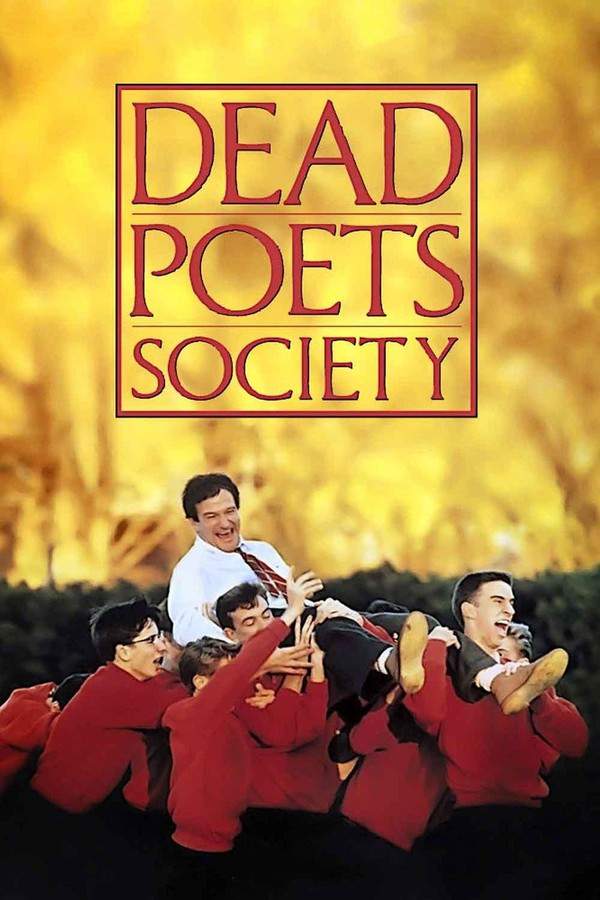
Dead Poets Society (1989) movie poster

Plot Summary

Dead Poets Society (1989) Plot Summary Explained

Release, runtime and language
1989 · 128 min · English
Directed by
Peter Weir
Starring
Robin Williams, Robert Sean Leonard

At a prestigious, conservative boarding school, a new English teacher, John Keating, inspires his students to challenge authority and embrace their passions. Encouraging them to make their lives extraordinary, Keating's unconventional methods lead them to form a secret society and re-evaluate their values. As they grapple with familial expectations and the pursuit of their dreams, the students confront the complexities of adolescence and the importance of living authentically.

On this page (7)
  1. 1 Where to watch
  2. 2 What happens: full plot
  3. 3 Plot questions answered
  4. 4 Movie threads
  5. 5 Movies like Dead Poets Society
  6. 6 Categories
  7. 7 Every angle

Where to watch

Where to Watch Dead Poets Society (1989)

Where can you watch Dead Poets Society? Stream, rent or buy it in the US, including on Amazon Video, Apple TV Store and Fandango At Home: current JustWatch availability with up-to-date prices.

Streaming availability powered by JustWatch

Full plot summary · contains spoilers

What Happens in Dead Poets Society: Full Plot Summary

The whole story of Dead Poets Society (1989) explained, from the opening scene to the final frame: every key event, every twist and what it all adds up to. Read it as a quick recap before the sequel, to check a scene you missed, or to finally understand what really happened.

As Todd Anderson embarks on his junior year at Welton Academy, an esteemed Episcopalian boarding school nestled in Vermont, he finds himself among a distinguished group of peers, including his lively roommate, Neil Perry. This first interaction sets off a transformative journey that significantly alters the trajectories of their lives.

The arrival of the unconventional English teacher, John Keating, a Welton graduate with a Cambridge background, serves as a turning point for the students. Keating's approach to education—championing the idea of carpe diem and celebrating individuality—urges his students to question traditional norms. His unique methods, such as having them stand on their desks and tearing pages out of poetry books, foster an environment brimming with creativity and self-expression.

While Keating's teaching style captivates many students, it also raises eyebrows among the school's administration, particularly for the stern headmaster, Gale Nolan. Inspired by Keating's lessons, Neil takes the bold step of reviving the long-dormant Dead Poets Society, reigniting a spirit of defiance reminiscent of past generations.

As the club evolves, its members enter a realm of personal exploration and empowerment. Knox Overstreet finds himself infatuated with Chris Noel, a local cheerleader connected to the Welton community. In parallel, Neil pursues his newfound love for acting and secures the role of Puck in a local rendition of A Midsummer Night's Dream, directly opposed to his father's strict insistence that he prepare for a career in medicine at Harvard.

Keating becomes a crucial influence in Todd's journey, helping him transition from a timid observer to a budding creative voice. Through engaging exercises in self-expression, Todd eventually finds the courage to write and share a poem before his class.

In a twist of events, Charlie Dalton’s publication of an audacious article in the school newspaper, advocating for female admission at Welton, ignites a series of repercussions that jeopardize the club’s existence. When Nolan pressures Charlie to betray his peers by naming the other Dead Poets members, Charlie stands firm, but Keating warns him about the consequences of such bold actions.

As the climax approaches with Neil's final performance, his father's abrupt revelation of Neil's involvement in the play leads to a volatile confrontation. Neil’s father demands he abandon both the production and his studies at Welton. Keating, steadfast in his guidance, encourages Neil to assert his passion for acting, recognizing that this moment could define his commitment. Tragically, the fallout from this confrontation results in Neil being forced out of Welton and sent to military school, leaving him isolated and unable to voice his emotions to his father, which ultimately drives him to despair.

After Neil's tragic passing, Nolan is pressured to investigate the factors leading to this heartbreaking event, uncovering the huge toll that Keating's dedication has taken on his students. Amid the investigation, Cameron, feeling culpable, attempts to shift blame onto Keating by exposing the identities of the Dead Poets Society members. Confronted by Charlie about his treachery, Cameron's lack of integrity is starkly evident, leading to Charlie's expulsion after a fierce altercation.

Each boy faces Nolan's demands to confirm Cameron's false statements, putting Todd in a distressing position: torn between loyalty to Keating and the overwhelming pressure to please his parents. Ultimately, Todd succumbs, signing the letter, a choice that brings dire consequences for Keating.

When Nolan takes over Keating’s class, enforcing his stringent views of traditional education, the atmosphere becomes stifling. Keating, embodying hope, makes a final appearance to collect his belongings. It is here that Todd, revealing the manipulation that led them to betray their friend, takes a stand. Nolan's intimidating warning echoes as Keating exits, cautioning that any further dissent will meet harsh retribution.

In a moment of powerful defiance, Todd climbs onto his desk and declares “O Captain! My Captain!” One by one, his fellow Dead Poets Society members join him, symbolizing the everlasting influence of Keating’s passion and commitment. As he leaves, Keating’s eyes reflect gratitude, knowing that even in the darkest times, the spark of creativity and individuality remains a resilient force, inspiring future generations to rise against conformity.

Last updated: November 21, 2024 at 10:06

Was this helpful?

Plot questions answered

Dead Poets Society Plot Explained: Your Questions Answered

The questions people ask most about Dead Poets Society (1989): what happens in the confusing scenes, why the characters do what they do, the twists, hidden details and what the ending means. Each answer contains spoilers.

Q1

Why did Neil Perry end his life?

Neil Perry took his own life after his father forced him to abandon his passion for acting, removed him from Welton, and sent him to military school. Feeling completely trapped between his father's demands and his own desires, with no way to express his feelings or pursue what he loved, Neil saw no escape from the oppressive control his father exerted over his life.

Foreshadowing: Earlier scenes showed Neil's father dismissing any interest in acting as a waste of time, and Keating's lessons about 'carpe diem' had inspired Neil to pursue his dreams despite the consequences.

  • neil perry suicide
  • neil's death
  • why neil died
  • neil perry tragedy
Q2

Why did Todd Anderson sign the letter blaming Keating?

Todd signed the letter because he was under immense pressure from Headmaster Nolan and feared disappointing his parents. At seventeen, Todd lacked the courage to stand up to authority, and the combined pressure from the school administration and his family led him to betray his mentor, though this decision clearly haunted him.

Foreshadowing: Throughout the film, Todd is shown struggling with extreme shyness and reluctance to assert himself, often defaulting to pleasing others.

  • todd anderson signs letter
  • why todd betrayed keating
  • todd surrenders to pressure
Q3

Why was John Keating fired from Welton Academy?

Keating was fired because the school administration blamed his unorthodox teaching methods for Neil's death. After Cameron betrayed the Dead Poets Society by revealing the members' names, and the students signed a letter implicating Keating as a bad influence, Headmaster Nolan used this as justification to dismiss him despite his innocence.

Foreshadowing: Nolan had been skeptical of Keating's methods from the beginning, criticizing his challenge to tradition and his 'carpe diem' philosophy.

  • keating fired
  • why keating lost job
  • welton dismisses keating
Q4

What caused the confrontation between Neil and his father?

The confrontation erupted when Neil's father discovered his son was playing Puck in A Midsummer Night's Dream against his explicit wishes. His father demanded Neil quit the play and focus entirely on preparing for Harvard and a career in medicine, refusing to acknowledge Neil's passion for acting as legitimate.

Foreshadowing: Earlier conversations revealed Neil's father controlled every aspect of his life, insisting medicine was the only acceptable profession for his son.

  • neil father fight
  • mr perry confronts neil
  • neil acting forbidden
Q5

Why did Cameron expose the Dead Poets Society members?

Cameron exposed the Dead Poets Society members because he felt guilty about Neil's death and sought to deflect blame from himself by shifting responsibility onto Keating. Rather than accepting his own complicity in the club's activities, Cameron chose to betray his peers to save face with the administration.

Foreshadowing: Cameron was consistently shown as the most cautious and rule-following member of the group, always concerned about getting caught.

  • cameron betrays dead poets
  • who named names
  • cameron informs on students
Q6

What happened to Charlie Dalton at the end of the movie?

Charlie Dalton was expelled from Welton Academy after refusing to betray his fellow Dead Poets Society members to Headmaster Nolan. When Nolan pressured him to name the other club members, Charlie refused and was kicked out for his defiance.

Foreshadowing: Charlie consistently demonstrated the most willingness to challenge authority, from publishing the controversial article to standing up to Nolan.

  • charlie expelled
  • charlie dalton kicked out
  • what happened to charlie
Q7

Why did the students stand on their desks at the end?

The students stood on their desks to honor Keating and demonstrate that his lessons about thinking for themselves and embracing individuality had truly taken root. When Todd first climbed onto his desk saying 'O Captain! My Captain!' it was an act of defiance against Nolan's repression and a tribute to the teacher who changed their lives.

Foreshadowing: Keating had originally asked his students to stand on their desks to see the world from a different perspective, making this act deeply symbolic.

  • o captain my captain
  • students stand on desks
  • final tribute keating
Q8

Why couldn't Neil stand up to his father about acting?

Neil couldn't stand up to his father because of years of emotional control and the overwhelming pressure to fulfill his father's unfulfilled ambitions. Raised to believe his only worth was in meeting his father's expectations, Neil lacked the psychological framework to assert his own identity against such dominant authority.

Foreshadowing: The film established early that Mr. Perry made all decisions for Neil and dismissed any deviation as unacceptable.

  • neil father control
  • neil cannot defy father
  • neil trapped by parents
Q9

How did Todd Anderson change throughout the movie?

Todd transformed from an extremely shy, withdrawn student who couldn't even speak in class to a confident young man willing to defy authority. Keating's mentorship helped Todd discover his creative voice, culminating in his brave decision to stand on his desk and quote 'O Captain! My Captain!' as a final act of tribute.

Foreshadowing: Keating worked specifically with Todd, having him scream in the bathroom and write poetry, gradually building his confidence.

  • todd growth
  • todd becomes confident
  • todd character arc
Q10

What was the purpose of the Dead Poets Society?

The Dead Poets Society served as a secret club where students could explore poetry, art, and personal expression outside the rigid confines of Welton's traditional curriculum. It represented freedom from conformity and a space for the boys to discover their individual identities, though it ultimately became a symbol of their rebellion against institutional authority.

Foreshadowing: Keating shared the original club's history with his students, showing them old photographs of students who had also defied tradition.

  • dead poets society purpose
  • what was the club
  • why dead poets matter

Movie threads

More Movies Like Dead Poets Society, by Mood & Story

Curated lists built around what makes Dead Poets Society tick: the same mood, the same kind of story or the same emotional payoff. Each list explains why these movies belong together.

Bittersweet tales of nonconformity like Dead Poets Society

Stories where rebellious spirits ignite change but pay a heavy price. Movies like Dead Poets Society that follow inspiring but tragically costly journeys of rebellion. If you were moved by the blend of hope and sorrow, these similar dramas showcase characters who challenge authority, often with bittersweet or heartbreaking outcomes.

  • bittersweet
  • inspiring
  • melancholic
  • tense
  • rebellious
  • tragic
  • Tone: bittersweet, melancholic, inspiring
  • Pacing: steady, character-driven build
Why these movies?

The story pattern: The narrative typically centers on a catalyst figure who inspires a group or individual to break from oppressive norms. The journey is one of awakening and empowerment, but it escalates into a direct, high-stakes conflict with authority, culminating in a significant personal loss that underscores the cost of defiance while simultaneously validating the rebellious spirit.

Why they belong together: They are grouped by their powerful, bittersweet tone, where inspirational highs are inextricably linked with profound sadness. They share a heavy emotional weight, a steady, deliberate pacing that builds towards an emotional climax, and a central theme of the price paid for living authentically.

Intense coming-of-age dramas like Dead Poets Society

Young characters grapple with crushing expectations and seek self-discovery. If you liked the intense pressure and rebellion in Dead Poets Society, explore these similar coming-of-age stories. These films feature young protagonists battling familial and institutional expectations, often in confined settings, leading to tense and emotionally charged confrontations.

  • tense
  • anxious
  • rebellious
  • reflective
  • melancholic
  • claustrophobic
  • Tone: tense, melancholic, reflective
  • Pacing: steady, building tension
Why these movies?

The story pattern: The plot follows a group or individual protagonist in a restrictive setting (academic, familial, or societal) where self-expression is stifled. A catalyst event or person sparks a rebellion against the established order. The narrative builds tension as personal desires clash violently with external demands, leading to a crisis that forces a painful but formative reckoning with adulthood.

Why they belong together: These films share a high-intensity emotional core driven by the fundamental conflict between youthful passion and oppressive control. They feature a steady pacing that allows for deep character development, a melancholic and reflective mood, and themes of rebellion, parental pressure, and the painful process of self-discovery.

If you liked this

Movies Like Dead Poets Society

Similar movies to Dead Poets Society: the same genre, themes or kind of story. Each one comes with its own plot summary, timeline and ending explained.

Browse all movie summaries

Categories

Movie Lists Featuring Dead Poets Society

Dead Poets Society appears in these hand-built movie categories. Each one groups movies by a specific mood, theme or story type, with their plot summaries and endings explained.

View all movie categories

Every angle

Dead Poets Society (1989) Explained: Plot, Timeline & Characters

Everything about Dead Poets Society in one place: what happens in the plot summary, the timeline in chronological order, the characters and meaning and a spoiler-free summary. What's After the Movie adds the cast, box office and post-credit scenes.

Coming soon on iOS and Android

The Plot Explained Movie Summary App

Plot summaries, endings explained and timelines on your phone. Catch up on any movie in minutes, save your favorites and never miss a twist again.

Be the first to know when we launch. Your email stays private, always.

Learn more about the app