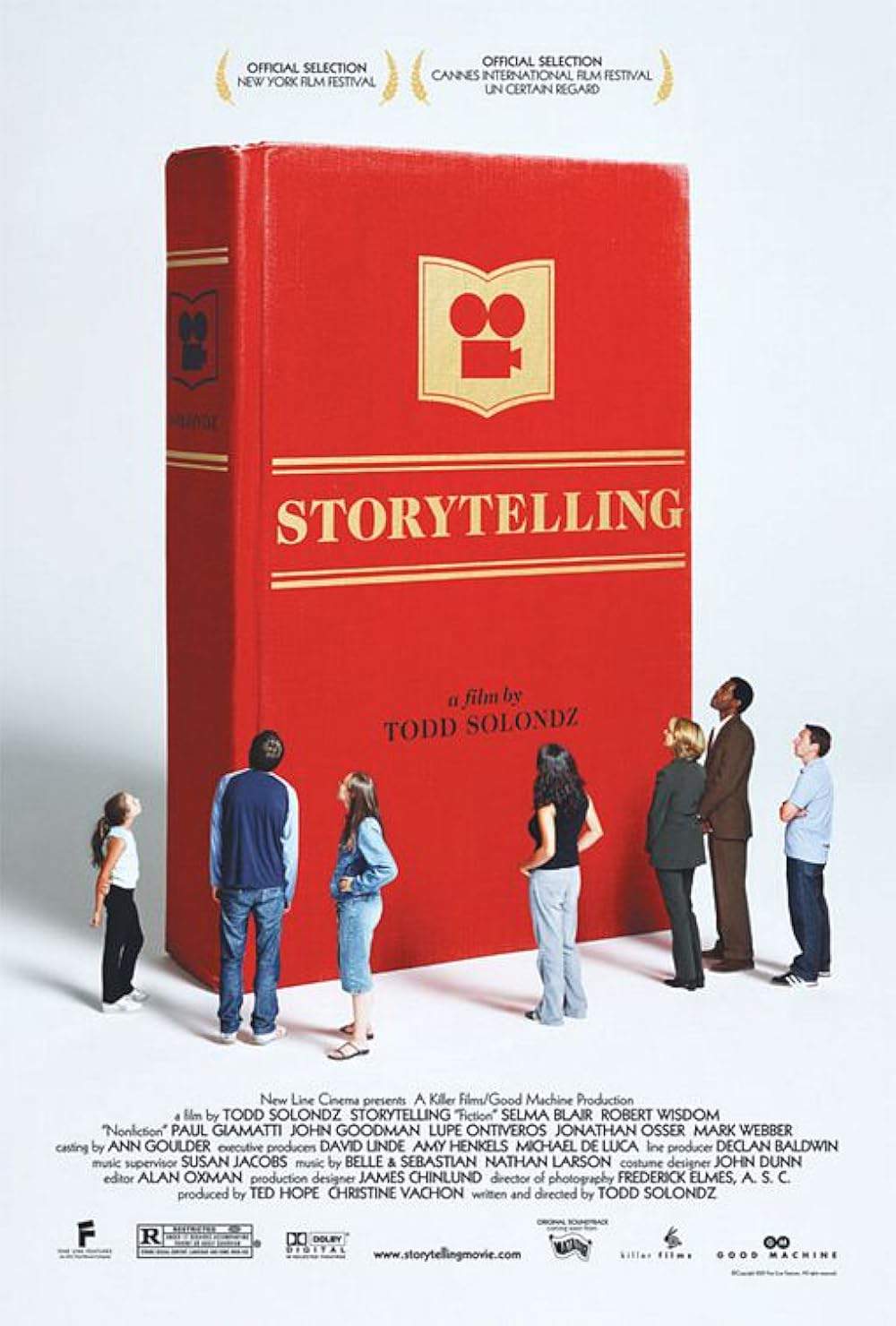
Fiction, the first segment of Storytelling, begins with Vi entwined in an intimate moment with her boyfriend Marcus, who lives with cerebral palsy. Following their encounter, Vi displays a sense of urgency to leave, prompting Marcus to suspect that she may have lost interest in him due to his disability. Despite his love for writing, Marcus's short stories are subpar, and Vi, along with their creative writing classmates, are aware of this but hesitate to voice their opinions out of fear of offending him. However, the truth eventually emerges when a classmate courageously critiques his writing, leading to a harsh reprimand from their professor, Mr. Scott. In a moment of vulnerability, Marcus feels betrayed by Vi's lack of honest feedback, leading him to end their relationship.
As the story unfolds, Vi crosses paths with Mr. Scott at a bar, and they share intimate moments that escalate quickly. While preparing in his bathroom, she stumbles upon compromising photographs of several of her white female classmates, whispering a reminder to herself: “Don't be racist.” Stepping out, the encounter takes a dark turn as Mr. Scott demands she remove her clothing and engage in degrading acts that challenge both her identity and values. This traumatic experience inspires her to pen a provocative fictional short story, which, upon presenting it to her classmates, garners severe backlash. Critics label it as racist and misogynistic, dismissing it as the shallow expression of a “spoiled white girl.”
The narrative transitions into the second segment, Nonfiction, featuring Toby, an aspiring yet unsuccessful documentary filmmaker, alongside his subject Scooby, a youth caught in the throes of adolescence and familial strife. The tension within Scooby’s household often erupts during dinner conversations, revealing a tumultuous relationship with his parents. As Toby documents their lives, he recognizes his project’s potential aimlessness. The revelation of Scooby’s bisexuality unfolds when he indifferently allows a male classmate to engage in sexual acts while fantasizing about drastic changes to his miserable home life. As the documentary morphs from a respectful exploration into a mocking representation, an unanticipated screening reveals the audience's laughter at the portrayal of Scooby's family.
In a tragic twist, while Scooby is away, their ex-housekeeper, embittered by her dismissal, retaliates by poisoning the family. Upon returning, Scooby discovers the horrifying scene of his family's demise. In a cold and detached manner, he tells Toby not to feel pity for him, asserting that “the movie is a hit.” Through these intertwined stories, Storytelling boldly navigates themes of vulnerability, exploitation, and the often harsh realities of existence, leaving the audience to ponder the moral implications of both fiction and non-fiction in our lives.