Plot Explained Spoilers guaranteed!
Plot Explained

Browse by genre

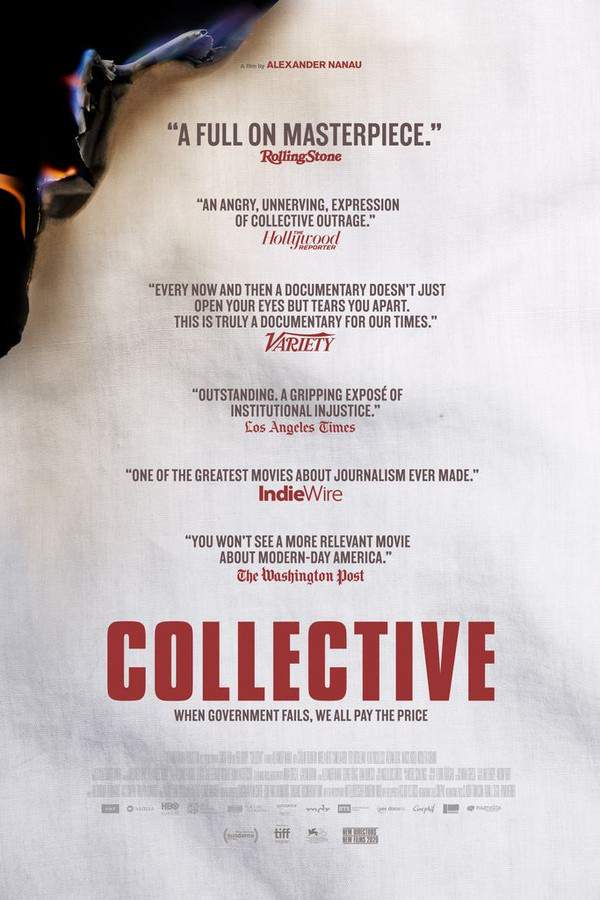
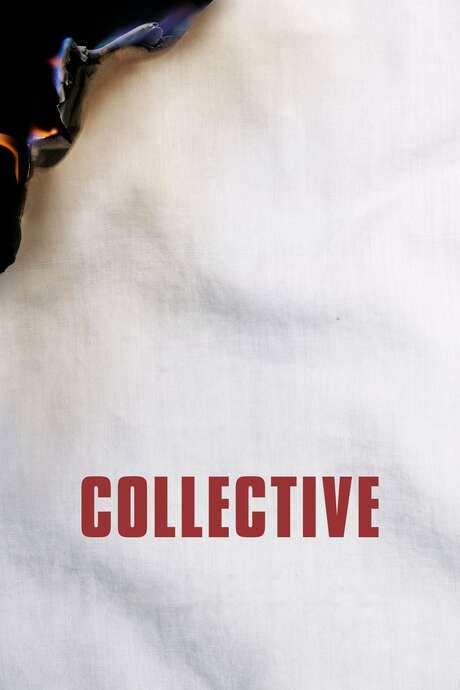
Collective (2020) movie poster

Plot Summary

Collective (2020) Plot Summary Explained

Release, runtime and language
2020 · 109 min · Romanian
Echo score 83
Loading streaming availability…
Directed by
Alexander Nanau
Starring
Catalin Tolontan, Mirela Neag, Razvan Lutac, Tedy Ursuleanu, Vlad Voiculescu

Following a deadly nightclub fire in Bucharest, a team of investigative journalists begins to unravel a disturbing series of events. Their pursuit leads them to question the circumstances surrounding the deaths of patients given faulty medication, and ultimately, implicates a health minister’s abrupt resignation. Through meticulous reporting, they expose a complex network of corruption and reveal the vital role of a free press in holding those in power accountable.

On this page (6)
  1. 1 Where to watch
  2. 2 What happens: full plot
  3. 3 Plot questions answered
  4. 4 Movie threads
  5. 5 Movies like Collective
  6. 6 Every angle
Loading streaming availability…

Full plot summary · contains spoilers

What Happens in Collective: Full Plot Summary

The whole story of Collective (2020) explained, from the opening scene to the final frame: every key event, every twist and what it all adds up to. Read it as a quick recap before the sequel, to check a scene you missed, or to finally understand what really happened.

On October 30, 2015, the metal band Goodbye to Gravity takes the stage at a club named Colectiv in Bucharest, Romania. Unfortunately, a catastrophic fire breaks out due to pyrotechnics, leading to the tragic deaths of 27 individuals right away, with 180 others suffering injuries. In the ensuing months, 37 more victims succumb to their injuries, largely as a result of the inadequate healthcare provided by public hospitals.

In the aftermath, a group of dedicated journalists begins to scrutinize the alarming mismanagement within the healthcare system. They receive alarming tips indicating that the disinfectants used at hospitals are diluted, which subsequent tests confirm. This leads them to expose the supplier, Hexi Pharma, in a compelling report highlighting how it falsified documentation regarding its disinfectants and the government's failure to verify the supplier's legitimacy. The Minister of Health, Patriciu Achimaș-Cadariu, promptly orders an investigation. However, during a television interview, Cătălin Tolontan passionately argues for the truth, only to have the Minister dismiss his claims, insisting that tests show the disinfectants are 95 percent effective.

Undeterred, the journalists continue their investigation and uncover that the intelligence service was aware for years that bacterial infections were responsible for numerous deaths yet took no action. After publishing this explosive information, mass protests erupt, demanding accountability for the rampant corruption and inadequate healthcare. In this climate of unrest, the Health Minister resigns, and a criminal probe is initiated against the CEO of Hexi Pharma, Dan Condrea. A press conference reveals that the tests on Hexi Pharma’s products indeed confirmed they were all diluted. When Tolontan presses the Ministry of Health regarding the earlier claim of effectiveness, they abruptly refuse to comment on their previous statements. Tragically, Condrea meets an untimely death in a car accident shortly after these revelations.

As the investigation progresses, The Gazette receives a shocking video showing a patient in a hospital plagued by maggots in their wound. A frustrated doctor sheds light on the worsening situation, revealing that even after a governmental overhaul in late 2015, deaths from diluted disinfectants and medical negligence persist. Now in charge, Vlad Voiculescu, the new Minister of Health, meets with the doctor, who details the inhumane treatment patients receive and the bribery schemes rampant among hospital staff and management.

Voiculescu discovers that the rot goes deep within the system; every public hospital is entangled in profound corruption. He realizes his hands are tied, as he cannot dismiss the corrupt managers who bribed their way into their positions and thus insists on imposing stringent regulations on any new appointments. He acknowledges that genuinely rooting out corruption may mean "firing everyone." When he decides to reallocate funds away from a risky lung transplant unit, he becomes the target of backlash from Mayor Gabriela Firea, who accuses him of squandering taxpayer money by transferring patients to Vienna, despite claims of full accreditation for procedures in Bucharest. In a private discussion, a professor confides the truth about the accreditation being politically influenced and implores Voiculescu to keep this information under wraps to avoid a scandal.

On election day, the Social Democrats sweep the polls, earning the majority of votes. At The Gazette, Tolontan's colleague reveals they've received warnings about the safety of the journalists and their families. To facilitate the deteriorating state of affairs, an unqualified and legally prohibited manager is appointed to oversee the public hospital, thus perpetuating the cycle of negligence and corruption.
Last updated: November 16, 2024 at 14:17

Was this helpful?

Plot questions answered

Collective Plot Explained: Your Questions Answered

The questions people ask most about Collective (2020): what happens in the confusing scenes, why the characters do what they do, the twists, hidden details and what the ending means. Each answer contains spoilers.

Q1

Why did more victims die in the months after the Colectiv fire?

While 27 people died immediately in the fire, another 37 succumbed later because the public hospitals treating the injured had severely diluted disinfectants. This caused bacterial infections that the weakened patients could not fight off, turning what should have been treatable injuries into fatal complications.

  • colectiv fire
  • delayed deaths
  • infections
  • disinfectants
  • hospital failures
Q2

What prompted the journalists to investigate hospital disinfectants?

The journalists received disturbing tips from sources indicating that the disinfectants used in public hospitals were diluted. This tip came as they were covering the aftermath of the fire and the unexpected number of deaths among burn victims, leading them to suspect the healthcare system was contributing to the mortality rate.

  • journalists
  • investigation
  • disinfectants
  • tips
  • hexi pharma
Q3

How did Hexi Pharma falsify its disinfectant documentation?

Hexi Pharma supplied diluted disinfectants to hospitals while falsifying documentation claiming their products met proper standards. The company created paperwork showing the disinfectants were effective when laboratory tests later confirmed they were significantly diluted, failing to kill bacteria as intended.

  • hexi pharma
  • falsified documents
  • diluted disinfectants
  • testing
Q4

Why did the Health Minister dismiss the journalists' claims about disinfectants?

During a television interview, Minister Patriciu Achimaș-Cadariu dismissed the journalists' claims by insisting that tests showed the disinfectants were 95 percent effective. However, this claim was either based on flawed testing or deliberately misleading, as subsequent independent tests proved the products were diluted.

  • health minister
  • Patriciu Achimaș-Cadariu
  • disinfectants
  • effectiveness claim
Q5

What did the intelligence service know about the hospital infections?

The investigation revealed that Romania's intelligence service had been aware for years that bacterial infections were causing numerous deaths in public hospitals. Despite this knowledge, they took no action to warn the public or investigate the source of the infections, allowing the deadly situation to continue unchecked.

  • intelligence service
  • bacterial infections
  • government inaction
  • cover-up
Q6

What happened to Dan Condrea after the scandal was exposed?

Dan Condrea, the CEO of Hexi Pharma, died in a car accident shortly after the scandal was exposed and tests confirmed his products were diluted. His death was mysterious and added tension to the narrative, though the documentary does not definitively explain whether it was accidental or connected to the investigation.

  • dan condrea
  • hexi pharma ceo
  • car accident
  • death
Q7

Why couldn't Vlad Voiculescu eliminate the hospital corruption?

When Vlad Voiculescu became Health Minister, he discovered that every public hospital was entangled in deep-rooted corruption. He realized he could not simply dismiss corrupt managers because many had bribed their way into their positions, meaning firing them could expose the bribery network. He could only impose stricter regulations on new appointments, but the systemic rot proved nearly impossible to overcome.

  • vlad vocescu
  • health minister
  • corruption
  • hospital management
  • reform failure
Q8

Why was Voiculescu criticized for reallocating lung transplant funds?

Voiculescu decided to reallocate funds away from a risky lung transplant unit, choosing instead to transfer patients to Vienna for treatment. Mayor Gabriela Firea accused him of squandering taxpayer money, but the documentary reveals the Bucharest unit's accreditation was politically influenced rather than medically legitimate, creating a difficult situation where the truth could not be made public.

  • lung transplant
  • vlad vocescu
  • funding
  • mayor gabriela firea
  • vienna
Q9

How did the election affect the investigation into the healthcare scandal?

On election day, the Social Democrats won the majority of votes, effectively returning the same political force that had overseen the corruption to power. This shift in power threatened the journalists' investigation and created a more hostile environment for accountability.

  • election
  • social democrats
  • investigation
  • political consequences
Q10

Why were the journalists warned about their safety?

After the investigation gained traction and exposed deep government corruption, Tolontan's colleagues at The Gazette received warnings about threats to the safety of the journalists and their families. This reflected the increasingly perilous climate for investigative reporting in Romania.

  • journalist threats
  • safety
  • the gazette
  • catalin tolontan
Q11

What was the significance of the hospital video showing maggots?

The Gazette received a shocking video showing a patient with maggots in their surgical wound, providing visceral evidence of the deplorable conditions in Romanian hospitals. This footage illustrated how the diluted disinfectants and medical negligence were literally rotting flesh in public hospitals, reinforcing the journalists' findings.

  • maggots video
  • hospital conditions
  • patient neglect
  • the gazette
Q12

Why does the corruption continue despite the exposé?

The documentary ends bleakly showing that despite the exposé, an unqualified and legally prohibited manager was appointed to oversee a public hospital, perpetuating the cycle of negligence and corruption. The political system reasserted itself, demonstrating how deeply embedded corruption is in Romania's healthcare and governmental institutions.
  • corruption cycle
  • systemic failure
  • political status quo
  • healthcare reform

Movie threads

More Movies Like Collective, by Mood & Story

Curated lists built around what makes Collective tick: the same mood, the same kind of story or the same emotional payoff. Each list explains why these movies belong together.

Movies about uncovering systemic corruption like Collective

Stories where a slow, meticulous process reveals deep-seated institutional failure. If you appreciated the methodical exposure of corruption in Collective, this thread gathers similar films. These movies feature investigative journalism, political exposés, and true stories of systemic failure, all sharing a tense, steady pace and a heavy emotional weight that delivers a sobering viewing experience.

  • urgent
  • frustrating
  • determined
  • exposing
  • unsettling
  • sombre
  • Tone: dark, urgent, exposing
  • Pacing: steady, methodical
Why these movies?

The story pattern: These narratives follow a logical, step-by-step investigative arc. Starting with a catalyst event, the story unfolds through diligent research, interviews, and evidence gathering. Each discovery deepens the complexity of the problem, leading to a confrontation with powerful, entrenched interests, often resulting in a conclusion that underscores the difficulty of achieving true justice.

Why they belong together: Movies are grouped here for their shared focus on a meticulous process of revelation, their dark and urgent tone, and their ability to evoke a profound sense of injustice. The pacing is deliberate, the intensity is high due to the real-world stakes, and the emotional journey is consistently heavy.

Bleak and heavy documentaries similar to Collective

Unflinching non-fiction films that expose harsh truths with little hope of resolution. For viewers who found Collective's bleak examination of corruption compelling, this section features other sobering documentaries. These films share a dark tone, high emotional weight, and a focus on exposing difficult truths about society, politics, or human nature, often with a similarly steady and intense pace.

  • sombre
  • frustrating
  • heavy
  • unsettling
  • thought-provoking
  • urgent
  • Tone: dark, bleak, sombre
  • Pacing: steady, deliberate
Why these movies?

The story pattern: The narrative pattern involves presenting a real-world problem with deep historical and systemic roots. The film builds its case through evidence and testimony, creating an overwhelming sense of a broken system. The emotional journey is one of growing disillusionment, culminating in an ending that acknowledges the persistence of the problem rather than its solution.

Why they belong together: These films are united by their commitment to dark, heavy subject matter, their sobering tone, and their bleak outlook. They are grouped by a shared vibe of urgency and frustration, and a pacing that allows the gravity of the situation to sink in fully, making for a powerful but emotionally draining experience.

If you liked this

Movies Like Collective

Similar movies to Collective: the same genre, themes or kind of story. Each one comes with its own plot summary, timeline and ending explained.

Browse all movie summaries

Every angle

Collective (2020) Explained: Plot, Timeline & Characters

Everything about Collective in one place: what happens in the plot summary, the timeline in chronological order, the characters and meaning and a spoiler-free summary. What's After the Movie adds the cast, box office and post-credit scenes.

Coming soon on iOS and Android

The Plot Explained Movie Summary App

Plot summaries, endings explained and timelines on your phone. Catch up on any movie in minutes, save your favorites and never miss a twist again.

Be the first to know when we launch. Your email stays private, always.

Learn more about the app