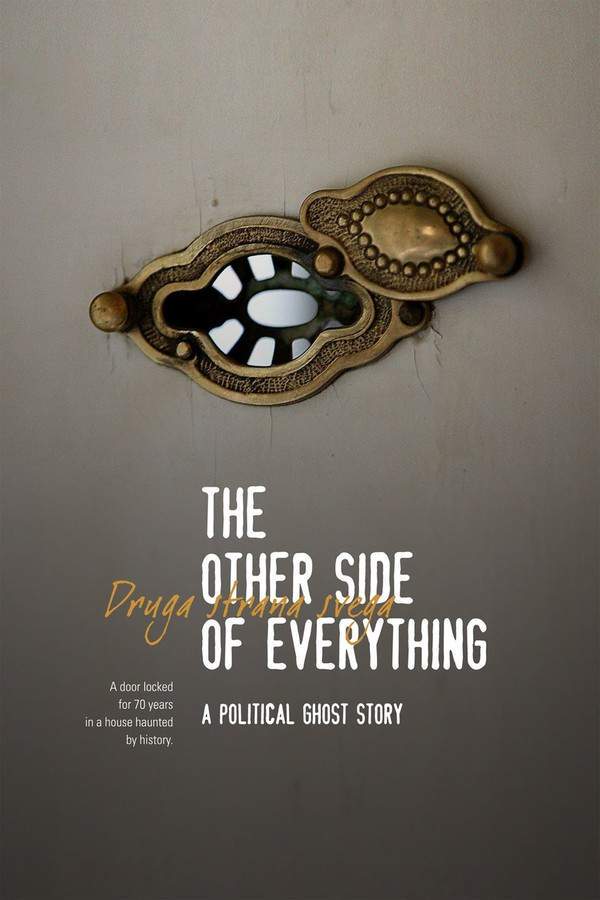
This documentary explores a Belgrade family's history through the lens of a unique door in their home. Director Mila Turajlić engages in a revealing conversation with her mother, the activist Srbijanka Turajlić, uncovering a wealth of untold stories. The house itself becomes a powerful symbol of Serbia's complicated past, revealing how personal experiences are inextricably linked to the nation's political and historical landscape. Through intimate recollections, the film examines the intersection of family, activism, and the enduring impact of history.
Warning: spoilers below!
Haven’t seen The Other Side of Everything yet? This summary contains major spoilers. Bookmark the page, watch the movie, and come back for the full breakdown. If you're ready, scroll on and relive the story!
Read the complete plot breakdown of The Other Side of Everything (2018), including all key story events, major twists, and the ending explained in detail. Discover what really happened—and what it all means.
Set against the backdrop of the early 1970s, the film delves into the final day of Jake Hannaford, an aging Hollywood director whose life tragically ends in a car crash on his 70th birthday. The narrative unfolds through the voice of an elderly Brooks Otterlake, a once-promising protégé of Hannaford’s, who reflects on the complex legacy left by the iconic filmmaker. As the story progresses, we learn that Hannaford is engulfed in efforts to revive his flagging career by creating an experimental film, tantalizingly titled The Other Side of the Wind. However, this ambitious project is laden with gratuitous scenes of sex and violence, ultimately yielding mixed and indecipherable results.
Before his untimely demise, Hannaford’s film remains unfinished, abandoned after John Dale, the film’s star, storms off the set under mysterious circumstances that intrigue the audience. The film opens with a private screening showcasing garbled segments of Hannaford’s unfinished work as a desperate attempt to secure “end money” from the studio head Max David. Intriguingly, Hannaford himself is absent during this curious event, leaving the task of elucidating the film’s content to his former child star and loyal friend, Billy Boyle. Boyle’s explanations fall flat, only adding to the film’s enigma as various guests converge on Hannaford’s birthday party at an Arizona ranch, each with their own stories and motives for being there.
Accompanying Hannaford is a young Otterlake, who has enjoyed success by emulating his mentor’s style, claiming much of his achievements stem from careful observation of Hannaford’s genius. The party soon attracts a horde of journalists armed with cameras, their invasive inquiries piercing Hannaford’s carefully constructed public facade. They delve into personal matters, questioning his sexual orientation and labeling him a potential closeted homosexual despite his overtly masculine image. Having a history of seducing the partners of his leading men, Hannaford grapples with the implications of his relationships as the evening unfurls.
Among the attendees, speculation brews around the notable absence of John Dale, the leading man who Hannaford discovered during a moment of desperation when he attempted to take his own life by leaping into the Pacific Ocean. However, as the birthday festivities unfold, it is revealed that Dale’s suicide attempt was merely a ruse; he had journeyed to Mexico in search of Hannaford. The screening reveals more scenes from the unfinished film, casting light on why Dale left the project—he abruptly exited a vital scene, clearly distressed by Hannaford’s off-screen provocations.
As the party rages on, Hannaford succumbs to intoxication, leading to a poignant moment in the bathroom where he breaks down in front of Otterlake, pleading for help to rejuvenate his faltering career. However, a series of power outages disrupts the gathering, forcing guests to flock to the lantern-lit areas of the ranch, where they again view segments of the unfinished film in a drive-in cinema atmosphere. The air thickens with tension as Hannaford comes to terms with Otterlake’s reluctance to provide the financial support he desperately needs, culminating in a sorrowful realization that their friendship may be irreparably fractured.
Throughout the party, inquisitive journalist Juliette Rich poses bold and intrusive questions regarding Hannaford’s sexuality, leading to a volatile encounter where a drunk Hannaford lashes out in outrage. Amidst this chaos, a tipsy Boyle rises to defend his old friend, his impassioned speech echoing the loyalty that once existed among them. As dawn breaks, Dale arrives, wandering through the now-deserted house, eventually finding his way to the drive-in just as a beleaguered Hannaford departs. Dale is offered a ride in Hannaford’s sports car but chooses to decline, leaving the director to drive into the abyss of fate, culminating in his fatal accident.
As the final remnants of Hannaford’s troubled film echo across the empty drive-in screen, the only person left to watch is the actress who starred in it. She absorbs the culmination of the narrative, leaving as Hannaford’s haunting final narration resonates: > “The story must go on.”
Last Updated: December 13, 2024 at 06:47
Discover curated groups of movies connected by mood, themes, and story style. Browse collections built around emotion, atmosphere, and narrative focus to easily find films that match what you feel like watching right now.
A family's story becomes a powerful lens on a nation's turbulent history.If you liked The Other Side of Everything, explore more movies that use intimate family stories to unpack national history. These documentaries connect personal memories to political landscapes, offering a deeply human perspective on major events. Films in this thread share a reflective, melancholic tone and a focus on legacy.
Stories in this thread unfold through personal recollections, family artifacts, and interviews, weaving together individual lives with the fabric of a nation's past. The narrative often moves between past and present, revealing how historical forces have directly shaped personal identities and family dynamics.
These films are grouped by their unique approach to history, prioritizing emotional truth and personal testimony over objective facts. They share a melancholic, reflective tone and a steady pacing that allows for deep immersion into the connections between the private and the political.
Stories where a heavy past leads to a complex, bittersweet conclusion.Find movies similar to The Other Side of Everything that explore heavy themes and end on a bittersweet note. If you appreciated its complex look at legacy and history, you'll find more stories here with a melancholic tone, high emotional weight, and a focus on how the past informs the present.
The narrative pattern involves characters confronting a burdensome past—be it familial, national, or creative. The central conflict is often internal, a struggle to reconcile with history. The journey is emotionally taxing, leading to an ending that acknowledges loss and pain but also finds a sliver of meaning, continuity, or fragile hope within the ruins.
These movies are united by a specific emotional mix: a high-intensity, heavy viewing experience dominated by melancholy, paired with a pacing that allows for deep reflection, and culminating in a bittersweet resolution that acknowledges complexity rather than offering simple closure.
Don't stop at just watching — explore The Other Side of Everything in full detail. From the complete plot summary and scene-by-scene timeline to character breakdowns, thematic analysis, and a deep dive into the ending — every page helps you truly understand what The Other Side of Everything is all about. Plus, discover what's next after the movie.
Track the full timeline of The Other Side of Everything with every major event arranged chronologically. Perfect for decoding non-linear storytelling, flashbacks, or parallel narratives with a clear scene-by-scene breakdown.
Discover the characters, locations, and core themes that shape The Other Side of Everything. Get insights into symbolic elements, setting significance, and deeper narrative meaning — ideal for thematic analysis and movie breakdowns.
Get a quick, spoiler-free overview of The Other Side of Everything that covers the main plot points and key details without revealing any major twists or spoilers. Perfect for those who want to know what to expect before diving in.
Visit What's After the Movie to explore more about The Other Side of Everything: box office results, cast and crew info, production details, post-credit scenes, and external links — all in one place for movie fans and researchers.
Discover movies like The Other Side of Everything that share similar genres, themes, and storytelling elements. Whether you’re drawn to the atmosphere, character arcs, or plot structure, these curated recommendations will help you explore more films you’ll love.
The Other Side of Everything (2018) Scene-by-Scene Movie Timeline
The Other Side of Everything (2018) Movie Characters, Themes & Settings
The Other Side of Everything (2018) Spoiler-Free Summary & Key Flow
Movies Like The Other Side of Everything – Similar Titles You’ll Enjoy
Grbavica: The Land of My Dreams (2007) Story Summary & Characters
Al otro lado (2006) Movie Recap & Themes
The Other Side (2016) Story Summary & Characters
Other People's Children (2015) Full Summary & Key Details
The Man on the Other Side (2019) Full Movie Breakdown
Land of Truth, Love & Freedom (2000) Film Overview & Timeline
Made in Serbia (2005) Complete Plot Breakdown
A Night at My Mother’s House (1991) Film Overview & Timeline
Homelands (2020) Story Summary & Characters
The Other Side of the River (2021) Film Overview & Timeline
Montenegro: A Land Divided (2021) Complete Plot Breakdown
Innocence Unprotected (1968) Full Movie Breakdown
Dark Is the Night (1995) Plot Summary & Ending Explained
The Troubles We’ve Seen (1994) Full Movie Breakdown
Another Spring (2022) Film Overview & Timeline