The House That Jack Built

The House That Jack Built

Year: 2018

Runtime: 152 min

Language: English

Director: Lars von Trier

Echo Score: 57

Budget: $8.7M

DramaThrillerHorrorComedyCrime

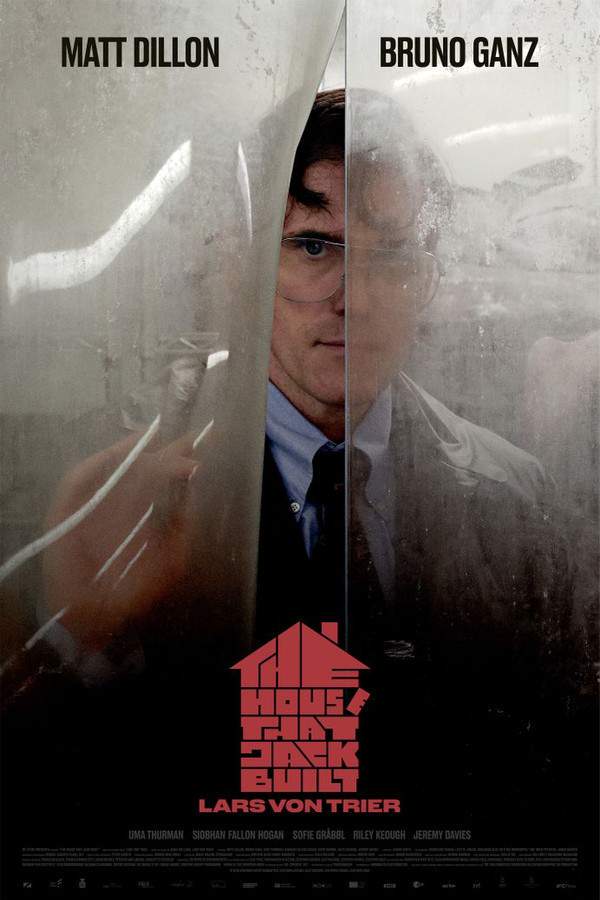
A darkly comedic and surreal film, it follows Jack, portrayed by Matt Dillon, as he recounts five intricately planned murders. Each crime is presented as a carefully constructed work of art, blurring the lines between creation and destruction. The film delves into themes of violence, the artistic process, and the complexities of the human condition through a provocative and unconventional narrative.

Warning: spoilers below!

Haven’t seen The House That Jack Built yet? This summary contains major spoilers. Bookmark the page, watch the movie, and come back for the full breakdown. If you're ready, scroll on and relive the story!

The House That Jack Built (2018) – Full Plot Summary & Ending Explained

Read the complete plot breakdown of The House That Jack Built (2018), including all key story events, major twists, and the ending explained in detail. Discover what really happened—and what it all means.

The narrative centers on Jack, a serial killer with an artistic flair, as he operates over a span of twelve years, showcasing the evolution of his heinous acts. Throughout this journey, he engages in philosophical dialogues with Verge, delving into themes of ethics and his own worldview.

1st Incident

While driving, Jack (portrayed by Matt Dillon) encounters a woman, Lady 1, stranded due to car trouble. As they share light-hearted banter, she jokingly insinuates he could be a serial killer. Agreeing to assist her, he takes her to his mechanic, Sonny. Despite fixing her tire jack, it falters again during their attempt to get the car running. As she requests another ride, Jack seizes the opportunity; he uses the tire jack to murder her before concealing her body within an industrial freezer he had secured just for such purposes. The woman’s car is hidden partially out of sight in the bushes, lying in a secluded area where the police remain oblivious, lucky enough that it sits on the border of two states – an area often ignored.

2nd Incident

Jack adopts a new guise and knocks on the door of another woman, Lady 3, claiming to be a police officer with information regarding her deceased husband’s pension. As the situation escalates, he poses as an insurance agent, offering her enticing cash promises. After luring her in, he chokes her but isn’t able to finish the job initially. When she awakens, he offers her a glass of water with disintegrated donuts in hopes of inducing choking, but to no avail. He ultimately resorts to strangulation before stabbing her directly in the heart. As the police become suspicious, represented by Ed Speleers, Jack hastily wraps her corpse and drags it to the freezer, leaving behind a gruesome trail of blood that, by sheer chance, the rain washes away later that night.

3rd Incident

In a chilling episode, Jack takes his girlfriend Jacqueline, along with her two sons, Grumpy and George, for a deceptive hunting lesson. In a calculated move, he murders the boys from a distance using a sniper rifle. Continuing his gruesome spree, he ultimately kills their mother and, leveraging his taxidermy skills, alters Grumpy’s face into a grotesquely eternal smile.

4th Incident

After meeting Jacqueline (played by Riley Keough), whom Jack dubbed “Simple” due to his perception of her naivety, he fabricates tales of his murderous exploits, claiming to have killed sixty people as the notorious “Mr. Sophistication.” Though she dismisses it as a mere boast, he makes his intentions clear by marking her with red circles, ultimately leading to her brutal demise. His depravity knows no bounds, as he goes so far as to sever and display one of her breasts on a police car, crafting the other into a grotesque wallet.

5th Incident

Jack finds himself orchestrating a macabre assembly, detaining six victims tied up in a row, intending to take them all out with a single bullet. However, misfortune hits as he discovers the bullets procured from Al aren’t suitable. Desperation drives him to a man named S.P. ([David Bailie]), with whom he has a lethal encounter, ultimately acquiring the necessary bullet. In a moment of dark irony, he dons S.P.’s red bathrobe, hoping to elude the police who are closing in. Once captured, he embarks on a violent path while constructing a makeshift house out of bodies, mirroring the chaos in his mind.

Epilogue: Katabasis

Echoing Dante’s Inferno, Verge, who is revealed to be Virgil, guides Jack through branches of Hell. In a climactic moment, Jack discovers a broken bridge leading away from the depths of despair, while Verge warns him against the risks of navigating the treacherous cliffs. Ignoring the sage advice, Jack attempts the perilous climb but ultimately plummets into the fiery depths below, sealing his fate in a world forged by his own monstrous decisions.
Last Updated: November 07, 2024 at 22:58

Ending Explained – What Happens at the End of The House That Jack Built?

Still wondering what the ending of The House That Jack Built (2018) really means? Here’s a spoiler-heavy breakdown of the final scene, major twists, and the deeper themes that shape the film’s conclusion.

In the climax of The House That Jack Built, Jack’s descent into hell mirrors the structure of Dante’s Inferno, where he is guided through different levels of torment. As Jack tries to escape capture, he encounters a mysterious figure called Verge, who is trapped in a freezer in Jack’s basement. Verge encourages Jack to create a gruesome “house” out of all the corpses he has accumulated over the years, symbolizing his own twisted conception of art and order from chaos. After constructing this horrific structure, Jack follows Verge into a hole beneath the house as police storm his home, leading to his downfall.

The journey with Verge takes Jack deeper into hell, to a place beyond the usual circles of punishment. Verge eventually leads him onto a broken bridge suspended over the abyss itself. Jack notices a stairway that supposedly leads to heaven, and in a moment of desperation or hope, he tries to cross it. However, his attempt ends in failure as he slips and disappears into the darkness below, symbolizing his ultimate fall from grace and escape from redemption. The film ends with the tune “Hit The Road Jack” playing over the credits, leaving his fate unresolved but emphasizing the tragic and nihilistic tone of the story. Overall, the ending suggests that Jack’s obsession with his own artistic vision and his moral depravity have condemned him to an eternal journey in hell, with only the fleeting hope of salvation slipping away just out of reach.

Last Updated: June 25, 2025 at 08:59

Mobile App Preview

Coming soon on iOS and Android

The Plot Explained Mobile App

From blockbusters to hidden gems — dive into movie stories anytime, anywhere. Save your favorites, discover plots faster, and never miss a twist again.

Sign up to be the first to know when we launch. Your email stays private — always.

Explore Movie Threads

Discover curated groups of movies connected by mood, themes, and story style. Browse collections built around emotion, atmosphere, and narrative focus to easily find films that match what you feel like watching right now.

Serial Killers as Unreliable Artists like in The House That Jack Built

Stories where murder is framed as a dark and obsessive form of artistic expression.If you were fascinated by the artistic framing of violence in The House That Jack Built, you'll find similar themes in these movies. This collection features films where serial killers perceive their murders as a dark art form, blending crime with a disturbing philosophical and aesthetic justification.

unsettlingphilosophicalcolddetachedprovocativeintellectualgrim

Narrative Summary

Films in this thread often feature a protagonist or narrator who meticulously plans and executes violent acts, rationalizing them as a form of creation or purification. The narrative structure may be episodic, showcasing different 'works,' and is frequently accompanied by intellectual or philosophical monologues that challenge conventional morality.

Why These Movies?

These movies are grouped by their unique approach to the serial killer genre, emphasizing the killer's artistic delusion and intellectual detachment over simple gore or suspense. They share a cold, provocative tone and a complex, often surreal, narrative that delves into themes of creation, destruction, and the nature of evil.

Surreal Descents into Damnation like in The House That Jack Built

A dark and philosophical journey through a surreal landscape towards a bleak fate.For viewers who appreciated the surreal, hell-bound narrative of The House That Jack Built, this thread gathers movies with similar journeys. These films feature bleak narratives where characters spiral downwards through a mix of reality and allegory, leading to an inescapably grim and philosophically heavy conclusion.

surrealbleakphilosophicalunsettlinggrimapocalypticdreamlike

Narrative Summary

The narrative pattern involves a character's actions, often a series of transgressions, leading them through a progressively more surreal and symbolic world. The structure is less about linear plot and more about a thematic descent, culminating in a finale that represents their ultimate psychological or spiritual collapse, with no hope for redemption.

Why These Movies?

These films are united by their bleak, philosophical outlook and their use of surrealism to externalize a character's internal damnation. They share a heavy emotional weight, a complex narrative structure that challenges reality, and an ending that offers no escape, leaving a lasting, unsettling impression.

Unlock the Full Story of The House That Jack Built

Don't stop at just watching — explore The House That Jack Built in full detail. From the complete plot summary and scene-by-scene timeline to character breakdowns, thematic analysis, and a deep dive into the ending — every page helps you truly understand what The House That Jack Built is all about. Plus, discover what's next after the movie.

The House That Jack Built Timeline

Track the full timeline of The House That Jack Built with every major event arranged chronologically. Perfect for decoding non-linear storytelling, flashbacks, or parallel narratives with a clear scene-by-scene breakdown.

The House That Jack Built Timeline

Characters, Settings & Themes in The House That Jack Built

Discover the characters, locations, and core themes that shape The House That Jack Built. Get insights into symbolic elements, setting significance, and deeper narrative meaning — ideal for thematic analysis and movie breakdowns.

Characters, Settings & Themes in The House That Jack Built

The House That Jack Built Ending Explained

What really happened at the end of The House That Jack Built? This detailed ending explained page breaks down final scenes, hidden clues, and alternate interpretations with expert analysis and viewer theories.

The House That Jack Built Ending Explained

The House That Jack Built Spoiler-Free Summary

Get a quick, spoiler-free overview of The House That Jack Built that covers the main plot points and key details without revealing any major twists or spoilers. Perfect for those who want to know what to expect before diving in.

The House That Jack Built Spoiler-Free Summary

More About The House That Jack Built

Visit What's After the Movie to explore more about The House That Jack Built: box office results, cast and crew info, production details, post-credit scenes, and external links — all in one place for movie fans and researchers.

More About The House That Jack Built

Similar Movies to The House That Jack Built

Discover movies like The House That Jack Built that share similar genres, themes, and storytelling elements. Whether you’re drawn to the atmosphere, character arcs, or plot structure, these curated recommendations will help you explore more films you’ll love.