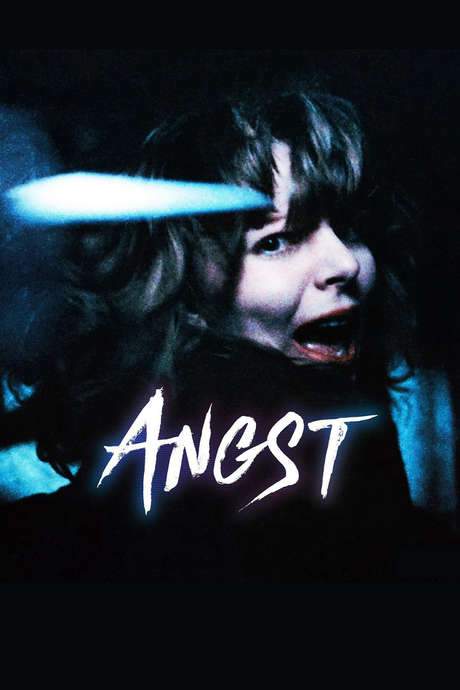
In late-1970s London, a middle-aged civil servant named Jordan March is taken into custody and tells Inspector Simmons, Geoffrey Greenhill about the murders he committed, a confession that unfolds through a series of stark flashbacks that peel back the layers of his disturbed mind. The tale begins with a chance encounter at a pub with Joe, Martin Byrne-Quinn a young former art student who intrigues Jordan with his free-spirited ease. After the drinks, Joe returns to Jordan’s flat, and what starts as an uneasy but intimate companionship quickly sours as Jordan, though drawn to Joe, wrestles with fear, control, and vulnerability. They share coffee at a cafe, a moment that exposes the fragility of their bond, as their conversation shifts from casual talk to something sharper and more accusatory.
As their dynamic evolves, Jordan grows increasingly possessive of the younger man, who moves with a reckless, carefree abandon that fascinates and unsettles him in equal measure. One morning, while Joe lies sleeping, Jordan executes a fatal strangulation and collapses onto his victim’s prone body, a jarring moment that is punctuated by a haunting flashback to his grandfather’s death from his own childhood. The sin of possession bleeds into the intimate space of the bedroom, and Joe’s body is kept nearby as Jordan slips into necrophilia, seeking a perverse companionship that he cannot find in the living.
A detour into the city’s red-light district brings another uneasy encounter. A female prostitute, Claire King, approaches Jordan in hopes of seduction, but he rebuffs her advances even as he reluctantly pays for the brief exchange before moving on. The encounter lingers in his thoughts as he presses deeper into his darkest impulses. Later, in the cafe again, a young homeless man asks for a cigarette, and though Jordan is irritated, the request shifts into a new, dangerous entanglement when the man persuades him to take him into his flat.
Once there, Jordan’s violence erupts anew: he strangles the intruder in an armchair and then drowns him in the bathtub. After this murder, a fog of drink and nightmare overtakes him, returning to the memory of his grandfather’s death from his childhood. He dismembers and skins the man’s corpse, disposing of flesh in the storm drain and boiling the severed head as the grim routine continues to unfold. Another flood of terror hits when he encounters Stephen, a young punk whom he saves from a drug overdose, only to watch him relapse into heroin and subsequently suffer another overdose.
The following day, Julie Stay, Jackie Cox, a tenant living beneath Jordan, notices plumbing problems and calls the landlord to inspect the bathroom. Her warning triggers a panic in Jordan, who wrestles with the pressure of keeping his crimes hidden. He hauls pieces of Stephen’s flesh and other remains outside, where they vanish into the storm drain as a grim escape hatch. The plumber’s inspection catches a whiff of decay, and a routine search reveals flesh remnants in the pipes, drawing the attention of the police. As investigators close in, Jordan’s world begins to crumble: the truth beneath the floorboards reveals Joe’s corpse alongside the dismembered bodies of the others.
Ultimately, the investigation tightens around the bloody footprint of Jordan March, leading to his arrest and the dismantling of his flat. Beneath the floorboards, the authorities uncover the grim tableau: Joe’s remains, interwoven with the dismembered bodies of the other victims, a chilling catalogue of a life defined by compulsion, fear, and the lure of control. The film lingers on the psychological toll of Jordan’s actions, presenting a stark, unflinching portrait of a man who chooses isolation and violence over connection, and the consequences those choices unleash on everyone around him.