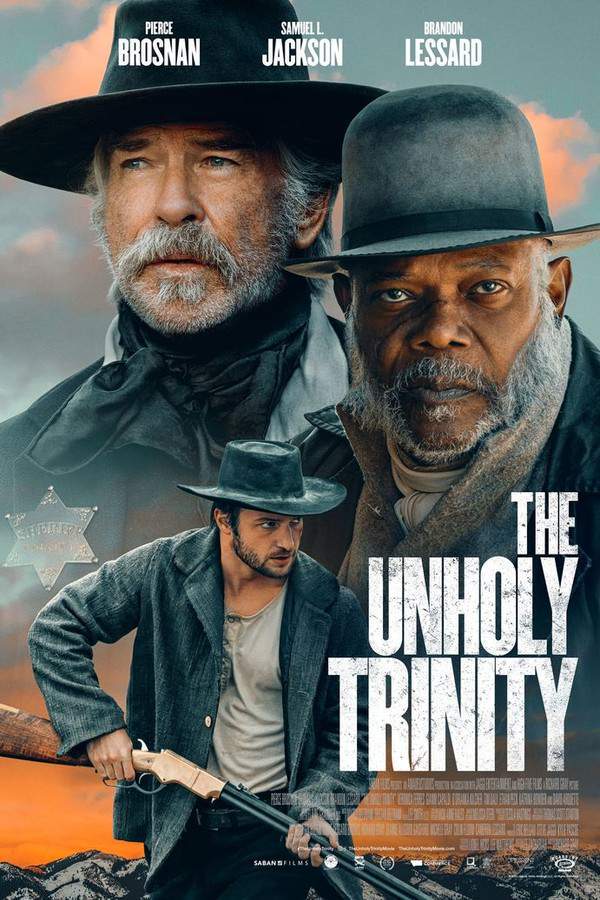
Jackson wakes to a nightmare: his home and barn are burning, and his wife has been taken by Mexican bandits. He fights back and shoots one attacker, then fumbles to dig something from the ashes in a haze of smoke. The dawn brings neighbors who help him to his feet, and he clutches a package he had kept the night before. With the weight of loss heavy on him, he vows to follow the trail south in pursuit of the bandits who have torn his life apart.
On the road he discovers the dying man he shot still clinging to life. The man’s last words are hostile and cryptic, calling Jackson “damned” before he dies. The corpse yields a pair of silver coins, a small, grim talisman that keeps him moving. As the sun rises, he stops to drink and a Native American archer fires two arrows, forcing him to improvise a flank. In the struggle that follows, he discovers a cowering boy nearby and shooes him away, leaving the child to the wilderness.
A more curious encounter follows when a Chinese wagon repairman blocks the trail, demanding a toll of five silver pieces. Out of nowhere, a stranger named Ezra appears and shoots the Chinese man dead. The two men exchange a cryptic dialogue, and a tense fight erupts between Jackson and Ezra. When Jackson reaches for his gun, Ezra has vanished as if into the air, leaving behind a puzzling gap in the pursuit.
Moments later, the duo’s path intersects with a brutal Mexican ambush. Jackson is wounded by gunfire, crawling along the ground with infection gnawing at him. The same stranger, Ezra, later finds him and promises to stay and watch him die, a haunting companionship that blurs the line between ally and threat. When Jackson finally awakens, Ezra is gone, and the Native American boy drags him toward the safety of a village where the two men’s fates feel even more tangled.
After medical care, the people of the village test Jackson with peyote to gauge whether he’s evil or just broken by circumstance. The hallucinogenic journey shakes him loose from reality, and he races through a sweat lodge where memories crash together—he sees his maimed brother, a Union uniform vivid in memory, and the question of what he did in anger haunts him. The vision ends as the Native Americans force him to leave; the boy gives him his horse, and Jackson tries to pass his gun to the boy, only to be pushed away by the crowd. Yet Ezra suddenly appears again and kills the two adults who kept watch as the boy escapes.
His thirst for answers now drives him to a man he once served with during the Civil War, Mr. Carver. The veteran’s granddaughter, Rebecca, watches warily as Jackson asks for water and a saddle for his horse. But Carver distrusts him and, with a shotgun ready, tells Rebecca to run if anything goes wrong. He sends Jackson to a shed to wait, and the old man warns that the rider’s madness may be catching up to him. When Jackson returns with water, he finds Ezra holding Carver at gunpoint. A standoff unfolds, and the truth comes out in a brutal twist: Ezra is really Jackson himself, a fractured psyche that has been driving the violence. In the tense confrontation, Carver is killed, and Ezra slips away.
The pursuit resumes as Jackson finally catches up to the Mexicans and reclaims the scene of his broken life. He reaches his wife, Alexsandra, but she flees from him, taking shelter behind the homestead’s defenses. He presses forward, killing several men, and the chase tightens around the house. Inside, Alexsandra reveals a devastating truth: their “love” was merely a fantasy born from Jackson’s wounded mind, and she remains loyal to her husband—one of the bandits. She kisses Jackson to distract him, then draws his gun and fires the last of her ammunition at him. He staggers outside, only to face Guillermo, her real husband, as the screen goes dark on the shot that follows.