Plot Explained Spoilers guaranteed!
Plot Explained

Browse by genre

The House (2017) movie poster

Plot Summary

The House (2017) Plot Summary Explained

Release, runtime and language
2017 · 88 min · Vietnamese
Echo score 44
JustWatch #3,092 16
Directed by
Andrew J. Cohen
Starring
Will Ferrell, Jason Mantzoukas, Amy Poehler, Ryan Simpkins, Allison Tolman, Rob Huebel
Budget
$40M

A strong-willed woman expertly manages both her bustling family and a beloved crab noodle soup stall. When different generations live together, tensions rise and long-held secrets are revealed. One daughter struggles to break free from her mother's influence, forcing the family to confront issues of love, personal identity, and ultimately, forgiveness, as they learn to understand and accept one another.

On this page (6)
  1. 1 Where to watch
  2. 2 What happens: full plot
  3. 3 Plot questions answered
  4. 4 Movie threads
  5. 5 Movies like The House
  6. 6 Every angle

Where to watch

Where to Watch The House (2017)

Where can you watch The House? Stream, rent or buy it in the US, including on TBS, TNT and tru TV: current JustWatch availability with up-to-date prices.

Streaming availability powered by JustWatch

Full plot summary · contains spoilers

What Happens in The House: Full Plot Summary

The whole story of The House (2017) explained, from the opening scene to the final frame: every key event, every twist and what it all adds up to. Read it as a quick recap before the sequel, to check a scene you missed, or to finally understand what really happened.

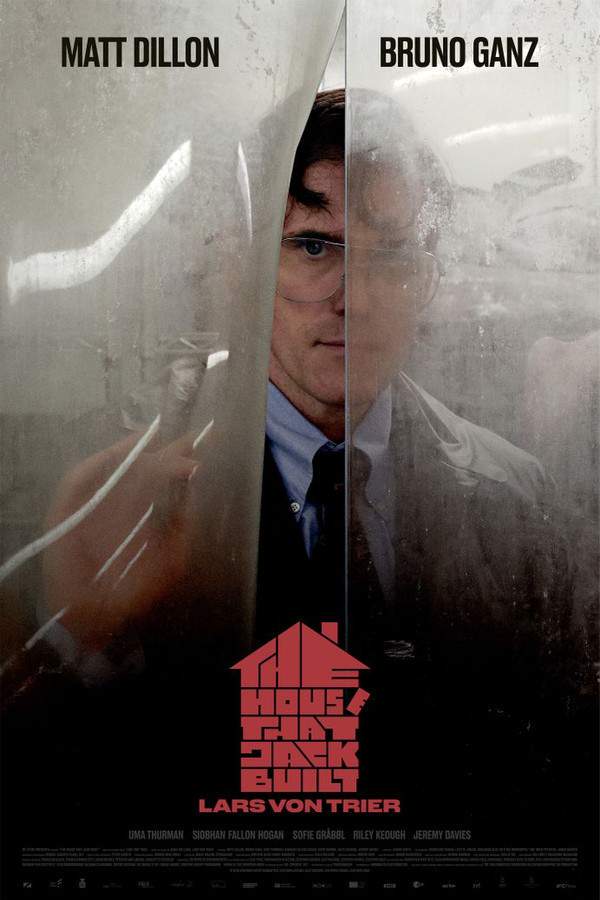
The film chronicles the disturbed life of Jack, a serial killer possessing a peculiar artistic flair, unfolding over the span of twelve years. Jack's journey is marked by a series of chilling murders, each shaping his descent into darkness. Throughout this grim narrative, he engages in philosophical discussions with Verge, reflecting on ethics and his unique perspective of the world in between the gruesome incidents.

In the first incident, Jack, portrayed by Matt Dillon, encounters a woman experiencing car trouble, played by Uma Thurman. After some light-hearted banter, during which she jokingly suggests he might be a serial killer, Jack offers to help. When they arrive at a mechanic’s, the tire jack breaks, and after a brief return, Jack grimly uses it to kill her, storing her body in an industrial freezer he previously acquired. Concealing her car in the bushes near the state border keeps the police oblivious to his crime, as it's situated in a "no man's land."

The second incident finds Jack visiting another woman, portrayed by Siobhan Fallon Hogan, under the guise of a police officer who can assist her with her late husband’s pension. Once he gains her trust, he quickly turns violent, attempting to strangle her. When she regains consciousness, he sinisterly offers her water mixed with donuts in an effort to choke her, but when that fails, he resorts to strangling and stabbing her in a brutal act of desperation. His constant obsession with cleanliness nearly exposes him when a suspicious officer, played by Edward Speleers, comes to investigate. Yet again, luck favors Jack as rain washes away the blood trail he left behind.

In the third incident, Jack takes his date, a woman played by Sofie Grabol, along with her two sons, Grumpy and George, out for a hunting excursion. In a shocking turn of events, he kills the two boys from a distance using a sniper rifle before forcing their mother to serve pie to one of them. Ultimately, he kills her as well and grotesquely rearranges Grumpy’s face into a disturbing smile using his taxidermy skills.

The fourth incident introduces Jacqueline, portrayed by Riley Keough, whom Jack mistakenly believes to be naive. He brazenly confesses to her that he is the infamous serial killer, "Mr. Sophistication." Skeptical of his claims, she tries to escape after his disturbing advances. Jack, however, captures her and gruesomely murders her, even attaching her dismembered breast to a police car and crafting the other into a wallet.

In the fifth incident, Jack finds himself in a precarious position as he captures six victims, planning to execute them all with a single bullet. When he realizes his bullet isn’t suitable, he must seek help from a dealer named Al. A tense encounter ensues with a man named S.P., where Jack successfully convinces him to lower his weapon. After killing S.P., he dons his red bathrobe and awaits the police, who eventually arrive following Jack's reckless driving. In a last-ditch effort, he retrieves his necessary bullet, leading to a dramatic standoff with law enforcement.

In a clever twist, Jack's pursuit culminates in a makeshift house crafted from the remains of his victims, where he finds a mysterious hole. It is within this bizarre structure that he finally meets Verge, played by Bruno Ganz, who reveals Jack's unfinished business. As police forces begin to breach the door, Jack chooses to follow Verge down a darkened path.

In the epilogue, titled Katabasis, Jack discovers that Verge, akin to Dante’s guide Virgil, leads him through Hell. A broken bridge symbolizes the divide between Hell and a possible escape to Heaven. Despite Verge's warnings against climbing, Jack, driven by arrogance, attempts to navigate the treacherous cliff. His hubris leads to a tragic fall into the fiery abyss below.

Through these harrowing encounters, the film explores the chilling psychology behind Jack's character, his moral void, and the philosophical dialogues that create a haunting examination of a serial killer's mind.

Last updated: June 23, 2025 at 08:30

Was this helpful?

Plot questions answered

The House Plot Explained: Your Questions Answered

The questions people ask most about The House (2017): what happens in the confusing scenes, why the characters do what they do, the twists, hidden details and what the ending means. Each answer contains spoilers.

Q1

Why does Jack become a serial killer?

Jack's motivation appears to stem from a profound moral void and an obsession with perfection and control. He views himself as an artist creating 'masterpieces' through his murders, adopting the moniker 'Mr. Sophistication' to reflect his twisted pride. His philosophical discussions with Verge reveal a man who sees himself as above conventional morality, believing his actions hold deeper meaning or purpose.

Foreshadowing: Early scenes show Jack's detached demeanor and his ability to engage in casual conversation before violence, hinting at his psychological distortion.

  • serial killer motivation
  • mr sophistication
  • psychology
  • artistic murders
Q2

Who is Verge and what is his role?

Verge serves as Jack's philosophical guide throughout the film, appearing first as a vision and later as a physical presence in Jack's makeshift house. Modeled after Virgil in Dante's Inferno, Verge leads Jack through a surreal journey that represents his descent into Hell. He warns Jack about the consequences of his arrogance but ultimately cannot prevent Jack's downfall.

Foreshadowing: Verge first appears as a mysterious figure Jack sees in his vision while building the house of bodies, foreshadowing his role as a guide to the underworld.

  • verge
  • guide
  • virgil
  • dante
  • inferno
  • afterlife
Q3

Why does Jack confess to Jacqueline about being a serial killer?

Jack confesses to Jacqueline because he views her as someone who would appreciate his 'artistry.' His arrogance leads him to believe she would understand or accept his twisted perspective. When she doesn't respond with the admiration he expects and tries to escape, he kills her, treating her skepticism as a personal rejection of his self-perceived genius.

Foreshadowing: Jack's earlier adoption of 'Mr. Sophistication' reveals his need for recognition, which culminates in his dangerous confession.

  • jacqueline
  • confession
  • mr sophistication
  • arrogance
Q4

What does the house made of bodies represent?

The house Jack constructs from his victims' bodies represents the ultimate manifestation of his twisted artistic vision and detachment from reality. It symbolizes his complete descent into madness, where he literally surrounds himself with the physical remnants of his crimes. This grotesque structure becomes the setting for his final confrontation with Verge and his descent into Hell.

Foreshadowing: Jack's vision of the house appears after his conversation with Verge, suggesting it materializes from his innermost psychological state.

  • house of bodies
  • taxidermy
  • art
  • vision
  • death
Q5

Why does Jack fall into the fiery abyss at the end?

Jack falls into the fiery abyss because he ignores Verge's explicit warning against climbing the broken bridge. Driven by his characteristic arrogance and belief that he can transcend any challenge, Jack attempts to reach what he sees as a possible escape to Heaven. His hubris represents his ultimate failure to accept responsibility for his actions, and his fall symbolizes the consequences of his moral corruption.

Foreshadowing: Verge's warning about the dangerous bridge and Jack's pattern of ignoring advice throughout the film foreshadow this fatal decision.

  • hell
  • hubris
  • bridge
  • fall
  • punishment
  • dante
Q6

How does Jack evade police capture for so long?

Jack evades police through a combination of luck, careful planning, and exploiting jurisdictional loopholes. He hides evidence in 'no man's land' areas outside police jurisdiction, uses disguises like fake police officer identities, and benefits from fortunate circumstances like rain washing away blood trails. His meticulous cleaning habits and strategic thinking keep him ahead of law enforcement until his final standoff.

Foreshadowing: The first murder's location near a state border establishes early that Jack understands how to manipulate jurisdictional boundaries.

  • police
  • escape
  • disguise
  • jurisdiction
  • investigation
Q7

Why does Jack kill the mother and her two sons during the hunting trip?

Jack uses the hunting trip as a calculated opportunity to murder an entire family, demonstrating his complete lack of empathy and escalating brutality. After killing the two sons with a sniper rifle from a distance, he forces the mother to serve pie to one of the dead boys before killing her. This incident showcases his twisted sense of theater and his descent into increasingly horrific violence.

Foreshadowing: This third incident follows his pattern of escalation, each murder becoming more elaborate and disturbing than the last.

  • hunting
  • sons
  • mother
  • murder family
  • sniper
Q8

What happens when Jack captures six victims in the abandoned trailer?

Jack captures six victims and plans to execute them all with a single bullet, showcasing his obsession with efficiency and spectacle. When he realizes his bullet won't work, he must leave the trailer to acquire ammunition from a dealer named Al. This leads to a confrontation with S.P., whom Jack kills after convincing him to lower his weapon. The chaotic sequence ultimately draws police attention to his location.

Foreshadowing: Jack's meticulous planning and obsessive attention to detail in previous murders sets up this elaborate execution attempt.

  • six victims
  • abandoned trailer
  • bullet
  • al
  • s p
  • confrontation
Q9

What is the significance of Jack's philosophical discussions with Verge?

The philosophical discussions between Jack and Verge serve to intellectualize and contextualize Jack's atrocities, adding a layer of moral and existential inquiry to the violent narrative. Verge challenges Jack's self-perception as an artist and questions his moral compass, creating a tension between the film's graphic violence and its cerebral framing. These dialogues transform the film from a simple slasher into an exploration of evil, guilt, and the nature of artistic expression.

Foreshadowing: The recurring philosophical tone established early in the film prepares viewers for the film's deeper thematic concerns beyond mere violence.

  • philosophy
  • ethics
  • verge
  • dialogue
  • moral
  • art
Q10

Why does Jack disguise himself as a police officer to approach victims?

Jack disguises himself as a police officer because it provides him with instant authority and trust, making it easier to gain access to his victims' homes. He tells his second victim that he can help with her deceased husband's pension benefits, using emotional manipulation to lower her defenses. This tactic demonstrates his understanding of how to exploit people's trust and vulnerability.

Foreshadowing: Jack's comfort with deception and manipulation is evident from his very first encounter, where he presents himself as a helpful stranger.

  • police disguise
  • pension
  • manipulation
  • trust
  • home invasion

Movie threads

More Movies Like The House, by Mood & Story

Curated lists built around what makes The House tick: the same mood, the same kind of story or the same emotional payoff. Each list explains why these movies belong together.

Moral Descent Dramas like The House

Stories charting a character's methodical and unrepentant fall into evil. Movies like The House that explore a character's descent into darkness. If you were captivated by the methodical exploration of evil and the absence of moral compass, these similar stories of psychological collapse will appeal to you.

  • disturbing
  • grim
  • philosophical
  • unsettling
  • chilling
  • psychological horror
  • Tone: dark, bleak, philosophical
  • Pacing: steady, deliberate
Why these movies?

The story pattern: Narratives in this thread typically follow a central character over a significant period as they commit increasingly heinous acts. The journey is less about external conflict and more about the internal, philosophical justification for atrocity, culminating in a fate that seals their damnation.

Why they belong together: These films are grouped by their shared commitment to exploring the nature of evil from the inside. They share a bleak tone, high intensity, and a complex, psychologically heavy focus on a character who willingly embraces their monstrous side.

Philosophical Horror Movies like The House

Horror stories where intellectual concepts are as terrifying as the violence. For viewers who liked the cerebral horror of The House. These films combine disturbing themes and graphic content with intellectual depth, creating a uniquely unsettling experience that challenges the viewer on a philosophical level.

  • philosophical
  • unsettling
  • chilling
  • oppressive
  • darkly surreal
  • existential dread
  • Tone: dark, unsettling, philosophical
  • Pacing: steady, calculated
Why these movies?

The story pattern: The narrative pattern involves juxtaposing visceral, horrific events with abstract, philosophical dialogues or concepts. The plot serves as a dark experiment to test ideas about humanity, often leaving the audience with a profound sense of dread about the answers found.

Why they belong together: These movies are united by their blend of high-intensity horror and intellectual ambition. They share a complex structure where the violence is framed by philosophical inquiry, resulting in an oppressive, thought-provoking, and deeply unsettling vibe.

If you liked this

Movies Like The House

Similar movies to The House: the same genre, themes or kind of story. Each one comes with its own plot summary, timeline and ending explained.

Browse all movie summaries

Every angle

The House (2017) Explained: Plot, Timeline & Characters

Everything about The House in one place: what happens in the plot summary, the timeline in chronological order, the characters and meaning and a spoiler-free summary. What's After the Movie adds the cast, box office and post-credit scenes.

Coming soon on iOS and Android

The Plot Explained Movie Summary App

Plot summaries, endings explained and timelines on your phone. Catch up on any movie in minutes, save your favorites and never miss a twist again.

Be the first to know when we launch. Your email stays private, always.

Learn more about the app