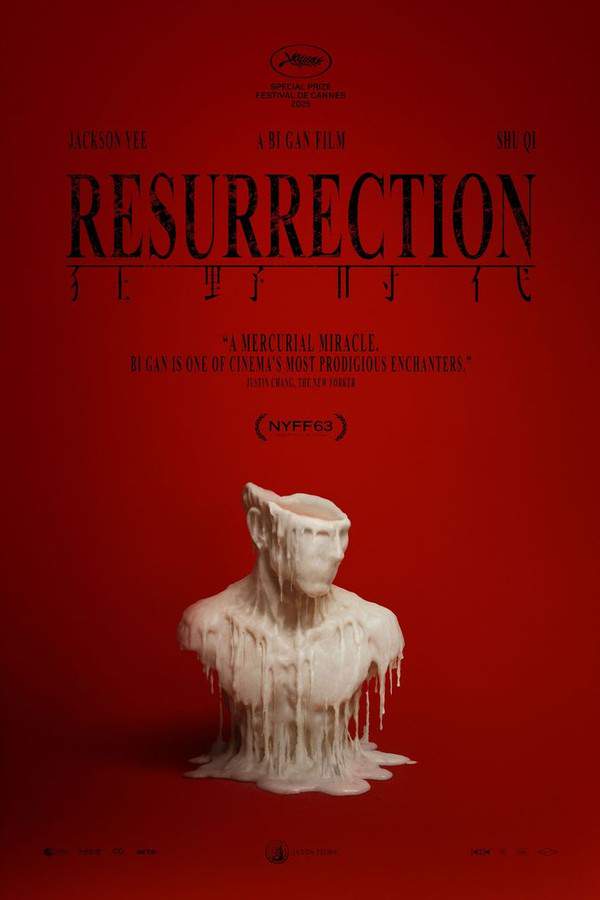
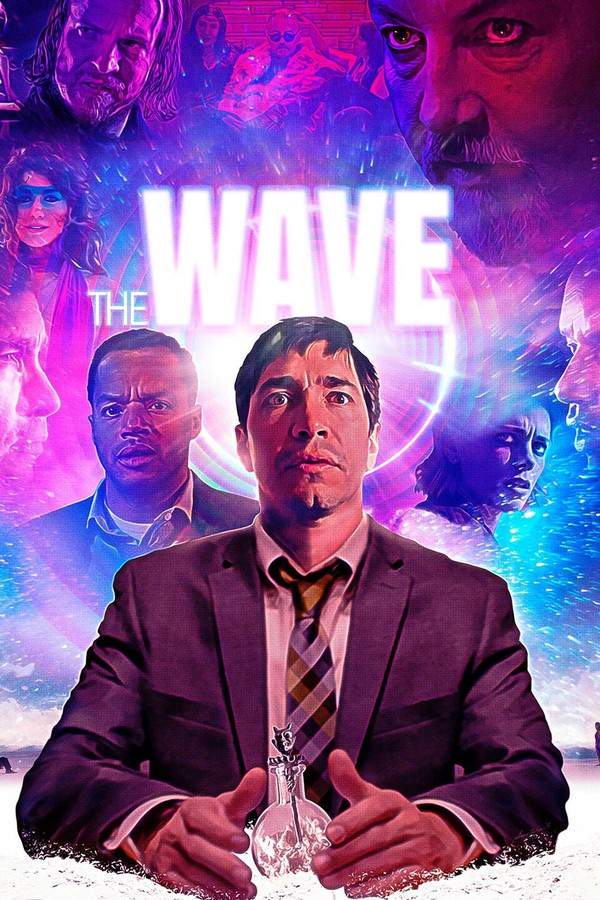
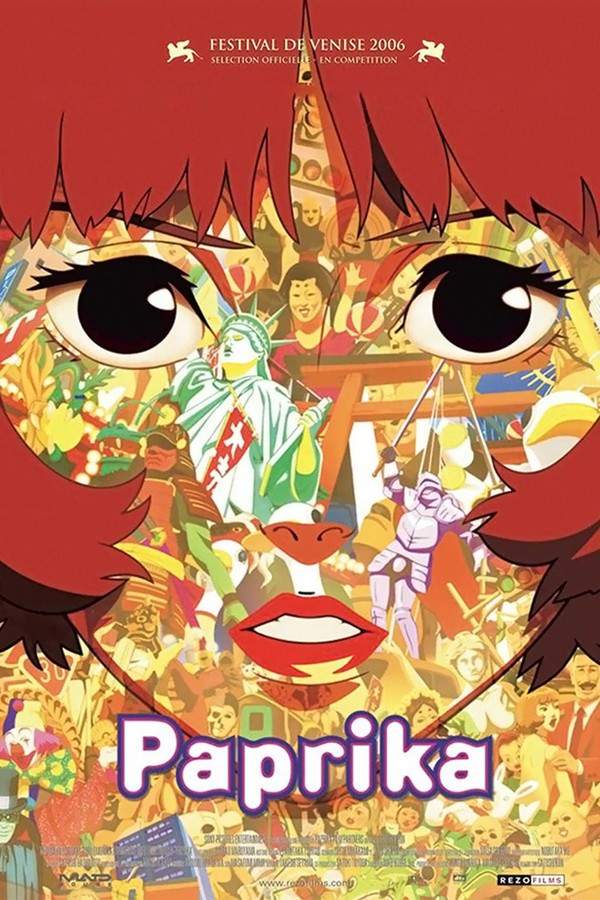
In a world where humanity has traded dreams for longer life, a hidden tax on the soul shapes society around the idea that dreaming is a relic. In this setting, the living seek out Deliriants—beings who have preserved the capacity to dream—while the so‑called Other Ones hunt them to preserve a fragile balance. The tale begins with Miss Shu, Shu Qi, an Other One, who tracks a monstrous Deliriant. Moved by the creature’s stubborn devotion to the dream life, Shu grants him a merciful end by installing a film projector inside him, inviting him to live through cinematic visions that unfold inside his own body and mind.
The story then leaps forward to the mid‑twentieth century, where the Deliriant reappears as Qiu, Jackson Yee. He stands accused of stabbing a man with a fountain pen, an act that cascades into a larger war over a mysterious suitcase carried by the dead man. The Commander, Mark Chao, tortures Qiu to uncover the suitcase’s location inside a mirror shop. In the shop, a theremin hidden within the suitcase becomes the instrument of fate. Using the shop’s disorienting layout, Qiu stabs the Commander in one ear and escapes, declaring that he is, in fact, “the suitcase.” The exchange leaves a chilling memory: the Commander later stabs himself in the other ear and plays Bach’s “Come, Sweet Death” on the theremin. He tracks Qiu to a train and kills him; the two figures are consumed by flames in the aftermath. The moment leaves an eerie sense that the Deliriant’s identity has become inseparable from the weaponized memory of his own legend.
Three decades later, the Deliriant is reborn as Mongrel, an art thief stranded inside a ruined Buddhist temple. He dislodges a broken tooth from a Buddha statue and frees a mischievous Spirit of Bitterness, a presence that has been reincarnated into the tooth. Mongrel confesses a grim act—he killed his father, whose appearance the Spirit has adopted—in order to spare him an agonizing death from rabies. Despite their initial enmity, they ultimately embark on a shared Buddhist rite. The Spirit attains a form of Enlightenment, while Mongrel’s fate takes a darker turn, becoming the embodiment of a real dog. The ritual ends with a haunting sense that the line between thief and spirit, dream and waking life, has blurred beyond repair.
Decades later, the Deliriant reappears as Jia, a con artist who enlists an orphan girl, Mucheng Guo, as his trusty sidekick. The girl carries a banknote with a riddle she believes will summon her father back to her side. Jia teaches the girl a repertoire of showy tricks—until a profitable swindle against a mob boss seems within reach. Jia plans to abandon the girl, but fate intervenes when he discovers a banknote bearing a simple, profane answer to her riddle. He does not return to her. Meanwhile, the mob boss presses the girl to decipher the final message his estranged daughter left on a burned piece of paper; the girl, relying on her senses, detects the correct answer by smell and completes the task. This arc emphasizes how memory, deception, and scent intertwine in a world where reality can be manufactured and dreamlike clues can be bought or stolen.
In a port city on New Year’s Eve, 1999, the Deliriant emerges as Apollo, a young hoodlum who falls for Tai Zhaomei, a vampire singer. Tai, who claims she has never bitten anyone, and Apollo—who says he’s never kissed a girl—wander the neon streets until they are torn apart by danger. Tai is dragged back to her boss, Mr. Luo, at a karaoke bar. The conflict lands a brutal beating on Apollo, but Luo ultimately grants the couple a chance to leave together and sail away. Tai reveals her vampiric nature, biting Apollo with his consent, and their kiss beneath the rising sun ends in tragedy: Apollo dies from his wounds, and Tai is overwhelmed by the daylight.
The Deliriant’s story closes in a ritualized, ceremonial farewell. Shu dresses the late Deliriant in a set of “monster garbs,” conducts a funeral rite, and seeks one last connection to him through cinema. The final tableau unfolds in a wax movie theater, its walls brimming with bright figures that slowly melt away, leaving only memories projected in light.
Throughout these chapters, the characters intersect with a broader cycle of longing and loss, where cinema becomes a language to express what life cannot sustain on its own. The journey moves through cities and centuries, tying together the persistence of dream with the fragility of the dreamer, and ending in a reverent, melancholic homage to the power of image to preserve what life otherwise exhausts.