Plot Explained Spoilers guaranteed!
Plot Explained

Browse by genre

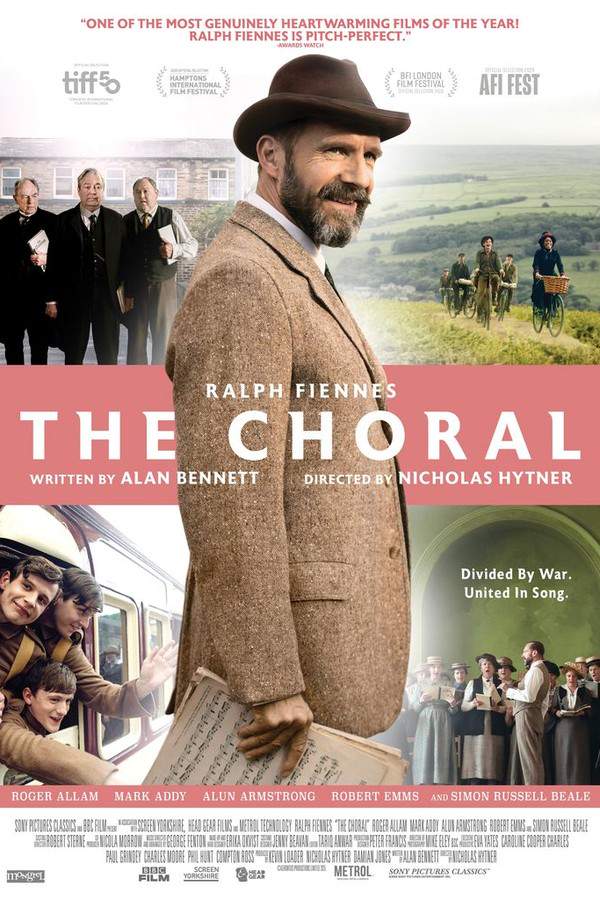
The Choral (2025) movie poster

Plot Summary

The Choral (2025) Plot Summary Explained

Release, runtime and language
2025 · 1 h 53 m · English
Echo score 70
JustWatch #5,613 11
Directed by
Nicholas Hytner
Starring
Ralph Fiennes, Shaun Thomas, Simon Russell Beale, Ron Cook, Mark Addy, Roger Allam

When the male members of a local choral society go off to fight in World War I, the exacting Dr. Guthrie must turn to a group of teenage boys to keep the choir alive. He trains them in discipline and song, and together they find the joy of music even as the youths confront the looming reality of being drafted into the army.

On this page (6)
  1. 1 Where to watch
  2. 2 What happens: full plot
  3. 3 Plot questions answered
  4. 4 Movie threads
  5. 5 Movies like The Choral
  6. 6 Every angle

Where to watch

Where to Watch The Choral (2025)

Where can you watch The Choral? Stream, rent or buy it in the US, including on Netflix, Netflix Standard and Amazon Video: current JustWatch availability with up-to-date prices.

Streaming availability powered by JustWatch

Full plot summary · contains spoilers

What Happens in The Choral: Full Plot Summary

The whole story of The Choral (2025) explained, from the opening scene to the final frame: every key event, every twist and what it all adds up to. Read it as a quick recap before the sequel, to check a scene you missed, or to finally understand what really happened.

In Ramsden, a small Yorkshire town, a devoted choir faces a turning point when their choirmaster leaves for the army and the group considers appointing Dr Henry Guthrie as his replacement, despite Guthrie’s sexuality, Germanophilia, and atheism. A brick crashes through the audition room window, bearing a taunt that reads “Hun muck,” directed at Guthrie and the idea of performing Bach’s St Matthew Passion. In response, Guthrie proposes Elgar's The Dream of Gerontius, a choice that is accepted even as some worry about the composer’s Catholicism and the work’s inclusion of purgatory. To counteract a thinning male chorus, Guthrie brings in male voices from the nearby military hospital, expanding the group’s reach and its sense of purpose.

Two of the singers begin a romance, as Bella plays Bella, and her sweetheart Clyde—the young man she cares for—has become missing believed dead. Clyde eventually returns, arriving back in Ramsden with his arm amputated, a moment that tests Bella’s commitment and reshapes the group’s dynamic. At the same time, Guthrie receives devastating news: the German battleship Pommern has sunk, a blow intensified by the parallel surge of support from Elgar for the new plan. Guthrie is overwhelmed with grief, haunted by the memory that his lover was a sailor on that very vessel.

In another thread, Guthrie’s gay pianist Robert Emms confides his intention to register as a conscientious objector rather than face conscription, a stance he attempts to justify before the board, though the effort ultimately does not sway them. The group’s limited resources force practical changes: Duxbury yields the lead role to the talented Clyde, and the production is reimagined as a semi-stage piece, with Gerontius recast as a wounded soldier and the Angel reimagined as a nurse. The revised plan moves forward, but when Duxbury mentions the changes, Elgar withdraws his permission, casting a fresh shadow over the project.

Undeterred, the choir decides to present the performance for free, and the night becomes a remarkable success, drawing notice from the town and beyond. Soon after, three of the men are conscripted, with a fourth spared due to epilepsy, but the pressures of war press in on them all. On the eve of their departure, one member seeks to lose his virginity with a sex worker, while another visits his girlfriend Mary, who will not have sex because of a deal she has made with God for his safe return. Meanwhile, Robert Emms is taken away by Military Police, and the three conscripts board a train in uniform, their faces reflecting a mix of resolve and unease as they say goodbye to their sweethearts and families, already where memory and duty begin to blur.
Last updated: December 27, 2025 at 11:31

Was this helpful?

Plot questions answered

The Choral Plot Explained: Your Questions Answered

The questions people ask most about The Choral (2025): what happens in the confusing scenes, why the characters do what they do, the twists, hidden details and what the ending means. Each answer contains spoilers.

Q1

Why does Dr. Guthrie choose The Dream of Gerontius instead of Bach's St Matthew Passion?

Guthrie proposes Elgar's work as a direct response to the brick thrown through the window with a 'Hun muck' note, which was tied to the idea of performing Bach (a German composer). By choosing Elgar, an English composer, Guthrie makes a political and artistic statement while still pursuing ambitious, spiritually complex music that resonates with the choir's circumstances.

Foreshadowing: The choice of a piece about death, purgatory, and spiritual journey foreshadows the wartime losses the characters will face.

  • guthrie
  • elgar
  • bach
  • st matthew passion
  • dream of gerontius
  • choir
Q2

Why does Guthrie recruit male voices from the military hospital?

The male chorus is thinning as members leave for the war. To keep the choir viable, Guthrie reaches out to recovering soldiers at the local military hospital, bringing in additional male voices that allow the group to perform more ambitious pieces.

Foreshadowing: The wounded soldiers foreshadow the reality of war casualties that will soon affect the choir directly.

  • military hospital
  • male voices
  • choir recruitment
  • wounded soldiers
Q3

Why does Guthrie react so strongly to the Pommern sinking?

Guthrie receives news that the German battleship Pommern has sunk at the same time he learns Elgar has approved their plan. The emotional impact is devastating because his lover was a sailor aboard that very vessel, making the victory of the choir's success deeply intertwined with personal grief.

Foreshadowing: Guthrie's hidden personal life and the war's direct impact on him have been set up earlier through his Germanophilia and his discreet relationship.

  • pommern
  • guthrie
  • german battleship
  • lover
  • death
Q4

Why does Robert Emms want to register as a conscientious objector?

Robert, Guthrie's gay pianist, intends to register as a conscientious objector rather than be conscripted into military service. He struggles to justify this stance before the conscription board, reflecting the moral and personal conflicts faced by those who opposed the war on ethical grounds.

Foreshadowing: Robert's artistic sensitivity and his position outside conventional society have been established from the beginning.

  • robert emms
  • conscientious objector
  • conscription
  • gay
Q5

Why does Elgar withdraw his permission to perform The Dream of Gerontius?

When Duxbury mentions the planned revisions, transforming Gerontius into a wounded soldier and the Angel into a nurse, Elgar becomes hostile and withdraws his permission to perform the work. The changes to his sacred composition, made without his input, offend him despite the group's desperate circumstances.

Foreshadowing: Elgar's initial approval came with conditions, and his investiture as Doctor of Music creates added pressure for artistic integrity.

  • elgar
  • withdraws permission
  • dream of gerontius
  • revisions
Q6

Why does Duxbury step aside and let Clyde take the lead role?

Duxbury reluctantly relinquishes the lead role to Clyde because the group's limited resources and casting constraints make it necessary. Clyde's talent ultimately earns him the position, and his return from the war with an amputated arm adds emotional weight to his portrayal of the wounded Gerontius.

Foreshadowing: Clyde's earlier absence as 'missing believed dead' and his physical transformation make his casting thematically powerful.

  • duxbury
  • clyde
  • lead role
  • gerontius
  • amputated arm
Q7

Why does the choir decide to perform for free?

With Elgar withdrawing permission and the production in jeopardy, the group decides to present the performance for free to ensure the show goes on. This bold move transforms a potential failure into a community event, drawing a enthusiastic audience and turning the night into a remarkable success.

Foreshadowing: The free concert reflects the choir's commitment to art over commercial concerns, echoing Guthrie's artistic vision.

  • free concert
  • performance
  • community
  • success
Q8

What happens to Robert Emms at the end of the film?

Robert is taken away by the Military Police on the night before the conscripts depart. His attempt to register as a conscientious objector has failed, and he is imprisoned, removing him from the choir as the war claims yet another member.

Foreshadowing: Robert's earlier decision to resist conscription directly leads to his arrest and removal from the group.

  • robert emms
  • military police
  • prison
  • conscientious objector
Q9

Why does Bella struggle with her feelings after Clyde returns?

Bella has become involved with someone new while Clyde was missing believed dead. When Clyde returns with an amputated arm, she feels torn between her new attachment and her past commitment to him, creating a complicated triangle of loyalties that tests her emotionally.

Foreshadowing: Bella's new relationship was established early in the film, making her conflict inevitable upon Clyde's return.

  • bella
  • clyde
  • love triangle
  • amputated arm
Q10

Why does Mary refuse to have sex with her boyfriend before he leaves?

On the night before departure, Mary's boyfriend visits her, but she refuses to have sex. She has made a deal with God that she will remain pure in exchange for his safe return from the war, reflecting the deep religious faith and superstitions that permeated wartime Britain.

Foreshadowing: The religious themes throughout the film, including the choice of The Dream of Gerontius with its Catholic imagery, establish the spiritual framework for Mary's vow.

  • mary
  • virginity
  • religious vow
  • war departure
Q11

What happens to the choir members after the performance?

Soon after the successful performance, three men from the choir are conscripted into military service, while a fourth is spared due to epilepsy. The group faces the harsh reality of war as their members depart, and the choir's project becomes a poignant microcosm of a community entering conflict.

Foreshadowing: The film's steady build toward departure has been foreshadowed throughout as the war increasingly affects Ramsden.

  • conscription
  • choir members
  • departure
  • war
  • epilepsy

Movie threads

More Movies Like The Choral, by Mood & Story

Curated lists built around what makes The Choral tick: the same mood, the same kind of story or the same emotional payoff. Each list explains why these movies belong together.

Movies about art and resilience in wartime like The Choral

Communities finding solace and strength through artistic expression amidst the hardships of war. If you liked The Choral, you'll appreciate these movies that explore how communities use art as a form of resilience during war. Discover similar historical dramas where music, theater, or other creative acts provide hope and connection in the face of overwhelming adversity.

  • resilient
  • melancholic
  • hopeful
  • wistful
  • sobering
  • uplifting
  • Tone: bittersweet, hopeful, melancholic
  • Pacing: steady, deliberate
Why these movies?

The story pattern: These narratives typically follow a community or individual who turns to art as a refuge and a form of resistance during a period of war or occupation. The central conflict is between the destructive forces of the outside world and the life-affirming, unifying power of creative expression, often culminating in a significant performance or creation that symbolizes their resilience.

Why they belong together: They are grouped by their shared, bittersweet tone, juxtaposing the communal joy of artistic creation with the sobering reality of loss and conflict. The pacing is steady and character-driven, focusing on emotional depth and the transformative power of art rather than action.

Coming of age stories with the shadow of war like The Choral

Young characters confronting the grim realities of adulthood and conflict before their time. Explore more movies like The Choral, where young protagonists face the daunting prospect of war. These coming of age dramas capture the bittersweet moment when youth is interrupted by adult realities, blending themes of innocence, duty, and personal growth.

  • coming of age
  • sobering
  • wistful
  • reflective
  • melancholic
  • hopeful
  • Tone: bittersweet, reflective, sobering
  • Pacing: steady, character-focused
Why these movies?

The story pattern: The narrative pattern follows a group or individual of youthful characters whose journey of self-discovery is abruptly intertwined with external, large-scale conflict. Their personal growth—exploring identity, first love, passion—is set against an impending, inescapable fate, forcing them to mature quickly and make weighty decisions about their future.

Why they belong together: They share a specific emotional mix: the inherent hope and passion of youth is tempered by the melancholic and sobering reality of the world they are about to enter. The pacing allows for character development, and the tone is consistently bittersweet, reflecting the 'mixed' feeling of potential cut short or innocence lost.

If you liked this

Movies Like The Choral

Similar movies to The Choral: the same genre, themes or kind of story. Each one comes with its own plot summary, timeline and ending explained.

Browse all movie summaries

Every angle

The Choral (2025) Explained: Plot, Timeline & Characters

Everything about The Choral in one place: what happens in the plot summary, the timeline in chronological order, the characters and meaning and a spoiler-free summary. What's After the Movie adds the cast, box office and post-credit scenes.

Coming soon on iOS and Android

The Plot Explained Movie Summary App

Plot summaries, endings explained and timelines on your phone. Catch up on any movie in minutes, save your favorites and never miss a twist again.

Be the first to know when we launch. Your email stays private, always.

Learn more about the app