Plot Explained Spoilers guaranteed!
Plot Explained

Browse by genre

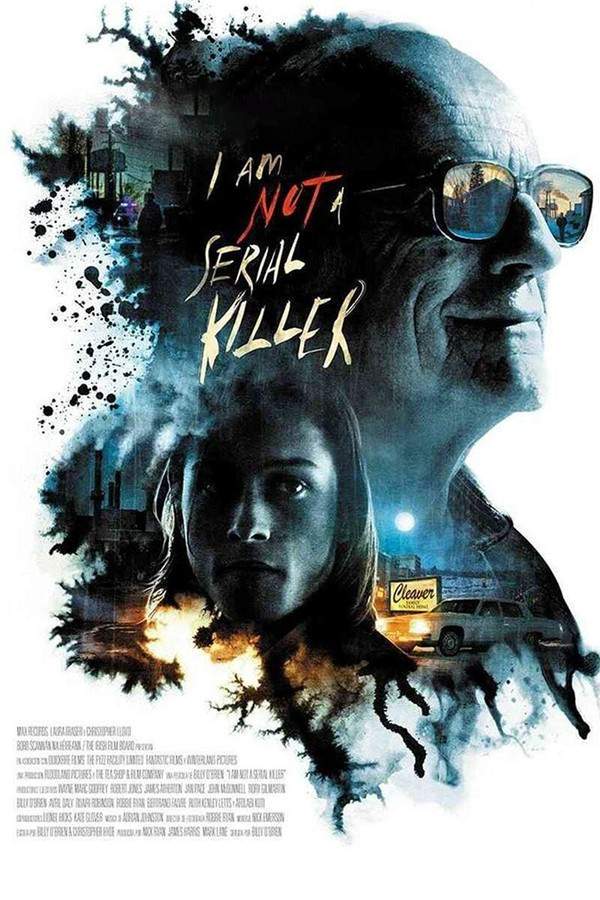
I Am Not a Serial Killer (2016) movie poster

Plot Summary

I Am Not a Serial Killer (2016) Plot Summary Explained

Release, runtime and language
2016 · 104 min · English
JustWatch #16,117 6
Directed by
Billy O'Brien

A teenager grappling with homicidal tendencies suspects a new serial killer is operating in his Midwestern town. As the body count rises, he struggles to differentiate between his own dark urges and the actions of the killer, leading him to investigate. He must confront his deepest fears and the unsettling possibility that he might be more connected to the crimes than he realizes, all while trying to maintain a semblance of normalcy.

On this page (7)
  1. 1 Where to watch
  2. 2 What happens: full plot
  3. 3 Plot questions answered
  4. 4 The book behind the movie
  5. 5 Movie threads
  6. 6 Movies like I Am Not a Serial Killer
  7. 7 Every angle

Where to watch

Where to Watch I Am Not a Serial Killer (2016)

Where can you watch I Am Not a Serial Killer? Stream, rent or buy it in the US, including on AMC+, Philo and Shudder: current JustWatch availability with up-to-date prices.

Streaming availability powered by JustWatch

Full plot summary · contains spoilers

What Happens in I Am Not a Serial Killer: Full Plot Summary

The whole story of I Am Not a Serial Killer (2016) explained, from the opening scene to the final frame: every key event, every twist and what it all adds up to. Read it as a quick recap before the sequel, to check a scene you missed, or to finally understand what really happened.

We begin on a quiet street in a small town where a police officer discusses a gruesome discovery with his partner. Nearby, an ambulance is parked, and two EMTs struggle to load a stretcher carrying a covered body — a sight that horrifies onlookers due to its bloody condition. One officer remarks he's never seen anything like it, noting the victim appears to have been torn apart. As the EMTs accidentally jostle the stretcher, entrails fall to the ground, further unsettling the crowd. Once the body is loaded, they drive off, leaving only a young boy on a bike, our protagonist, John Wayne Cleaver.

As the police vehicle moves away, John exits the road and is questioned by the officers about their grim findings. John's nonchalant reply, "Well, he's dead for sure," sets the tone for his character. He rides through town to his home, which also functions as the local funeral home. Here, he assists his mother, April (portrayed by Laura Fraser), and his aunt, Margaret (played by Christina Baldwin), in their work. They mention the recently deceased man, and John, with characteristic dark humor, quips that at least they'll profit from it, much to the dismay of the adults around him. As he prepares an elderly woman's body, he jokes about the smell, only to be corrected by Aunt Margaret, showcasing his awkwardness in handling social situations.

In an introspective moment in his room, John grapples with questions of identity, seeming to practice social skills while reflecting on his true nature. Determined to investigate the crime scene, he discovers a strange black substance that heightens his curiosity. At school, he faces scrutiny from Principal Layton (played by James Gaulke) because of his report on the infamous BTK killer, Dennis Rader. The principal advises John about the fine line between curiosity about death and crossing into darker territory.

Seated in the cafeteria with his only friend Max (played by Raymond Brandstrom), John navigates interactions with their peers, facing bullying from Rob Anders (Vincent Russo), who mocks him, leading John to a disturbing confrontation in which he resists the urge to lash out. Instead, he inspects his sociopathic tendencies and attempts to articulate his thoughts on violence. A therapy session with Dr. Neblin (Karl Geary) reveals John's self-awareness, although his fascination with the mechanics of death is unsettling for others.

Later, intrigued by a pretty girl named Brooke (played by Lucile Lawton), John's stalking of the mysterious neighbor Mr. Crowley (Christopher Lloyd) mounts. John faces a complex relationship with his desires and his impulses, complicating his identity as he observes sinister happenings around town. Following the discovery of additional homicides, John's relentless pursuit of knowledge leads to an obsession with profiling the killer.

Halloween brings unexpected tensions, as he encounters normal teenage life juxtaposed with his dark musings. The party scene becomes a battleground of social dynamics where John showcases his chilling honesty, confronting bullies in a manner that surprises and terrifies them. His hyper-awareness of his sociopathic inclinations becomes ever more pronounced.

As events unfold, John's investigations lead him to link Mr. Crowley to the town's growing body count. Tensions escalate when John unintentionally compels Crowley to expose his monstrous form during a climactic confrontation. John, caught between empathy and a survival instinct, faces a moral quandary over his mother's life when Crowley threatens her, hinting at the depths of his attachment.

Ultimately, John realizes he can wield control over his destiny and possibly save those he loves by confronting Crowley, leading to a harrowing standoff that reveals the complex nature of humanity interwoven with monstrosity. In the end, John's chilling journey culminates in a reflection of love, loss, and acceptance as he grapples with empathy and the consequences of human actions.

As the film closes, we see John continues to wrestle with his identity, aiming for a grasp on his emotions while preparing his therapist for burial. In a moment filled with dark humor, he remarks that consulting another therapist post-loss seems disloyal, leaving a poignant note as his family moves forward amid the complexities of life and death.
Last updated: November 03, 2024 at 11:14

Was this helpful?

Plot questions answered

I Am Not a Serial Killer Plot Explained: Your Questions Answered

The questions people ask most about I Am Not a Serial Killer (2016): what happens in the confusing scenes, why the characters do what they do, the twists, hidden details and what the ending means. Each answer contains spoilers.

Q1

Why is John Wayne Cleaver so nonchalant about death?

John grew up working at his family's funeral home, which normalized death for him from a young age. Additionally, he has sociopathic tendencies that make him process death differently than most people - he understands it intellectually but lacks the emotional response others have. This combination explains his detached remark when finding the body and his dark humor about profit from deaths.

Foreshadowing: Earlier scenes show John practicing social skills and questioning his own nature, hinting at his awareness that his perspective on death is abnormal.

  • john wayne cleaver
  • sociopathy
  • funeral home
  • death
  • desensitization
Q2

What is John's condition and how does it affect his behavior?

John exhibits sociopathic traits - he has self-awareness about his lack of empathy, struggles with impulse control around violence, and uses intellectual reasoning to compensate for his emotional deficits. During therapy, he discusses his fascination with death mechanics. His condition makes him uniquely suited to investigate the killer but also creates internal tension as he must constantly resist his own urges.

Foreshadowing: Principal Layton warns John about crossing the line from curiosity about death into darker territory after John's BTK report.

  • sociopathy
  • sociopathic tendencies
  • john cleaver
  • impulses
  • therapy
Q3

How does John figure out Mr. Crowley is the killer?

John becomes suspicious of Crowley after noticing him watching Brooke and observing strange behavior around the neighborhood. His profiling knowledge and obsessive investigation lead him to connect Crowley to the murders, though the exact evidence is not detailed in the summary. John's outsider status and lack of normal emotional responses allow him to think like a killer in ways others cannot.

Foreshadowing: John's obsession with profiling and his stalking of Crowley build throughout the film as the body count rises.

  • mr crowley
  • serial killer
  • investigation
  • profiling
  • discovery
Q4

What is Mr. Crowley - is he a human or something supernatural?

Mr. Crowley is revealed to be something beyond a human serial killer. During the confrontation, John inadvertently compels Crowley to expose his 'monstrous form,' suggesting Crowley is either a supernatural being or something transformed beyond normal human appearance. This twist elevates the story from a psychological thriller into something darker, explaining the extreme violence of the murders.

Foreshadowing: The early discovery scene describes the victim as 'torn apart' in ways that seem beyond normal human capability.

  • mr crowley
  • monster
  • supernatural
  • serial killer
  • transformation
Q5

How does John stop Crowley and save his mother?

John confronts Crowley during a climactic showdown when Crowley threatens his mother. The summary indicates John realizes he can 'wield control over his destiny' - he uses his understanding of dark impulses (his own and possibly Crowley's) to gain the upper hand. His sociopathic detachment becomes an asset, allowing him to remain calm and strategic where others would panic.

Foreshadowing: John's therapy sessions and self-analysis throughout the film foreshadow him using his condition as a tool rather than a curse.

  • confrontation
  • mother
  • survival
  • control
  • victory
Q6

Why does John prepare Dr. Neblin for burial at the end?

Dr. Neblin, John's therapist, has died by the film's end. John prepares his body at the funeral home, which is his domain and source of comfort. His dark humor remark about it being disloyal to see another therapist shows his coping mechanism - using wit to process grief and loss while maintaining his connection to death and his identity.

Foreshadowing: The therapy sessions throughout the film establish the complex relationship between John and Dr. Neblin.

  • dr neblin
  • therapist
  • death
  • funeral home
  • grief
Q7

Does John become a killer at the end?

The ending suggests John has chosen to control his dark urges rather than act on them. He saves his mother and achieves a form of acceptance about his nature without surrendering to it. However, the film leaves ambiguity - John's continued wrestling with his identity and his dark sense of humor at the end implies he will always struggle with these impulses, though he now has agency in choosing not to act on them.

Foreshadowing: Throughout the film, John repeatedly resists impulses to violence, even when bullied, demonstrating his capacity for control.

  • killer
  • impulses
  • control
  • acceptance
  • identity
  • morality
Q8

What happens at the Halloween party and why is it significant?

At the Halloween party, John's sociopathic honesty emerges when he confronts his bullies. Rather than fighting physically, his unsettling transparency about his dark thoughts and lack of normal emotional response terrifies them. This scene demonstrates how John's self-awareness of his condition can be weaponized and marks a turning point where he embraces his difference rather than hiding it.

Foreshadowing: Earlier cafeteria scenes show John struggling to suppress violence when bullied, but the party marks a shift in how he handles such situations.

  • halloween party
  • bullying
  • confrontation
  • honesty
  • social situation
Q9

Why does the principal warn John about his BTK killer report?

John wrote a school report on Dennis Rader (BTK), a real-life Kansas serial killer who eluded capture for years. Principal Layton warns him because John's intense fascination with the BTK killer mirrors concerning behavior - excessive curiosity about murder methods. This warning foreshadows John's descent into investigating the local killer and highlights the thin line between understanding evil and becoming it.

Foreshadowing: The warning sets up the film's central tension between John's investigative curiosity and his dark impulses.

  • btk
  • dennis rader
  • principal
  • warning
  • school report
Q10

What is John's fascination with Brooke?

John becomes infatuated with Brooke, a girl in town, which represents his normal teenage desire contrasting with his dark impulses. His interest in her intersects with his investigation of Crowley, as he stalks Crowley's behavior while pursuing Brooke. This subplot shows John's struggle to have a normal life and normal feelings, even as his obsession with the murders intensifies.

Foreshadowing: John's observation of Crowley near Brooke's home connects his romantic interest to his criminal investigation.

  • brooke
  • attraction
  • normalcy
  • teenage
  • relationship

Movie threads

More Movies Like I Am Not a Serial Killer, by Mood & Story

Curated lists built around what makes I Am Not a Serial Killer tick: the same mood, the same kind of story or the same emotional payoff. Each list explains why these movies belong together.

Monster hunters confronting their inner demons like in I Am Not a Serial Killer

Protagonists who hunt darkness while wrestling with the same evil inside themselves. If you liked the internal struggle in I Am Not a Serial Killer, this list features movies where the hero's hunt for a killer or monster becomes a bleak journey of self-discovery. These stories explore the terrifying line between hunter and hunted, hero and villain, in similar dark thrillers and psychological dramas.

  • dark
  • unsettling
  • introspective
  • psychological
  • tense
  • paranoid
  • Tone: dark, introspective, unsettling
  • Pacing: steady, deliberate
Why these movies?

The story pattern: The narrative follows an investigation that parallels the protagonist's internal psychological unraveling. As they get closer to the external threat, they must also confront and manage their own dark urges or hidden nature, creating a tense duality where success often comes with a heavy personal cost.

Why they belong together: Movies are grouped here for their shared core conflict: the blurring of lines between the pursuer and the pursued. They share a dark, introspective tone and explore themes of identity, monstrosity, and the moral gray areas within those who stand against evil.

Bleak small-town murder mysteries like I Am Not a Serial Killer

Atmospheric thrillers where a suffocating small town hides a sinister secret. Fans of the grim, wintry atmosphere in I Am Not a Serial Killer will find more movies here with a similar vibe. These stories are set in isolated towns where a murder investigation peels back the layers of a community, revealing hidden darkness and personal demons in a slow-burn, tense narrative.

  • gritty
  • melancholic
  • suspenseful
  • atmospheric
  • claustrophobic
  • small town
  • Tone: dark, melancholic, gritty
  • Pacing: steady, slow burn
Why these movies?

The story pattern: The narrative unfolds in a confined, isolated community where the discovery of a crime acts as a catalyst. The investigation is often conducted by an internal or disillusioned outsider, slowly exposing the town's hidden corruption, hypocrisy, or longstanding secrets against a backdrop of pervasive unease.

Why they belong together: These films are grouped by their potent combination of a specific setting and mood. They share a bleak, gritty aesthetic, a steady pace that builds suspense, and a central theme of hidden evil within a seemingly ordinary community, creating a cohesive and immersive viewing experience.

If you liked this

Movies Like I Am Not a Serial Killer

Similar movies to I Am Not a Serial Killer: the same genre, themes or kind of story. Each one comes with its own plot summary, timeline and ending explained.

Browse all movie summaries

Every angle

I Am Not a Serial Killer (2016) Explained: Plot, Timeline & Characters

Everything about I Am Not a Serial Killer in one place: what happens in the plot summary, the timeline in chronological order, the characters and meaning and a spoiler-free summary. What's After the Movie adds the cast, box office and post-credit scenes.

Coming soon on iOS and Android

The Plot Explained Movie Summary App

Plot summaries, endings explained and timelines on your phone. Catch up on any movie in minutes, save your favorites and never miss a twist again.

Be the first to know when we launch. Your email stays private, always.
Learn more about the app