Plot Explained Spoilers guaranteed!
Plot Explained

Browse by genre

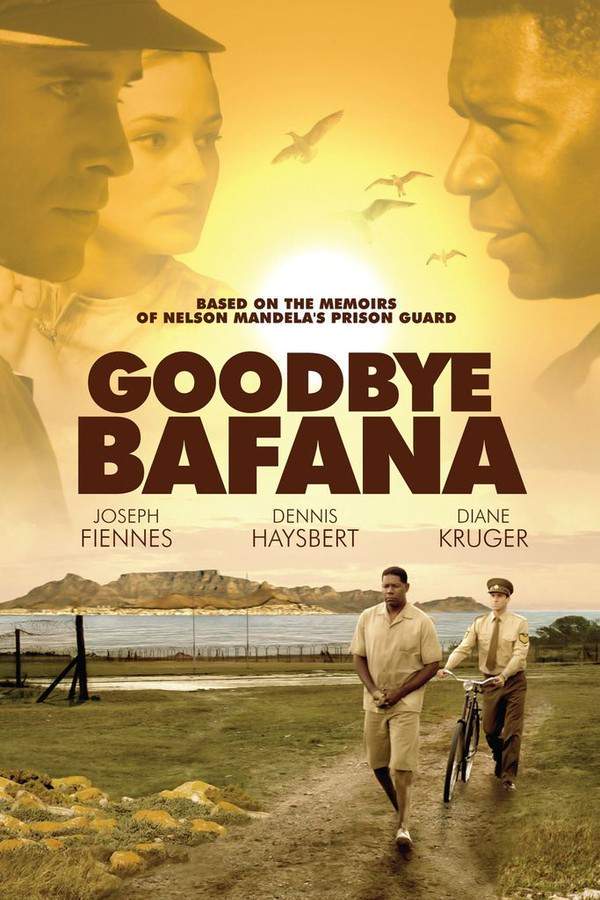
Goodbye Bafana (2007) movie poster

Timeline

Goodbye Bafana (2007) Timeline Explained – Every Event in Order

Release, runtime and language
2007 · 140 min · English
Directed by
Bille August

During the height of apartheid in South Africa, Afrikaner warden James Gregory is assigned to guard Nelson Mandela and his fellow political prisoners on Robben Island. As Gregory gets to know Mandela, he begins to question his own beliefs and the injustices of the system, forging an unexpected connection that challenges his worldview and reveals a shared humanity.

On this page (5)
  1. 1 Events in order (15)
  2. 2 Timeline questions answered
  3. 3 Movie threads
  4. 4 Movies like Goodbye Bafana
  5. 5 Every angle

15 events in order · contains spoilers

Goodbye Bafana Timeline: Events in Chronological Order

Every key event of Goodbye Bafana (2007) in order, scene by scene, with when and where it takes place. Use it to untangle flashbacks, time jumps and parallel storylines, to refresh your memory before the sequel or to find the exact scene you are thinking of.

  1. James Meets Bafana

    As children, James Gregory and Bafana, a black native, forge a friendship on a South African farm. Their interactions are innocent, marked by shared laughter and communication in the local language, symbolizing a bond that transcends racial barriers.

    Where
    South African farm
  2. James Moves to the City

    James relocates to the city, bidding farewell to Bafana with a sense of nostalgia. This move represents a shift from a carefree childhood to a more complex adult life, distanced from the simplicity of their early friendship.

    Where
    City
  3. James Embraces Conservatism

    Years later, now a government worker, James marries Gloria, who instills conservative beliefs in their children. She teaches them that the suffering of black natives is 'God's Will', a perspective that shapes their worldview.

  4. Influence of Friends

    James' friends view the nostalgic photograph of him with Bafana and mock him for it. This teasing fosters a growing resentment in James towards black natives, altering his previously innocent perception.

  5. Recruitment by Secret Service

    James is recruited by the South African Secret Service as a Prison Censorship Officer due to his fluency in the native language. His new role requires him to monitor inmates, particularly focusing on Nelson Mandela, the imprisoned leader of the African National Congress.

    Where
    Secret Service Headquarters
  6. Conversation with Nelson Mandela

    James engages in a conversation with Nelson Mandela during his prison monitoring. Through this interaction, he learns that Nelson's native name is Madiba, deepening their connection.

    Where
    Prison
  7. Interference with Mandela's Visit

    Monitoring Winnie Mandela's visit to Nelson, James intentionally interrupts them when their conversation drifts to topics concerning the African National Congress. This demonstrates his commitment to his role, even at the cost of human connection.

    Where
    Prison Visiting Room
  8. Tragedy Strikes Mandela's Family

    After reporting on Nelson's son acquiring a driver's license, James is later tasked to relay the tragic news of the son's death in an automobile accident. This event emphasizes the personal cost involved in the political struggle, impacting both Nelson and James deeply.

  9. Discovery of the 'Freedom Charter'

    Curiosity leads James to investigate the banned 'Freedom Charter' of the African National Congress, rumored to advocate the 'extermination of whites'. After acquiring a copy, he becomes acutely aware of the dangerous implications of his findings.

  10. Witnessing Police Brutality

    James' children are scarred by the traumatic experiences of witnessing police brutality against civilians. This exposure fuels James' internal conflict regarding his role in a system that perpetuates such violence and injustice.

  11. Gift of Chocolate

    During a visit, Nelson requests James to give Winnie a piece of chocolate as a Christmas present. This seemingly simple act complicates James' moral standing, marking a pivotal moment in his journey towards empathy.

    Where
    Prison
  12. James Considers Resignation

    Moved by witnessing Gloria's despair due to his actions, James contemplates resigning from his censorship role. However, his resignation is initially rejected, illustrating the struggle between his conscience and his duty.

  13. International Pressure Mounts

    Faced with increasing international calls to free Nelson Mandela and severe economic sanctions, the South African government proposes to relocate Nelson in exchange for his release, a deal Nelson flatly rejects.

  14. Threats Against James' Family

    As riots escalate among the black natives, James' family starts receiving threatening phone calls, instilling fear and paranoia. This chapter heightens the stakes and foreshadows imminent danger for James and his loved ones.

  15. Tragic News of Brett's Death

    In a shattering turn of events, James receives news that his son Brett has died in an automobile accident. This tragedy forces James to grapple with the consequences of his past actions and the connections between personal and political turmoil.

Last updated: December 31, 2024 at 18:09

Was this helpful?

Timeline questions answered

Goodbye Bafana Timeline Explained: Your Questions Answered

When does it happen, and why in that order? The questions people ask about the chronology of Goodbye Bafana (2007): time jumps, flashbacks, cause and effect between scenes and the correct order of events, each answered with spoilers.

Q1

Why was James Gregory recruited by the South African Secret Service?

James was recruited because he was fluent in the local native language, a skill that made him valuable for monitoring and censoring the correspondence of political prisoners, particularly Nelson Mandela. His language ability allowed him to understand conversations that other guards could not, making him an ideal candidate for the position of Prison Censorship Officer on Robben Island.

Foreshadowing: James's childhood friendship with Bafana on the farm gave him fluency in the native language that would later prove useful to the Secret Service.

  • james gregory
  • secret service
  • prison censorship
  • robben island
  • apartheid
Q2

Why did James report on Mandela's son getting a driver's license?

As part of his duties as a Prison Censorship Officer, James was required to report any information about Mandela's family and activities. When Mandela's son obtained a driver's license, James dutifully reported this information to his superiors, not realizing the tragic consequences that would follow.

  • mandela's son
  • driver license
  • james gregory
  • reporting
  • prison
Q3

What happened to Nelson Mandela's son in the movie?

Nelson Mandela's son died in a car accident after obtaining his driver's license. James was later tasked with the painful duty of relaying this tragic news to Mandela, which deeply affected both men and intensified James's moral crisis about his role in the prison system.

Foreshadowing: James's earlier reporting on the son's driver license directly led to this devastating news.

  • mandela's son
  • car accident
  • death
  • robben island
  • tragedy
Q4

Why did Nelson Mandela ask James to deliver chocolate to Winnie?

During a Christmas visit, Mandela requested that James give Winnie Mandela a piece of chocolate as a simple present. This gesture represented Mandela's humanity and ability to maintain personal connections despite his imprisonment. It also marked a turning point for James, who began to see Mandela not just as a prisoner but as a real person with emotional depth, complicating James's moral position further.

  • chocolate
  • winnie mandela
  • christmas
  • gift
  • prison visit
Q5

Why did James Gregory want to resign from his position?

James wanted to resign because he was deeply affected by witnessing his wife Gloria's grief and despair over his involvement in the oppressive prison system. The toll of censoring Mandela's correspondence, betraying his trust, and participating in a system he increasingly questioned became too overwhelming, leading him to seek a way out.

  • resignation
  • james gregory
  • quit
  • moral conflict
  • prison
Q6

What was the Freedom Charter and why was it significant?

The Freedom Charter was a banned document of the African National Congress that James investigated after hearing rumors it advocated the 'extermination of whites.' After obtaining a copy, James discovered these claims were false, it was actually a manifesto calling for equality and non-racial democracy. This revelation further shattered the government's propaganda and deepened James's internal conflict.

  • freedom charter
  • african national congress
  • banned document
  • apartheid
  • equality
Q7

What happened to James's son Brett?

James's son Brett died in a car accident, the same manner in which Mandela's son had died earlier. This tragic parallel left James questioning whether it was mere coincidence, payback for his reporting on Mandela's son, or a deliberate act by his superiors or the ANC. The loss devastated James and intensified the dangers and threats his family faced.

Foreshadowing: The earlier death of Mandela's son in a car accident foreshadows the similar tragedy that would strike James's own family.

  • brett
  • car accident
  • death
  • james gregory
  • son
Q8

How did the relationship between James and Nelson Mandela develop?

Initially, James viewed Mandela merely as a prisoner to monitor, but through their conversations, a genuine friendship developed. Mandela shared that his native name was Madiba, and he treated James with respect despite James's role as his censor. This unexpected human connection gradually transformed James's worldview and made him question everything he had been taught about black South Africans.

  • friendship
  • nelson mandela
  • madiba
  • james gregory
  • relationship
Q9

Why did Mandela refuse the government's offer for conditional release?

The South African government offered to free Mandela if he agreed to relocate, essentially asking him to abandon his cause and go into exile. Mandela firmly rejected this ultimatum, demonstrating his unwavering commitment to fighting for equality and democracy in South Africa from within his homeland, rather than accepting freedom at the cost of his principles.

  • mandela release
  • government offer
  • relocation
  • exile
  • conditions
Q10

Why did James's friends mock the photograph of him with Bafana?

When James's friends discovered the old photograph of him as a child with his black friend Bafana, they laughed at him and their teasing turned to hatred toward black people. This incident reflects how deeply ingrained racism had become in Afrikaner society, even a childhood friendship that transcended racial barriers was ridiculed, showing how apartheid systematically dismantled such natural bonds.

  • photograph
  • bafana
  • childhood friend
  • mockery
  • racism
  • apartheid
Q11

Why did Gloria teach the children that black suffering was 'God's Will'?

Gloria represented the typical Afrikaner conservative viewpoint that justified apartheid through religious beliefs. She taught her children that the suffering of black South Africans was part of God's plan, a perspective deeply embedded in the cultural and religious fabric of white South Africa at the time. This taught worldview directly contrasted with James's childhood experiences with Bafana.

  • gloria
  • god's will
  • apartheid
  • teaching children
  • racism
  • religion
Q12

Why did James start receiving threatening phone calls?

As riots escalated and James's internal conflict became apparent, he began receiving menacing phone calls intended to intimidate him and his family. The threats came as tensions between the government and black South Africans intensified, and James's growing sympathy for Mandela made him a target from both his superiors (who suspected his loyalty) and those who saw him as a government collaborator.

  • threatening calls
  • intimidation
  • riots
  • family safety
  • danger

Movie threads

More Movies Like Goodbye Bafana, by Mood & Story

Curated lists built around what makes Goodbye Bafana tick: the same mood, the same kind of story or the same emotional payoff. Each list explains why these movies belong together.

Movies about unlikely friendships like Goodbye Bafana

True stories of unlikely bonds that challenge prejudice and transform lives. If you were moved by the transformative bond in Goodbye Bafana, explore more movies like it. These dramas feature powerful stories of friendship and understanding that bridge political, racial, or cultural divides, leading to profound moral awakenings.

  • moral conflict
  • reflective
  • hopeful
  • tense
  • somber
  • transformative
  • Tone: dark, hopeful, reflective
  • Pacing: steady, character-driven
Why these movies?

The story pattern: The narrative pattern follows an individual entrenched in a system of power or prejudice who is assigned to monitor or control a member of an oppressed group. Through sustained, often forced, proximity, a genuine connection forms. This friendship becomes a catalyst for a painful but necessary moral awakening, challenging the protagonist's worldview and forcing them to confront the injustices they once upheld.

Why they belong together: Movies in this thread share a heavy emotional weight and a steady pacing that allows the complex relationship to develop believably. They are united by a dark tone reflecting serious subject matter, yet contain a hopeful core centered on the possibility of human connection and redemption. The endings are often bittersweet, acknowledging the personal sacrifices made for growth.

Moral awakening dramas similar to Goodbye Bafana

Intense character studies set within unjust systems, leading to profound personal change. For viewers who appreciated the heavy moral journey in Goodbye Bafana, this list features similar historical and biographical dramas. These movies explore characters grappling with their conscience within corrupt or oppressive systems, resulting in tense, reflective, and emotionally powerful stories.

  • oppressive
  • moral conflict
  • somber
  • claustrophobic
  • tense
  • reflective
  • Tone: dark, somber, tense
  • Pacing: steady, deliberate
Why these movies?

The story pattern: The story unfolds within a claustrophobic or highly controlled environment representing a larger unjust system. The protagonist, initially blind or indifferent to the system's cruelty, experiences a series of catalytic events or relationships that force them to see the truth. The central conflict becomes internal, pitting their ingrained beliefs against their growing conscience, culminating in a defining choice that carries significant consequences.

Why they belong together: These films are grouped by their high intensity and heavy emotional weight, derived from the tension between personal conscience and systemic conformity. They share a dark, somber tone and a steady, deliberate pacing that allows the protagonist's internal transformation to feel earned and profound. The focus is on the psychological cost of enlightenment.

If you liked this

Movies Like Goodbye Bafana

Similar movies to Goodbye Bafana: the same genre, themes or kind of story. Each one comes with its own plot summary, timeline and ending explained.

Browse all movie summaries

Every angle

Goodbye Bafana (2007) Explained: Plot, Timeline & Characters

Everything about Goodbye Bafana in one place: what happens in the plot summary, the timeline in chronological order, the characters and meaning and a spoiler-free summary. What's After the Movie adds the cast, box office and post-credit scenes.

Coming soon on iOS and Android

The Plot Explained Movie Summary App

Plot summaries, endings explained and timelines on your phone. Catch up on any movie in minutes, save your favorites and never miss a twist again.

Be the first to know when we launch. Your email stays private, always.

Learn more about the app