Plot Explained Spoilers guaranteed!
Plot Explained

Browse by genre

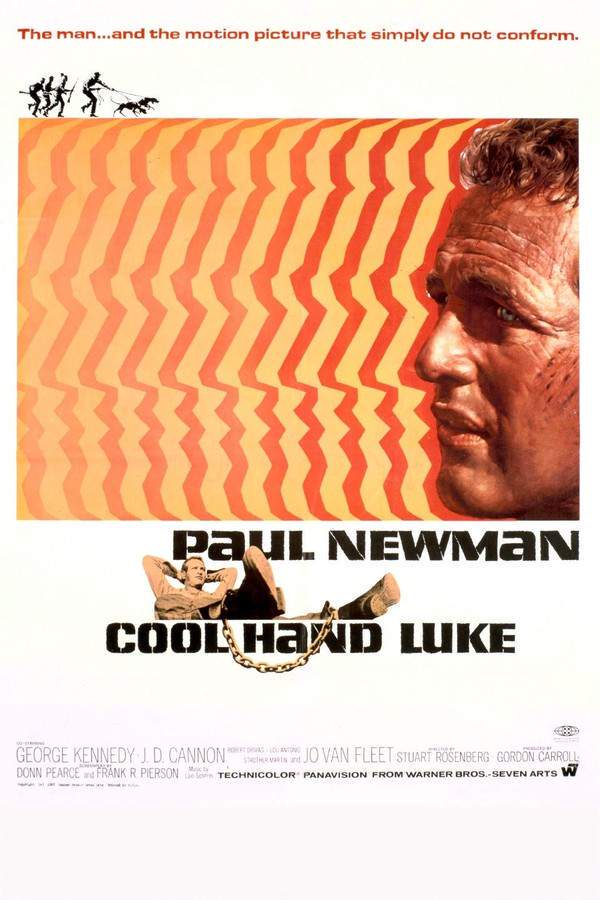
Cool Hand Luke (1967) movie poster

Plot Summary

Cool Hand Luke (1967) Plot Summary Explained

Release, runtime and language
1967 · 126 min · English
Loading streaming availability…
Directed by
Stuart Rosenberg
Starring
Paul Newman, Strother Martin, J.D. Cannon, Clifton James, George Kennedy, Jo Van Fleet

A rebellious drifter named Luke Jackson is sentenced to two years on a chain gang where he clashes with the brutal warden and corrupt system. Luke’s refusal to break, his quiet acts of defiance, and his enduring hope inspire his fellow prisoners, creating a complex dynamic within the harsh prison environment. He becomes a symbol of resistance against oppression, testing the limits of authority and sparking a tense power struggle.

On this page (7)
  1. 1 Where to watch
  2. 2 What happens: full plot
  3. 3 Plot questions answered
  4. 4 The book behind the movie
  5. 5 Movie threads
  6. 6 Movies like Cool Hand Luke
  7. 7 Every angle
Loading streaming availability…

Full plot summary · contains spoilers

What Happens in Cool Hand Luke: Full Plot Summary

The whole story of Cool Hand Luke (1967) explained, from the opening scene to the final frame: every key event, every twist and what it all adds up to. Read it as a quick recap before the sequel, to check a scene you missed, or to finally understand what really happened.

In the early 1950s in Florida, Lucas "Luke" Jackson, played by Paul Newman, finds himself in a bizarre predicament after a night of drunken antics that leads to the destruction of multiple parking meters. His reckless behavior results in a two-year sentence on a brutal chain gang overseen by a strict warden known as the Captain and his silent enforcer, Walking Boss Godfrey, who is ominously referred to as "the man with no eyes" due to his ever-present mirrored sunglasses. Within this grim prison camp, even the smallest infractions lead to the dire punishment of "a night in the box," a tiny wooden confinement that offers little air or space.

Luke's rebellious spirit quickly puts him at odds with the gang's dominant figure, Dragline. Despite being physically outmatched, Luke refuses to submit during their boxing match, which ultimately earns him the respect of the other inmates. Following this encounter, Dragline nicknames him "Cool Hand Luke" after he pulls off the extraordinary feat of winning a poker game with a worthless hand, showcasing his knack for defiance.

After receiving a visit from his ailing mother, Arletta, Luke's resolve grows stronger. He continues to challenge the authority of the Captain and the guards, lifting the spirits of his fellow inmates with his humor and refusal to conform. His legendary reputation skyrockets when he leads a seemingly impossible work crew that successfully completes a road-paving job in less than a day. The pinnacle of his rebellion comes when he wagered that he could eat 50 hard-boiled eggs in just an hour, a gamble that the other prisoners eagerly cheer him on to accomplish.

Tragedy strikes when Luke learns about his mother's death. Anticipating a potential escape attempt to attend her funeral, the Captain retaliates by locking him in the box once more. However, undeterred by this setback, Luke plans his escape. During a festive Fourth of July celebration, he makes his move but is quickly recaptured, setting off a chain of brutal consequences that lead to his being outfitted with leg irons.

As Luke escapes for a second time, he brazenly sends a postcard back to the prison adorned with a picture of himself sandwiched between two glamorous women, inciting envy among his fellow prisoners. Ultimately, Luke is caught again, mercilessly beaten, and returned to the camp, receiving harsh treatment from the guards. In a moment of vulnerability, he reluctantly turns into an errand boy for them. Yet, possessing a resilient nature, he seizes another chance to escape, stealing a truck with Dragline by his side. Upon realizing the impossibility of their freedom, they part ways, and in a moment of desperation, Luke enters a church to confront God, whom he blames for his misfortunes.

As law enforcement closes in, Dragline tries to persuade Luke to surrender peacefully. In defiance, Luke mocks the Captain's earlier threats, resulting in a fatal encounter with Godfrey, who shoots him. Dragline, distraught, carries Luke outside but is unable to protect him from the corruptive grip of the guards. As Luke is driven away in the Captain's car toward what will likely be a grim fate, he manages to smile faintly, a final sign of his spirit, even as the tires crush Godfrey's sunglasses beneath them.

In the aftermath, the prison crew returns to work near the fateful intersection where Luke fell, led by a new Walking Boss while Dragline, now in leg irons, shares fond memories of the man who became a legend among them all.
Last updated: November 16, 2024 at 17:49

Was this helpful?

Plot questions answered

Cool Hand Luke Plot Explained: Your Questions Answered

The questions people ask most about Cool Hand Luke (1967): what happens in the confusing scenes, why the characters do what they do, the twists, hidden details and what the ending means. Each answer contains spoilers.

Q1

Why does Luke destroy the parking meters?

Luke gets drunk and goes on a reckless rampage that destroys multiple parking meters. This night of drunken antics is what leads to his arrest and subsequent two-year sentence on the chain gang. The destruction of public property is treated as a serious offense, landing him in prison.

Foreshadowing: The film opens with this reckless behavior, establishing Luke as someone who acts impulsively without considering consequences.

  • luke arrest
  • parking meters
  • drunk
  • reason for prison sentence
Q2

Why does Luke refuse to give up during the boxing match?

When Dragline challenges Luke to a boxing match, Luke gets badly beaten but refuses to submit or say 'uncle' (the signal of surrender). He takes repeated blows rather than quit, which puzzles and then impresses both the guards and the other prisoners. This act of defiance establishes his reputation as someone who cannot be broken by physical force.

Foreshadowing: This early moment sets the pattern for Luke's entire prison journey, he refuses to break no matter the punishment.

  • dragline
  • boxing match
  • refuses to quit
  • cool hand luke origin
Q3

What's the story behind Luke's nickname?

Dragline gives Luke the nickname 'Cool Hand Luke' after watching him win a poker game with a completely worthless hand. Despite having nothing but a 7-5 offsuit, Luke bluffs successfully and takes the pot. The name reflects his ability to stay calm and confident even when he has nothing, a perfect metaphor for his整个监狱生涯中保持的冷静态度.

Foreshadowing: The nickname foreshadows Luke's approach to prison: maintaining composure and confidence regardless of circumstances.

  • cool hand luke nickname
  • dragline
  • poker game
  • origin
Q4

Why does Luke attempt to eat 50 hard-boiled eggs?

Luke makes a wager with the other prisoners that he can eat 50 hard-boiled eggs in one hour. This is less about hunger and more about another act of defiance and self-proof. The other prisoners bet heavily against him and cheer him on throughout the grueling challenge. He succeeds, demonstrating extraordinary willpower and further cementing his legendary status among the inmates.

Foreshadowing: The egg-eating contest becomes one of Luke's defining moments of stubborn willpower, paralleling his refusal to break in the boxing ring.

  • 50 eggs
  • egg eating contest
  • wager
  • prison bet
Q5

Why does the Captain lock Luke in the box after his mother dies?

When Luke receives news of his mother's death, the Captain anticipates that Luke will try to escape to attend her funeral. In a cruel move, the Captain proactively punishes him by locking him in the box, the tiny wooden confinement, before Luke can even attempt to leave. This demonstrates the Captain's strategic cruelty and his determination to break Luke's spirit through psychological torment.

Foreshadowing: This moment reveals the Captain's methodology: he uses any personal tragedy as an opportunity for punishment rather than compassion.

  • mother death
  • captain
  • the box
  • punishment
  • arletta
Q6

Why does Luke keep attempting to escape even though he knows he'll be caught?

Luke's repeated escape attempts represent his fundamental refusal to accept institutional control over his life. Each time he's caught and punished, he escapes again, not because he believes he'll succeed indefinitely, but because the act of trying itself affirms his freedom and humanity. He would rather die trying than live as a broken man. His escapes are also acts of defiance against the Captain's authority.

Foreshadowing: From his first night in the box, Luke shows he cannot accept the prison's control, foreshadowing his multiple escape attempts.

  • escape attempts
  • freedom
  • defiance
  • why keeps escaping
Q7

Why does Luke enter the church to confront God?

After his second escape fails and he realizes freedom is impossible, Luke enters a church and confronts God directly. He blames God for his suffering and curses his circumstances, expressing the anger and spiritual struggle that have built up inside him throughout his imprisonment. This moment reveals Luke's inner turmoil and need to make sense of his suffering through faith, even if it's rage against faith itself.

Foreshadowing: Luke's spiritual confrontation adds depth to his character, showing that his rebellion extends beyond the prison walls to existential questions.

  • church
  • god
  • confrontation
  • spiritual
  • blame
Q8

Why does Godfrey shoot Luke at the end?

As law enforcement closes in during Luke's final escape, Dragline urges him to surrender peacefully. Instead, Luke defiantly mocks the Captain's earlier threats about 'a dead man' and 'a live man' walking. This defiance triggers Godfrey, the silent enforcer known as 'the man with no eyes', to shoot Luke. The shooting is presented as sudden and brutal, a direct result of Luke's refusal to submit even in the face of overwhelming force.

Foreshadowing: The Captain's earlier threat about what happens to escapees foreshadows this fatal confrontation.

  • godfrey shooting
  • final scene
  • death
  • walking boss
  • captain orders
Q9

What does Luke's final smile mean?

As Luke is driven away in the Captain's car toward likely death, he manages a faint smile. This final expression represents the enduring nature of his spirit, he refuses to give the Captain the satisfaction of seeing him broken or afraid. The smile suggests that even in defeat, Luke has maintained his dignity and inner freedom. The tires also crush Godfrey's sunglasses beneath them, symbolically damaging the 'man with no eyes' who enabled the violence.

Foreshadowing: This smile echoes Luke's entire philosophy: maintaining composure and defiance regardless of circumstances.

  • final smile
  • ending
  • death
  • spirit
  • symbolism
Q10

Why doesn't Dragline escape with Luke?

During Luke's final escape attempt, Dragline accompanies him but ultimately parts ways when they realize escape is impossible. Dragline returns to prison while Luke continues alone. Dragline's decision reflects his acceptance of his situation and perhaps his understanding that someone needs to carry Luke's memory back to the other prisoners. His return also sets up the final scenes where he reminisces about Luke's legend.

Foreshadowing: Dragline's choice to return foreshadows his role as the keeper of Luke's memory among the inmates.

  • dragline
  • escape
  • stays behind
  • leaves luke
Q11

Why is the Captain so determined to break Luke specifically?

The Captain treats Luke with particular cruelty because Luke represents a threat to the prison's entire system of control. Unlike other prisoners who eventually submit or accept their situation, Luke's continuous defiance undermines the Captain's authority. Luke's success at the road-paving job and his ability to inspire the other inmates make him dangerous to the power structure. The Captain cannot tolerate anyone who refuses to be broken, making Luke a personal challenge to his authority.

Foreshadowing: From the moment Luke arrives and refuses to show fear, the Captain singles him out for special treatment.

  • captain
  • obsession
  • breaking luke
  • power struggle
  • authority
Q12

Why do the other prisoners admire Luke so much?

The inmates look up to Luke because he represents hope and resistance against the brutal system that oppresses them all. His refusal to break inspires them to maintain their own dignity. Whether it's winning the boxing match, eating 50 eggs, or completing impossible work tasks, Luke shows that spirit cannot be entirely crushed by the system. His actions give the other prisoners something to believe in and talk about, breaking the monotony of prison life.

Foreshadowing: The prisoners' admiration grows with each act of defiance, building toward their legendary view of him.

  • prisoners admire
  • legend
  • inspiration
  • hope
  • fellow inmates
Q13

Why does Luke send a postcard with two women on it after escaping?

During his second escape, Luke sends a postcard back to the prison featuring a picture of himself sandwiched between two glamorous women. This act is both a boast and a taunt, he wants to make the other prisoners envious and to thumb his nose at the authorities who recaptured him. The postcard represents Luke's personality: defiant, humorous, and always maintaining his image even while on the run.

Foreshadowing: This moment reinforces Luke's character as someone who cares about how he's perceived and uses humor as a weapon.

  • postcard
  • two women
  • escape
  • taunt
  • brag

Movie threads

More Movies Like Cool Hand Luke, by Mood & Story

Curated lists built around what makes Cool Hand Luke tick: the same mood, the same kind of story or the same emotional payoff. Each list explains why these movies belong together.

Movies about unbreakable rebels like Cool Hand Luke

When one man's defiance becomes a legend for a broken community. If you enjoyed the defiant spirit of Cool Hand Luke, discover other movies about characters who challenge corrupt systems. These films explore the cost and impact of becoming a symbol of resistance, often with tragic but resonant conclusions. They are gripping dramas focused on the power of individual will.

  • rebellious
  • defiant
  • oppressive
  • resilient
  • tragic
  • inspiring
  • Tone: dark, defiant
  • Pacing: steady, character-driven
Why these movies?

The story pattern: These narratives typically follow a charismatic but flawed protagonist who enters a rigid, oppressive environment. Their refusal to conform sparks a growing power struggle with authority. While their ultimate fate is often tragic, their journey transforms the people around them, leaving a lasting legacy of resilience.

Why they belong together: This thread groups films that share a core dynamic: an individual's symbolic war against institutional power. They are united by a dark, intense tone, heavy emotional weight, and a focus on the psychological and physical costs of defiance. The central character's journey from prisoner to legend is the common thread.

Grim prison dramas like Cool Hand Luke

Stories of survival and small rebellions within brutal institutions. Fans of the harsh prison setting and tense power dynamics in Cool Hand Luke will find more movies like it here. These similar dramas depict the brutal conditions of incarceration, the complex relationships between inmates, and the relentless struggle against authority. They are intense, character-driven stories with a dark tone.

  • claustrophobic
  • oppressive
  • grim
  • brutal
  • defiant
  • hopeless
  • Tone: dark, oppressive
  • Pacing: steady, tense
Why these movies?

The story pattern: The narrative is often set almost entirely within the walls of the institution, creating a sense of inescapable claustrophobia. The plot revolves around the daily grind of survival, punctuated by conflicts with guards and moments of solidarity among the imprisoned. The focus is on the psychological toll of the environment and the small, meaningful acts that preserve humanity.

Why they belong together: These films are connected by their oppressive setting and the central theme of defiance within a controlled system. They share a grim, high-intensity mood, a steady pace that builds tension, and a heavy emotional weight derived from themes of isolation, punishment, and the fragile hope found in friendship.

If you liked this

Movies Like Cool Hand Luke

Similar movies to Cool Hand Luke: the same genre, themes or kind of story. Each one comes with its own plot summary, timeline and ending explained.

Browse all movie summaries

Every angle

Cool Hand Luke (1967) Explained: Plot, Timeline & Characters

Everything about Cool Hand Luke in one place: what happens in the plot summary, the timeline in chronological order, the characters and meaning and a spoiler-free summary. What's After the Movie adds the cast, box office and post-credit scenes.

Coming soon on iOS and Android

The Plot Explained Movie Summary App

Plot summaries, endings explained and timelines on your phone. Catch up on any movie in minutes, save your favorites and never miss a twist again.

Be the first to know when we launch. Your email stays private, always.

Learn more about the app