









Plot Explained Spoilers guaranteed!
Plot Explained

Browse by genre

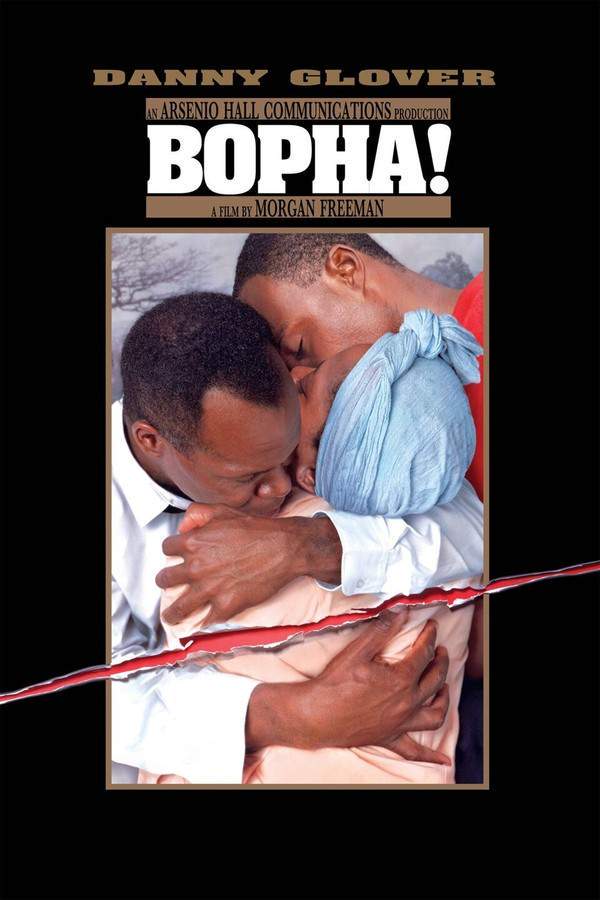
Bopha! (1993) movie poster

Plot Summary

Bopha! (1993) Plot Summary Explained

Release, runtime and language
1993 · 120 min · English
Starring
Malcolm McDowell, Danny Glover, Alfre Woodard

During apartheid in South Africa, a black police officer finds himself caught between his duty and his family. While training a new generation of officers, his own son becomes involved in the anti-apartheid movement, creating a deep rift between them. The situation becomes increasingly dangerous as the Special Branch investigates, threatening to shatter relationships and expose the complexities of loyalty and justice in a divided nation.

On this page (6)
  1. 1 Where to watch
  2. 2 What happens: full plot
  3. 3 Plot questions answered
  4. 4 Movie threads
  5. 5 Movies like Bopha!
  6. 6 Every angle

Where to watch

Where to Watch Bopha! (1993)

Where can you watch Bopha!? Stream, rent or buy it in the US, including on fuboTV, Hoopla and Kanopy: current JustWatch availability with up-to-date prices.

Streaming availability powered by JustWatch

Full plot summary · contains spoilers

What Happens in Bopha!: Full Plot Summary

The whole story of Bopha! (1993) explained, from the opening scene to the final frame: every key event, every twist and what it all adds up to. Read it as a quick recap before the sequel, to check a scene you missed, or to finally understand what really happened.

As the story unfolds in this intense drama, a palpable sense of turmoil engulfs the scene when a black police officer, perceived as a traitor by his community, meets a tragic end at the hands of a furious mob. The focus then shifts to Sergeant Micah "Baba" Mangena, a devoted family man and seasoned law enforcement officer, whose once-peaceful life is beginning to unravel.

Tension builds as Micah's son, Zweli Mangena, starts to question his father's steadfast allegiance to the police force, feeling the weight of expectations pressing down on him. This skepticism is mirrored in Micah's wife, whose once-quiet neighborhood has transformed into a cauldron of tension and distrust. The couple's home becomes a venue for conflict, as their contrasting viewpoints clash against the backdrop of a community in distress.

At the core of this chaos lies a pressing issue that stirs deep outrage: the enforcement of Afrikaans in schools predominantly attended by black students. For these students, using English becomes an act of defiance against an oppressive system. Zweli's frustration with the prevailing conditions simmers intensely as he grapples with his yearning for change, complicated by the imminent fear of retaliation.

In a bid to ease tensions, Zweli orchestrates a secret meeting with radicalized youth and Pule Rampa, a revered elder who has endured imprisonment for his anti-Apartheid convictions. However, their gathering is violently disrupted by the police, leading to the apprehension of several students and Rampa himself. Anticipating the fallout, Micah attempts to detain Rampa, showcasing a moment of moderation by releasing a portion of the arrested youth.

Micah's intention to conduct his own line of questioning is thwarted when two Special Branch agents arrive, taking over with a more intimidating stance. Despite Micah and his superiors begging these operatives to reflect on the potential repercussions of their actions, their severe tactics appear only to escalate resistance, hinting at grim possibilities such as torturing and hanging Pule in his confinement.

As the turmoil escalates, Micah and Zweli find themselves on opposing sides of a deepening divide, a heartbreaking reality given their profound love for one another.

Last updated: November 18, 2024 at 21:02

Was this helpful?

Plot questions answered

Bopha! Plot Explained: Your Questions Answered

The questions people ask most about Bopha! (1993): what happens in the confusing scenes, why the characters do what they do, the twists, hidden details and what the ending means. Each answer contains spoilers.

Q1

Why does Micah continue working as a police officer when his community treats him as a traitor?

Micah remains loyal to the police force because it provides for his family and represents the only stable employment available to him as a black man under apartheid. Despite being viewed as a traitor by his community, he believes in maintaining order and hopes that behaving moderately within the system might protect his family and even effect small changes. His dedication is also shaped by his sense of duty and the moral complexity of surviving within an unjust system.

Foreshadowing: The tragic death of the black police officer at the hands of a mob at the beginning foreshadows the severe consequences faced by those who collaborate with the apartheid regime.

  • Micah Mangena
  • police loyalty
  • apartheid
  • collaboration
  • community betrayal
Q2

Why does Zweli organize a secret meeting with Pule Rampa and radical youth?

Zweli organizes the meeting because he is desperate for meaningful change and believes his father's moderate approach is ineffective. Pule Rampa is a respected elder who has already been imprisoned for anti-apartheid activism, giving him credibility among the radicalized youth. Zweli sees this gathering as an opportunity to unite the community and take a stronger stand against the oppressive system, particularly the enforcement of Afrikaans in schools.

Foreshadowing: Earlier, Zweli's frustration with the language enforcement in schools and his skepticism toward his father's police loyalty set the stage for his decision to seek more radical paths.

  • Zweli Mangena
  • Pule Rampa
  • secret meeting
  • anti-apartheid
  • radical youth
Q3

What happens to Pule Rampa after the police raid and arrest?

After the police raid, Pule Rampa is arrested along with several students. Micah attempts to intervenemoderately, but two Special Branch agents arrive and take over the interrogation. Despite Micah and his superiors pleading for restraint, the Special Branch agents use severe tactics. The summary indicates grim possibilities, they threaten to torture and hang Pule in his confinement, suggesting a brutal fate for the anti-apartheid activist.

Foreshadowing: Micah's earlier attempt at moderation by releasing some arrested youth is immediately undermined when the Special Branch arrives, showing how the system overrides any individual mercy.

  • Pule Rampa
  • arrest
  • Special Branch
  • torture
  • apartheid violence
Q4

Why does Micah release some of the arrested youth during the raid?

Micah releases some of the arrested youth because he wants to demonstrate moderation and humanity in an otherwise brutal system. He hopes that showing restraint might ease tensions in the community and prevent further escalation. This act also reflects his internal conflict, he cares about his community but cannot abandon his position entirely. However, his attempt at moderation is quickly overridden by the Special Branch intervention.

Foreshadowing: This moment reveals Micah's moral struggle between his duty and his conscience, foreshadowing his eventual inability to protect those he loves.

  • Micah Mangena
  • arrested youth
  • moderation
  • police brutality
  • compassion
Q5

What role does the enforcement of Afrikaans in schools play in the story?

The enforcement of Afrikaans in predominantly black schools serves as a major flashpoint for community anger and student defiance. For black students, being forced to learn in Afrikaans, a language associated with the oppressive regime, represents cultural domination. Using English instead becomes an act of resistance. This policy fuels Zweli's frustration and the broader unrest that leads to the secret meeting, making the language controversy a key catalyst for the escalating conflict.

Foreshadowing: The language enforcement is introduced early as a source of outrage, directly motivating Zweli's involvement in the anti-apartheid movement.

  • Afrikaans
  • language enforcement
  • schools
  • student protest
  • apartheid education
Q6

How does the Special Branch intervention affect the situation?

The Special Branch intervention dramatically escalates the conflict. When these agents arrive, they take over the interrogation of Pule Rampa from Micah, imposing severe, intimidating tactics. Despite Micah and his superiors begging them to consider the consequences, the Special Branch ignores warnings and threatens to torture and hang Pule. Their arrival signals that the situation has moved beyond local police control into state-level repression, dramatically increasing the danger for everyone involved.

Foreshadowing: The transition from Micah's attempted moderation to Special Branch brutality shows how the system closes ranks against any form of humanity.

  • Special Branch
  • escalation
  • interrogation
  • torture
  • state violence
Q7

Why is Micah unable to protect both his son and his position on the police force?

Micah cannot protect both because the apartheid system demands absolute loyalty and treats any deviation as betrayal. As Zweli becomes more involved in anti-apartheid activities, Micah faces an impossible choice: betray his son by doing his job, or betray his job by protecting his son. The Special Branch monitors all police officers closely, and any hint of sympathy for activists would endanger Micah himself. His position as a black officer in a white supremacist system creates an inherent conflict that cannot be resolved through moderation.

Foreshadowing: This mirrors the earlier tragedy of the black police officer killed by a mob, both situations show that the system allows no middle ground.

  • Micah
  • Zweli
  • protection dilemma
  • police duty
  • family loyalty
Q8

What causes the deepening rift between Micah and Zweli?

The rift between Micah and Zweli is caused by their fundamentally opposing positions in the apartheid system. Micah believes working within the police force can protect his family, while Zweli sees this as collaboration with an oppressive regime. Their conflict intensifies as Zweli becomes radicalized and organizes the secret meeting, while Micah is forced to participate in cracking down on dissent. Despite their profound love for each other, their differing beliefs about how to respond to injustice create an unbridgeable chasm.

Foreshadowing: The tension is established early when Zweli first questions his father's loyalty, foreshadowing the eventual breakdown of their relationship.

  • father son relationship
  • Micah Zweli
  • generational conflict
  • ideological divide
  • family divided
Q9

Why do black South Africans view police officers like Micah as traitors?

Black South Africans view black police officers as traitors because these officers enforce apartheid laws against their own people. The police are responsible for upholding a system that oppresses black citizens through forced relocations, curfews, and violent crackdowns. When a black person chooses to join the police force, community members see it as choosing personal survival over solidarity with the struggle for liberation. The tragic death of the black officer at the beginning illustrates the community's extreme reaction to perceived collaboration.

Foreshadowing: The opening scene directly establishes this theme by showing a black police officer killed by a mob for being a traitor.

  • black police
  • collaboration
  • community
  • traitor
  • apartheid South Africa
Q10

What motivates Zweli to join the anti-apartheid movement?

Zweli is motivated to join the anti-apartheid movement by his growing anger over the oppressive conditions in his community, particularly the forced Afrikaans language policy in schools. He feels his father's moderate approach to dealing with injustice is ineffective and perhaps even complicit. His desire for meaningful change, combined with fear of retaliation, drives him to seek out Pule Rampa and other radicalized youth. The desire to reclaim his dignity and stand up for his people's rights outweighs the dangers he knows he will face.

Foreshadowing: His frustration with the language enforcement and his skepticism toward his father's police loyalty are established early as his motivation for seeking radical action.

  • Zweli Mangena
  • anti-apartheid
  • motivation
  • student protest
  • resistance

Movie threads

More Movies Like Bopha!, by Mood & Story

Curated lists built around what makes Bopha! tick: the same mood, the same kind of story or the same emotional payoff. Each list explains why these movies belong together.

Movies about families divided by politics like Bopha!

Dramas where loyalty to a cause tears a family apart from within. For viewers seeking movies like Bopha!, this thread collects powerful dramas where family loyalties are tested by political conflict. These stories show the heartbreaking personal cost of ideological divides, often set against the backdrop of oppressive regimes or civil unrest.

  • tense
  • heartbreaking
  • unsettling
  • urgent
  • tragic
  • oppressive
  • Tone: tense, heartbreaking, tragic
  • Pacing: steady, escalating
Why these movies?

The story pattern: Stories in this thread typically follow a family unit, often with a patriarch or matriarch upholding the system, while a younger member becomes a dissident. The narrative builds tension through escalating confrontations, forcing characters to choose between blood ties and their principles, often leading to tragic consequences.

Why they belong together: These movies are grouped together because they share a central conflict where political ideology becomes a destructive force within a family. They mix heavy emotional weight with tense, high-stakes drama, creating a profoundly unsettling and gripping viewing experience centered on moral crisis and betrayal.
Movies about moral dilemmas within corrupt systems like Bopha!

Stories of individuals whose duty forces them to uphold an unjust system. If you liked Bopha! for its exploration of a policeman's moral crisis under apartheid, this thread features similar movies about characters trapped by their duty to an unjust system. These films are tense, heavy dramas about loyalty, complicity, and awakening conscience.

  • tense
  • oppressive
  • unsettling
  • gripping
  • urgent
  • tragic
  • Tone: tense, dark, unsettling
  • Pacing: steady, methodical
Why these movies?

The story pattern: The narrative follows a character, often in a position of authority like a police officer or soldier, who begins to question the morality of the system they serve. Their journey is one of growing disillusionment, faced with impossible choices between self-preservation and doing what is right, typically culminating in a bittersweet or tragic resolution.

Why they belong together: These films are united by their focus on the psychological and emotional toll of being complicit in systemic injustice. They share a tense, oppressive mood, a steady pacing that builds dread, and a high intensity driven by the protagonist's internal and external conflicts.

If you liked this

Movies Like Bopha!

Similar movies to Bopha!: the same genre, themes or kind of story. Each one comes with its own plot summary, timeline and ending explained.

Browse all movie summaries

Every angle

Bopha! (1993) Explained: Plot, Timeline & Characters

Everything about Bopha! in one place: what happens in the plot summary, the timeline in chronological order, the characters and meaning and a spoiler-free summary. What's After the Movie adds the cast, box office and post-credit scenes.

Coming soon on iOS and Android

The Plot Explained Movie Summary App

Plot summaries, endings explained and timelines on your phone. Catch up on any movie in minutes, save your favorites and never miss a twist again.

Be the first to know when we launch. Your email stays private, always.

Learn more about the app