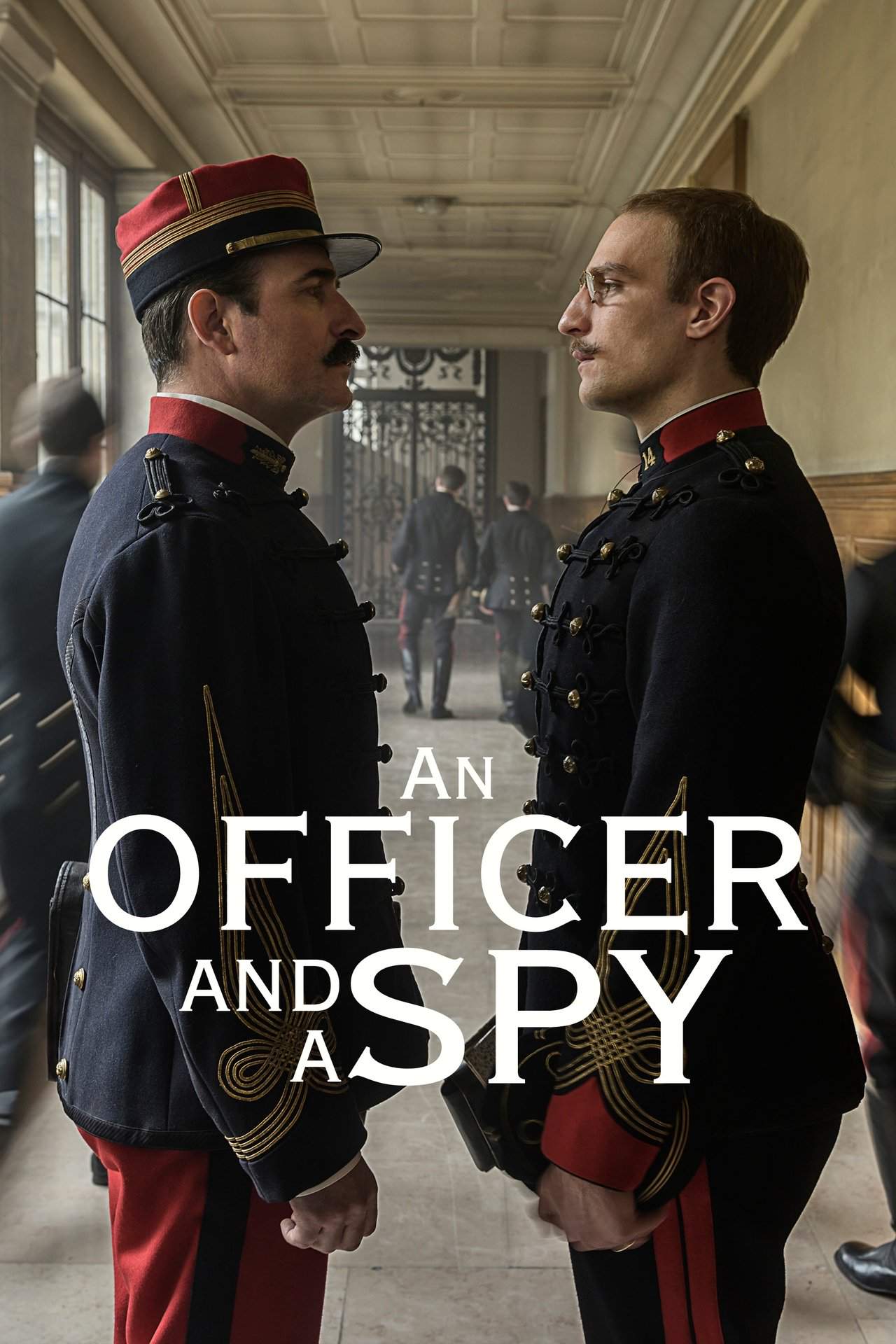
An Officer and a Spy

An Officer and a Spy

Year: 2019

Runtime: 132 mins

Language: French

Echo Score: 78

Budget: $25M

ThrillerHistoryDrama

In 1894, French Captain Alfred Dreyfus is wrongfully convicted of treason and sentenced to life imprisonment at the Devil’s Island penal colony.

Warning: spoilers below!

Haven’t seen An Officer and a Spy yet? This summary contains major spoilers. Bookmark the page, watch the movie, and come back for the full breakdown. If you're ready, scroll on and relive the story!

An Officer and a Spy (2019) – Full Plot Summary & Ending Explained

Read the complete plot breakdown of An Officer and a Spy (2019), including all key story events, major twists, and the ending explained in detail. Discover what really happened, and what it all means.

In 1894, Alfred Dreyfus, Louis Garrel, a captain in the French army, is found guilty of high treason for passing military secrets to the German Empire and is exiled to Devil's Island. His case sends a shockwave through France, particularly because Dreyfus is Jewish, creating a rift that echoes across society and the military.

One year later, officer Georges Picquart, Jean Dujardin, is appointed head of the secret service section in the French army (Deuxième Bureau). Despite alleged anti-Semitic sentiments in the ranks, he senses that the trial against Dreyfus was rushed and biased by the suspect’s origins. Noticing irregularities in the dossier, he decides to investigate further to verify Dreyfus’ guilt.

Picquart discovers that the so-called bordereau, the document that ostensibly proves Dreyfus’ guilt, was not written by Dreyfus but by Major Ferdinand Walsin Esterhazy, Laurent Natrella. According to Picquart, Esterhazy is the real spy, but the evidence has been manipulated or suppressed to protect the army. Convinced of Dreyfus’ innocence, Picquart attempts to reopen the case and arrest Esterhazy, yet he faces furious resistance from his superiors: admitting Dreyfus’ innocence would reveal a corrupt system, and the symbol of the crime—by virtue of Dreyfus’ Jewish identity—serves as a convenient scapegoat for powerful interests.

Picquart is removed from office and sent away from Paris, but he eventually returns and shares everything with his friend, the lawyer Louis Leblois, who begins organizing a committee to rehabilitate Dreyfus. They enlist Fernand Labori, and gather support from prominent intellectuals, including Émile Zola. Vincent Perez portrays Maître Leblois, Melvil Poupaud embodies Maître Labori, and André Marcon brings to life Émile Zola as a drove-by force in the campaign for justice.

Picquart’s stubborn stance leads to his arrest, while Zola makes a landmark move by publishing the incendiary article “J’accuse” in L’Aurore, fiercely detailing the irregularities of the trial and naming those implicated. The public controversy inflames the nation, and Zola faces a defamation trial that ends with a prison sentence, highlighting the deep fractures within the country’s institutions.

As the case unfolds, the testimony of Lieutenant Colonel Hubert Joseph Henry, Grégory Gadebois, destabilizes the proceedings. Henry’s deposition catalyzes a turn, and Picquart is eventually acquitted and released. Dreyfus is repatriated for a second trial in Rennes in 1899, a pivotal moment that keeps the dispute alive. Before a crucial hearing, Labori suffers an assassination attempt and is unable to defend Dreyfus, leading to a lighter sentence and a provisional pardon for Dreyfus. Yet the years of wrongful confinement weigh heavily on the men involved, even as the political landscape shifts and public opinion fractures.

Seven years later, there is a broader sense of justice as the case lingers toward a final reckoning, with broader recognition of the judicial errors that had harmed Dreyfus and those who stood up for him. The long arc of the affair continues to reverberate through the military and the public sphere, and Picquart’s career advances to a high political role, while Dreyfus, though pardoned, remains wary of how late vindication will reshape his standing within the army.

In 1907, Picquart is appointed Minister of War, a appointment that underscores the complex reconciliation of past mistakes and political necessity. Dreyfus seeks a formal acknowledgment of the years spent unjustly, hoping for restoration and recognition, but the evolving climate in France makes a complete redress improbable at that moment. The two men part with mutual respect, their earlier bond tempered by the heavy costs of a protracted, nation-shaking conflict, and the story remains a stark, enduring reminder of the long shadows cast by injustice and the courage of those who challenged it.

Last updated: October 01, 2025 at 13:04

Was this helpful?

An Officer and a Spy (2019) Plot Questions Answered – Summary FAQ

Explore frequently asked questions about An Officer and a Spy (2019) with spoiler-rich answers covering the full plot summary, major story beats, character motivations, hidden details, and ending meaning. This movie summary FAQ helps explain confusing scenes, plot twists, and narrative decisions in clear, searchable detail.

Q1

Why was Alfred Dreyfus wrongfully convicted of treason?

A.

Dreyfus was convicted primarily because of antisemitic prejudice within the French military. The bordereau, a document supposedly proving he passed secrets to Germany, was written by the actual spy, Major Ferdinand Walsin Esterhazy, but the evidence was manipulated to protect the army's reputation. His Jewish identity made him a convenient scapegoat for those who wanted to believe in a traitor without questioning their own institution.

The film establishes early that Dreyfus was convicted partly because of his Jewish background, a factor that shaped the institutional resistance to reopening his case.

alfred dreyfuswrongful convictiontreasonantisemitismfrench armybordereau
Q2

Who was the real spy if not Alfred Dreyfus?

A.

The real spy was Major Ferdinand Walsin Esterhazy, a French army officer. Picquart discovered that the bordereau, the document allegedly proving Dreyfus's guilt, was actually written by Esterhazy. The military suppressed this evidence because admitting Esterhazy's guilt would expose corruption at the highest levels and undermine the army's honor.

Picquart notices irregularities in the dossier early in his investigation that point to someone else having authored the bordereau.

ferdinand estherhazyreal spybordereauevidence forgerymilitary corruption
Q3

Why did Georges Picquart risk his career to investigate Dreyfus's case?

A.

Picquart believed the trial was rushed and biased against Dreyfus due to his Jewish background. As head of the secret service, he had access to evidence that convinced him Dreyfus was innocent and that the real spy remained active. His sense of justice and professional integrity compelled him to pursue the truth despite knowing it would threaten his position.

The film shows Picquart as a man of principle from his appointment, noting his concern about bias in the military ranks.

georges picquartinvestigationcareer riskjusticemilitary ethics
Q4

Why did the French military protect Esterhazy instead of admitting the truth?

A.

The military protected Esterhazy because admitting Dreyfus's innocence would expose a massive institutional cover-up and damage the army's honor and public trust. The Dreyfus conviction had already become a symbol, and reversing it would acknowledge that the military had wrongfully imprisoned an innocent man based on prejudice. The powerful interests involved preferred to sustain the lie rather than admit fault.

Picquart's superiors immediately resist his efforts to reopen the case, revealing their prioritization of institutional reputation over justice.

military cover-upesterhazy protectioninstitutional corruptionarmy reputation
Q5

What was Zola's "J'accuse" and why was it so important?

A.

"J'accuse" was an explosive open letter published by novelist Émile Zola in the newspaper L'Aurore in 1898. The letter directly accused the French government and military of wrongful conviction and anti-Semitic persecution of Dreyfus. It forced the affair into public consciousness, ignited a national debate about justice and prejudice, and led to Zola's prosecution for defamation, highlighting the deep divisions in French society.

The campaign to rehabilitate Dreyfus had been building support among intellectuals before Zola's intervention.

jaccuseemile zolal'aurorepublic debatedefamation trial
Q6

Why was Fernand Labori shot during the Rennes trial?

A.

Fernand Labori, Dreyfus's lawyer at the Rennes trial in 1899, was shot in the back by an assassin just before a crucial hearing. The attack was intended to silence the strongest advocate for Dreyfus's defense. Labori survived but was unable to continue representing Dreyfus, severely weakening the defense and contributing to Dreyfus's second conviction, though with a reduced sentence.

The film builds tension around the Rennes trial as the stage where the case might finally be resolved.

fernand laboriassassination attemptrennes triallawyerdefense
Q7

Why did it take so many years for Dreyfus to be fully exonerated?

A.

Dreyfus was not fully exonerated until 1906, twelve years after his initial conviction. The delay stemmed from intense institutional resistance, political pressure, antisemitism, and the military's refusal to admit wrongdoing. Each attempt to reopen the case faced obstruction, including Zola's imprisonment, Labori's assassination attempt, and political maneuvering. Even when pardoned in 1899, Dreyfus remained technically convicted.

The timeline shows multiple failed attempts at justice, with each legal setback reinforcing the institutional barriers.

exoneration timelinedelayed justicepolitical obstructiondreyfus affair duration
Q8

What happened to Georges Picquart after the Dreyfus Affair?

A.

Despite being arrested for his role in exposing the truth, Picquart was eventually acquitted and released. In 1907, he was appointed Minister of War, a remarkable reversal for a man who had challenged the military establishment. However, his victory was pyrrhic: he had suffered years of persecution, and his former opponent Dreyfus was still fighting for full recognition of his unjust imprisonment.

The timeline shows Picquart's career advancing but also notes the personal costs he endured.

georges picquartminister of warcareerpost-trialrehabilitation
Q9

Why was Dreyfus pardoned but not fully cleared of the charges?

A.

Dreyfus received a pardon in 1899 from the Prime Minister, which freed him from Devil's Island but did not formally clear his name. The pardon was a political compromise to ease public tension rather than a judicial vindication. Full exoneration only came in 1906, and even then, the recognition of his wrongful imprisonment remained incomplete in his view, as he was not restored to the rank he deserved.

The political climate in France made complete justice difficult, leading to the provisional pardon as a middle ground.

dreyfus pardonincomplete exonerationpolitical resolution1906 acquittal
Q10

Why did Dreyfus protest Picquart's appointment as Minister of War?

A.

Dreyfus protested Picquart's 1907 appointment as Minister of War because, despite their shared victory in exposing the truth, Dreyfus felt his own suffering had not been properly acknowledged. He had spent years unjustly imprisoned and was not restored to his rightful rank in the army. The appointment of the man who had saved his reputation while Dreyfus himself remained uncompensated felt like a final injustice.

The film notes the tension between the two men at their final meeting, shaped by the unequal outcomes of the affair.

dreyfus protestpicquart minister warrank restorationarmy recognition
Q11

What was the bordereau in the Dreyfus Affair?

A.

The bordereau was a secret document, a list of stolen French military documents, that served as the primary evidence supposedly proving Dreyfus's guilt. It was actually written by Major Ferdinand Walsin Esterhazy and used by the military to justify Dreyfus's conviction. Picquart's discovery that Dreyfus did not write the bordereau was the key evidence that exposed the frame-up.

Picquart's investigation centers on analyzing the handwriting and origin of this crucial document.

bordereausecret documentevidencehandwriting analysisframe-up
Mobile App Preview

Coming soon on iOS and Android

The Plot Explained Mobile App

From blockbusters to hidden gems - dive into movie stories anytime, anywhere. Save your favorites, discover plots faster, and never miss a twist again.

Sign up to be the first to know when we launch. Your email stays private, always.

Explore Movie Threads

Discover curated groups of movies connected by mood, themes, and story style. Browse collections built around emotion, atmosphere, and narrative focus to easily find films that match what you feel like watching right now.

Truth-seeking thrillers like An Officer and a Spy

Courageous individuals risk everything to expose institutional corruption and lies.If you enjoyed the tense, high-stakes investigation in An Officer and a Spy, explore more movies about whistleblowers and crusaders fighting institutional corruption. These films share a focus on evidence, moral courage, and the heavy personal cost of seeking justice against powerful, systemic forces.

tensegrippingfrustratingcourageousmethodicalunsettlinghistorical

Narrative Summary

These stories typically follow a methodical process of discovery, where a protagonist, often an insider, gradually uncovers a cover-up or miscarriage of justice. The central conflict is between the individual's integrity and the institution's desire to protect itself, leading to escalating tension and personal sacrifice.

Why These Movies?

They are grouped by their shared focus on a specific, high-stakes conflict: the lone truth-seeker versus an immovable system. The mood is consistently tense and gripping, built on a foundation of procedural detail and the emotional weight of fighting a seemingly unwinnable battle.

Methodical historical dramas with tense atmospheres like An Officer and a Spy

Where the weight of history builds a palpable sense of dread and injustice.For viewers who appreciated the slow-burn tension and historical setting of An Officer and a Spy, this collection features dramas and thrillers where a steady pace amplifies a feeling of institutional dread. These movies are gripping through atmosphere and building frustration, not fast-paced action.

sombermethodicalunsettlinggrippinghistoricalfrustratingtense

Narrative Summary

Narratives unfold patiently, allowing the audience to feel the constraints and pressures of the historical context. The drama arises from navigating rigid social structures, bureaucratic inertia, or deep-seated bigotry. The climax is often a pyrrhic victory or a bittersweet resolution that reflects the era's limitations.

Why These Movies?

They share a distinctive combination of a historical setting, a steady narrative pace, and a tone dominated by tension and somber reflection. The experience is defined by a feeling of being trapped within the machinery of a specific time and place, leading to a heavy, often frustrating emotional journey.

Unlock the Full Story of An Officer and a Spy

Don't stop at just watching - explore An Officer and a Spy in full detail. From the complete plot summary and scene-by-scene timeline to character breakdowns, thematic analysis, and a deep dive into the ending - every page helps you truly understand what An Officer and a Spy is all about. Plus, discover what's next after the movie.

An Officer and a Spy Timeline

Track the full timeline of An Officer and a Spy with every major event arranged chronologically. Perfect for decoding non-linear storytelling, flashbacks, or parallel narratives with a clear scene-by-scene breakdown.

An Officer and a Spy Timeline

Characters, Settings & Themes in An Officer and a Spy

Discover the characters, locations, and core themes that shape An Officer and a Spy. Get insights into symbolic elements, setting significance, and deeper narrative meaning - ideal for thematic analysis and movie breakdowns.

Characters, Settings & Themes in An Officer and a Spy

An Officer and a Spy Spoiler-Free Summary

Get a quick, spoiler-free overview of An Officer and a Spy that covers the main plot points and key details without revealing any major twists or spoilers. Perfect for those who want to know what to expect before diving in.

An Officer and a Spy Spoiler-Free Summary

More About An Officer and a Spy

Visit What's After the Movie to explore more about An Officer and a Spy: box office results, cast and crew info, production details, post-credit scenes, and external links - all in one place for movie fans and researchers.

More About An Officer and a Spy

Similar Movies to An Officer and a Spy

Discover movies like An Officer and a Spy that share similar genres, themes, and storytelling elements. Whether you’re drawn to the atmosphere, character arcs, or plot structure, these curated recommendations will help you explore more films you’ll love.