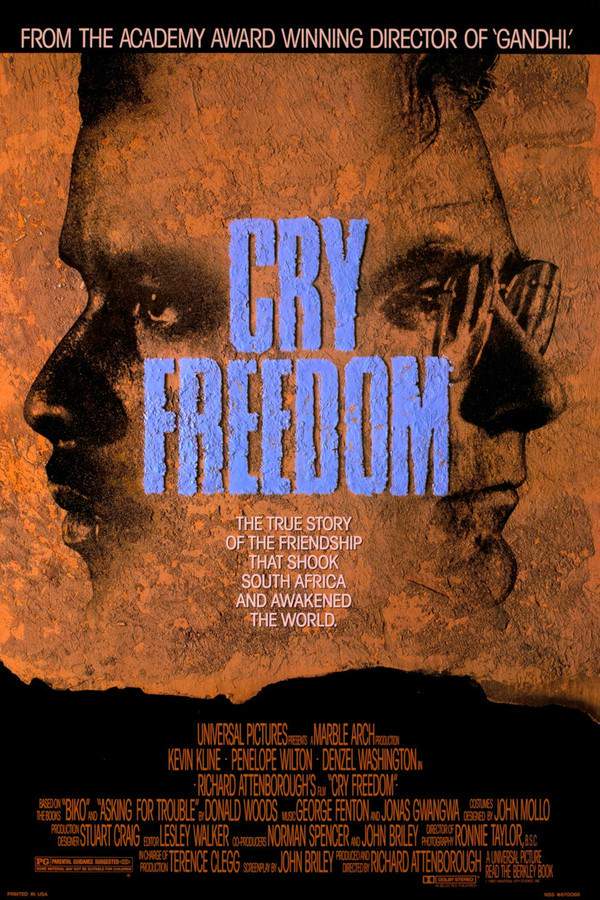
Cry Freedom

Cry Freedom

Year: 1987

Runtime: 157 min

Language: English

Director: Richard Attenborough

BiographyDramaHistory

During the turbulent era of apartheid in South Africa, journalist Donald Woods develops a close relationship with the charismatic activist Steve Biko. Following Biko's death in police custody, Woods becomes increasingly outspoken and is placed under house arrest. Faced with escalating persecution and fearing for his family's safety, he makes the difficult decision to flee the country, determined to expose the truth about the systemic injustice and fight for freedom and equality.

Warning: spoilers below!

Haven’t seen Cry Freedom yet? This summary contains major spoilers. Bookmark the page, watch the movie, and come back for the full breakdown. If you're ready, scroll on and relive the story!

Cry Freedom (1987) – Full Plot Summary & Ending Explained

Read the complete plot breakdown of Cry Freedom (1987), including all key story events, major twists, and the ending explained in detail. Discover what really happened—and what it all means.

Following an eye-opening exposé revealing the drastic destruction of a notorious slum in East London, South Africa, liberal journalist Donald Woods becomes fascinated by the challenges faced by anti-apartheid activist Steve Biko. Biko stands as a pivotal figure in the Black Consciousness Movement, and despite their initial ideological differences—Woods strongly opposing Biko’s banning and questioning his political beliefs—he cannot help but be captivated by Biko’s steadfast dedication to nonviolent resistance. Through insightful conversations, Biko invites Woods on an enlightening tour of impoverished black townships, where the harsh realities of government oppression and apartheid’s suffocating presence starkly unfold before them. Witnessing the dire conditions firsthand, Woods starts to understand and share Biko’s vision of a South Africa where every individual, irrespective of race, can enjoy equal rights and opportunities. As their relationship deepens, the two men forge a powerful bond grounded in their united pursuit of justice.

During a pivotal moment, Biko takes his message beyond his limited ‘banning area’ to inspire the masses with a passionate address that resonates with his audience. However, his call for change quickly meets with opposition as he is apprehended by security forces, informed on by an untrustworthy source. After enduring a relentless interrogation, Biko is summoned to court to explain his stance and articulate the burning passion that fuels his movement. Undaunted by an oppressive regime, he eloquently champions the cause of nonviolent resistance, his words infused with unwavering conviction.

In the shadow of this ordeal, Biko’s church comes under siege from security officers seeking to intimidate him. In a courageous move, Woods steps in, securing a meeting with Jimmy Kruger, the South African Minister of Justice, intent on halting the tide of violence and safeguarding his friend. Initially met with resistance, Woods’ grit leads to a fraught confrontation that places him under the chilling threat of harassment, indicating that orders have likely come from Kruger himself.

As Bantu Stephen Biko navigates an increasingly perilous path, he finds himself behind bars in brutal conditions and suffers severe injuries due to a beating, inflicting irreversible damage to his brain. Despite medical advice suggesting he should receive specialized treatment, the authorities refuse due to fears of escape. Instead, they transport him to a police hospital in Pretoria, a grueling 700-mile journey from Cape Town that further deteriorates his fragile condition and results in a tragic outcome.

Following Biko’s heartbreaking death, Woods feels compelled to expose the police’s involvement in this sinister act. However, his efforts face significant obstacles as he is barred from boarding a flight, learning he is banned from leaving South Africa. Consequently, Woods and his family endure relentless harassment from security forces, including gunfire into their home, vandalism, and tormenting packages sent to them, including shirts bearing Biko’s image coated in itching powder.

Unyielding, Woods resolves to find asylum in Britain, motivated by a relentless desire to unveil the heinous and racist nature of the South African government. His journey is fraught with danger as he disguises himself as a priest to escape the grips of the authorities. Ultimately, he manages to reach the Kingdom of Lesotho, where his wife Wendy and their children soon follow.

With the assistance of Australian journalist Bruce Haigh, the British High Commission in Maseru, and the Government of Lesotho, they secure passage with United Nations passports, aided by a lone official from Lesotho. Their daring escape traverses South African territory through Botswana, finally landing them in London, where they are granted political asylum.

The film culminates in a poignant reflection on the harrowing price paid by anti-apartheid activists like Biko, whose lives were tragically cut short while in government custody under dubious circumstances. As the poignant strains of Nkosi Sikelel’ iAfrika echo in the background, viewers are left to contemplate the devastating repercussions of oppression and the indomitable human spirit that fights back defiantly against adversity.

Last Updated: November 21, 2024 at 11:18

Mobile App Preview

Coming soon on iOS and Android

The Plot Explained Mobile App

From blockbusters to hidden gems — dive into movie stories anytime, anywhere. Save your favorites, discover plots faster, and never miss a twist again.

Sign up to be the first to know when we launch. Your email stays private — always.

Explore Movie Threads

Discover curated groups of movies connected by mood, themes, and story style. Browse collections built around emotion, atmosphere, and narrative focus to easily find films that match what you feel like watching right now.

Movies about Activist Journalists like Cry Freedom

True stories of courageous individuals documenting atrocities and fighting tyranny.If you were moved by the true story in Cry Freedom, explore these films about journalists and activists confronting oppressive systems. These movies feature similar themes of courage, documentation of injustice, and the perilous fight for truth against authoritarian governments.

urgentgrippingdeterminedfearfulsomberhopeful

Narrative Summary

These stories typically follow a linear, character-driven path from initial awareness to active, dangerous involvement. The protagonist, often an outsider at first, becomes deeply entangled in a political struggle, leading to persecution and a climactic fight for survival or to expose the truth to the world.

Why These Movies?

Movies in this thread share a core focus on the role of truth-telling in the face of overwhelming power. They create a cohesive experience through their high-stakes narratives, morally unambiguous conflicts, and a tone that blends dread with determined hope.

Bittersweet Historical Dramas like Cry Freedom

Sobering true stories where hard-won victories are shadowed by profound loss.For viewers seeking more impactful historical stories like Cry Freedom, this list features films that tackle difficult chapters of history. They share a similar blend of a dark, oppressive tone, a straightforward dramatic narrative, and an ending that feels bittersweet—a mix of hard-won hope and somber reflection.

sombermelancholicoppressivehopefulgrippingdetermined

Narrative Summary

The narrative pattern involves immersing the viewer in a dark period of history through a personal story. The journey is one of awakening and struggle against an immense force, leading to a conclusion that offers a measure of justice or escape but is permanently marked by the trauma and loss experienced along the way.

Why These Movies?

These films are grouped by their shared emotional weight, dark historical settings, and a specific kind of ending. They provide a similar viewing experience: emotionally draining yet ultimately meaningful, leaving the audience with a complex mix of sorrow for the past and admiration for human courage.

Unlock the Full Story of Cry Freedom

Don't stop at just watching — explore Cry Freedom in full detail. From the complete plot summary and scene-by-scene timeline to character breakdowns, thematic analysis, and a deep dive into the ending — every page helps you truly understand what Cry Freedom is all about. Plus, discover what's next after the movie.

Cry Freedom Timeline

Track the full timeline of Cry Freedom with every major event arranged chronologically. Perfect for decoding non-linear storytelling, flashbacks, or parallel narratives with a clear scene-by-scene breakdown.

Cry Freedom Timeline

Characters, Settings & Themes in Cry Freedom

Discover the characters, locations, and core themes that shape Cry Freedom. Get insights into symbolic elements, setting significance, and deeper narrative meaning — ideal for thematic analysis and movie breakdowns.

Characters, Settings & Themes in Cry Freedom

Cry Freedom Spoiler-Free Summary

Get a quick, spoiler-free overview of Cry Freedom that covers the main plot points and key details without revealing any major twists or spoilers. Perfect for those who want to know what to expect before diving in.

Cry Freedom Spoiler-Free Summary

More About Cry Freedom

Visit What's After the Movie to explore more about Cry Freedom: box office results, cast and crew info, production details, post-credit scenes, and external links — all in one place for movie fans and researchers.

More About Cry Freedom

Similar Movies to Cry Freedom

Discover movies like Cry Freedom that share similar genres, themes, and storytelling elements. Whether you’re drawn to the atmosphere, character arcs, or plot structure, these curated recommendations will help you explore more films you’ll love.