




Plot Explained Spoilers guaranteed!
Plot Explained

Browse by genre

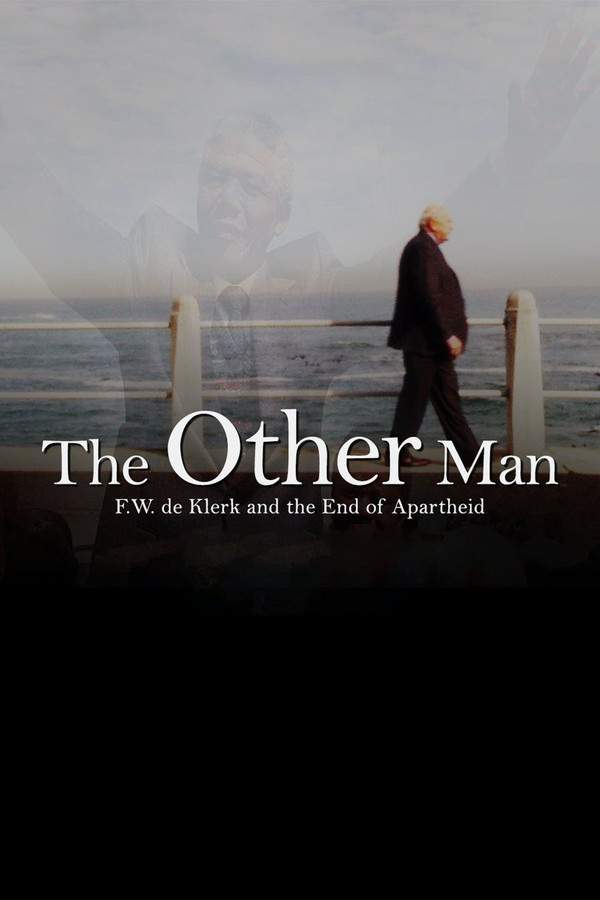
The Other Man: F.W. de Klerk and the End of Apartheid (2015) movie poster

Plot Summary

The Other Man: F.W. de Klerk and the End of Apartheid (2015) Plot Summary Explained

Release, runtime and language
2015 · 75 min · English
Directed by
Nicolas Rossier

This documentary explores the surprising journey of F.W. de Klerk, the last apartheid-era president of South Africa. It examines his pivotal role in transitioning from imprisoning Nelson Mandela to collaborating with him, a partnership that prevented a potential civil war and fundamentally altered South Africa's future. The film investigates the complexities of de Klerk’s political evolution and sheds light on his legacy, revealing the unexpected decisions that led to a historic reconciliation.

On this page (6)
  1. 1 Where to watch
  2. 2 What happens: full plot
  3. 3 Plot questions answered
  4. 4 Movie threads
  5. 5 Movies like The Other Man: F.W. de Klerk and the End of Apartheid
  6. 6 Every angle

Where to watch

Where to Watch The Other Man: F.W. de Klerk and the End of Apartheid (2015)

Where can you watch The Other Man: F.W. de Klerk and the End of Apartheid? Stream, rent or buy it in the US, including on BINGE Movies & TV, Fawesome and Tubi TV: current JustWatch availability with up-to-date prices.

Streaming availability powered by JustWatch

Full plot summary · contains spoilers

What Happens in The Other Man: F.W. de Klerk and the End of Apartheid: Full Plot Summary

The whole story of The Other Man: F.W. de Klerk and the End of Apartheid (2015) explained, from the opening scene to the final frame: every key event, every twist and what it all adds up to. Read it as a quick recap before the sequel, to check a scene you missed, or to finally understand what really happened.

De Klerk held the position of president of South Africa from 1989 until 1994. A pivotal moment in his leadership occurred in 1990 when he made the significant decision to release the leading anti-apartheid activist, Nelson Mandela, who had spent an astounding 27 years in prison. This release coincided with the repeal of all major apartheid laws, including the lifting of the ANC ban. Initially, de Klerk was a proponent of the apartheid state; however, he is now recognized for his crucial role in dismantling South Africa's racial segregation policies. Together with Nelson Mandela, he guided the nation towards becoming a multi-racial democracy.

Throughout the years, there has been extensive speculation regarding de Klerk's motivations and his impact on this evolving landscape. Is it appropriate to view him as a South African Fujimori or Kissinger? What truly constitutes de Klerk's legacy? What transformations led this man, who fervently defended the privileges of white Africans, to initiate such profound changes towards a more equitable nation? The film delves deep into the political complexities of his tenure during apartheid and examines his intricate relationship with Mandela. It paints a portrait of a man who has been both reviled and celebrated, somehow remaining in the shadows despite his significant contributions.

The narrative of de Klerk is also synonymous with the story of South Africa itself, as its oppressive past and remarkable transformation consistently shape its social and political identities in ways that resonate both locally and internationally. The documentary includes exclusive interviews with de Klerk himself, alongside prominent figures such as Thabo Mbeki (former president of S.A.), Roelf Meyer, and Leon Wessels (former minister in the de Klerk cabinet). It also features insights from Albie Sachs (an anti-apartheid activist and former judge on the Constitutional Court of South Africa), Mathews Phosa (former ANC Treasurer General and anti-apartheid activist), Yasmin Sooka (former commissioner of the Truth and Reconciliation Commission), Richard Goldstone (who led the Goldstone Commission investigations into political violence in South Africa), and many others who were instrumental in both pre- and post-apartheid South Africa. Through these accounts, the film illuminates the profound legacy of de Klerk and the ongoing narrative of a country forever marked by its history.

Last updated: May 12, 2025 at 07:04

Was this helpful?

Plot questions answered

The Other Man: F.W. de Klerk and the End of Apartheid Plot Explained: Your Questions Answered

The questions people ask most about The Other Man: F.W. de Klerk and the End of Apartheid (2015): what happens in the confusing scenes, why the characters do what they do, the twists, hidden details and what the ending means. Each answer contains spoilers.

Q1

Why did F.W. de Klerk release Nelson Mandela in 1990?

De Klerk released Mandela because he recognized that apartheid was becoming unsustainable both domestically and internationally. Facing mounting international sanctions, internal resistance, and the realization that Mandela was willing to negotiate, de Klerk calculated that releasing him and entering talks was the only viable path to prevent a total collapse of the system. This decision marked a dramatic shift from his previous stance as a defender of racial segregation.

  • mandela release
  • 1990
  • negotiations
  • apartheid end
  • political change
Q2

What caused de Klerk to transition from supporting apartheid to dismantling it?

De Klerk's transformation stemmed from multiple factors: mounting international pressure through sanctions that crippled the economy, growing internal resistance and unrest, and a pragmatic recognition that minority rule could not be sustained indefinitely. Additionally, he reportedly had private conversations that challenged his worldview, and he believed that leading the change would yield better outcomes than being swept away by revolution.

  • apartheid change
  • de klerk motivation
  • reform
  • political evolution
  • white privilege
Q3

How did de Klerk and Mandela's negotiations prevent civil war in South Africa?

Their direct negotiations created a controlled pathway for transition that addressed the fears of both white and black South Africans. By engaging in secret talks and public negotiations, they established compromise on key issues like power-sharing, security force transitions, and election timelines. This deliberate approach prevented the power vacuum and ethnic violence that many predicted would erupt if apartheid ended abruptly.

  • civil war prevention
  • negotiations
  • mandela
  • transition
  • violence avoidance
Q4

Why does de Klerk's legacy remain controversial despite his role in ending apartheid?

De Klerk's legacy is contested because he spent years actively defending and enforcing apartheid before his transformation. Critics argue he only changed course when apartheid became unsustainable, questioning whether his motivations were truly principled or simply pragmatic self-interest. Additionally, many feel that the transition did not deliver full justice for apartheid victims, leaving de Klerk as both a liberator and a former oppressor.

  • de klerk legacy
  • controversy
  • criticism
  • apartheid
  • reconciliation
Q5

What was the Truth and Reconciliation Commission and what role did it play?

Established in 1995, the Truth and Reconciliation Commission was chaired by Desmond Tutu and created a platform for victims of apartheid-era human rights violations to confront perpetrators and share their experiences. It offered amnesty to those who fully disclosed their crimes, aiming to balance justice with national healing. The commission documented thousands of abuses and became a model for transitional justice worldwide.

  • trc
  • truth commission
  • apartheid crimes
  • justice
  • desmond tutu
Q6

What do the Fujimori and Kissinger comparisons mean in the documentary?

The documentary explores whether de Klerk resembles Alberto Fujimori, the Peruvian president who ended his country's authoritarian regime through democratic reforms, or Henry Kissinger, the American diplomat known for realpolitik. The comparison probes whether de Klerk was a genuine reformer or a pragmatist who changed tactics to preserve influence. Both comparisons suggest his motivations were complex and possibly self-serving.

  • fujimori
  • kissinger
  • comparison
  • motivations
  • reformer
Q7

What happened to de Klerk's National Party after the 1994 elections?

After Mandela's election victory in 1994, the National Party joined the coalition government and became part of the new political order. De Klerk served as Mandela's vice president until 1996, when the National Party rebranded as the New National Party and eventually merged into the Democratic Alliance. The party transitioned from ruling party to opposition, fundamentally changing its role in South African politics.

  • national party
  • 1994 elections
  • coalition
  • opposition
  • government
Q8

Why did Mandela spend 27 years in prison before his release?

Mandela was sentenced to life imprisonment in 1964 for his anti-apartheid activities, including his role in founding Umkhonto we Sizwe, the armed wing of the ANC. He remained incarcerated on Robben Island and later in Pollsmoor Prison for 27 years, becoming the global symbol of anti-apartheid resistance. His release in 1990 was only possible when de Klerk legalized the ANC and decided to negotiate rather than continue holding him.

  • mandela prison
  • 27 years
  • robben island
  • anc
  • imprisonment
Q9

How did de Klerk's 1990 decisions dismantle apartheid legally?

In 1990, de Klerk took three major legal steps: he ordered Mandela's release, repealed the laws that banned the ANC and other anti-apartheid organizations, and began dismantling the legal framework of racial segregation. These actions transformed South Africa from a dictatorship into a country where political negotiation became possible, setting the stage for the 1994 elections.

  • 1990
  • legal changes
  • anc ban
  • apartheid laws
  • repeal
Q10

What was de Klerk's relationship with Mandela during the transition?

De Klerk and Mandela developed an unexpectedly collaborative relationship despite their opposing backgrounds. They conducted direct negotiations that were often tense but remained respectful. Mandela reportedly found de Klerk more willing to compromise than expected, though their perspectives on justice and history differed significantly. This working relationship was crucial in achieving a peaceful transition.

  • mandela relationship
  • negotiations
  • collaboration
  • transition
  • partnership

Movie threads

More Movies Like The Other Man: F.W. de Klerk and the End of Apartheid, by Mood & Story

Curated lists built around what makes The Other Man: F.W. de Klerk and the End of Apartheid tick: the same mood, the same kind of story or the same emotional payoff. Each list explains why these movies belong together.

Documentaries on Controversial Legacies like The Other Man: F.W. de Klerk and the End of Apartheid

Documentaries that investigate the complex and debated figures behind pivotal moments. For viewers who liked the historical investigation in The Other Man, this section features movies about complex political figures and disputed legacies. Find similar documentaries that offer a somber, reflective look at the people behind major historical turning points, inviting you to grapple with difficult moral questions.

  • historical
  • reflective
  • thought-provoking
  • somber
  • critical
  • informative
  • Tone: neutral, reflective, critical
  • Pacing: steady, methodical
Why these movies?

The story pattern: Movies in this thread typically follow an investigative structure, piecing together historical events through archival footage, interviews, and expert analysis. The narrative builds a nuanced portrait of a central figure, focusing on the tension between their positive contributions and the harm they may have caused. The journey is one of peeling back layers to understand motivation and consequence.

Why they belong together: These films are grouped by their shared commitment to examining history's gray areas. They share a neutral to critical tone, a steady pacing suited for methodical investigation, and a heavy emotional weight derived from confronting painful truths about power and injustice. The focus is on legacy, transition, and reconciliation.


Movies with Bittersweet Endings about Painful Transitions like The Other Man: F.W. de Klerk and the End of Apartheid

Stories where societal healing is achieved, but at a significant and acknowledged cost. If you appreciated the bittersweet resolution in The Other Man, explore films that capture the complex emotions of societal change. Discover dramas and documentaries where progress is hard-won, leaving characters and audiences with a mix of hope and sorrow about the costs of transformation.

  • bittersweet
  • somber
  • thought-provoking
  • historical
  • heavy
  • reflective
  • Tone: somber, bittersweet, heavy
  • Pacing: steady, deliberate
Why these movies?

The story pattern: The narratives in this thread follow a journey from a state of conflict or oppression toward a resolution that prevents greater disaster, yet falls short of a purely happy ending. The climax is often a political or moral compromise, and the conclusion reflects on what was sacrificed for peace or justice, leaving a lasting emotional resonance.

Why they belong together: These films share a specific emotional trajectory: they build toward a resolution that feels simultaneously like an achievement and a loss. They are united by a bittersweet ending feel, a heavy emotional weight, and moderate complexity in dealing with moral and political nuance. The pacing is often steady, allowing the gravity of the transition to unfold.

If you liked this

Movies Like The Other Man: F.W. de Klerk and the End of Apartheid

Similar movies to The Other Man: F.W. de Klerk and the End of Apartheid: the same genre, themes or kind of story. Each one comes with its own plot summary, timeline and ending explained.

Browse all movie summaries

Every angle

The Other Man: F.W. de Klerk and the End of Apartheid (2015) Explained: Plot, Timeline & Characters

Everything about The Other Man: F.W. de Klerk and the End of Apartheid in one place: what happens in the plot summary, the timeline in chronological order, the characters and meaning and a spoiler-free summary. What's After the Movie adds the cast, box office and post-credit scenes.

Coming soon on iOS and Android

The Plot Explained Movie Summary App

Plot summaries, endings explained and timelines on your phone. Catch up on any movie in minutes, save your favorites and never miss a twist again.

Be the first to know when we launch. Your email stays private, always.

Learn more about the app