Plot Explained Spoilers guaranteed!
Plot Explained

Browse by genre

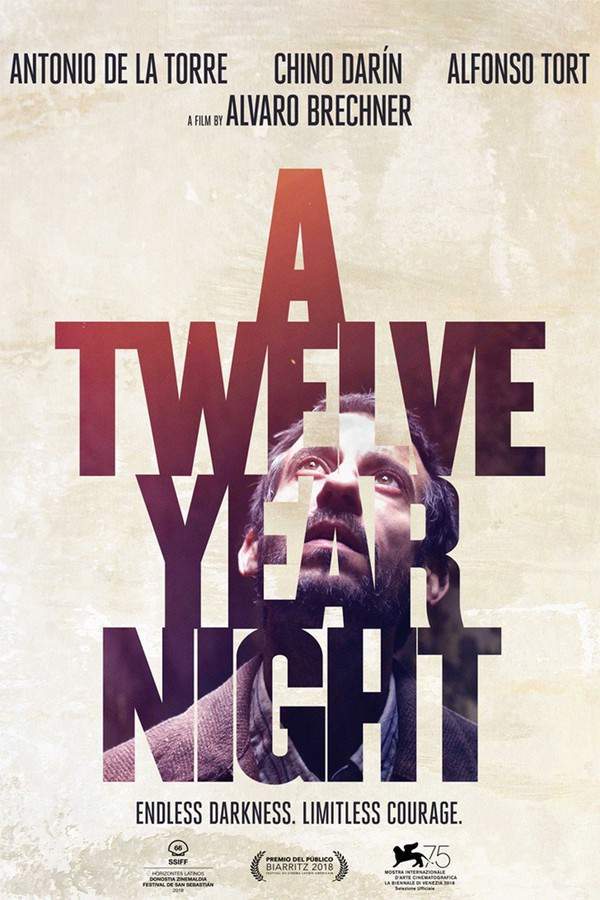
A Twelve Year Night (2018) movie poster

Plot Summary

A Twelve Year Night (2018) Plot Summary Explained

Release, runtime and language
2018 · 122 min · Spanish
Echo score 84
Directed by
Álvaro Brechner
Starring
Antonio de la Torre, Alfonso Tort, Álvaro Armand Ugón, César Bordón, César Troncoso, Chino Darín

In 1973, under Uruguay's military regime, three Tupamaro prisoners are subjected to a brutal and clandestine plan. They are taken to a clandestine prison facility and held in solitary confinement without trial. For twelve years, Pepe Mujica, one of the prisoners and a future president, faces relentless psychological warfare and extreme conditions. Despite the cruelty and despair, his spirit remains defiant throughout his ordeal.

On this page (5)
  1. 1 What happens: full plot
  2. 2 Plot questions answered
  3. 3 Movie threads
  4. 4 Movies like A Twelve Year Night
  5. 5 Every angle

Full plot summary · contains spoilers

What Happens in A Twelve Year Night: Full Plot Summary

The whole story of A Twelve Year Night (2018) explained, from the opening scene to the final frame: every key event, every twist and what it all adds up to. Read it as a quick recap before the sequel, to check a scene you missed, or to finally understand what really happened.

In 1973 Uruguay, the nation is under the oppressive grip of a civic-military dictatorship, with the National Army engaged in violent battles against the leftist Tupamaros group. Three courageous members of the Tupamaros—José "Pepe" Mujica (Antonio de la Torre), Mauricio Rosencof (Chino Darín), and Eleuterio Fernández Huidobro (Alfonso Tort)—are captured and confined as hostages in a prison controlled by the government. Over the next twelve harrowing years, the trio endures repeated transfers to various military facilities scattered throughout the country.

As mounting international scrutiny prevents the military from executing them, they resort to psychological torment instead. The hostages are subjected to humiliating petty rules and severe abuses, including solitary confinement and even a staged execution. In a rare show of compassion under pressure from the hostages' families, the military chief reluctantly grants a brief opportunity for the men to reunite on the prison grounds, but with an ominous warning to maintain silence.

In 1975, Pepe experiences a drastic separation from his comrades, being imprisoned in the dark confines of a grain silo. His isolation leads him to suffer from severe mental delusions, prompting haunting hallucinations of his mother. Meanwhile, in a different facility, Rosencof forms an unexpected bond with Sargento Alzamora (César Bordón), aiding him in crafting a heartfelt letter to a girl he admires. Eventually, the trio reunites and is transported to a hidden underground prison in 1978. Tragically, Pepe is thrust into complete isolation, spiraling further into despair as he clings to memories of his capture and grapples with the fear of being forgotten by time.

Their fate shifts as they are moved to another prison boasting improved conditions, granted special privileges in a deceptive tactic to mislead a visiting Red Cross delegation. However, these privileges are swiftly rescinded once the delegation departs. The discovery of a bar of soap with mysterious inscriptions in Huidobro's possession leads to intense scrutiny, ultimately exonerating him but triggering a grim remark from the military chief about his failure to eliminate them.

After a series of items sent by his mother are unjustly taken, Pepe disrupts a military event occurring close to his cell, resulting in an order for him to see a psychiatrist, who vows to highlight his dire situation. By 1980, the government faces a significant defeat in a referendum aimed at amending the constitution to entrench the military's power.

Fast forward to 1983, the hostages find themselves in another prison, where Rosencof encounters Alzamora, now serving as a chief guard. Alzamora, having married in the intervening years, expresses gratitude to Rosencof, which allows the three men increased freedoms under his supervision. The struggle culminates in 1985 when the military finally releases Pepe, Rosencof, and Huidobro among a wave of political prisoners during a general amnesty, leading to an emotional reunion with their families.

Last updated: November 16, 2024 at 14:57

Was this helpful?

Plot questions answered

A Twelve Year Night Plot Explained: Your Questions Answered

The questions people ask most about A Twelve Year Night (2018): what happens in the confusing scenes, why the characters do what they do, the twists, hidden details and what the ending means. Each answer contains spoilers.

Q1

Why were the Tupamaro prisoners held for 12 years instead of being executed?

The military could not execute them due to mounting international scrutiny and pressure. Instead, they resorted to psychological torment as a way to break the prisoners without openly killing them. The regime wanted to eliminate the Tupamaros as political symbols but needed to avoid international condemnation, so they kept them alive in isolated conditions hoping they would psychologically deteriorate or die from the harsh conditions.

  • tupamaro
  • execution
  • international pressure
  • psychological warfare
  • dictatorship
Q2

Why was Pepe Mujica separated and kept in a grain silo?

In 1975, Pepe was separated from his comrades and imprisoned in complete darkness inside a grain silo. This extreme isolation was part of the military's psychological warfare tactic to break him individually. The darkness and complete solitude drove him into severe mental delusions, causing him to frequently hallucinate about his mother as his mind deteriorated without human contact.

  • pepe mujica
  • grain silo
  • isolation
  • hallucinations
  • mental breakdown
Q3

Why did the military grant the prisoners special privileges in 1979?

In 1979, the prisoners were moved to a facility with improved conditions and granted special privileges. This was a calculated deception aimed at misleading a visiting Red Cross delegation. The military wanted to present a false image of humane treatment to the international observers. Once the delegation departed, all privileges were immediately rescinded, revealing the tactic as pure manipulation.

  • red cross
  • deception
  • privileges
  • international scrutiny
  • propaganda
Q4

Why was the 1980 referendum important for the prisoners?

In 1980, the military government suffered a humiliating defeat in a referendum aimed at amending the constitution to permanently entrench their power. This political setback weakened the dictatorship's legitimacy and marked a turning point in Uruguay's political landscape. For the prisoners, this defeat signaled that the regime's grip on power was loosening, eventually leading to their eventual release in 1985.

  • referendum
  • 1980
  • constitution
  • dictatorship
  • political defeat
Q5

How did Rosencof's relationship with Sargento Alzamora develop?

While imprisoned in a different facility, Rosencof formed an unexpected bond with Sargento Alzamora by helping him write a heartfelt letter to a girl he admired. This human connection across enemy lines demonstrated how even under oppressive conditions, small acts of kindness could bridge divides. By 1983, when they reunited at another prison, Alzamora had become a chief guard and expressed gratitude toward Rosencof, granting the three prisoners increased freedoms.

  • rosencof
  • alzamora
  • letter
  • guard
  • human connection
Q6

What caused Pepe Mujica's mental breakdown and hallucinations?

Pepe's mental breakdown was caused by the extreme isolation in the grain silo, where he spent extended periods in complete darkness with no human contact. This sensory deprivation led to severe mental delusions and hallucinations, particularly of his mother. The psychological warfare was designed to break prisoners mentally, and Pepe's isolation was the most extreme example of this tactic.

  • pepe mujica
  • hallucinations
  • isolation
  • mental health
  • grain silo
Q7

Why were the prisoners finally released in 1985?

In 1985, the military government granted a general amnesty and released Pepe, Rosencof, and Huidobro among a wave of political prisoners. This came after years of mounting international pressure, the regime's 1980 referendum defeat, and broader political changes in Uruguay. The prisoners' release marked the end of their twelve-year ordeal and their emotional reunion with their families.

  • release
  • 1985
  • amnesty
  • political prisoners
  • freedom
Q8

What was the significance of the soap with inscriptions found on Huidobro?

In 1979, a bar of soap with mysterious inscriptions was discovered in Huidobro's possession, leading to an intense investigation. After being exonerated, the military chief made a grim remark about their failure to eliminate the hostages. This incident revealed the regime's continued hostility and their frustration at being unable to dispose of the prisoners while maintaining plausible deniability to the international community.

  • soap
  • inscriptions
  • huidobro
  • investigation
  • elimination
Q9

What was the staged execution that the prisoners were subjected to?

The prisoners were subjected to a staged execution as part of the psychological torment tactics used by the military. This cruel trick was designed to psychologically break the hostages by making them believe they would be executed, only to reveal it was a macabre game. This psychological abuse, along with humiliating petty rules and severe conditions, was part of the systematic cruelty inflicted upon them.

  • staged execution
  • psychological torture
  • fear
  • intimidation
Q10

How did the prisoners maintain hope during their 12-year ordeal?

The prisoners maintained hope through various means: their shared defiance and solidarity when briefly reunited, the small human connections like Rosencof's bond with Alzamora, and the belief that their struggle was meaningful. Pepe clung to memories of his capture, and despite moments of despair about being forgotten by time, the trio's resilience and the eventual political changes in Uruguay ultimately led to their release.

  • hope
  • defiance
  • solidarity
  • resilience
  • memories

Movie threads

More Movies Like A Twelve Year Night, by Mood & Story

Curated lists built around what makes A Twelve Year Night tick: the same mood, the same kind of story or the same emotional payoff. Each list explains why these movies belong together.

Political Prisoner Stories Like A Twelve Year Night

Stories of individuals surviving brutal regimes through quiet, defiant resilience. If you were moved by the resilience in A Twelve Year Night, explore more movies like it. This collection features powerful dramas about survival under dictatorship, psychological torture, and the human cost of political dissent, all sharing a dark tone and heavy emotional weight.

  • oppressive
  • defiant
  • somber
  • gritty
  • psychological
  • resilient
  • Tone: dark, oppressive, defiant
  • Pacing: slow, deliberate
Why these movies?

The story pattern: Narratives in this thread often follow a linear, chronological path spanning years, detailing the daily grind of survival under extreme duress. The central conflict pits an individual's internal fortitude against an impersonal, oppressive system, with the character arc focused on maintaining identity and hope amidst relentless psychological warfare.

Why they belong together: These films are grouped together because they share a specific thematic focus on political imprisonment and resistance, a dark and oppressive tone, and a storytelling approach that prioritizes psychological realism and emotional gravity over fast-paced action. They provide a sobering look at the human capacity for endurance.

Slow Burn Psychological Dramas Like A Twelve Year Night

Unflinching portrayals where mental anguish unfolds in confined spaces over time. For viewers who appreciated the slow-burn tension of A Twelve Year Night, this list curates similar movies with a claustrophobic feel. Discover films that master a slow pace and high intensity, focusing on psychological torment, isolation, and the grim reality of confined characters in bleak scenarios.

  • claustrophobic
  • slow burn
  • psychological
  • somber
  • oppressive
  • despairing
  • Tone: somber, tense, bleak
  • Pacing: slow burn, grueling
Why these movies?

The story pattern: The narrative pattern revolves around characters trapped in physically or psychologically confined spaces, with the primary tension arising from their deteriorating mental state. The plot is less about external events and more about the gradual erosion and strengthening of the human psyche under sustained pressure, often leading to a bittersweet or bleak resolution.

Why they belong together: These movies share a cohesive vibe defined by a slow pacing that accentuates dread, a high level of psychological intensity, and a claustrophobic, somber mood. They are united by their focus on the internal battle of characters facing extreme isolation or oppression, making the emotional journey the central focus.

If you liked this

Movies Like A Twelve Year Night

Similar movies to A Twelve Year Night: the same genre, themes or kind of story. Each one comes with its own plot summary, timeline and ending explained.

Browse all movie summaries

Every angle

A Twelve Year Night (2018) Explained: Plot, Timeline & Characters

Everything about A Twelve Year Night in one place: what happens in the plot summary, the timeline in chronological order, the characters and meaning and a spoiler-free summary. What's After the Movie adds the cast, box office and post-credit scenes.

Coming soon on iOS and Android

The Plot Explained Movie Summary App

Plot summaries, endings explained and timelines on your phone. Catch up on any movie in minutes, save your favorites and never miss a twist again.

Be the first to know when we launch. Your email stays private, always.

Learn more about the app