Year: 2015
Runtime: 124 min
Language: German
Director: Giulio Ricciarelli
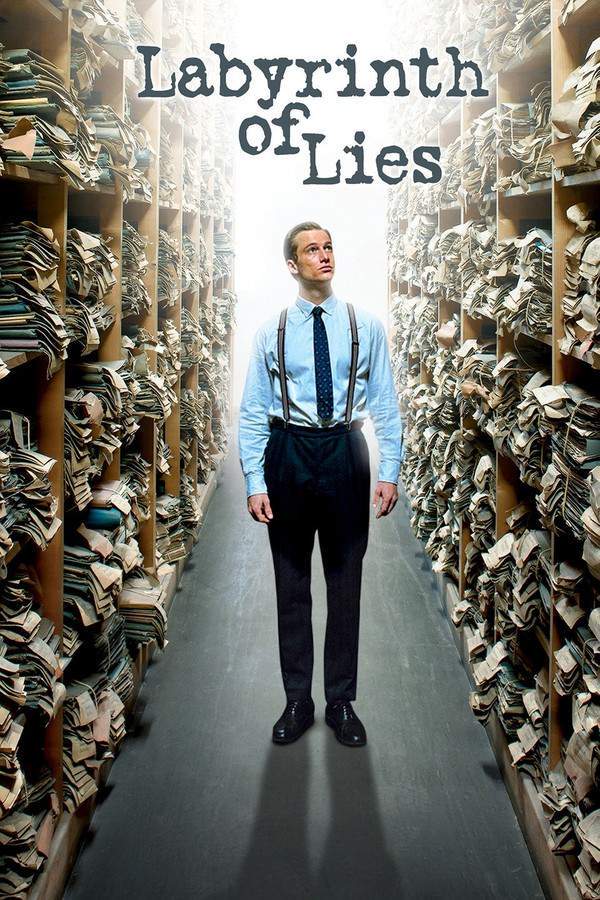
In post-war Germany, 1958, Public Prosecutor Johann Radmann investigates a teacher accused of being an Auschwitz guard. His pursuit of justice is met with resistance as he uncovers a widespread network of deceit and denial surrounding the concentration camp. As Radmann delves deeper, he finds himself facing a complex web of lies, where confronting the past is deeply uncomfortable for many. Risking everything, he is determined to uncover the truth and expose the nation’s reckoning with its dark history.
Warning: spoilers below!
Haven’t seen Labyrinth of Lies yet? This summary contains major spoilers. Bookmark the page, watch the movie, and come back for the full breakdown. If you're ready, scroll on and relive the story!
Read the complete plot breakdown of Labyrinth of Lies (2015), including all key story events, major twists, and the ending explained in detail. Discover what really happened—and what it all means.
In 1958, a zealous and idealistic public prosecutor named Johann Radmann takes on an ambitious case involving Charles Schulz, a man with a dark past as a former commander of the Auschwitz extermination camp, who has since transformed into an educator in Frankfurt am Main. Radmann’s unwavering commitment to bring Schulz to justice quickly becomes a battle against the formidable influence of former Nazis entrenched in Germany’s government, illuminating the sobering challenges that lie ahead.
Under the mentorship of his superior, Fritz Bauer, the Prosecutor-General, Radmann embarks on an extensive investigation into the 8,000 individuals who once worked at Auschwitz. With access granted by the U.S. occupation forces to crucial files, he uncovers a wealth of documentation that demands meticulous examination. As he digs deeper, Radmann’s investigation shifts focus to Josef Mengele, who has fled to Argentina. However, upon returning to West Germany for a family visit, Radmann’s attempts to secure an arrest warrant for Mengele face obstruction from the authorities, leading his boss to suggest he concentrate on less infamous targets.
While grappling with the complexities of his case, the department seeks the assistance of Mossad representatives, resulting in a significant breakthrough: the capture of Adolf Eichmann, who is subsequently tried, convicted, and executed for his horrific crimes. Notably, Israel chooses not to pursue Mengele, leaving him in the shadows.
Amid these intricate developments, Radmann finds himself entangled in a romantic relationship with Marlene, a seamstress and successful dress designer whose connections have aided her rise in the business. However, a shocking revelation about Radmann’s father’s affiliation with the Nazi party forces him to confront the troubling facets of his lineage. When he divulges this information to Marlene, he discovers that she too has a familial link to the party, creating a rift that ultimately fractures their relationship.
As the plot progresses, Radmann faces a pivotal moment when he resigns from his official role, accepting a position with a prominent industrialist. Unfortunately, he soon uncovers that a colleague of his has defended a former Nazi under investigation, presenting Radmann with a moral quandary. Torn between the allure of personal gain and his ethical obligations, he ultimately chooses integrity and steps away from the troubling situation.
Throughout his journey, Radmann’s idealism is challenged by the oppressive realities surrounding him. The prevailing bureaucratic “system” demands conformity and often shuns justice, while he yearns to see accountability for those who suffered. He learns that it is essential to recognize not only the victims of Nazi oppression but also the intricate tapestry of lives impacted by this dark chapter in history.
Ultimately, as Radmann’s passion evolves, he gains a deeper understanding of human nature and the complexity of justice. He comes to realize that mere legal retribution cannot erase the scars of the past; instead, true healing emerges from honoring the personal stories and experiences of those who endured. This newfound insight allows Radmann to move beyond rigid dichotomies of good and evil, fostering a more sophisticated grasp of life’s intricacies, and inspiring his commitment to rectify the injustices that his earlier fervor may have overlooked.
As Johann Radmann returns from a somber pilgrimage to Auschwitz, where he profoundly honors the lives lost, he slowly transforms his grief into a renewed sense of purpose. The West German state prosecutor’s office, once marked by bureaucratic disconnect, now calls him back to fulfill his duty. Prepared to face the dark forces that have wrought devastation upon millions, Radmann stands resolutely as the courtroom prepares for a trial that aims to deliver justice for the atrocities committed at Auschwitz. The multitude of accused—each a harbinger of humanity’s profound capacity for evil—will soon confront the consequences of their actions. As proceedings commence, Radmann remains steadfast, his gaze fixed intensely on the defendants, driven by a relentless pursuit for truth, accountability, and righteous retribution.
Last Updated: November 22, 2024 at 11:37
Discover curated groups of movies connected by mood, themes, and story style. Browse collections built around emotion, atmosphere, and narrative focus to easily find films that match what you feel like watching right now.
Solemn dramas about individuals forcing a nation to confront its buried past.If you were captivated by Labyrinth of Lies, this collection features similar historical dramas about uncovering buried truths. These films follow determined individuals battling systemic denial in post-conflict societies, focusing on moral persistence and the heavy cost of facing a dark past. Find more movies like Labyrinth of Lies that explore national guilt and the pursuit of justice.
Stories in this thread typically involve a lone investigator or small group methodically piecing together evidence of historical crimes against a backdrop of official resistance and public indifference. The protagonist's journey is often one of increasing isolation and obsession, as the scale of the hidden truth becomes overwhelming, culminating in a bittersweet victory that acknowledges justice is incomplete.
These films are grouped by their shared focus on a specific type of moral quest: the investigation of state-sanctioned atrocities after the fact. They create a coherent experience through their solemn tone, heavy emotional weight, and thematic exploration of truth, memory, and the individual's role in upholding justice against overwhelming odds.
Methodical investigations that expose a web of lies protected by powerful institutions.Fans of the investigative process in Labyrinth of Lies will appreciate this selection of films. These stories follow a similar pattern of a steady, methodical unraveling of complex lies protected by powerful systems. Discover movies with a tense pace and heavy themes, where the search for truth is a central, driving force, much like in Labyrinth of Lies.
The narrative pattern involves a protagonist, often a journalist, lawyer, or official, following a paper trail and testimonies that lead from a single case to a much larger network of corruption or denial. The structure is incremental, with each discovery raising the stakes and increasing the personal risk, leading to a climax that exposes the system but often at great personal cost.
Movies here share a specific plot mechanics and pacing: a steady, evidence-driven narrative that exposes systemic wrongs. They are united by a tense atmosphere created by institutional resistance, a focus on the granular details of an investigation, and the catharsis of slowly dismantling a fortress of lies.
Don't stop at just watching — explore Labyrinth of Lies in full detail. From the complete plot summary and scene-by-scene timeline to character breakdowns, thematic analysis, and a deep dive into the ending — every page helps you truly understand what Labyrinth of Lies is all about. Plus, discover what's next after the movie.
Track the full timeline of Labyrinth of Lies with every major event arranged chronologically. Perfect for decoding non-linear storytelling, flashbacks, or parallel narratives with a clear scene-by-scene breakdown.
Discover the characters, locations, and core themes that shape Labyrinth of Lies. Get insights into symbolic elements, setting significance, and deeper narrative meaning — ideal for thematic analysis and movie breakdowns.
Get a quick, spoiler-free overview of Labyrinth of Lies that covers the main plot points and key details without revealing any major twists or spoilers. Perfect for those who want to know what to expect before diving in.
Visit What's After the Movie to explore more about Labyrinth of Lies: box office results, cast and crew info, production details, post-credit scenes, and external links — all in one place for movie fans and researchers.
Discover movies like Labyrinth of Lies that share similar genres, themes, and storytelling elements. Whether you’re drawn to the atmosphere, character arcs, or plot structure, these curated recommendations will help you explore more films you’ll love.
Labyrinth of Lies (2015) Scene-by-Scene Movie Timeline
Labyrinth of Lies (2015) Movie Characters, Themes & Settings
Labyrinth of Lies (2015) Spoiler-Free Summary & Key Flow
Movies Like Labyrinth of Lies – Similar Titles You’ll Enjoy
Lore (2013) Detailed Story Recap
Amen. (2003) Full Summary & Key Details
The Good German (2006) Story Summary & Characters
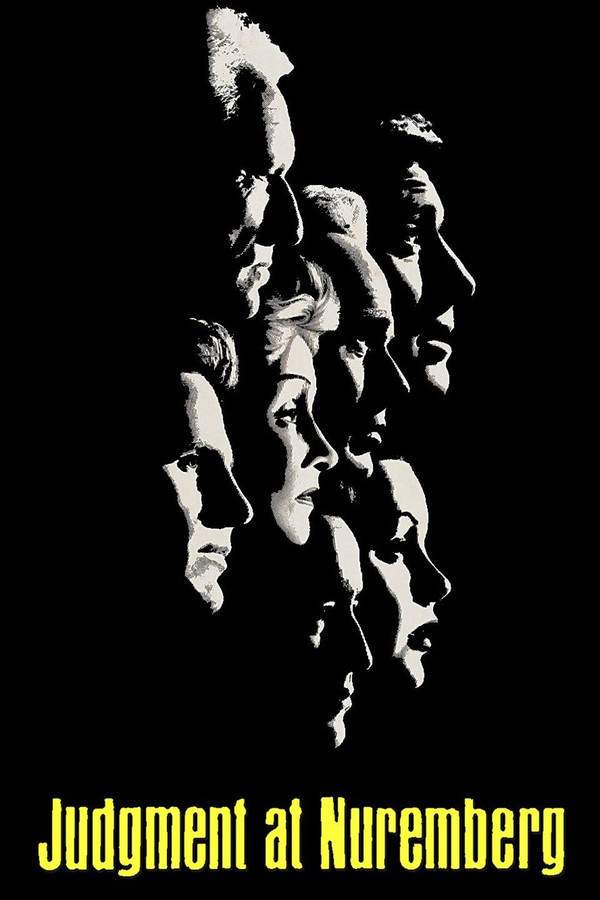
Judgment at Nuremberg (1961) Full Movie Breakdown
Jakob the Liar (1999) Story Summary & Characters
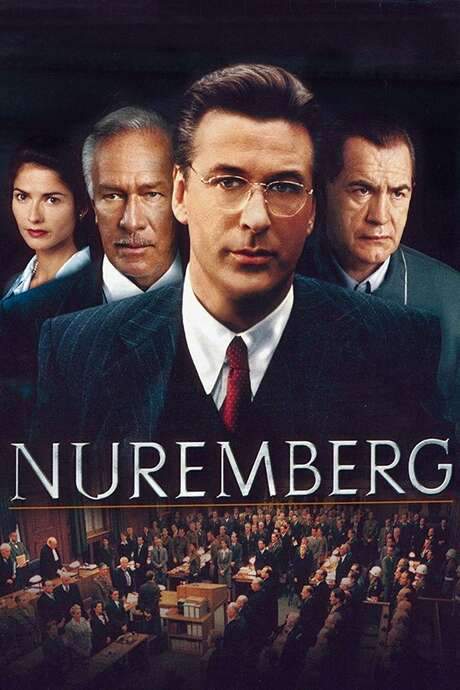
Nuremberg (1000) Full Movie Breakdown
Murer: Anatomy of a Trial (2018) Story Summary & Characters
Labyrinth (2003) Complete Plot Breakdown
Our Nazi (1984) Ending Explained & Film Insights
Wundkanal (1984) Story Summary & Characters
A Love in Germany (1983) Film Overview & Timeline
Labyrinth of Peace (1000) Detailed Story Recap
After the Truth (1999) Full Movie Breakdown
Lissy (1957) Full Movie Breakdown
Verdict on Auschwitz (1993) Detailed Story Recap