Plot Explained Spoilers guaranteed!
Plot Explained

Browse by genre

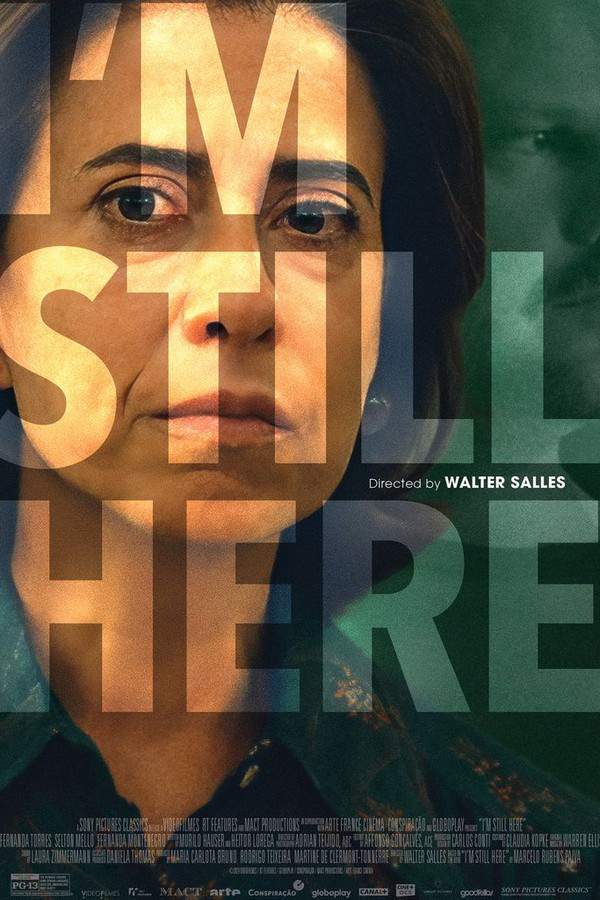
I'm Still Here (2025) movie poster

Plot Summary

I'm Still Here (2025) Plot Summary & Ending Explained

Release, runtime and language
2025 · 2 h 16 m · Portuguese
Echo score 88
Directed by
Walter Salles
Starring
Antonio Saboia, Fernanda Montenegro, Maria Manoella, Charles Fricks, Valentina Herszage, Dan Stulbach
Budget
$80K

In Brazil, 1971, a family's life is tragically disrupted by an act of violence under the country's increasingly repressive military dictatorship. The mother is compelled to rebuild her life and adapt to the changing circumstances. The story is based on Marcelo Rubens Paiva's acclaimed memoir.

On this page (5)
  1. 1 What happens: full plot
  2. 2 Plot questions answered
  3. 3 How it ends
  4. 4 Movie threads
  5. 5 Every angle

Full plot summary · contains spoilers

What Happens in I'm Still Here: Full Plot Summary

The whole story of I'm Still Here (2025) explained, from the opening scene to the final frame: every key event, every twist and what it all adds up to. Read it as a quick recap before the sequel, to check a scene you missed, or to finally understand what really happened.

In December 1970, Rubens Paiva [Selton Mello] lives in an idyllic house near Leblon beach with his wife Eunice Paiva [Fernanda Montenegro] and their five children. Returning to his civil career after the revocation of his tenure at the outset of the 1964 Brazilian coup d'état, Paiva quietly supports political exiles without discussing his activities with his family.

After revolutionary movements kidnap the Swiss ambassador to Brazil, the country faces looming political instability. The Paivas' friends Fernando Gasparian [Charles Fricks] and Dalva Gasparian [Maeve Jinkings] decide to seek refuge in London, taking the Paivas' eldest daughter, Vera, with them. A military raid takes place in Paiva's house, resulting in his arrest and disappearance in January 1971. Eunice's public inquiries about his whereabouts result in her arrest and torture for 12 days. Eliana [Marjorie Estiano], their teenage daughter, is imprisoned but is released after 24 hours. Eunice is questioned about whether her husband is involved with pro-democracy movements, which she denies.

False newspaper reports claim that Rubens fled the country into exile, but Eunice and her friends suspect otherwise. With the help of lawyer Lino Machado, she files a habeas corpus petition. She also learns from family friend Bocaiuva Cunha that Rubens had been secretly helping political exiles. A former teacher, Martha, confirms she was imprisoned with Rubens but is afraid to speak out publicly. She later writes a letter detailing her arrest. Félix, a journalist and family friend, informs Eunice that Rubens was killed, but the military authorities refuse to confirm it officially. Left to care for her children alone, Eunice sells their home and moves to São Paulo, anticipating a new start close to her maternal family.

Twenty-five years later, in 1996, while Brazil is now once again a democracy, Rubens Paiva's official death certificate arrives from the state, and Eunice, surrounded by journalists, calls for reparations for victims' families and accountability for the military dictatorship's crimes. In 2014, during a family gathering surrounded by her children and grandchildren, the now 85-year-old Eunice lives with advanced Alzheimer's disease. When a news report about the National Truth Commission addresses Rubens's case, a distressed Eunice appears to remember him.

An epilogue reveals that five men were identified as responsible for the murder of Paiva, who was killed at the DOI-CODI headquarters between January 21 and 22, 1971, but none was prosecuted. The epilogue also notes that Eunice graduated from law school at 48 and became one of the few experts on indigenous rights in Brazil, serving as a counselor for the federal government, the World Bank, and the United Nations. She died in 2018 at the age of 89.
Last updated: October 09, 2025 at 16:12

Was this helpful?

Plot questions answered

I'm Still Here Plot Explained: Your Questions Answered

The questions people ask most about I'm Still Here (2025): what happens in the confusing scenes, why the characters do what they do, the twists, hidden details and what the ending means. Each answer contains spoilers.

Q1

Why was Rubens Paiva arrested by the military

Rubens Paiva was arrested because he was secretly supporting political exiles who fled Brazil's military dictatorship. Although he kept his political activities hidden from his family, the military authorities discovered his involvement in helping pro-democracy activists escape the country. His work with political exiles made him a target of the regime's crackdown on dissent.

Foreshadowing: The film establishes early that Rubens quietly continues his political support after the 1964 coup, hinting at the danger this creates.

  • rubens paiva arrest
  • military dictatorship brazil
  • political exiles
  • 1964 coup
Q2

What happened to Eunice after Rubens was arrested

After Rubens disappeared, Eunice publicly questioned the military about his whereabouts. This led to her own arrest in January 1971. She endured 12 days of interrogation and torture, during which authorities pressured her to reveal whether her husband was involved with pro-democracy movements. She denied any knowledge of his activities.

  • eunice paiva torture
  • 12 days interrogation
  • military regime brazil
Q3

How did Eunice find out Rubens was killed

Eunice learned of Rubens's death from Félix, a journalist and family friend, who informed her that Rubens had been killed. The military authorities refused to officially confirm his death, maintaining a policy of denial about the fate of political prisoners. This left Eunice to fight for recognition of his disappearance for decades.

Foreshadowing: Earlier false newspaper reports claiming Rubens fled the country created confusion that made the truth harder to uncover.

  • rubens paiva death
  • félix journalist
  • military denial brazil
Q4

Why did the military raid the Paiva home if Rubens kept his activities secret

The military raid on the Paiva home occurred because authorities had identified Rubens as someone helping political exiles. Even though he never discussed his activities with his family, the regime's intelligence apparatus tracked his connections to the underground network supporting dissidents who were fleeing Brazil.

  • paiva house raid
  • political prisoners brazil
  • lei de seguranca nacional
Q5

Why were no prosecutions made even though five men were identified for Rubens's murder

Although five men were identified as responsible for Rubens Paiva's murder at the DOI-CODI headquarters between January 21-22, 1971, none was ever prosecuted. This reflects the broader pattern of impunity for human rights abuses committed during Brazil's military dictatorship, where the legal system failed to hold perpetrators accountable even after the return to democracy.

Foreshadowing: The film shows the military authorities refusing to confirm Rubens's death, demonstrating the regime's strategy of denial.

  • doi-codi headquarters
  • impunity dictatorship
  • human rights brazil
  • military crimes not prosecuted
Q6

What happened when Eunice saw the National Truth Commission report in 2014

In 2014, the 85-year-old Eunice was living with advanced Alzheimer's disease. When a news report about the National Truth Commission addressed Rubens's case during a family gathering, she became visibly distressed and appeared to remember her husband in that moment. This poignant scene connects the national reckoning with historical trauma to her personal memory.

  • national truth commission 2014
  • eunice paiva alzheimer's
  • memory dictatorship
Q7

What happened to Vera Paiva during the political crackdown

Vera Paiva, the eldest daughter, was not present during the military raid on her home. She had previously witnessed military violence, which prompted the family's friends Fernando and Dalva Gasparian to take her with them when they fled to London in early 1971. This decision protected her from the immediate danger but separated her from her family during the crisis.

  • vera paiva london
  • gasparian family fled brazil
Q9

Why did Rubens Paiva's death certificate arrive in 1996

Rubens's official death certificate arrived in 1996, nearly 25 years after his murder, because Brazil had returned to democracy in 1985 and was finally able to acknowledge the fate of victims of political violence. The document arrived during Eunice's public appearance with journalists, allowing her to use the moment to demand reparations for victims' families and accountability for the dictatorship's crimes.

  • death certificate 1996
  • brazil democracy 1996
  • reparations dictatorship victims
Q10

What did Eunice do after moving to São Paulo following Rubens's disappearance

After selling the family home in Rio de Janeiro, Eunice moved to São Paulo to be closer to her maternal family. There she rebuilt her life while raising her five children without their father. She later earned a law degree at age 48 and became one of Brazil's leading experts on indigenous rights, serving as a counselor for the federal government, the World Bank, and the United Nations.

  • eunice paiva law degree
  • indigenous rights expert brazil
  • world bank united nations

Ending explained

What Happens at the End of I'm Still Here?

How I'm Still Here (2025) ends, in short: the final scene, the last twist and what it means for the characters. The full ending explained, with every spoiler, lives on its own page.

Read the full ending explained

At the end of I’m Still Here, Eunice Paiva finally receives the official document confirming her husband Rubens’ death—an important moment after decades of uncertainty and suffering. This law, which Eunice helped to champion, formally acknowledges his murder by the Brazilian military dictatorship and puts an end to the lingering question of his fate. The receipt of this death certificate is a bittersweet victory; it provides the closure her family desperately needed, confirming that Rubens was indeed killed by the regime, and officially ending the psychological torment they endured for over 25 years. However, the film’s final scenes reveal Eunice in a fragile state — she is shown as unable to speak and seemingly unaware of her surroundings. This condition is linked to her later life with Alzheimer’s disease, which she lived with until her death. The final portrayal of Eunice is poignant: her fight for justice was monumental, yet the toll on her body and mind was immense, emphasizing the enduring human cost of political repression. Throughout the film, it’s made clear that her story is one of resilience and profound loss, capturing the enduring impact of Argentina’s darkest chapter on its victims and their families.

I'm Still Here ending explained in full

Movie threads

More Movies Like I'm Still Here, by Mood & Story

Curated lists built around what makes I'm Still Here tick: the same mood, the same kind of story or the same emotional payoff. Each list explains why these movies belong together.

Political Survival Dramas like I'm Still Here

Stories of ordinary lives fractured by the brutality of an authoritarian regime. If you were moved by the harrowing historical truth of I'm Still Here, these films also depict the struggle for survival under repressive regimes. Discover movies like I'm Still Here that explore the intersection of family, trauma, and the fight for dignity against overwhelming political force.

  • somber
  • oppressive
  • tense
  • grieving
  • resilient
  • unsettling
  • Tone: dark, somber, oppressive
  • Pacing: steady, deliberate
Why these movies?

The story pattern: These narratives typically follow individuals or families whose worlds are violently disrupted by a repressive government. The plot often revolves around loss, grief, and the long, arduous path of adapting to a new, more dangerous reality, where personal survival becomes a quiet act of defiance.

Why they belong together: Movies in this thread share a dark, oppressive tone and a heavy emotional weight, focusing on the traumatic impact of political systems on human lives. They are united by their serious pacing, high intensity stemming from real-world horrors, and a focus on themes of injustice and resilience.

Bittersweet Stories of Grief and Resilience like I'm Still Here

Journeys of profound loss that find a glimmer of resilience, but not full healing. For viewers who appreciated the complex emotional resolution of I'm Still Here, this collection features movies with similarly bittersweet endings. Find films like I'm Still Here where characters carry heavy grief but find a way to endure, blending profound sadness with a quiet acknowledgment of survival.

  • melancholic
  • grieving
  • resilient
  • somber
  • heavy
  • heartbreaking
  • Tone: melancholic, bittersweet, heavy
  • Pacing: steady, character-driven
Why these movies?

The story pattern: The narrative arc follows a character through a devastating, life-altering loss. The story meticulously charts the long-term psychological impact, avoiding neat closure. The ending is bittersweet, acknowledging that some wounds never fully heal while finding meaning in the simple, ongoing act of living.

Why they belong together: These films are grouped by their shared emotional journey: they begin with a heavy, tragic event and explore its lifelong consequences. They are defined by a steady pacing that allows grief to breathe, a high emotional weight, and an ending feel that is bittersweet rather than purely bleak or happy.

Every angle

I'm Still Here (2025) Explained: Plot, Ending, Timeline & Characters

Everything about I'm Still Here in one place: what happens in the plot summary, the timeline in chronological order, the characters and meaning, the ending explained and a spoiler-free summary. What's After the Movie adds the cast, box office and post-credit scenes.

Coming soon on iOS and Android

The Plot Explained Movie Summary App

Plot summaries, endings explained and timelines on your phone. Catch up on any movie in minutes, save your favorites and never miss a twist again.

Be the first to know when we launch. Your email stays private, always.

Learn more about the app