



















Plot Explained Spoilers guaranteed!
Plot Explained

Browse by genre

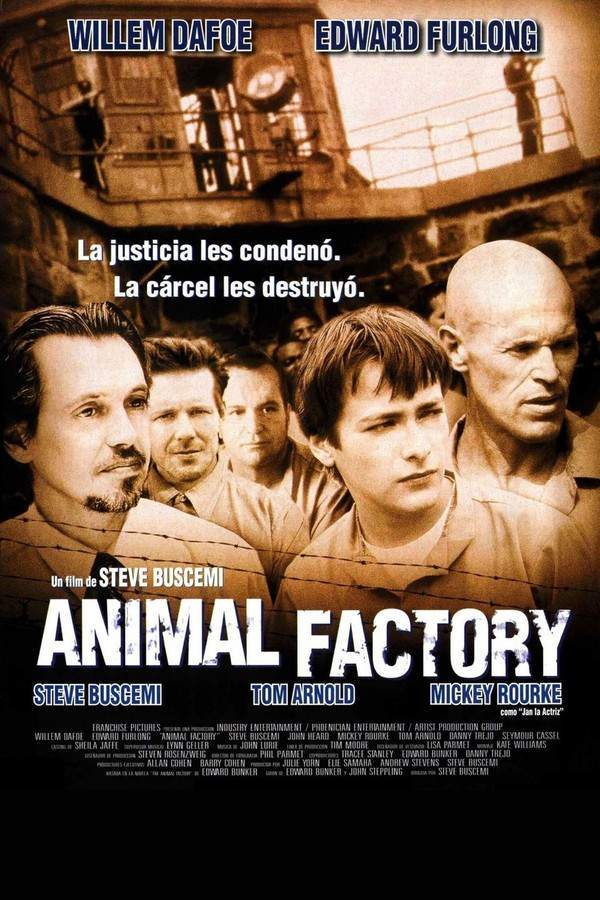
Animal Factory (2000) movie poster

Plot Summary

Animal Factory (2000) Plot Summary Explained

Release, runtime and language
2000 · 94 min · English
JustWatch #9,217 12

Wrongfully accused of drug dealing, privileged suburbanite Ron is sentenced to San Quentin State Prison, where he must quickly adapt to a brutal and dangerous environment. Facing threats from predatory inmates, Ron struggles to survive until he finds an unexpected mentor in Earl, a seasoned prisoner who offers guidance and support. Through this unlikely connection, Ron confronts his fears, discovers a sense of purpose, and learns valuable lessons about resilience and belonging within the confines of the prison walls.

On this page (6)
  1. 1 Where to watch
  2. 2 What happens: full plot
  3. 3 Plot questions answered
  4. 4 Movie threads
  5. 5 Movies like Animal Factory
  6. 6 Every angle

Where to watch

Where to Watch Animal Factory (2000)

Where can you watch Animal Factory? Stream, rent or buy it in the US, including on Amazon Prime Video, fuboTV and Fawesome: current JustWatch availability with up-to-date prices.

Streaming availability powered by JustWatch

Full plot summary · contains spoilers

What Happens in Animal Factory: Full Plot Summary

The whole story of Animal Factory (2000) explained, from the opening scene to the final frame: every key event, every twist and what it all adds up to. Read it as a quick recap before the sequel, to check a scene you missed, or to finally understand what really happened.

As Ron Decker, a young man wrongfully imprisoned for a minor drug offense, struggles to navigate the perilous world of the penal system, he unexpectedly finds guidance in Earl Copen, a seasoned inmate with a sharp instinct for survival and a talent for mentorship. When three vicious attackers try to lure Decker into a dangerous cell block, Copen steps in, cleverly using his charm and quick thinking to diffuse the tense situation, sending the threats packing.

In the days that follow, Copen becomes a kind of guardian angel for Decker, securing him more favorable living conditions, improved food options, and even orchestrating a transfer to his own cell block. Leveraging a loophole in recent legislation, he fabricates false reports and shares wise tips that enable Decker to appear less menacing to the authorities, thereby bolstering his hopes for a potential sentence reduction. However, this glimmer of hope is abruptly extinguished when a brutal attack by Buck Rowan, a massive inmate with no regard for others, leaves Decker feeling vulnerable and shaken.

Following this violent encounter, Copen assists Decker in crafting a narrative that shifts the blame onto Rowan. Unfortunately, their efforts to manipulate the justice system ultimately yield little success, as a judge denies Decker's request for a reduced sentence, enforcing the completion of his five-year term. Simultaneously, Copen devises a masterful plan for retribution against Rowan, collaborating with an unwitting infirmary worker to poison the IV fluids and eliminate the threat of the would-be informant permanently.

As both Decker and Copen anticipate their release from the confinement of prison life, they develop an audacious escape strategy. Under the cloak of night, they plan to slip into a garbage truck, cleverly employing a sturdy bar to shield themselves from the clutches of the compactor. Decker takes the bold step of executing the plan, successfully fleeing to Costa Rica while leaving Copen to face his own perilous fate. In that moment, grappling with the weight of his circumstances, Copen chillingly remarks, > "This is my prison, after all," and hauntingly cites Satan's legendary assertion from John Milton's Paradise Lost: > "Better to reign in hell than serve in heaven."

Last updated: November 22, 2024 at 15:28

Was this helpful?

Plot questions answered

Animal Factory Plot Explained: Your Questions Answered

The questions people ask most about Animal Factory (2000): what happens in the confusing scenes, why the characters do what they do, the twists, hidden details and what the ending means. Each answer contains spoilers.

Q1

Why does Earl Copen take an interest in helping Ron Decker?

Earl Copen sees a younger version of himself in Ron Decker, a privileged kid who doesn't belong in prison and lacks the survival skills to navigate a predatory environment. Copen's protective instincts kick in after he witnesses three attackers trying to lure Decker into a dangerous cell block. His mentorship stems from both genuine compassion and his own need to feel relevant within the prison hierarchy, using his experience to guide someone who reminds him of his past self.

Foreshadowing: Earlier, Copen is introduced as a seasoned inmate with sharp instincts for survival, suggesting he once needed help himself.

  • earl copen
  • ron decker
  • mentorship
  • prison guide
  • protective instincts
Q2

How does Earl Copen manipulate the system to help Decker?

Copen exploits a loophole in recent legislation to fabricate false reports that portray Decker as less threatening to authorities. He coaches Decker on how to present himself favorably during evaluations and orchestrates transfers to better cell blocks with improved living conditions and food. These strategic manipulations give Decker hope for a potential sentence reduction by making him appear model-compliant.

  • false reports
  • sentence reduction
  • prison manipulation
  • system loophole
Q3

Why does Buck Rowan attack Ron Decker?

Buck Rowan is described as a massive inmate with no regard for others, representing the unchecked violence that permeates prison life. The attack appears to be unprovoked, driven by Rowan's predatory nature rather than any specific grievance. The assault leaves Decker feeling vulnerable and directly triggers the blame-shifting strategy between Decker and Copen.

  • buck rowan
  • attack
  • violence
  • prison predators
Q4

Why does Decker's request for a reduced sentence get denied?

Despite Copen's help in crafting a narrative that shifts blame onto Buck Rowan, the judge's denial suggests the fabricated story failed to convince the court. The judge enforces completion of the full five-year term, indicating that the manipulation of the justice system has limits, even within the prison's corruptible bureaucracy, the legal system ultimately rejects their attempt to game the process.

  • sentence denial
  • court
  • blame shifting
  • justice system
Q5

How does Earl Copen poison Buck Rowan?

Copen collaborates with an unwitting infirmary worker to poison Buck Rowan's IV fluids. He exploits the trust of medical staff by devising a scheme that uses the infirmary worker's access to contaminate the intravenous treatment. This calculated revenge eliminates Rowan permanently, removing the threat he posed to both Decker and Copen.

Foreshadowing: Earlier, Copen demonstrates his talent for manipulation and strategic planning by helping Decker navigate prison politics.

  • poison
  • revenge
  • buck rowan
  • infirmary
  • iv fluids
Q6

Why does Earl Copen stay behind during the escape?

Copen chooses to remain in prison because, as he states, 'This is my prison, after all.' After years of incarceration, he has become institutionalized, prison has become his true home where he holds power and purpose. His philosophical acceptance of his circumstances reflects a deeper resignation, viewing freedom as less meaningful than reigning over the hell he knows.

  • stay behind
  • freedom
  • institutionalized
  • acceptance
Q7

What does Copen mean by quoting 'Better to reign in hell than serve in heaven'?

Copen invokes Satan's famous declaration from John Milton's Paradise Lost to justify his choice to stay imprisoned. The quote reflects his belief that domination within a hellish environment feels more authentic than servile freedom in a world that never accepted him. It's a chilling acknowledgment that he'd rather control his dark reality than submit to an outside society that marginalized him.

  • paradise lost
  • quote
  • satan
  • reign in hell
  • philosophy
Q8

Why does Ron Decker flee to Costa Rica after escaping?

Costa Rica represents a fresh start far from the American justice system that wrongfully imprisoned Decker. By escaping to a country without extradition treaties for minor drug offenses, Decker ensures he cannot be returned to serve his remaining sentence. The tropical location symbolizes his complete break from his previous life and the possibility of reinventing himself.

  • costa rica
  • escape
  • exile
  • fresh start
  • freedom
Q9

How does the garbage truck escape plan work?

Under cover of night, Decker and Copen hide inside a garbage truck as it leaves the prison. They use a sturdy bar to shield themselves from the truck's compactor mechanism, preventing being crushed during the journey. The plan requires precise timing and nerve, exploiting the routine nature of waste removal to smuggle Decker out while leaving Copen behind to face the consequences.

  • garbage truck
  • escape plan
  • compactor
  • nighttime
Q10

What happens to Buck Rowan after being poisoned?

Buck Rowan dies from the poisoned IV fluids. Copen's revenge plot succeeds in permanently eliminating the threat Rowan posed, removing the violent inmate from the prison population entirely. His death serves as both retribution for attacking Decker and a demonstration of Copen's ruthlessness when protecting those under his care.

  • buck rowan death
  • poisoning outcome
  • revenge success

Movie threads

More Movies Like Animal Factory, by Mood & Story

Curated lists built around what makes Animal Factory tick: the same mood, the same kind of story or the same emotional payoff. Each list explains why these movies belong together.

Brutal Prison Survival Movies like Animal Factory

Stories of individuals forced to adapt or perish within unforgiving, oppressive institutions. If you enjoyed the raw, unforgiving portrayal of prison life in Animal Factory, explore other movies like it. These films delve into survival within oppressive systems, featuring high intensity, dangerous environments, and characters fighting for their humanity against brutal institutional forces. Discover similar gritty dramas about incarceration and resilience.

  • brutal
  • oppressive
  • claustrophobic
  • dangerous
  • survivalist
  • grim
  • Tone: dark, grim, tense
  • Pacing: steady, deliberate
Why these movies?

The story pattern: The narrative typically follows a newcomer thrust into a hostile, structured environment where the existing rules are brutal and survival-oriented. The protagonist must quickly learn the social hierarchy, form alliances for protection, and confront their own vulnerabilities. The central conflict is often between maintaining one's identity and succumbing to the corrosive nature of the system.

Why they belong together: Movies are grouped here for their shared focus on a claustrophobic, high-intensity setting where survival is the primary driver. They share a dark tone, heavy emotional weight, and a steady pacing that builds tension through a series of escalating challenges. The core experience is one of immersion in a dangerous world with high stakes.

Movies with Prison Mentorship like Animal Factory

Bonds formed in adversity between a seasoned survivor and a vulnerable newcomer. Fans of the powerful mentor-protege relationship between Earl and Ron in Animal Factory will appreciate these similar films. Discover stories of unexpected guidance and loyalty formed under extreme pressure. These movies explore how profound bonds can develop in the darkest places, often featuring bittersweet endings and heavy emotional journeys.

  • mentorship
  • bittersweet
  • heavy
  • unlikely friendship
  • redemptive
  • loyalty
  • Tone: dark, bittersweet, heavy
  • Pacing: steady, character-driven
Why these movies?

The story pattern: The narrative revolves around the development of a protective, guiding relationship between a jaded expert and a naive initiate. The mentor provides the skills and wisdom needed to navigate a perilous world, while the protege often offers the mentor a chance at redemption or reconnection with their own humanity. The arc typically strengthens both characters but is tested by the harsh environment, leading to a poignant conclusion.

Why they belong together: These movies are grouped by their central, emotionally heavy focus on a mentorship dynamic that is essential for survival. They share a steady pacing that allows the relationship to develop authentically, a dark tone punctuated by moments of connection, and a bittersweet emotional core. The power of the bond in the face of adversity is the unifying element.

If you liked this

Movies Like Animal Factory

Similar movies to Animal Factory: the same genre, themes or kind of story. Each one comes with its own plot summary, timeline and ending explained.

Browse all movie summaries

Every angle

Animal Factory (2000) Explained: Plot, Timeline & Characters

Everything about Animal Factory in one place: what happens in the plot summary, the timeline in chronological order, the characters and meaning and a spoiler-free summary. What's After the Movie adds the cast, box office and post-credit scenes.

Coming soon on iOS and Android

The Plot Explained Movie Summary App

Plot summaries, endings explained and timelines on your phone. Catch up on any movie in minutes, save your favorites and never miss a twist again.

Be the first to know when we launch. Your email stays private, always.

Learn more about the app