




Plot Explained Spoilers guaranteed!
Plot Explained

Browse by genre

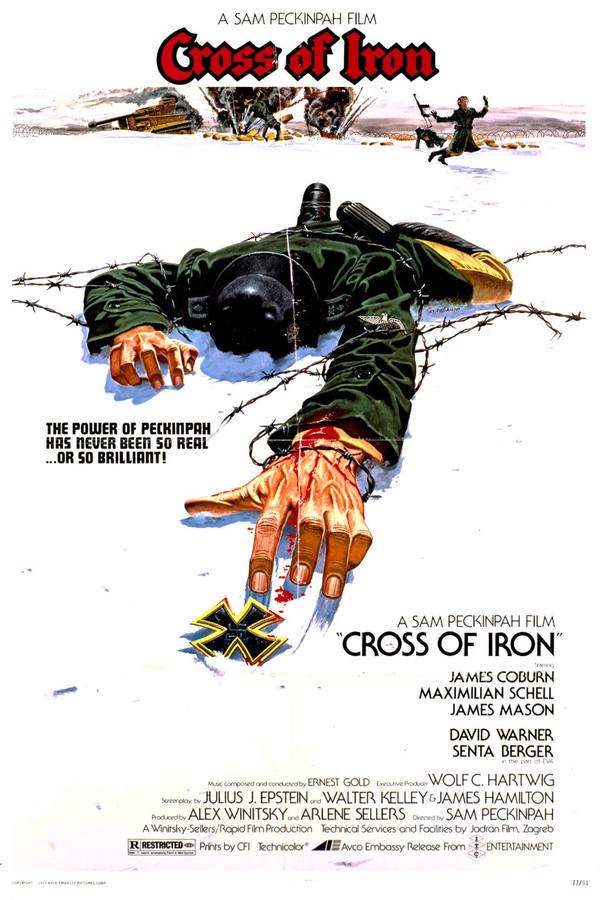
Cross of Iron (1977) movie poster

Timeline

Cross of Iron (1977) Timeline Explained – Every Event in Order

Release, runtime and language
1977 · 132 min · English
JustWatch #18,037 9
Directed by
Sam Peckinpah
Starring
David Warner, James Mason, James Coburn, Burkhard Driest, Dieter Schidor, Fred Stillkrauth

During the final months of World War II, decorated Corporal Rolf Steiner finds himself at odds with ambitious Captain Stransky, who seeks to undermine him and claim Steiner's Iron Cross medal. Set against the backdrop of a brutal battlefield, the film explores the clash between Steiner’s pragmatic approach to war and Stransky’s desperate need for recognition. Their rivalry intensifies as they navigate the dangers of combat and the moral compromises demanded by war, blurring the lines between duty and personal ambition.

On this page (6)
  1. 1 Where to watch
  2. 2 Events in order (15)
  3. 3 Timeline questions answered
  4. 4 Movie threads
  5. 5 Movies like Cross of Iron
  6. 6 Every angle

Where to watch

Where to Watch Cross of Iron (1977)

Where can you watch Cross of Iron? Stream, rent or buy it in the US, including on Amazon Prime Video, Cultpix and Amazon Video: current JustWatch availability with up-to-date prices.

Streaming availability powered by JustWatch

15 events in order · contains spoilers

Cross of Iron Timeline: Events in Chronological Order

Every key event of Cross of Iron (1977) in order, scene by scene, with when and where it takes place. Use it to untangle flashbacks, time jumps and parallel storylines, to refresh your memory before the sequel or to find the exact scene you are thinking of.

  1. Introduction of Rolf Steiner

    Corporal Rolf Steiner is introduced as a seasoned soldier in the Wehrmacht, stationed on the Eastern Front during World War II. The brutal realities of war have shaped his character, pushing him to confront not only enemy soldiers but the moral complexities of conflict.

    When
    World War II
    Where
    Eastern Front
  2. Successful Mission

    Steiner and his reconnaissance platoon successfully execute a mission against an enemy mortar position. Their victory, however, is overshadowed by the grim realities of war, leading to complex moral choices.

    When
    Immediately after the mission
    Where
    Enemy territory
  3. Capture of the Russian Boy Soldier

    As they return to friendly lines, Steiner's platoon captures a young Russian boy soldier. This moment sets off a cascade of ethical dilemmas, questioning the inherent humanity within the barbarism of war.

    When
    After the successful mission
    Where
    In transit to the lines
  4. Arrival of Captain Stransky

    Captain Stransky arrives to take command of Steiner's battalion, creating a palpable tension within the unit. His background and ambition to earn the Iron Cross raise suspicions among the men, especially regarding his rapid transfer to the front lines.

    When
    Following the capture of the boy
    Where
    German base
  5. Stransky's Execution Order

    Stransky coldly orders the execution of the captured Russian boy soldier, showcasing his ruthless nature. Steiner's defiance in refusing this order highlights the moral divide between him and Stransky.

    When
    Shortly after Stransky's arrival
    Where
    German camp
  6. Steiner's Promotion

    During a heated meeting with Stransky, Steiner learns of his promotion to senior sergeant. This development emphasizes the growing tensions and conflicts among the ranks, particularly with Stransky's ambitions.

    When
    After the execution order
    Where
    Command tent
  7. Lieutenant Meyer's Birthday

    The platoon gathers to celebrate Lieutenant Meyer's birthday, creating a rare moment of levity amidst the chaos of war. This celebration quickly turns tragic as the situation spirals out of control, marking a significant turning point.

    When
    On Meyer's birthday
    Where
    German camp
  8. Tragedy Strikes

    In a tragic turn, during a chaotic counterattack, Steiner attempts to liberate the young Russian boy but is accidentally killed by advancing Soviet troops. This loss serves as a profound reminder of the war's indiscriminate brutality.

    When
    During the counterattack
    Where
    Battlefield
  9. Steiner's Hospitalization

    Wounded in battle, Steiner is sent to a military hospital where he experiences flashbacks of the horrors he faced. He also develops a brief romantic connection with a nurse, which highlights moments of human connection amid the despair.

    When
    After being wounded
    Where
    Military hospital
  10. Return to Duty

    Opting for duty over recuperation, Steiner returns to his platoon instead of taking a home leave. This decision reflects his commitment to his men and the harsh realities of a soldier’s life.

    When
    After his hospital stay
    Where
    German base
  11. Iron Cross Controversy

    Upon his return, Steiner learns about Stransky's questionable nomination for the Iron Cross based on Meyer's actions. The situation is further complicated by Stransky's manipulative tactics as he attempts to coerce others into supporting his deceit.

    When
    Shortly after returning
    Where
    Command center
  12. The Retreat Orders

    As retreat orders are issued, Stransky's failure to inform Steiner's platoon leads them into dangerous territory. This lack of communication demonstrates Stransky's negligence and highlights the growing disarray within their unit.

    When
    During the retreat
    Where
    Front lines
  13. Encounter with Russian Unit

    During their perilous retreat, Steiner and his men capture an all-female Russian unit. This encounter exposes the darker side of war as the situation quickly escalates into a scene of violence and horror.

    When
    During the retreat
    Where
    Near the front lines
  14. Zoll's Despicable Act

    In a shocking event, Nazi Party member Zoll brutally rapes one of the Russian women, leading to her death. This atrocity fuels Steiner's anger and prompts him to imprison Zoll with the Russian captives as a form of retribution.

    When
    After capturing the Russian unit
    Where
    Tent facility
  15. Final Confrontation

    In a climactic confrontation, Steiner finds Stransky and, instead of killing him, offers him a weapon to face the reality of war together. The film ends on a haunting note, with Stransky bewildered by the chaos around him as the dark humor of war takes its toll.

    When
    Final moments of the film
    Where
    Battlefield

Last updated: November 15, 2024 at 18:13

Was this helpful?

Timeline questions answered

Cross of Iron Timeline Explained: Your Questions Answered

When does it happen, and why in that order? The questions people ask about the chronology of Cross of Iron (1977): time jumps, flashbacks, cause and effect between scenes and the correct order of events, each answered with spoilers.

Q1

Why does Steiner refuse to execute the captured Russian boy soldier?

Steiner refuses because he sees the boy as a child soldier who was forced into combat and poses no real threat. His act of defiance demonstrates his moral compass in a war that demands horrific deeds, setting him apart from Stransky's ruthlessness. Steiner orders Corporal Schnurrbart to hide the boy instead of executing him.

Foreshadowing: Earlier, the film establishes Steiner as a pragmatic soldier who has survived the Eastern Front by relying on his own moral code rather than blindly following orders.

  • steiner
  • russian boy
  • execution
  • defiance
  • moral code
Q2

Why is Captain Stransky so desperate to earn the Iron Cross?

Stransky's desperate need for the Iron Cross stems from his desire for recognition and advancement in the Nazi hierarchy. He transferred from the cushioned duties in occupied France to the deadly Eastern Front specifically to earn this medal. The Iron Cross represents his ticket to prestige and political success after the war.

Foreshadowing: Upon arriving, Stransky proudly tells Colonel Brandt that his sole purpose at the front is to earn the Iron Cross.

  • stransky
  • iron cross
  • ambition
  • recognition
  • transfer
Q3

What happens to the Russian boy that Steiner tries to free?

The Russian boy is accidentally killed by advancing Soviet troops during the chaos of a counterattack while Steiner attempts to liberate him. The boy dies not from enemy fire but as a tragic consequence of the battlefield confusion, underscoring the war's indiscriminate brutality.

Foreshadowing: The platoon's celebration of Lieutenant Meyer's birthday is interrupted by the Soviet counterattack, creating the chaotic situation.

  • russian boy
  • death
  • steiner
  • liberation attempt
  • counterattack
Q4

How does Stransky try to claim the Iron Cross for himself?

Stransky nominates himself for the Iron Cross based on Lieutenant Meyer's heroic actions during the counterattack, despite Meyer being the one who actually died heroically. To validate his claim, he blackmails his adjutant Lieutenant Triebig (a closeted homosexual) and tries to manipulate Steiner into supporting his lie, promising preferential treatment after the war.

Foreshadowing: The timeline shows Stransky's Iron Cross controversy arises immediately after Steiner returns from the hospital.

  • stransky
  • iron cross
  • meyer
  • blackmail
  • triebig
  • lie
Q5

Why does Stransky fail to inform Steiner's platoon during the retreat?

Stransky deliberately neglects to inform Steiner's platoon of the retreat orders, forcing them to navigate dangerous territory without proper communication or support. This negligence puts Steiner's men at grave risk and demonstrates Stransky's willingness to sacrifice soldiers to further his own interests.

Foreshadowing: This betrayal directly leads to the deadly encounter where Stransky later suggests allowing Steiner's group to be mistaken for Russians.

  • retreat
  • stransky
  • steiner platoon
  • communication
  • betrayal
Q6

Why does Stransky suggest letting Steiner's group be mistaken for Russian forces?

Stransky sinisterly suggests to Triebig that they allow Steiner's small group to be mistakenly identified as Russians, hoping they would be killed in friendly fire. This plot reveals Stransky's willingness to murder his own men, particularly Steiner, who knows too much about his Iron Cross deception, to protect his reputation.

Foreshadowing: The retreat communication was already compromised, showing Stransky's escalating attempts to eliminate Steiner.

  • stransky
  • steiner
  • friendly fire
  • murder
  • triebig
  • betrayal
Q7

What happens when Zoll attacks the captured Russian women soldiers?

Nazi Party member Zoll brutally rapes one of the captured Russian women, causing her death after she bites him in self-defense. The atrocity disgusts Steiner so deeply that he confinement Zoll with the remaining Russian women and takes their uniforms as disguise for his own men.

Foreshadowing: The encounter with the all-female Russian unit was noted earlier in the timeline as a morally dark moment.

  • zoll
  • russian women
  • rape
  • atrocity
  • steiner
  • punishment
Q8

Why does Steiner choose to return to his platoon instead of taking home leave?

Despite being wounded and being offered home leave at the military hospital, Steiner chooses duty over rest. This decision reflects his deep commitment to his men and his inability to abandon them during the retreat, even though he could have escaped the front lines. His brief romance with the nurse serves only as a moment of human connection before he returns to the war's harsh realities.

Foreshadowing: The hospital scene provides a brief respite before the moral compromises of the final act.

  • steiner
  • hospital
  • home leave
  • duty
  • men
  • return
Q9

Why does Steiner spare Stransky's life at the end instead of killing him?

Instead of killing Stransky, Steiner hands him a weapon and offers to show him 'where the Iron Crosses grow', meaning the deadly front lines. This dark irony forces Stransky to face the reality of war he has avoided throughout the film. By making Stransky confront the battlefield he has manipulated others to die on, Steiner delivers a more fitting punishment than simple murder.

Foreshadowing: The entire film builds toward this confrontation between Steiner's pragmatic survival and Stransky's desperate ambition.

  • steiner
  • stransky
  • ending
  • iron cross
  • confrontation
  • battle
Q10

What is the significance of Stransky not knowing how to reload his MP40?

The ending reveals Stransky as a hollow warrior, someone who sought military glory but lacks basic combat skills. While he schemed for the Iron Cross, he was never a true soldier. The young Russian soldier who resembles the boy they earlier captured fires at him, creating a tragic symmetry. Steiner's haunting laugh at Stransky's helplessness underscores the futility and dark irony of war.

Foreshadowing: Stransky was always shown commanding from bunkers rather than leading from the front.

  • stransky
  • mp40
  • reload
  • ending
  • irony
  • incompetent soldier
Q11

Why is Lieutenant Triebig being blackmailed by Stransky?

Stransky discovers that Triebig is a closeted homosexual, which carried severe consequences in the Nazi German Army. Stransky uses this knowledge to blackmail Triebig into supporting his false Iron Cross nomination and going along with his schemes, including the plot to have Steiner killed.

Foreshadowing: The film notes Stransky's realization of Triebig's secret shortly after his arrival and promotion of Steiner.

  • triebig
  • homosexuality
  • blackmail
  • stransky
  • secret
Q12

What is Colonel Brandt's role in the conflict between Steiner and Stransky?

Colonel Brandt is the regiment commander who suspects Stransky's motives from the start, questioning why he transferred from comfortable duties in France to the deadly Russian front. Brandt hopes Steiner will expose Stransky's deception but is disappointed when Steiner remains noncommittal, expressing disdain for all officers. Brandt ultimately heroically attempts to rally troops for a counteroffensive, showing he at least fights for his men unlike Stransky.

Foreshadowing: Brandt's initial curiosity about Stransky's transfer establishes Stransky as suspicious from the beginning.

  • brandt
  • colonel
  • stransky
  • steiner
  • command
  • trust

Movie threads

More Movies Like Cross of Iron, by Mood & Story

Curated lists built around what makes Cross of Iron tick: the same mood, the same kind of story or the same emotional payoff. Each list explains why these movies belong together.

War stories of moral collapse like Cross of Iron

Stories where the battlefield corrupts the soul and ambition trumps honor. For viewers seeking movies like Cross of Iron that delve into the moral decay and psychological toll of warfare. These films often feature cynical characters, intense personal rivalries, and a bleak perspective on the human cost of conflict, leaving a heavy emotional impact.

  • cynical
  • grim
  • tense
  • bitter
  • desperate
  • harrowing
  • Tone: dark, cynical, bleak
  • Pacing: variable, character-driven
Why these movies?

The story pattern: The narrative pattern typically follows a protagonist or group whose moral compass is shattered by the realities of a brutal setting, often wartime. The central conflict is as much internal and psychological as it is external, driven by ambition, betrayal, or the sheer necessity of survival, culminating in an ending that questions the very meaning of their struggles.

Why they belong together: Movies are grouped here due to their shared focus on the theme of moral compromise, a consistently dark and cynical tone, and the depiction of intense personal dramas set against a backdrop of large-scale conflict. They deliver a heavy, thought-provoking experience centered on character downfall.

Movies with rivalries like in Cross of Iron

Tense narratives about gritty realists confronting arrogant idealists. If you liked the intense rivalry between Steiner and Stransky in Cross of Iron, this list features similar movies where a clash of personalities drives the narrative. These films explore the conflict between practical survivalists and glory-seeking figures within harsh, hierarchical settings.

  • tense
  • gritty
  • oppressive
  • bitter
  • clash of wills
  • power struggle
  • Tone: dark, tense, gritty
  • Pacing: variable, tense
Why these movies?

The story pattern: The narrative is built around a potent character dynamic: the competent, often disillusioned veteran versus the narcissistic, status-seeking newcomer. Their rivalry escalates within a confining system, creating a tense, gritty atmosphere where personal conflict fuels the plot and exposes the flaws of the institution they inhabit.

Why they belong together: These films share a core narrative engine of a character-driven rivalry that highlights themes of class, competence, and madness within authority. They feature a variable pacing that balances intense confrontations with slower, tense build-ups, all under a dark, oppressive tone.

If you liked this

Movies Like Cross of Iron

Similar movies to Cross of Iron: the same genre, themes or kind of story. Each one comes with its own plot summary, timeline and ending explained.

Browse all movie summaries

Every angle

Cross of Iron (1977) Explained: Plot, Timeline & Characters

Everything about Cross of Iron in one place: what happens in the plot summary, the timeline in chronological order, the characters and meaning and a spoiler-free summary. What's After the Movie adds the cast, box office and post-credit scenes.

Coming soon on iOS and Android

The Plot Explained Movie Summary App

Plot summaries, endings explained and timelines on your phone. Catch up on any movie in minutes, save your favorites and never miss a twist again.

Be the first to know when we launch. Your email stays private, always.

Learn more about the app