




Plot Explained Spoilers guaranteed!
Plot Explained

Browse by genre

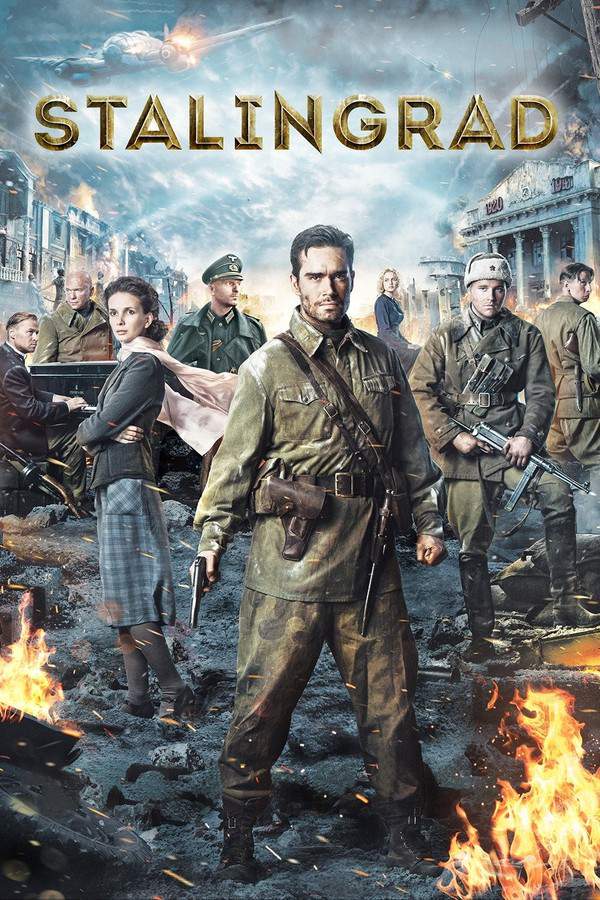
Stalingrad (2014) movie poster

Plot Summary

Stalingrad (2014) Plot Summary Explained

Release, runtime and language
2014 · 131 min · Russian
Directed by
Fedor Bondarchuk
Starring
Thomas Kretschmann, Aleksey Barabash, Andrey Smolyakov, Dmitriy Lysenkov, Mariya Smolnikova, Oleg Volku

During the brutal Battle of Stalingrad, a small group of Russian soldiers fights desperately to defend a vital building against the overwhelming German forces. Surrounded and facing certain death, they forge unexpected connections with a courageous local woman. Their lives become intertwined as they struggle to survive the relentless fighting amidst the destruction of the city.

On this page (6)
  1. 1 Where to watch
  2. 2 What happens: full plot
  3. 3 Plot questions answered
  4. 4 Movie threads
  5. 5 Movies like Stalingrad
  6. 6 Every angle

Where to watch

Where to Watch Stalingrad (2014)

Where can you watch Stalingrad? Stream, rent or buy it in the US, including on Apple TV Store, Google Play Movies and YouTube: current JustWatch availability with up-to-date prices.

Streaming availability powered by JustWatch

Full plot summary · contains spoilers

What Happens in Stalingrad: Full Plot Summary

The whole story of Stalingrad (2014) explained, from the opening scene to the final frame: every key event, every twist and what it all adds up to. Read it as a quick recap before the sequel, to check a scene you missed, or to finally understand what really happened.

This Russian film may be easily misunderstood due to its grand title; however, it delves into much more than mere violence. Indeed, while it features scenes of bloody action, which are expected in any film centered on urban warfare, its essence lies in exploring themes of rebirth amidst turmoil, a narrative that's highly relevant in today's world.

The story begins against the backdrop of the Fukushima disaster, where a team of Russian rescuers is on a mission to save a group of young German girls trapped in the rubble of a devastated building. As the plot unfolds, we transition into a flashback that intricately weaves together the experiences of a band of Russian soldiers and a young girl. Their paths intersect with a German officer and his young Russian lover, both caught in a struggle over a crumbling structure. Ah, the symmetry of it all – should it be corny? The answer is a resounding NO!

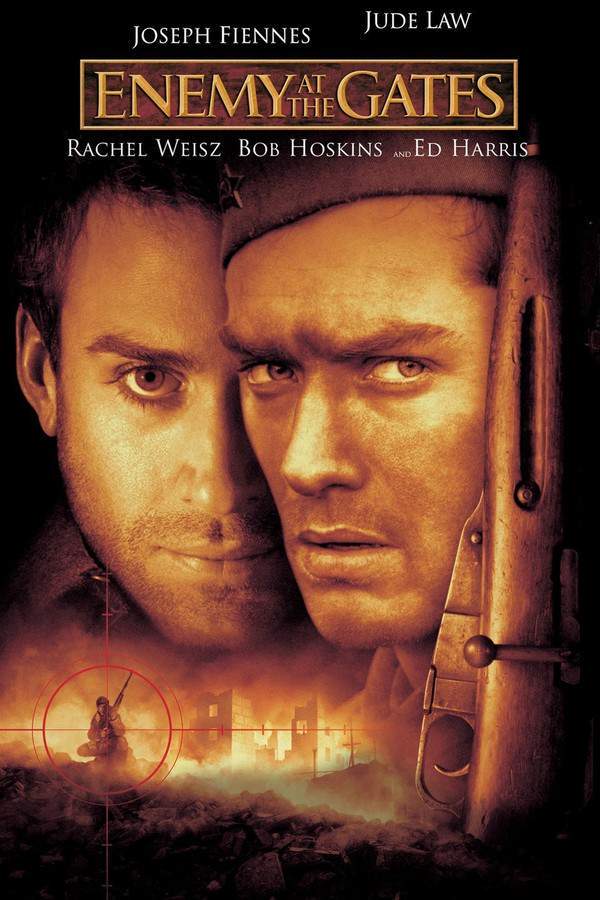
It's in the subtitled spoken Russian that the film truly invests you in its story, evoking memories of other significant films such as Enemy at the Gates and Miracle at St. Anna, while providing an experience that is far more gripping and intense.

Without revealing too much, what we have here is a rich emotional portrait depicting the lives of individuals amidst the chaos of an all-encompassing war. If you’re seeking a film that’s simply about mindless violence, you might find yourself somewhat disappointed, as there do exist movies that offer more of that flavor. However, if you crave a story that radiates hope amidst despair, then this film will surely resonate with you on a deeper level.

Last updated: May 12, 2025 at 07:04

Was this helpful?

Plot questions answered

Stalingrad Plot Explained: Your Questions Answered

The questions people ask most about Stalingrad (2014): what happens in the confusing scenes, why the characters do what they do, the twists, hidden details and what the ending means. Each answer contains spoilers.

Q1

Why does the movie open with the Fukushima disaster instead of Stalingrad?

The film uses a dual-timeline structure where the Fukushima rescue mission serves as the framing device. This opening establishes the modern-day rescue of German girls, which mirrors the historical story of Russian soldiers protecting civilians during the Battle of Stalingrad. The parallel creates thematic symmetry between both rescue missions, emphasizing the timeless nature of human compassion in catastrophe.

  • fukushima
  • flashback structure
  • rescue mission
  • dual timeline
Q2

How are the Fukushima and Stalingrad storylines connected?

Both storylines mirror each other through parallel rescue situations. In the present, Russian rescuers save trapped German girls in Fukushima, while in the past, Russian soldiers protect a young Russian woman and other civilians during the Battle of Stalingrad. The film uses flashbacks to reveal how the past events echo in the present, suggesting a cyclical nature of war and human resilience.

  • flashback
  • parallel stories
  • rescue
  • mirroring narrative
Q3

Who is the German officer and what is his relationship with the Russian woman?

The German officer is a commanding figure in the Stalingrad portion who develops a romantic relationship with a young Russian woman. This relationship complicates the moral landscape of the film, as both characters are caught on opposite sides of the conflict yet form a genuine human connection amid the destruction.

  • german officer
  • russian woman
  • love
  • relationship
  • war romance
Q4

Why do Russian soldiers risk their lives to save German girls during Stalingrad?

The Russian soldiers defy their combat orders to protect civilians, including a young Russian girl associated with the German officer. Their actions demonstrate that humanity can persist even in the most brutal circumstances, choosing compassion over enemy classification.

  • russian soldiers
  • german girls
  • civilians
  • protection
  • humanity
Q5

What happens to the Russian soldiers in the Stalingrad storyline?

The Russian soldiers face overwhelming German forces while defending a strategic building. Surrounded and facing certain death, they form bonds with the local woman and ultimately experience a bittersweet resolution where their sacrifice reflects the film's theme of rebirth and hope amid devastation.

  • russian soldiers
  • death
  • sacrifice
  • ending
  • bittersweet
Q6

Who is the young Russian woman in the Stalingrad portion of the film?

The young Russian woman is a local resident who becomes romantically involved with the German officer while also interacting with the Russian soldiers defending her city. Her presence highlights the complex civilian experience during urban warfare, where ordinary people navigate impossible choices between survival and allegiance.

  • russian woman
  • civilian
  • survival
  • occupation
  • complex character
Q7

Why does the film use Russian with English subtitles?

The original Russian dialogue with subtitles creates an immersive, authentic atmosphere that pulls viewers into the wartime experience. This stylistic choice adds emotional weight and realism, making the story feel more genuine and less like a typical Hollywood war film.

  • subtitles
  • russian language
  • authentic
  • film style
  • immersion
Q8

What does the title Stalingrad represent in this film?

Despite the title referring to the famous WWII battle, the film actually depicts a smaller-scale story within that conflict. The title represents the broader context of brutal urban warfare and human endurance, while the narrative focuses on personal stories of survival, love, and hope rather than large-scale military events.

  • title meaning
  • battle of stalingrad
  • war context
  • urban warfare
Q9

How does the film portray rebirth and hope amid the war?

The film weaves themes of rebirth through its parallel structure, where the modern Fukushima rescue echoes the past tragedies and triumphs. Characters forge unexpected human connections, Russian soldiers with a local woman, the German officer with his lover, that demonstrate resilience and hope even when facing inevitable death.

  • rebirth
  • hope
  • resilience
  • human connection
  • themes
Q10

What is the symmetry the film creates between characters?

The film establishes symmetry by mirroring situations across both timelines: rescuers saving trapped civilians, enemies becoming protectors, and love forming across opposing sides. This structural choice emphasizes that human nature, compassion, fear, love, remains consistent across different wars and generations.

  • symmetry
  • character parallels
  • mirroring
  • narrative structure

Movie threads

More Movies Like Stalingrad, by Mood & Story

Curated lists built around what makes Stalingrad tick: the same mood, the same kind of story or the same emotional payoff. Each list explains why these movies belong together.

Movies about siege survival and found family like Stalingrad

Groups of strangers form deep connections while trapped under desperate circumstances. If you liked the desperate camaraderie in Stalingrad, this list features similar movies about groups trapped in dire situations. These war, survival, and disaster films showcase characters forming unbreakable bonds while fighting against impossible odds, blending intense action with deep emotional connections.

  • desperate
  • hopeful
  • claustrophobic
  • emotional
  • gripping
  • somber
  • Tone: tense, desperate, hopeful
  • Pacing: variable, shifting between action and reflection
Why these movies?

The story pattern: These stories typically begin with a group of disparate individuals thrown into a confined, high-stakes environment. The narrative follows their struggle against an external threat while simultaneously charting the development of their internal relationships. The emotional core shifts from individual survival to collective resilience, often culminating in acts of profound sacrifice for the newfound 'family'.

Why they belong together: These films are grouped together because they share a specific emotional recipe: the intensity of a siege narrative combined with the heart of a found family story. They balance relentless external pressure with poignant character moments, creating a powerful, bittersweet tone focused on hope and human connection in the face of despair.

Emotional war dramas about resilience like Stalingrad

Stories where victory is measured in emotional survival, not just military success. For viewers who appreciated the emotional depth and bittersweet tone of Stalingrad, this collection features similar war films. These movies prioritize the personal journeys of soldiers and civilians, depicting the struggle to maintain hope and humanity amidst the chaos and destruction of battle.

  • somber
  • emotional
  • gripping
  • hopeful
  • desperate
  • oppressive
  • Tone: somber, bittersweet, tense
  • Pacing: variable, deliberate
Why these movies?

The story pattern: The narrative pattern follows characters navigating the extremes of warfare, where survival is uncertain and moral lines are blurred. The journey is defined by small, significant human interactions—acts of kindness, shared vulnerabilities, and forged bonds—that provide solace and meaning. The conclusion often reflects a pyrrhic victory, where physical survival is shadowed by loss, but the spirit's endurance offers a fragile hope.

Why they belong together: This thread connects films that share a specific tonal balance: they are unflinching in their depiction of war's horrors yet deliberate in showcasing the resilience of the human spirit. They are characterized by a heavy emotional weight, a tense and somber mood, and a conclusion that feels bittersweet rather than purely tragic or triumphant.

If you liked this

Movies Like Stalingrad

Similar movies to Stalingrad: the same genre, themes or kind of story. Each one comes with its own plot summary, timeline and ending explained.

Browse all movie summaries

Every angle

Stalingrad (2014) Explained: Plot, Timeline & Characters

Everything about Stalingrad in one place: what happens in the plot summary, the timeline in chronological order, the characters and meaning and a spoiler-free summary. What's After the Movie adds the cast, box office and post-credit scenes.

Coming soon on iOS and Android

The Plot Explained Movie Summary App

Plot summaries, endings explained and timelines on your phone. Catch up on any movie in minutes, save your favorites and never miss a twist again.

Be the first to know when we launch. Your email stays private, always.

Learn more about the app