Plot Explained Spoilers guaranteed!
Plot Explained

Browse by genre

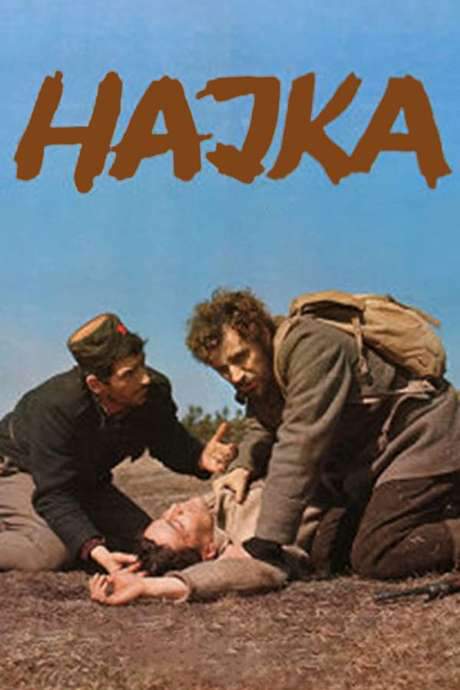
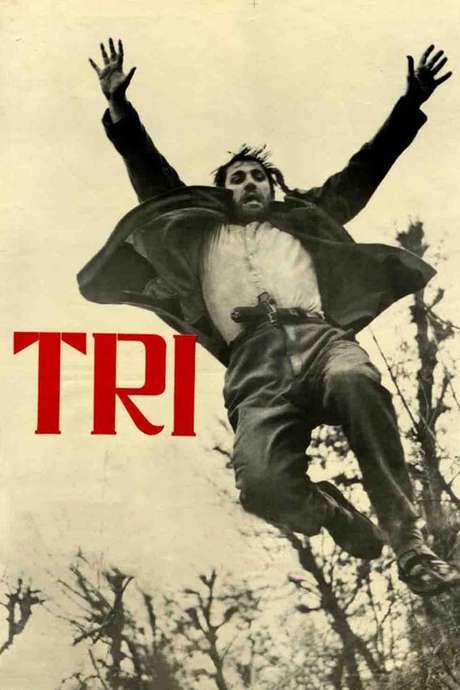
The Ambush (1969) movie poster

Plot Summary

The Ambush (1969) Plot Summary Explained

Release, runtime and language
1969 · 80 mins · Serbo-Croatian
Loading streaming availability…
Directed by
Živojin Pavlović
Starring
Ivica Vidović, Marko Nikolić, Milena Dravić, Ljubomir Ćipranić, Ljiljana Jovanović, Dušan Tadić

An idealistic young man eagerly backs the party and the fledgling communist regime of post‑war Yugoslavia, but he soon becomes entangled in a web of political intrigue and criminal schemes. As power struggles and betrayals mount, his sense of right and wrong grows ever more confused and ambiguous.

On this page (6)
  1. 1 Where to watch
  2. 2 What happens: full plot
  3. 3 Plot questions answered
  4. 4 Movie threads
  5. 5 Movies like The Ambush
  6. 6 Every angle
Loading streaming availability…

Full plot summary · contains spoilers

What Happens in The Ambush: Full Plot Summary

The whole story of The Ambush (1969) explained, from the opening scene to the final frame: every key event, every twist and what it all adds up to. Read it as a quick recap before the sequel, to check a scene you missed, or to finally understand what really happened.

Ive Vrana, a young Dalmatian and member of SKOJ, stands at the heart of a 1945 landscape where the communist government is newly formed but still wrestling with remnants of the Chetniks. He travels from his homeland after his father is killed by Italian soldiers, moving to Serbia to finish his high school education with relatives while clinging to a vision of revolution and a higher collective purpose. Early on, the personal meets the political in a sharp way: his girlfriend Milica is branded a bourgeoisie traitor simply because of her upbringing, a stigma that strains their bond and tests the strength of Ive’s beliefs. Around them, the atmosphere crackles with the unruly energy of the moment, as he also witnesses the drinking-fueled bravado and reckless actions of partisan leader Zeka, whose behavior underscores the moral ambiguity that permeates both sides of the conflict.

As the local partisans clash and push for influence, the hunt for Marko, a Chetnik leader, intensifies and pulls Ive deeper into the conflict. The romance and ideals that once seemed clear become tangled in a brutal reality where violence is not monopolized by one side: even his own comrades are capable of repression that shocks him and complicates his sense of justice. The situation grows more volatile as the movement’s goals collide with acts of coercion and power plays, forcing Ive to confront how revolutionary zeal can coarsen into fear, manipulation, and force.

In a bid for clarity, Ive joins OZNA, hoping to serve the cause with greater discipline and purpose. Yet the more he learns, the more he realizes that ambition, secrecy, and fear shape decisions on all sides, and that truth can be a casualty in the fog of war. He encounters the hollow lies of an opportunistic officer, whose rhetoric helps justify brutal actions and the arbitrary violence he witnesses around him. The personal unease deepens when Milica’s affection for him is complicated by her affair with her schoolteacher, a figure of authority and guidance in the village — Učiteljica — a betrayal that cuts deep and unsettles Ive’s faith in both love and leadership. This tangled entanglement of loyalty, desire, and ideology presses on him as the conflict closes in.

Frustrated and morally exhausted, Ive walks away from the village to seek space and silence, but the pursuit of anonymity proves futile. He is suddenly seized by partisans who mistake him for a Chetnik, and when he cannot produce documentation to prove his identity, they kill him. The tragedy of his fate underscores the film’s meditation on the cost of youthful idealism in a time of war, the moral complexity of a country rebuilding itself, and the way love, loyalty, and belief can fracture under the pressure of history.

Last updated: February 03, 2026 at 07:41

Was this helpful?

Plot questions answered

The Ambush Plot Explained: Your Questions Answered

The questions people ask most about The Ambush (1969): what happens in the confusing scenes, why the characters do what they do, the twists, hidden details and what the ending means. Each answer contains spoilers.

Q1

Why does Ive join OZNA after seeing the violence?

Ive joins OZNA hoping to find greater discipline and purpose within the communist apparatus, believing that the security forces might offer clearer moral direction than the local partisans. However, he quickly discovers that OZNA is plagued by opportunistic officers and a climate of suspicion, eroding his remaining ideals.

Foreshadowing: Earlier, Ive witnesses his own comrades committing repression that shocks him, planting seeds of doubt about which side truly represents justice.

  • ozna
  • ive vrana
  • partisan
  • security apparatus
  • idealism
Q2

Why is Milica branded a bourgeoisie traitor?

Milica is labeled a bourgeoisie traitor simply because of her family upbringing and background, not because of any specific action she took. In the post-war climate, class background determined loyalty, and her family history marks her as politically suspect in the new communist order.

  • milica
  • bourgeoisie
  • class enemy
  • betrayal
  • stigma
Q3

Why do the partisans kill Ive when he is one of their own?

During his walk outside the village, partisan forces mistake Ive for a Chetnik because he cannot produce documentation to prove his identity. In the chaos and suspicion of the post-war period, being unable to prove loyalty meant being seen as an enemy, leading to his execution.

Foreshadowing: Earlier, the film establishes that the atmosphere is filled with suspicion and misidentification, with violence affecting multiple sides.

  • ive vrana death
  • mistaken identity
  • documentation
  • partisan violence
  • chetnik
Q4

Why does Milica cheat on Ive with her schoolteacher?

Milica's affair with her PE teacher represents both personal betrayal and the broader breakdown of trust in the film. The affair occurs amid the political chaos, and her relationship with a figure of authority in the village underscores how Ive's faith in both love and leadership is shattered.

  • milica affair
  • teacher
  • betrayal
  • love triangle
  • disillusionment
Q5

Why does Ive's idealism shatter during the film?

Ive's idealism shatters because he witnesses that revolutionary zeal coarsens into fear, manipulation, and force on all sides. He sees his own comrades commit repression, discovers that ambition and secrecy drive OZNA officers, and experiences personal betrayal, all of which collapse the moral framework he believed in.

Foreshadowing: Early scenes show Ive arriving with revolutionary zeal, but the film progressively reveals the gap between theory and practice.

  • idealism
  • disillusionment
  • moral decay
  • partisan violence
  • ive vrana
Q6

What is SKOJ and what role does Ive play in it?

SKOJ (SKOJ - Savez komunističke omladine Jugoslavije) is the League of Communist Youth of Yugoslavia, the youth wing of the communist party. Ive is a member when he arrives in Serbia, bringing his revolutionary beliefs and commitment to the partisan cause.

  • skoj
  • communist youth
  • ive vrana
  • partisan movement
  • organization
Q7

Why is Zeka's reckless behavior significant to the story?

Zeka's drunk and reckless leadership exposes the moral ambiguity within the partisan movement itself. His behavior shows that violence and charisma can coexist with political aims, revealing that the partisans are not uniformly righteous, which shakes Ive's belief in the cause.

  • zeka
  • partisan leader
  • moral ambiguity
  • violence
  • leadership
Q8

Why is the hunt for Marko the Chetnik important to the plot?

The pursuit of Marko, a Chetnik leader, intensifies the conflict around the village and pushes Ive deeper into the violence. This conflict forces Ive to confront the escalating costs of the struggle and further blurs loyalties as the partisan-Chetnik clash escalates.

  • marko chetnik
  • chetnik
  • pursuit
  • partisan conflict
  • violence escalation
Q9

Why doesn't Ive have documentation to prove he's a partisan?

Ive is caught during an impromptu walk outside the village after leaving in frustration. He is not carrying identification because he left abruptly to clear his mind from the disillusionment caused by lies, violence, and betrayal. This lack of documentation proves fatal when he is mistaken for a Chetnik.

Foreshadowing: Earlier, the film establishes the climate of suspicion where identity documentation becomes a matter of life and death.

  • identity papers
  • documentation
  • mistaken for enemy
  • execution
  • wartime chaos
Q10

What does Ive's death represent in the film's themes?

Ive's senseless death underscores the brutal cost of factionalism and how even those with noble aims can be crushed by the power struggles they seek to serve. It represents the tragic cost of youthful idealism in wartime, where suspicion and misidentification become deadly, and love, loyalty, and belief fracture under historical pressure.

Foreshadowing: The film foreshadows this ending through the progressive collapse of Ive's ideals and the escalating violence surrounding him.

  • tragic ending
  • cost of idealism
  • factionalism
  • death meaning
  • moral chaos
Q11

Why does the film show violence on all sides of the conflict?

The film deliberately shows that violence is not monopolized by one side, Ive witnesses his own comrades commit repression that shocks him. This reflects the film's moral complexity, demonstrating that revolutionary zeal can justify brutality regardless of which faction commits it, and that truth becomes a casualty in the fog of war.

  • moral ambiguity
  • all sides violence
  • partisan repression
  • chetnik
  • war crimes
Q12

Why does Ive walk away from the village before his death?

Ive leaves the village because he is frustrated and morally exhausted from witnessing lies, violence, and personal betrayal, particularly Milica's affair. He seeks space and silence to process the collapse of his ideals, but this walk leads to his fatal encounter with partisan patrols.

  • ive leaves
  • disillusionment
  • walk
  • escape
  • frustration

Movie threads

More Movies Like The Ambush, by Mood & Story

Curated lists built around what makes The Ambush tick: the same mood, the same kind of story or the same emotional payoff. Each list explains why these movies belong together.

Movies about shattered idealism like The Ambush

Stories where fervent belief in a cause is shattered by grim reality. If you liked The Ambush's exploration of a young revolutionary's devastating disillusionment, you'll find similar powerful stories here. These films delve into the tragic gap between ideology and reality, often set against turbulent political backdrops, and share a dark, morally complex tone.

  • disillusioned
  • tragic
  • somber
  • oppressive
  • cynical
  • gritty
  • Tone: dark, tragic, cynical
  • Pacing: steady, methodical
Why these movies?

The story pattern: These stories typically follow a linear but impactful arc, beginning with a character's passionate commitment to a political or ideological cause. The central conflict arises as they witness the cause's inherent corruption, violence, or betrayal, leading to a crisis of faith. The narrative culminates in a bleak ending where the protagonist's ideals, and often the protagonist themselves, are casualties of the very system they helped build.

Why they belong together: Movies in this thread are grouped by their shared focus on the 'loss of innocence' archetype within a political context. They create a coherent experience through their dark tone, heavy emotional weight, and the specific narrative pattern of a hopeful beginning giving way to a tragic, disillusioning conclusion.

Gritty political dramas with moral ambiguity like The Ambush

Gritty dramas where right and wrong blur within a corrupt power structure. Fans of The Ambush will appreciate these similarly intense and dark-toned movies. They explore complex themes of betrayal and moral compromise within powerful, often brutal systems, creating a somber and anxious atmosphere where clear-cut heroes and villains are rare.

  • oppressive
  • anxious
  • gritty
  • somber
  • cynical
  • tense
  • Tone: dark, oppressive, ambiguous
  • Pacing: steady, tense
Why these movies?

The story pattern: The narrative pattern involves a protagonist, often an insider or a believer, becoming entangled in the machinations of a powerful political entity. As they are exposed to ethical compromises, betrayals, and violence, their own moral compass becomes increasingly unreliable. The story unfolds with a steady, escalating tension, focusing on psychological strain and the erosion of personal ethics rather than clear-cut external victories or defeats.

Why they belong together: These films are grouped by their shared setting within a corrupt political world and their central theme of moral ambiguity. They deliver a coherent vibe through their oppressive atmosphere, high psychological intensity, steady pacing, and focus on the conflict between personal morality and systemic demands.

If you liked this

Movies Like The Ambush

Similar movies to The Ambush: the same genre, themes or kind of story. Each one comes with its own plot summary, timeline and ending explained.

Browse all movie summaries

Every angle

The Ambush (1969) Explained: Plot, Timeline & Characters

Everything about The Ambush in one place: what happens in the plot summary, the timeline in chronological order, the characters and meaning and a spoiler-free summary. What's After the Movie adds the cast, box office and post-credit scenes.

Coming soon on iOS and Android

The Plot Explained Movie Summary App

Plot summaries, endings explained and timelines on your phone. Catch up on any movie in minutes, save your favorites and never miss a twist again.

Be the first to know when we launch. Your email stays private, always.

Learn more about the app