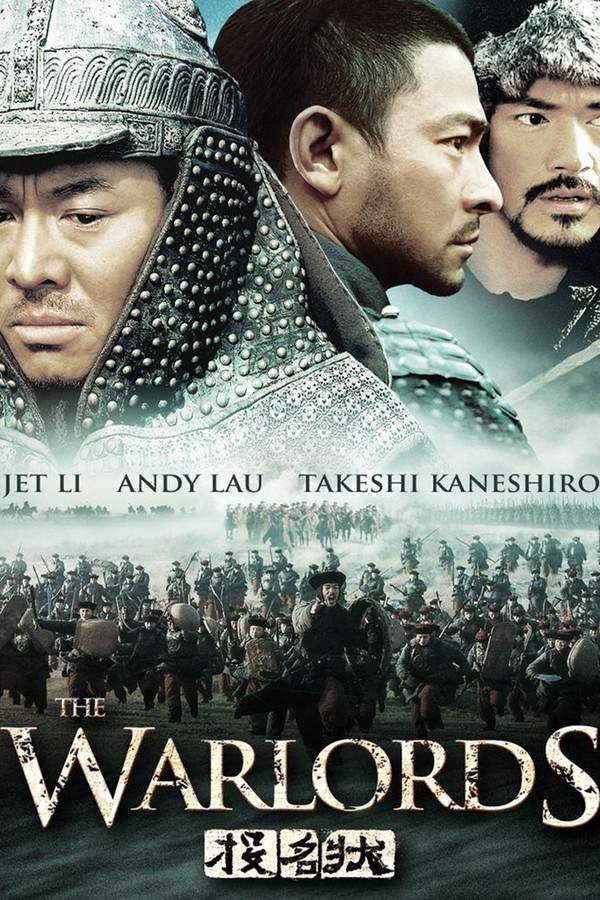
The film unfolds in 1860s China amid the Taiping Rebellion against the Qing Empire. Pang Qingyun, an imperial battalion commander, survives a brutal clash between imperial and rebel forces and finds himself drawn into a perilous alliance. He soon befriends Zhao Er-Hu and Jiang Wu-Yang, the influential leaders of a bandit network based in a nearby village, a crew led by Bandit Shi Jin Biao that operates on the edge of law and loyalty. Together, they raid a rebel convoy for food, a move that highlights the desperate hunger that grips the people and the fragile codes that bind these disparate figures. That night, imperial troops arrive in the village and seize the supplies, a blow that pushes Pang to seek power and influence beyond his immediate post. Around this time, Pang begins a secret affair with Lian, whose presence adds a dangerous personal dimension to the already tense power dynamics.
As the villagers' misery grows, Pang persuades them to form a militia that will support imperial efforts to suppress the rebellion. With Pang as their leader, the trio swears a blood oath and pledges brotherhood on pain of death, a bond that blends camaraderie with competing ambitions. The militia, though hampered by irregular support from the regular army, scores a string of victories against the rebels, feeding Pang’s appetite for greater control. His growing success stirs jealousy among higher-ups in the imperial hierarchy, who withhold reinforcements and scarce supplies, turning what should be a swift campaign into a protracted struggle. The siege intensifies as the rebel-held city of Suzhou becomes a focal point, and the frontline becomes a grind that tests loyalties, ethics, and the limits of mercy.
In Suzhou, Zhao disguises himself to infiltrate the city and prepare an assassination of the rebel commander. He discovers the commander is already prepared to surrender if certain conditions are met: the rebels and civilians will be spared, and the city’s trauma will end without a wholesale bloodbath. Meanwhile, Pang manages to secure ten days’ worth of provisions from a rival imperial commander, but when he learns Zhao has struck a separate deal with the rebels, he refuses to honor it—feeling the supply line cannot support both the militia and those who might have just surrendered. A tense dispute erupts between the two, and Pang temporarily places Zhao in chains to prevent interference. He then orders Jiang to oversee the massacre of the surrendered rebels, a brutal act Jiang carries out with heavy heart and mounting regret.
Zhao, embittered but loyal, plans to desert the militia; Pang pleads for him to stay, arguing that the massacre was a grim but necessary step to preserve resources for their next campaign toward the rebel capital, Nanjing. Zhao ultimately agrees to stay, convinced that Pang’s logic, though harsh, serves a greater strategic purpose. After the Battle of Nanjing—widely considered the turning point that ends the rebellion—Pang rises to a high position as a viceroy, rewarded by the imperial government. Yet the camaraderie between Pang and Zhao begins to fray as mistrust threads its way through their alliance; Zhao’s tendency to distribute funds to the men without Pang’s approval stirs further tensions, and political rivals begin to hint that Zhao might be a threat.
Realizing he is losing control over Zhao and the loyalists, Pang contemplates disbanding the militia and quietly plots to remove Zhao. When Jiang learns of Pang’s plan, he tries to dissuade him and, in the process, uncovers Pang’s ongoing affair with Lian. Jiang sees this as a betrayal of their brotherhood and kills Lian, a blow that shakes the trio’s fragile foundations. Meanwhile, Zhao is tricked into thinking Pang is in danger and goes to rescue him, only to fall into a trap and die, not realizing that Pang had intended his death as part of a larger political calculation.
When Jiang discovers that Pang was responsible for Zhao’s demise, he confronts Pang and a deadly confrontation ensues. Pang fights back and defeats Jiang, but a sniper hired by his political rivals fatally wounds him. As he collapses, he allows Jiang to deliver the coup de grâce to fulfill their oath. Offscreen, Jiang is arrested and made the scapegoat for Pang’s assassination, eventually executed by lingchi. His final words linger in the mind: “dying is easy, living is harder.”
Throughout the narrative, the thread of loyalty collides with ambition, love, and betrayal, constructing a humane portrait of men who navigate impossible moral terrain in a collapsing world. The film weighs the cost of survival against the price of power, asking whether duty can ever be clean in a time when every choice is stained by necessity, and whether comradery can endure when the ultimate aim shifts from liberation to control.