

Plot Explained Spoilers guaranteed!
Plot Explained

Browse by genre

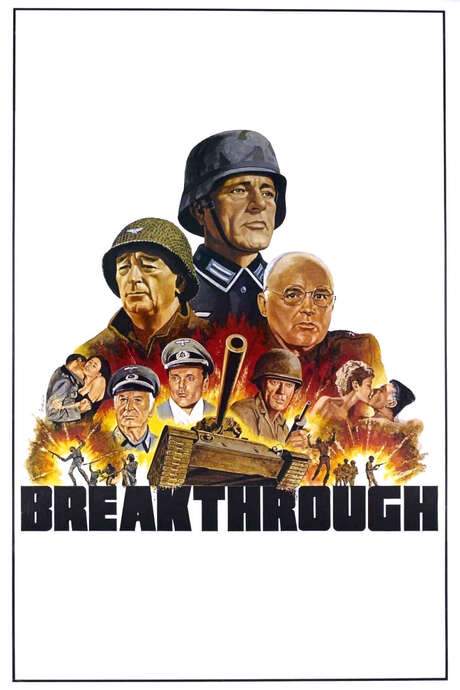
Breakthrough (1979) movie poster

Plot Summary

Breakthrough (1979) Plot Summary Explained

Release, runtime and language
1979 · 93 mins · German
Directed by
Andrew V. McLaglen
Starring
Rod Steiger, Robert Mitchum, Sieghardt Rupp, Horst Janson, Christoph Waltz, Richard Burton

Set in late May 1944 as the German retreat on the Eastern Front, Captain Stransky (Helmut Griem) orders Sergeant Steiner (Richard Burton) to blow up a railway tunnel to stop the Soviet advance. Steiner’s platoon is halted by a Russian tank and the mission fails. He then takes leave to Paris as the Allied invasion of Normandy begins, confronting shifting loyalties and harsh war realities.

On this page (6)
  1. 1 Where to watch
  2. 2 What happens: full plot
  3. 3 Plot questions answered
  4. 4 Movie threads
  5. 5 Movies like Breakthrough
  6. 6 Every angle

Where to watch

Where to Watch Breakthrough (1979)

Where can you watch Breakthrough? Stream, rent or buy it in the US, including on Cultpix: current JustWatch availability with up-to-date prices.

Streaming availability powered by JustWatch

Full plot summary · contains spoilers

What Happens in Breakthrough: Full Plot Summary

The whole story of Breakthrough (1979) explained, from the opening scene to the final frame: every key event, every twist and what it all adds up to. Read it as a quick recap before the sequel, to check a scene you missed, or to finally understand what really happened.

Starting in late May 1944, during the German retreat on the Eastern Front, Captain Stransky, Helmut Griem, orders Sergeant Steiner, Richard Burton, to blow up a railway tunnel to prevent Russian forces from using it. Steiner's platoon runs into trouble when a Russian tank halts their mission, and after this setback he takes a furlough to Paris just as the Allies launch their invasion of Normandy.

Steiner's unit is then moved to France, where they occupy the village of St Bologne. General Hofmann, Curd Jürgens, instructs Steiner to cross into nearby enemy territory and confer with American Colonel Rogers, Robert Mitchum, and General Webster, Rod Steiger. They reveal that the High Command of the Wehrmacht is plotting to assassinate Hitler and would welcome a surrender. The plan falters, and American forces proceed to attack German positions in St Bologne, a town that Stransky has targeted with an explosion intended to wipe out both the Americans and the civilian population.

Colonel Rogers and Sergeant Anderson, Michael Parks, take a jeep with a white flag and approach St Bologne. The Germans fire on them, acting on Stransky’s orders. Rogers and Anderson retreat to the tanks, and the Americans advance toward St. Bologne, unaware of the explosives that have been planted in the town.

Steiner urges Stransky not to proceed with the planned explosions. Stransky shoots Steiner and then leaves the scene.

The look-outs on the German side are killed. As the Americans enter the town square, the Germans prepare to trigger the dynamite. Steiner, still alive, disconnects the main switch that would detonate the explosives. He climbs the stairs, defeats the German soldiers, and shoots Stransky, saving Rogers’ life. The Germans then open fire on the tanks. Steiner helps move civilians out of the crossfire. The remaining Germans surrender.

Steiner walks through the burning town. One of the German soldiers shoots Anderson, and Steiner returns fire, killing the assailant and once again saving Rogers.

Throughout these events, Steiner’s actions reveal a clear tilt toward the Americans, showing sympathy that goes beyond duty and into personal restraint and mercy, even when it means standing against his own unit.

Last updated: October 09, 2025 at 09:23

Was this helpful?

Plot questions answered

Breakthrough Plot Explained: Your Questions Answered

The questions people ask most about Breakthrough (1979): what happens in the confusing scenes, why the characters do what they do, the twists, hidden details and what the ending means. Each answer contains spoilers.

Q1

Why does Stransky want to blow up St Bologne with explosives?

Stransky plans to detonate explosives planted in St Bologne to wipe out both the American forces and the civilian population in the town. This extreme measure reflects his willingness to sacrifice innocent lives rather than allow the Americans to capture the location, demonstrating the desperation and moral corruption within the German command as the war turns against them.

  • stransky
  • explosives
  • st bologne
  • civilians
  • massacre
Q2

Why do the Germans fire on Rogers and Anderson when they approach with a white flag?

The Germans fire on Colonel Rogers and Sergeant Anderson because Captain Stransky specifically ordered them to do so. Stransky intentionally rejects any negotiated surrender and uses the incoming American officers as targets, showing his determination to prevent any peaceful resolution and his willingness to violate the rules of war.

Foreshadowing: Earlier, Stransky's refusal to consider the American surrender talks signals his contempt for negotiation.

  • white flag
  • rogers
  • anderson
  • stransky
  • war crimes
Q3

How does Steiner survive being shot by Stransky?

Steiner survives being shot because the wound, while serious, does not kill him. After Stransky leaves the scene believing Steiner is dead, Steiner recovers enough strength to pull himself up, disconnect the main switch preventing the detonation, and continue fighting. The movie does not specify the exact nature of the wound, only that he was wounded but still capable of heroic action.

  • steiner
  • shot
  • wound
  • survival
  • stransky
Q4

Why does the German High Command want to assassinate Hitler and surrender?

The German High Command, represented by General Hofmann, initiates contact with the Americans to arrange both an assassination attempt on Hitler and a surrender. This reflects the growing recognition among senior German officers that the war is lost and that removing Hitler might allow for a more favorable armistice. They see surrendering to the Western Allies as preferable to continued fighting against the advancing Soviet forces from the east.

  • high command
  • assassination
  • hitler
  • surrender
  • hofmann
Q5

Why does Steiner begin helping the Americans?

Steiner's loyalties shift gradually throughout the film as he witnesses the moral corruption and atrocities committed by his own side. Confronted with Stransky's plan to massacre American soldiers and innocent civilians, and having established personal connections with Colonel Rogers during their liaison, Steiner chooses to act against his former comrades. His transformation represents a moral awakening driven by disgust at the German command's ruthlessness and genuine respect for the American officers.

Foreshadowing: Steiner's growing unease is visible during the failed tunnel mission and his conversations with American officers.

  • steiner
  • loyalties
  • transformation
  • americans
  • rogers
Q6

Why does the assassination and surrender plan fail?

The plan fails because the Americans proceed with their assault on St Bologne regardless of the ongoing negotiations. With the military situation deteriorating rapidly and communication difficult across enemy lines, the American forces launch their attack before the assassination plot can be executed. This forces Steiner and the Americans into open conflict with the German defenders.

  • assassination
  • surrender
  • plan
  • failure
  • attack
Q7

Why does Stransky shoot Steiner?

Stransky shoots Steiner because Steiner confronts him directly and urges him not to proceed with detonating the explosives in St Bologne. Steiner's attempt to prevent the massacre represents a direct challenge to Stransky's authority and orders. Rather than negotiate or reconsider, Stransky eliminates the threat by shooting his own sergeant.

  • stransky
  • steiner
  • shoot
  • confrontation
  • explosives
Q8

What happens to Sergeant Anderson in the final battle?

Sergeant Anderson is killed during the final battle when one of the German soldiers shoots him. However, Steiner immediately returns fire and kills the assailant, avenging Anderson's death. This occurs after Steiner has already saved Rogers' life by disconnecting the explosives and killing Stransky, and it represents the final act of violence in the battle.

  • anderson
  • death
  • german soldier
  • avenged
  • steiner
Q9

Why does Steiner kill Stransky?

Steiner kills Stransky after disabling the explosives that would have destroyed the town. He climbs the stairs, overcomes German guards, and confronts Stransky directly, shooting him to prevent any further attempt to detonate the charges. This act represents Steiner's complete break from his former command and his commitment to protecting the Americans and civilians in St Bologne.

  • steiner
  • stransky
  • killed
  • explosives
  • town square
Q10

How does Steiner prevent the explosives from detonating?

Despite being shot and wounded by Stransky, Steiner manages to pull himself up and reach the main switch that controls the detonators. He disconnects this switch, rendering the explosives harmless before the Germans can trigger them. This act saves the lives of both the advancing American forces and the civilian population in St Bologne.

  • explosives
  • detonator
  • switch
  • steiner
  • disconnect
Q11

Why does General Hofmann choose Steiner for the liaison mission?

General Hofmann orders Steiner to cross into enemy territory to meet with American Colonel Rogers and General Webster because Steiner commands a platoon in the occupied village and can move relatively freely through the area. As a sergeant with operational responsibilities, he is a logical choice for the sensitive diplomatic mission. His role puts him in direct contact with the American command and sets the stage for his eventual defection.

  • hofmann
  • steiner
  • liaison
  • mission
  • rogers
  • webster
Q12

What happens to the civilians in St Bologne during the battle?

The civilians in St Bologne are saved from death by Steiner's intervention. After disabling the explosives and defeating the German guards, Steiner physically moves civilians out of the line of fire as the fighting continues. His actions prevent them from being caught in the crossfire or killed by the planned detonation, ensuring their survival as the Germans surrender.

  • civilians
  • steiner
  • safety
  • surrender
  • st bologne

Movie threads

More Movies Like Breakthrough, by Mood & Story

Curated lists built around what makes Breakthrough tick: the same mood, the same kind of story or the same emotional payoff. Each list explains why these movies belong together.

Stories of Moral Conflict in War like Breakthrough

Soldiers grappling with impossible choices while surrounded by the brutality of combat. Discover movies like Breakthrough that explore the heavy burden of choice for soldiers. This thread features war dramas and thrillers where the central conflict is as much about conscience as it is about combat, perfect for viewers seeking morally complex military stories.

  • morally conflicted
  • tense
  • grim
  • desperate
  • suspenseful
  • chaotic
  • Tone: tense, grim, morally conflicted
  • Pacing: fast, mission-driven
Why these movies?

The story pattern: The narratives follow military personnel who become entangled in situations where loyalty, survival, and ethics collide. The plot often involves a mission or order that forces the protagonist to question their role, leading to moments of betrayal, difficult alliances, and profound personal reckoning.

Why they belong together: Movies are grouped here for their shared focus on the psychological and ethical dilemmas of soldiers. They combine the high-intensity action of war with a heavy emotional weight derived from characters wrestling with their decisions, creating a consistently tense and grim atmosphere.

Fast-Paced Mission Thrillers like Breakthrough

High-stakes, rapid-fire stories of survival against overwhelming odds. If you liked the non-stop action and high stakes of Breakthrough, explore these movies. This thread features thrilling stories of desperate missions against the clock, filled with suspense, combat, and a race for survival that keeps the pacing fast and the tension high.

  • suspenseful
  • chaotic
  • desperate
  • tense
  • fast-paced
  • high-stakes
  • Tone: tense, desperate, suspenseful
  • Pacing: fast, relentless
Why these movies?

The story pattern: Stories unfold in a linear, straightforward manner, focused on a clear and critical goal—such as destroying a target, escaping a zone, or completing an assignment. The structure is a sequence of escalating obstacles and confrontations, maintaining a high level of suspense and physical danger from start to finish.

Why they belong together: These films are united by their breakneck pacing and the palpable desperation of their scenarios. They create a cohesive experience of anxiety and high intensity through a simple, propulsive plot that emphasizes action, survival, and the chaos of trying to succeed against impossible odds.

If you liked this

Movies Like Breakthrough

Similar movies to Breakthrough: the same genre, themes or kind of story. Each one comes with its own plot summary, timeline and ending explained.

Browse all movie summaries

Every angle

Breakthrough (1979) Explained: Plot, Timeline & Characters

Everything about Breakthrough in one place: what happens in the plot summary, the timeline in chronological order, the characters and meaning and a spoiler-free summary. What's After the Movie adds the cast, box office and post-credit scenes.

Coming soon on iOS and Android

The Plot Explained Movie Summary App

Plot summaries, endings explained and timelines on your phone. Catch up on any movie in minutes, save your favorites and never miss a twist again.

Be the first to know when we launch. Your email stays private, always.

Learn more about the app