Plot Explained Spoilers guaranteed!
Plot Explained

Browse by genre

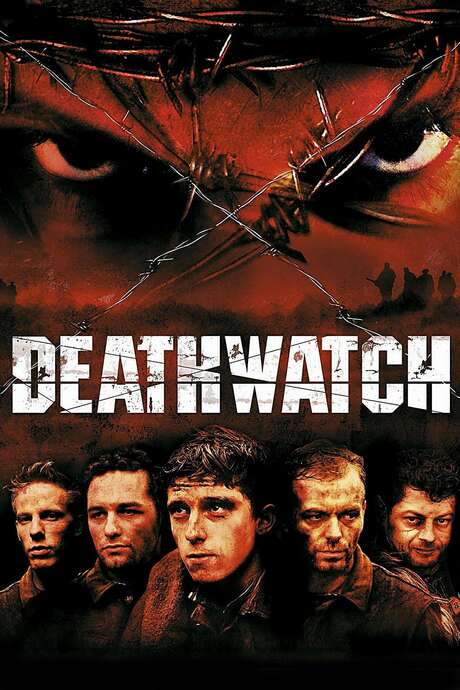
Deathwatch (2002) movie poster

Plot Summary

Deathwatch (2002) Plot Summary Explained

Release, runtime and language
2002 · 94 mins · English
Directed by
M.J. Bassett
Starring
Andy Serkis, Jamie Bell, Kris Marshall, Matthew Rhys, Hugh O'Conor, Rúaidhrí Conroy

In WWI trench warfare a British infantry company cut off after a battle seeks to rejoin its lines and finds a bomb‑shattered German trench, except for a few dazed soldiers. After killing most Germans and taking a prisoner they hold the position awaiting reinforcements. Soon a presence spreads, sowing paranoia and turning the men against each other.

On this page (5)
  1. 1 Where to watch
  2. 2 What happens: full plot
  3. 3 Plot questions answered
  4. 4 Movie threads
  5. 5 Every angle

Where to watch

Where to Watch Deathwatch (2002)

Where can you watch Deathwatch? Stream, rent or buy it in the US, including on The CW, Tubi TV and Amazon Video: current JustWatch availability with up-to-date prices.

Streaming availability powered by JustWatch

Full plot summary · contains spoilers

What Happens in Deathwatch: Full Plot Summary

The whole story of Deathwatch (2002) explained, from the opening scene to the final frame: every key event, every twist and what it all adds up to. Read it as a quick recap before the sequel, to check a scene you missed, or to finally understand what really happened.

During World War I, the soldiers of the British 5th Battalion's Y Company under Capt. Bramwell Jennings Laurence Fox push into a grim trench assault, only to find the battlefield quickly devolving into a tests of nerve and fate. The mission centers on the hesitant but determined Pvt. Charlie Shakespeare Jamie Bell, who is nudged forward by Sgt. David Tate Hugo Speer as the company threads through fog, shellfire, and the claustrophobic maze of dugouts. The group fights its way forward, but what begins as a tactical push turns into a haunting ordeal as machines guns and artillery swallow comrades, leaving the survivors scattered, exhausted, and suddenly deeply isolated in the choking mud.

Carrying Pvt. Colin Chevasse Rúaidhrí Conroy on a stretcher, the unit stumbles into a maze of trenches that seems to stretch into infinity. They encounter three terrified Germans who react with a strange, almost parasitic fear as if something otherworldly lurks deeper within the earth. In a tense exchange, Thomas Quinn Andy Serkis shoots one of the Germans, another flees, and the third, Friedrich Torben Liebrecht, surrenders. The incident convinces the men they have breached enemy lines, and they resolve to hold the trench, thinking they have emerged into a fragile moment of control. Yet the trove of unsettling discoveries follows: bodies decayed and strangled by barbed wire, abandoned kits frozen in time, torn watches and broken compasses—an eerie symmetry with the soldiers’ own unraveling morale. When detonations close passages, a demon-like growl rumbles through the mud and blood stains the earth, hinting at a danger far beyond conventional combat.

The fighting intensifies as Pvt. Jack Hawkstone [Hans Matheson] is ambushed by a second German hidden in the ooze. He and Pvt. Barry Starinski [Kris Marshall] falter, and Thomas even executes the captured foe with a pistol, a brutal act that unnerves the already fragile unit and draws the ire of the others. When radio contact with command reveals that White Company may already have been wiped out, the remaining soldiers must shoulder the burden of leadership in a place where rules crumble and fear becomes a weapon of its own.

As night falls, the mood turns heavier. Cpl. Doc Fairweather [Matthew Rhys] tends the wounded, but the sense of menace grows; Barry keeps his distance, then stumbles upon three German corpses wrapped in barbed wire, positioned upright as if mockingly saluting the living. One of the corpses suddenly animates, attacking. Charlie and Tate arrive to find Barry’s corpse suspended by wire, a brutal reminder that something unseen is manipulating the trench from within. When they force Friedrich to speak, he reveals that the others turned on each other and that there is indeed something evil inhabiting the trenches, a force that seems to feed on fear and fracture.

Morning brings a brittle calm that shatters quickly. Jennings’s leadership fractures under stress, and the men clear the dugouts with grenades while the noises of artillery and advancing infantry echo as if the earth itself is moving. In a moment of tragic misperception, Jack is mistakenly shot in the chaos. Despair festers into distrust, and Willie McNess fantasizes about desertion, his nerves unraveling with every echoing step through the trenches. That night, a red mist drifts through the line, voices whisper, and Willie is drenched in blood, chased into no-man’s-land, and finally killed by Bradford after a desperate chase. Doc attempts a rescue but Willie’s condition worsens, and he drags himself toward safety only to be pulled under by something tunneling below.

Anthony Bradford [Hugh O’Conor] enters the narrative more directly as madness tightens its grip: convinced that both the trench and death itself are possessed, he pleads with Charlie to shoot him so he won’t kill again. When Charlie refuses, Anthony leaves, ultimately dragging Doc into a trap of barbed wire and forcing a grim choice on the chaplain. The tension between duty and mercy seems to fracture with every breath, as the men either act or wither under the pressure.

The next day casts a brutal crescendo. Thomas crucifies Friedrich alive on a wooden beam in no-man’s land and is himself stabbed in a fevered, frenzied struggle with Tate, who becomes entangled in barbed wire. Thomas ultimately kills Tate and taunts Charlie when the latter refuses to shoot him, only to be impaled by living strands of wire that rise from the mud. Charlie must decide whether to end his comrade or risk becoming a casualty of the trench’s ravenous, inexplicable power. He ultimately frees Friedrich and arms him with a rifle to defend himself, then rushes toward help.

In a heartbreaking turn, Charlie discovers Colin, pale and covered in flies, whose legs have already been gnawed by rats. Charlie’s tears mark a devastating realization: the boy’s legs are gone, and he must euthanize him. The tension escalates as Anthony ties Doc up with barbed wire and implores Charlie to kill the chaplain as well. Charlie’s resolve wavers, and Anthony shoots Doc, leaving Charlie to confront the moral weight of mercy versus survival. In a final, grim reconnaissance, Charlie chooses to end Anthony’s rampage with his own hands, a moment that seals the fate of the unit in a trench where pain and doubt have become the only constants.

The trench’s earth begins to cave, passages become blocked by the relentless embrace of barbed wire, and Charlie is dragged into a subterranean labyrinth. He wakes in a cave filled with corpses and sees living versions of his men, including himself, sitting around a macabre campfire of memory. Panicked, he escapes back to the trench—and there, Friedrich, now healthy and calm, points his rifle toward him with quiet menace. Friedrich’s offer to let Charlie go, and his enigmatic remark about freedom, suggests a return to the surface is possible, but at a terrible price. The ladder back to no-man’s-land appears, inviting Charlie to climb toward an uncertain fate as the fog swallows the trench and the world above.

In the aftermath, a fresh team of British soldiers arrives at the slaughtered trench. They find Friedrich sitting alone, a chilling calm in his expression as he lifts his hands to surrender, the same gesture of submission that began the nightmare turning into a possible repeat. The film ends on this ominous note: the cycle, the trench, the evil, and the choices made in the murk of war ready to recur, as if history itself is condemned to relive the same horrors over and over again.

Last updated: October 09, 2025 at 15:25

Was this helpful?

Plot questions answered

Deathwatch Plot Explained: Your Questions Answered

The questions people ask most about Deathwatch (2002): what happens in the confusing scenes, why the characters do what they do, the twists, hidden details and what the ending means. Each answer contains spoilers.

Q1

Why does Thomas Quinn execute the German prisoner?

Thomas shoots the German prisoner in a moment of paranoia and escalating tension. The unit is already on edge from encountering the strange, terrified Germans and the eerie discoveries in the trench. When Jack and Barry struggle with a second German hidden in the mud, Thomas executes the captured Friedrich with a pistol, scarring him despite Sgt. Tate's objections. This brutal act signals the unit's moral collapse and draws the ire of whatever evil lurks in the trenches.

  • thomas quinn
  • german prisoner
  • execution
  • paranoia
  • moral collapse
Q2

What is the evil presence in the trenches?

The evil is an unseen supernatural force that inhabits the trenches and feeds on fear. Friedrich reveals during interrogation that the German soldiers turned on each other, and he warns that there is 'evil' in the trenches. The force manifests through demonic growls, animating corpses, red mists, and living barbed wire that attacks soldiers. It seems to amplify paranoia and drive men to violence against each other.

Foreshadowing: The three Germans Charlie encounters are already terrified of something deeper in the trench, hinting at the entity's presence.

  • evil
  • supernatural
  • trench
  • fear
  • Friedrich
Q3

Why do the British soldiers start turning against each other?

The soldiers fracture under the combined pressure of isolation, supernatural terror, and psychological deterioration. With no radio contact and believing White Company wiped out, they are completely cut off. The evil force in the trench appears to amplify their fears and suspicions, turning minor tensions into violent confrontations. Thomas becomes increasingly brutal, Jennings cracks under pressure, and men like Anthony Bradford become convinced the trench is possessed.

  • paranoia
  • isolation
  • supernatural
  • soldiers
  • violence
Q4

What is the red mist that attacks Willie McNess?

The red mist is a manifestation of the trench's evil force. On the second night, Willie sees a red mist drifting through the line and hears whispering voices. He becomes drenched in blood and flees into no-man's-land, where he is eventually shot by Anthony Bradford. The mist appears to be the entity's physical form, attacking and consuming soldiers through tunneling forces beneath the earth.

  • red mist
  • willie mcness
  • supernatural
  • attack
  • night
Q5

How does Jack Hawkstone get mistakenly shot?

Jack is killed during a chaotic morning on Day 2 when Jennings's leadership completely breaks down under stress. As the men clear dugouts with grenades and phantom artillery sounds echo through the trenches, Jennings accidentally shoots Jack in the confusion. This tragic misperception occurs during a moment of complete organizational collapse when no one is certain who is friend or foe.

  • jack hawkstone
  • jennings
  • mistaken shooting
  • chaos
  • day 2
Q6

What happens to Colin Chevasse and why does Charlie kill him?

Colin was carried on a stretcher throughout the story, and by Day 3, Charlie discovers him pale, covered in flies, with his legs completely gnawed off by rats. The injuries are terminal andColin is suffering terribly. Charlie is forced to euthanize him as an act of mercy, weeping as he does so. This scene highlights the brutal reality of trench warfare and the impossible choices soldiers face.

  • colin chevasse
  • euthanasia
  • rats
  • mercy killing
  • charlie
Q7

Why does Anthony Bradford go insane and kill Doc?

Anthony becomes convinced that both the trench and death itself are possessed by the evil force. His mental state deteriorates completely under the supernatural terror. He ties Doc Fairweather up with barbed wire and implores Charlie to kill the chaplain. When Charlie refuses, Anthony shoots Doc himself, forcing Charlie to then kill Anthony. Anthony believed he was already damned and wanted to end the cycle of violence.

  • anthony bradford
  • doc fairweather
  • insanity
  • possession
  • murder
Q8

What is the underground cave scene where Charlie sees himself?

When the trench collapses, Charlie is pulled into a subterranean labyrinth and wakes in a cavern filled with corpses. He sees living versions of his unit sitting around a macabre campfire of memory, including another version of himself. This appears to be a liminal space between life and death, or perhaps a vision of the trench's true nature as a predatory entity. Charlie escapes back to the surface, but the experience signifies the trench has consumed many souls.

  • cave
  • underground
  • charlie
  • vision
  • corpses
  • trench
Q9

What happens between Charlie and Friedrich at the end?

After Charlie escapes the underground cave, he encounters Friedrich, who is now healthy and calm despite being crucified earlier. Friedrich points a rifle at Charlie but then offers him freedom, gesturing toward a ladder leading to no-man's-land. Friedrich's remark about freedom and his mysterious recovery suggest he may be aligned with or possessed by the trench's evil. The ambiguity leaves Charlie's fate uncertain as he climbs into the fog.

Foreshadowing: Friedrich's survival after crucifixion and his sudden health hint at his connection to the supernatural force.

  • friedrich
  • charlie
  • ending
  • freedom
  • surrender
  • fog
Q10

What does the ending imply about the cycle of horror?

The film ends with a fresh team of British soldiers arriving at the slaughtered trench. They find Friedrich sitting alone, calm and ominous, who lifts his hands to surrender, the same gesture that began the nightmare. This cyclical ending suggests the evil in the trenches will consume another group of soldiers, and the horror is destined to repeat indefinitely. The trench itself appears to be a predatory entity that uses fear and violence to sustain itself.

  • cycle
  • ending
  • repeat
  • surrender
  • new soldiers
  • Friedrich
Q11

Why does Thomas crucify Friedrich in no-man's-land?

Thomas, having fully succumbed to paranoia and madness, crucifies Friedrich alive on a wooden beam in no-man's-land as a twisted form of domination and cruelty. This act represents the complete moral collapse of the unit, where Thomas has become a tyrant. The crucifixion also appears to fuel the supernatural evil, as it is followed by Thomas's own violent death when barbed wire impales him.

  • thomas
  • friedrich
  • crucifixion
  • no man's land
  • madness
Q12

How does the barbed wire come alive and attack soldiers?

The barbed wire in the trenches appears to be animate, controlled by the supernatural evil. It wraps around and kills soldiers, Barry Starinski is suspended by wire, Willie McNess is pulled under by something tunneling below, and Tate becomes entangled in barbed wire during his fight with Thomas. The living wire ultimately impales Thomas himself, as if the trench is defending itself or executing judgment on the soldiers.

  • barbed wire
  • attacks
  • supernatural
  • living wire
  • Tate
  • Thomas

Movie threads

More Movies Like Deathwatch, by Mood & Story

Curated lists built around what makes Deathwatch tick: the same mood, the same kind of story or the same emotional payoff. Each list explains why these movies belong together.

Claustrophobic isolation horror films like Deathwatch

Confined groups unraveling under the pressure of an unseen menace. If you liked the oppressive, paranoid atmosphere of Deathwatch, you'll find similar tension in these movies. This list features films where characters are trapped together, facing a menace that breeds suspicion and moral decay, much like the haunted trench warfare experience.

  • claustrophobic
  • paranoid
  • oppressive
  • despairing
  • brutal
  • anxious
  • Tone: dark, tense, paranoid
  • Pacing: steady, relentless
Why these movies?

The story pattern: These narratives typically isolate a group in a single location—a bunker, a spaceship, a remote facility—where a mysterious force or event triggers paranoia. The plot focuses on the group's descent into chaos as trust evaporates and survival instincts override morality, often leading to a bleak outcome.

Why they belong together: They are grouped by their shared focus on claustrophobic settings, high-tension paranoia, and the thematic exploration of how external pressure reveals the darkest aspects of human nature. The experience is defined by a steady, oppressive dread.

Supernatural war horror movies similar to Deathwatch

The horrors of combat amplified by an inexplicable, malevolent force. For viewers who enjoyed Deathwatch's blend of historical warfare with supernatural dread, this list collects films where the trauma of battle collides with otherworldly terror. These are stories asking if the true enemy is across no-man's-land or something far more ancient and sinister.

  • brutal
  • haunting
  • despairing
  • nightmarish
  • grim
  • atmospheric
  • Tone: dark, bleak, despairing
  • Pacing: steady, atmospheric
Why these movies?

The story pattern: The narrative pattern follows soldiers already grappling with the visceral terror of combat who then encounter a supernatural phenomenon. This force often acts as a mirror, reflecting and amplifying the inherent violence and trauma of war, leading to a compounded sense of despair and futility.

Why they belong together: These films share a core premise: war is hell, but something even worse can be waiting in the trenches. They combine the gritty realism of historical conflict with elements of the occult or paranormal, creating a unique subgenre of horror focused on the corruption of the human spirit in extreme conditions.

Every angle

Deathwatch (2002) Explained: Plot, Timeline & Characters

Everything about Deathwatch in one place: what happens in the plot summary, the timeline in chronological order, the characters and meaning and a spoiler-free summary. What's After the Movie adds the cast, box office and post-credit scenes.

Coming soon on iOS and Android

The Plot Explained Movie Summary App

Plot summaries, endings explained and timelines on your phone. Catch up on any movie in minutes, save your favorites and never miss a twist again.

Be the first to know when we launch. Your email stays private, always.

Learn more about the app