Plot Explained Spoilers guaranteed!
Plot Explained

Browse by genre

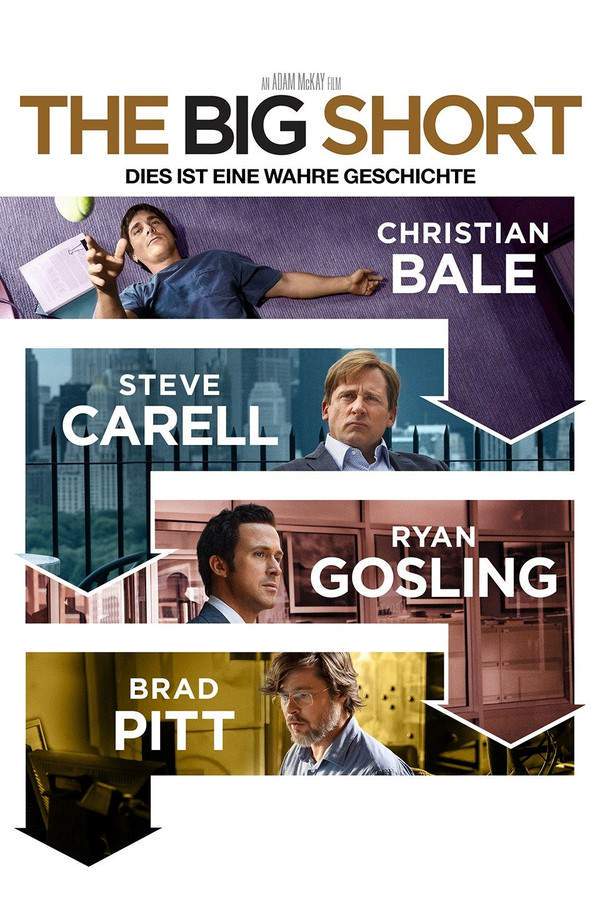
The Big Short (2015) movie poster

Ending Explained

The Big Short (2015) Ending Explained – Final Scene & Meaning

Release, runtime and language
2015 · 130 min · English
Loading streaming availability…
Directed by
Adam McKay
Starring
Brad Pitt, John Magaro, Christian Bale, Ryan Gosling, Melissa Leo, Rafe Spall
Budget
$28M

When the housing market shows signs of instability, eccentric investor Michael Burry recognizes the impending crisis and makes a risky bet against it. His unusual prediction draws the interest of a resourceful banker and a wary hedge-fund manager. Together, they team up to profit from the looming economic downfall, navigating the complexities of the financial world and ultimately capitalizing on the ensuing collapse.

On this page (7)
  1. 1 Where to watch
  2. 2 What happens at the end
  3. 3 Final events in order
  4. 4 Ending questions answered
  5. 5 Movie threads
  6. 6 Movies like The Big Short
  7. 7 Every angle
Loading streaming availability…

Ending explained · contains spoilers

What Happens at the End of The Big Short?

How The Big Short (2015) ends, what the final scene means, which earlier moments set it up and how to read the ending if the film leaves it open. The full ending explained, with every spoiler.

The film’s ending reveals that, despite the successful bets made by the main characters, there is a sobering reality behind their profits. While characters like Michael Burry and Mark Baum profit from the collapse of the housing market through their short positions and credit default swaps, the movie underscores that this victory comes at a terrible cost to ordinary people. As the scenes shift to real images of those affected—losing their homes, jobs, and savings—the film reminds viewers that the financial crisis was not just a story of greed and fraud, but a human tragedy. The characters’ victories are tainted by the understanding that their success was built on the suffering of others.

In the epilogue, it is shown that many of the investors involved in predicting the crisis, such as Baum and Burry, go on to lead relatively quieter lives—Baum becoming more compassionate, Burry closing and later reopening his hedge fund amidst ongoing scrutiny. Meanwhile, a stark fact is presented: although many individuals and institutions were aware of the misconduct, only one person, Kareem Serageldin, faced jail time for his role. This highlights how systemic corruption allowed most offenders to escape punishment, often paying settlements rather than serving jail terms.

Ultimately, the movie leaves us with a warning—little has been done to prevent another economic collapse. By showing the continuation of high-risk practices, like the sale of “bespoke tranche opportunities”—similar to the CDOs of the past—it suggests that history is repeating itself, with the same reckless behaviors lurking just beneath the surface. The ending isn’t just a reflection on the past crisis; it’s a stark warning that the cycle of greed and negligence may well continue, risking future catastrophes while most of society bears the costs. The victory of a few individuals is bittersweet, serving as a reminder that profitability for some often comes at the expense of many others.

Last updated: June 25, 2025 at 08:58

Was this helpful?

The last 4 events

How The Big Short Ends: The Final Events in Order

The last events of The Big Short (2015) in chronological order, the run-up to the ending explained above. The complete timeline has all 14 events, scene by scene.

Open the full timeline
  1. Repercussions of the Crisis

    The fallout from the crisis results in staggering losses, with approximately five trillion dollars worth of wealth evaporating, eight million jobs lost, and six million foreclosures nationwide. The aftermath raises questions about accountability and corporate greed.

    Where
    United States
  2. Baum’s Reflection

    Baum reflects on the devastation caused by the crisis but chooses not to gloat about their foresight, indicating a nuanced moral perspective. This moment encapsulates the bittersweet nature of their financial triumph amid widespread suffering.

  3. Continued Errors

    Fast forward to 2015, and we observe banks repeating the same mistakes, carelessly selling billions in CDOs. This alarming cycle raises concerns about whether lessons from the past have been truly learned or if history is destined to repeat itself.

    When
    2015
  4. The Final Outlook

    Burry, now focusing on unconventional investments like water, continues to remain unnoticed despite his foresight during the crisis. His isolation speaks to a broader narrative of how the industry disregards those who accurately predicted the impending collapse.

Ending questions answered

The Big Short Ending: Your Questions Answered

The questions people ask most about the ending of The Big Short (2015): what the final scene means, how the twist works, what happens to each character and how to read the ending. Each answer contains spoilers.

Q1

What happens to Michael Burry after the financial crisis ends?

Michael Burry closes his hedge fund Scion Capital after the crisis, but later reopens it under ongoing scrutiny. He becomes somewhat of a pariah in the financial world due to his role in exposing and profiting from the housing collapse, though he remains active in investing.

Foreshadowing: Earlier in the film, Burry is shown as an eccentric, reclusive investor who bucks Wall Street conventions, foreshadowing his isolated position afterward.

  • michael burry
  • scion capital
  • hedge fund
  • after crisis
Q2

What happens to Mark Baum at the end of The Big Short?

Mark Baum becomes more compassionate after witnessing the human cost of the crisis. Unlike many of his peers, he doesn't celebrate his profits and instead grapples with the moral implications of profiting from others' suffering.

Foreshadowing: Throughout the film, Baum is shown as the most ethically conflicted character, questioning the morality of the entire system, which sets up his transformation.

  • mark baum
  • steve carell character
  • ending fate
  • moral transformation
Q3

Why is The Big Short ending considered bittersweet?

The protagonists win financially by correctly predicting and betting against the housing collapse, but their victory is tainted by the realization that their profits came from the suffering of millions of ordinary people who lost homes, jobs, and savings. The film shifts from celebration to somber reflection.

Foreshadowing: The film repeatedly shows the disconnect between the financial instruments the characters trade and the real homes and families they represent.

  • bittersweet ending
  • moral ambiguity
  • financial crisis cost
  • victory含义
Q4

Did anyone go to jail for the 2008 financial crisis?

Only one person, Kareem Serageldin, a Credit Suisse trader, faced jail time for his role in the financial crisis. Most institutions and individuals involved paid settlements or faced no consequences at all, highlighting the systemic nature of the corruption.

Foreshadowing: Earlier scenes show executives aware of the fraudulent mortgage practices but choosing not to act, suggesting a culture of impunity.

  • kareem serageldin
  • jail
  • accountability
  • financial crime punishment
Q5

What is the warning at the end of The Big Short about bespoke tranche opportunities?

The film ends by showing that banks are still selling "bespoke tranche opportunities", essentially the same complex, risky financial products (CDOs) that caused the 2008 crash. This warns that history is repeating itself and another economic catastrophe could happen because the same reckless practices continue under different names.

Foreshadowing: The film explicitly compares these new products to the CDOs that caused the collapse, suggesting the system hasn't learned.

  • bespoke tranche opportunities
  • CDOs
  • history repeating
  • financial reform
  • warning
Q6

Why does The Big Short show real people losing homes at the end?

The film transitions from its fictional characters to real footage of people affected by the 2008 crisis, losing homes, jobs, and savings, to underscore that this was not just a Wall Street story but a real human tragedy affecting millions of ordinary Americans.

Foreshadowing: Throughout the film, the characters interact with real people (like the Florida condo sellers and the stripper) whose lives were devastated, grounding the financial story in human consequences.

  • real footage
  • human cost
  • 2008 crisis impact
  • ordinary people
Q7

How do the main characters profit from the financial crisis?

The characters profit through credit default swaps and short positions, they bet against the housing market by purchasing insurance-like contracts that pay out when mortgages default. When the housing bubble collapsed, these bets paid off massively, making them hundreds of millions of dollars each.

Foreshadowing: Early scenes explain how credit default swaps work, showing why Burry's initial investment of $500 million grew into over $2 billion.

  • credit default swaps
  • short positions
  • profit
  • housing collapse
Q8

What does The Big Short say about whether the financial system changed after the crisis?

The ending suggests very little has changed. Despite the devastation caused by the crisis, the same high-risk financial products continue to be created and sold, and accountability remains minimal. The film implies another collapse is inevitable if the same patterns persist.

Foreshadowing: The film shows regulatory failures throughout, with characters noting that no one in power is willing to rein in the excesses.

  • systemic change
  • regulations
  • financial reform
  • wall street accountability

Movie threads

More Movies Like The Big Short, by Mood & Story

Curated lists built around what makes The Big Short tick: the same mood, the same kind of story or the same emotional payoff. Each list explains why these movies belong together.

Movies that expose complex systems like The Big Short

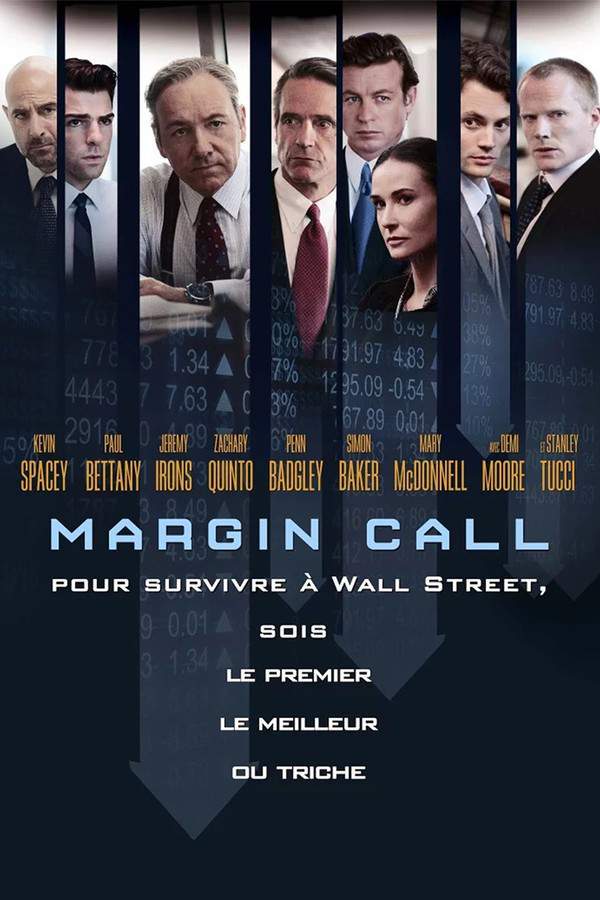
Films that dive deep into complex systems to reveal the rot at the core. If you liked how The Big Short broke down the housing crisis, you'll appreciate these films that dissect complex systems. This collection includes movies like Margin Call and Spotlight, where characters uncover systemic corruption and navigate the tense fallout, perfect for fans of intelligent, high-stakes dramas.

  • informative
  • urgent
  • cynical
  • gripping
  • anxious
  • frustrated
  • Tone: tense, cynical, informative
  • Pacing: fast, expository
Why these movies?

The story pattern: Stories in this thread typically involve a character or group discovering a critical vulnerability or act of fraud within a large, seemingly stable system. Their journey is one of investigation and validation, often against disbelief from the establishment, leading to a climax where the truth emerges with significant consequences.

Why they belong together: These films are grouped by their shared focus on explaining complex, real-world systems to the audience, combined with a tense, investigative narrative and a tone of moral outrage. They deliver a gripping experience that is both intellectually stimulating and emotionally charged.
Movies with bittersweet victories like The Big Short

Stories where being proven right comes with a heavy moral price. Find more films with morally complex endings like The Big Short. These movies feature characters who succeed in their goals but are left with guilt or disillusionment. If you appreciated the poignant ending where financial gain was overshadowed by human cost, explore these similar dramatic journeys.

  • morally conflicted
  • bittersweet
  • frustrated
  • cynical
  • sarcastic
  • gripping
  • Tone: bittersweet, morally conflicted
  • Pacing: fast, building to a sober end
Why these movies?

The story pattern: The narrative pattern follows characters who pursue a goal based on a correct but grim prediction or principle. They ultimately succeed, but their triumph is hollow, as they are forced to confront the devastating real-world consequences of being right, leading to a finale filled with moral ambiguity rather than celebration.

Why they belong together: Movies in this thread share a specific emotional arc: the blend of intellectual victory with profound moral discomfort. They resonate because they explore the complex aftermath of success, creating a powerful, thought-provoking, and bittersweet viewing experience.

If you liked this

Movies Like The Big Short

Similar movies to The Big Short: the same genre, themes or kind of story. Each one comes with its own plot summary, timeline and ending explained.

Browse all movie summaries

Every angle

The Big Short (2015) Explained: Plot, Ending, Timeline & Characters

Everything about The Big Short in one place: what happens in the plot summary, the timeline in chronological order, the characters and meaning, the ending explained and a spoiler-free summary. What's After the Movie adds the cast, box office and post-credit scenes.

Coming soon on iOS and Android

The Plot Explained Movie Summary App

Plot summaries, endings explained and timelines on your phone. Catch up on any movie in minutes, save your favorites and never miss a twist again.

Be the first to know when we launch. Your email stays private, always.

Learn more about the app