Plot Explained Spoilers guaranteed!
Plot Explained

Browse by genre

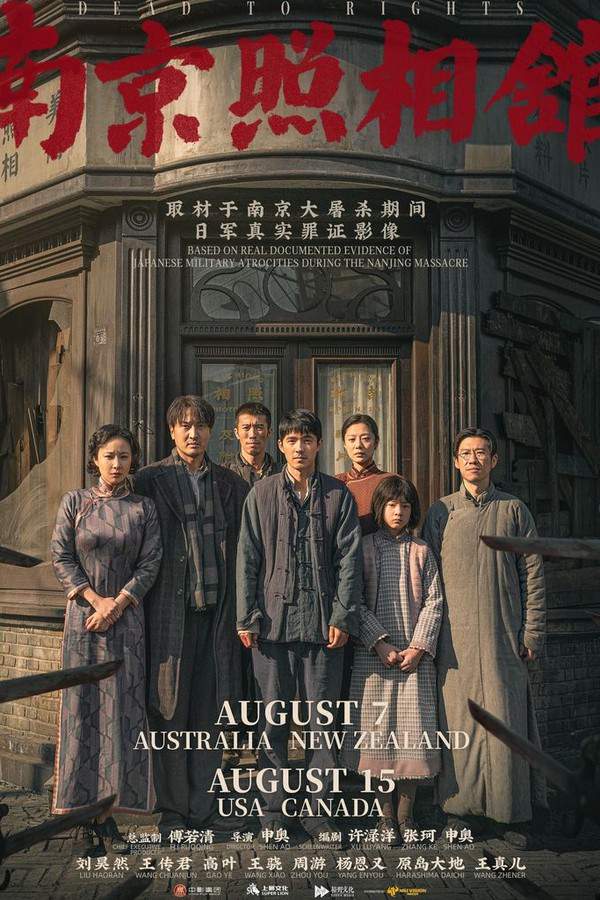
Dead to Rights (2025) movie poster

Timeline

Dead to Rights (2025) Timeline Explained – Every Event in Order

Release, runtime and language
2025 · 2 h 17 m · Chinese
Echo score 93
Loading streaming availability…
Directed by
Ao Shen
Starring
Haoyu Yang, Haoran Liu, You Zhou, Daichi Harashima, Xiao Wang, Chuan-jun Wang

Set amid the 1937 Nanjing Massacre, postman A Chang masquerades as a photo developer, cooperating with Japanese troops while covertly sheltering Chinese refugees. He ultimately risks his life to evacuate them and expose photographic proof of the brutal atrocities.

On this page (5)
  1. 1 Where to watch
  2. 2 Events in order (15)
  3. 3 Timeline questions answered
  4. 4 Movie threads
  5. 5 Every angle
Loading streaming availability…

15 events in order · contains spoilers

Dead to Rights Timeline: Events in Chronological Order

Every key event of Dead to Rights (2025) in order, scene by scene, with when and where it takes place. Use it to untangle flashbacks, time jumps and parallel storylines, to refresh your memory before the sequel or to find the exact scene you are thinking of.

  1. Nanjing falls under brutal occupation

    Japanese forces decimate the city with mass killings, rapes, and looting as the occupation begins. Civilians are massacred in the streets while the city’s infrastructure collapses under the onslaught. The world will later learn of these crimes, but in the moment the massacre dominates every corner of Nanjing.

    When
    1937
    Where
    Nanjing
  2. Wang Guanghai aligns with the Japanese to protect his family

    Wang Guanghai becomes a quisling translator who helps the occupying forces maintain control over the city. He secures passports for his family as a means of survival, while engaging in an affair with Lin Yuxiu to strengthen the ruse. Lin’s position becomes entangled with war, loyalty, and personal risk.

    When
    early occupation
    Where
    Nanjing
  3. Itō Hideo arrives to document the massacre

    Japanese military photographer Itō Hideo is tasked with producing propaganda by capturing the horrors of the occupation. In a moment of cruelty, he orders an execution to prove his loyalty, then learns that a civilian named Ah Chang carries photographs of the events. This assignment sets the stage for a fragile alliance of survival and deception.

    When
    early occupation
    Where
    Nanjing
  4. Ah Chang seeks refuge and a chance to develop the film

    Ah Chang hides with Jin Chengzong and his family inside a photo studio, hoping to use the developing process as a cover for the dangerous photographs. The studio becomes a sanctuary and a front for counterfeiting reality through images. Itō’s presence adds a tense urgency to their covert operation.

    When
    early occupation
    Where
    Jin Chengzong's photo studio, Nanjing
  5. Itō tests Ah Chang’s skill with the camera negatives

    Itō hands Ah Chang a stack of negatives and watches him develop them on the spot to prove his reliability. The process is meticulous and nerve-wracking, as any mistake could reveal their secret. When Ah Chang handles the process well, Itō begins to trust him—just enough to press the bounds of their alliance.

    When
    early occupation
    Where
    Jin Chengzong's photo studio, Nanjing
  6. The passport scheme expands: Lin joins the ruse

    Wang declares that Ah Chang has a wife named Lin, using this claim to secure two passports. Lin is brought into the studio to live with Ah Chang as his wife, reinforcing the deception. They also hide Song Cunyi, a soldier, behind the scenes to bolster their chances of survival.

    When
    early to mid occupation
    Where
    Jin Chengzong's photo studio, Nanjing
  7. The group forms a fragile survival network

    Lin reveals Song Cunyi to Ah Chang by opening her boxes and exposing the hidden survivor. The family, Song, and Ah Chang agree to cooperate, using the basement as a covert sanctuary while they slowly develop and duplicate the photographs. Trust is fragile as danger looms from every corner.

    When
    early to mid occupation
    Where
    Jin Chengzong's photo studio, Nanjing
  8. Propaganda vs. truth: the rolls reveal war crimes

    The initial propaganda photographs are manipulations, but deeper processing uncovers true images of executions, burnings, mutilations, and assaults. The group begins secretly duplicating and hiding the authentic negatives. Itō’s outward humanity gives way to a chilling opportunism, as he collects the photos as souvenirs.

    When
    mid occupation
    Where
    Jin Chengzong's photo studio, Nanjing
  9. A brutal turning point: a killer introduces a new threat

    Frustrated with quality and fearing exposure, Itō brings in another Japanese photo developer to handle the work. Song kills the newcomer during a trip outside the studio, a decisive act that raises the group's stakes. Wang's demeanor grows more desperate as Lin’s safety becomes paramount.

    When
    mid occupation
    Where
    Nanjing (outside the studio)
  10. The passport ruse backfires; Lin and her family are threatened

    Itō plans to dispose of Ah Chang but cannot bring himself to shoot him. The group votes to use the passports, but Itō has told guards that anyone using them would be shot on sight. This leads to a tragic moment where Lin and her infant daughter are killed and raped by the guards, a devastating consequence of the deception.

    When
    late occupation
    Where
    Nanjing, at the studio and gate
  11. Violence erupts in the studio; a scramble for escape

    Itō and his superior arrive, triggering a violent confrontation over Lin. Wang is shot by Itō, Jin kills the superior, and Itō is blinded by acid thrown by Jin. Ah Chang destroys his own negatives with a distraction, allowing the survivors to flee amid a burning studio.

    When
    late occupation
    Where
    Jin Chengzong's photo studio, Nanjing
  12. A sacrifice and a narrow escape to safety

    At the gate, the baby’s cry exposes the survivors. Jin sacrifices himself so Lin and the child can reach the Nanjing Safety Zone. The group goes on the run, concealing copies of war crime negatives on their clothes to survive the journey.

    When
    late occupation
    Where
    Gate of Nanjing, toward Safety Zone
  13. Itō’s end: suicide and a cover-up

    Itō, humiliated by the failure to secure the footage, commits suicide by harakiri. A superior then shoots Itō in an apparent heroic death, attempting to rewrite the record and preserve the regime’s reputation. The truth of the photographs remains a perilous secret.

    When
    post-conflict
    Where
    Nanjing, within the occupation’s confines
  14. Post-war tribunals punish the massacre’s architects

    After the war, the leaders and perpetrators behind the Nanjing Massacre are tried and sentenced to death. The world slowly reckons with the extent of the crimes and begins to seek accountability. The era’s consequences linger in courtrooms and memory.

    When
    post-war
    Where
    Post-war tribunals, generally in China/Japan region
  15. Lin preserves the victims’ story and memory

    Lin raises Jin’s son while photographing the executions of the architects in the style of the atrocity images. The spirits of Ah Chang, Wang, Song, Jin, and other victims appear in the memory of history, signaling that their stories endure. The film closes with footage of historical sites in modern Nanjing, linking past and present.

    When
    post-war credits
    Where
    Nanjing, then in modern-day sites

Last updated: October 01, 2025 at 13:07

Was this helpful?

Timeline questions answered

Dead to Rights Timeline Explained: Your Questions Answered

When does it happen, and why in that order? The questions people ask about the chronology of Dead to Rights (2025): time jumps, flashbacks, cause and effect between scenes and the correct order of events, each answered with spoilers.

Q1

Why does Wang Guanghai work with the Japanese occupiers?

Wang Guanghai becomes a quisling translator to secure survival for himself and his family during the brutal occupation. He uses his position to obtain extra passports that would allow those close to him to escape Nanjing. His affair with Lin Yuxiu is partly a strategic move to strengthen his cover, as he maintains a marriage to appear loyal to China while secretly arranging escape routes for those he cares about.

Foreshadowing: Wang's early decision to align with the Japanese establishes his pattern of making morally compromises for survival, which later leads to his ultimate demise.

  • wang guanghai
  • collaborator
  • translator
  • japanese occupation
  • passports
  • survival
Q2

Why does Lin Yuxiu agree to pretend to be Ah Chang's wife?

Lin agrees to pose as Ah Chang's wife because Wang proposes the scheme as a way to secure two additional passports for their escape network. By claiming Lin is already married to Ah Chang, the group obtains documentation that would allow more people to flee the city. Lin's decision reflects the desperate measures civilians took to survive under occupation, even when it required personal humiliation and risking her safety.

Foreshadowing: This deception sets up the tragic moment when the passports are later used, leading to catastrophic consequences.

  • lin yuxiu
  • ah chang
  • fake marriage
  • passport scheme
  • survival
  • deception
Q3

How do the hidden photographs reveal the real massacre?

The Japanese assign Itō Hideo to photograph the occupation for propaganda purposes, intentionally capturing staged or misleading images. However, when Ah Chang and Jin Chengzong develop the negatives in their hidden studio, they discover that deeper processing reveals the true images underneath, executions, burnings, mutilations, and assaults. The group secretly duplicates these authentic negatives, preserving evidence of war crimes while passing the doctored versions to the Japanese.

Foreshadowing: Early scenes of photo development foreshadow this discovery, as Ah Chang's skill with negatives becomes crucial.

  • photographs
  • negatives
  • atrocities
  • evidence
  • propaganda
  • war crimes
  • development
Q4

Why does Itō sabotage the escape passports?

Itō discovers the group's deception and deliberately sabotages the passports to ensure anyone who uses them will be executed. After the group votes to use the remade passports for escape, Itō tips off the guards that anyone presenting these documents should be shot on sight. This act transforms the passports from a means of escape into a death trap, demonstrating Itō's hardening loyalty to the regime and his determination to crush the resistance.

Foreshadowing: Itō's earlier order to dispose of Ah Chang shows his willingness to eliminate those who oppose the occupation.

  • ito hideo
  • passports
  • sabotage
  • escape
  • guards
  • trap
  • execution
Q5

What happens to Lin and her daughter at the gate?

When Lin and her infant daughter attempt to escape using the passports, the guards, tipped off by Itō, shoot them. Lin is also raped during this attack, marking one of the film's most devastating moments. The passport scheme that was meant to save them becomes the instrument of their destruction, highlighting the brutality of the occupation and the fatal consequences of the group's deception.

Foreshadowing: The earlier vote to use the passports directly leads to this tragedy, as the group's desperate plan backfires.

  • lin yuxiu
  • daughter
  • gate
  • passports
  • shot
  • killed
  • tragedy
Q6

Why does Jin sacrifice himself at the gate?

Jin Chengzong sacrifices himself to allow Lin, her infant son, and the other survivors to reach the Nanjing Safety Zone. When the baby's cry at the gate threatens to expose the group, Jin deliberately draws attention to himself, enabling the others to escape. His act of courage ensures the survival of those who carry the crucial evidence of war crimes, though he pays for it with his life.

Foreshadowing: Jin's earlier role as protector of his family and the hidden group foreshadows his ultimate sacrifice.

  • jin chengzong
  • sacrifice
  • safety zone
  • gate
  • baby
  • escape
  • death
Q7

How does the evidence of the massacre reach the outside world?

Before escaping the burning studio, Ah Chang and the survivors sew duplicates of the atrocity negatives into their clothing. These hidden films survive the journey and are eventually disseminated to international journalists. The images expose the truth of the Nanjing Massacre globally, triggering condemnation and forcing the regime to confront its crimes. This mission accomplished the group's primary objective despite the immense personal cost.

Foreshadowing: The earlier secret duplication of photographs prepares for this moment of global exposure.

  • evidence
  • negatives
  • journalists
  • world
  • exposure
  • international
  • truth
Q8

Why does Itō commit harakiri after the studio confrontation?

Itō commits harakiri because he is humiliated by his failure to secure the footage and stop the group's escape. His plan has completely unraveled, the evidence he was meant to control has been smuggled out, and he cannot erase his complicity in the events. Rather than face accountability, he chooses suicide. A Japanese superior then shoots Itō to mask the truth and present his death as heroic, attempting to rewrite history.

Foreshadowing: Itō's earlier escalating brutality and obsession with controlling the narrative foreshadow his ultimate inability to face the consequences.

  • ito hideo
  • harakiri
  • suicide
  • cover-up
  • superior
  • heroic death
  • shame
Q9

What happens when Jin throws acid at Itō?

During the violent confrontation in the studio, Jin throws acid at Itō's face, blinding him. This act occurs when Itō and his superior arrive intending to stop the group from escaping with the evidence. Jin's desperate attack provides a crucial moment of chaos that helps the survivors flee. The acid not only physically incapacitates Itō but also symbolizes the retaliatory violence that erupts when oppressed people fight back against their tormentors.

Foreshadowing: Jin's earlier resourcefulness in protecting his family suggests he would take drastic action when cornered.

  • jin chengzong
  • acid
  • ito
  • blinding
  • studio
  • confrontation
  • attack
Q10

Who is Song Cunyi and why is he hidden in the studio?

Song Cunyi is a Chinese soldier whom Lin Yuxiu hides in the studio, concealing him behind boxes in the building. He becomes part of the fragile survival network that forms around Jin Chengzong's photo studio. When Itō brings in another Japanese photographer to improve the work quality, Song kills the newcomer during an outside trip, a decisive act that raises the group's stakes but also increases the danger of discovery.

Foreshadowing: Lin revealing Song to Ah Chang establishes the trust network that forms among the hidden group.

  • song cunyi
  • soldier
  • hidden
  • studio
  • japanese photographer
  • killed
  • survival
Q11

How does Wang Guanghai die in the studio?

Wang Guanghai is shot by Itō during the violent confrontation in the studio. When Itō and his superior arrive to confront the group over Lin, the situation escalates into chaos. Wang, who has been maneuvering throughout the occupation to protect himself and those close to him, is killed in the crossfire. His death represents the futility of collaboration, his attempts to survive through the occupiers ultimately lead to his destruction.

Foreshadowing: Wang's earlier manipulation of both sides sets up his tragic end, as he becomes trapped between his allegiances.

  • wang guanghai
  • death
  • studio
  • shot
  • ito
  • confrontation
  • collaboration
Q12

What does Lin do after the war ends?

After surviving the massacre and reaching safety, Lin raises Jin's son while documenting the executions of the massacre's architects. She photographs their deaths in the stark, unflinching style of the atrocity images she once helped preserve. This act represents her enduring commitment to bearing witness and ensuring that the victims' stories are not forgotten, transforming her personal trauma into a mission of historical memory.

Foreshadowing: Lin earlier shows courage under pressure and a commitment to protecting others, which continues in her post-war work.

  • lin yuxiu
  • post-war
  • photographer
  • executions
  • memory
  • justice
  • jin son

Movie threads

More Movies Like Dead to Rights, by Mood & Story

Curated lists built around what makes Dead to Rights tick: the same mood, the same kind of story or the same emotional payoff. Each list explains why these movies belong together.

Movies about courageous witnesses like in Dead to Rights

Stories of ordinary people who risk everything to document and expose terrible truths. If you were gripped by the act of bearing witness in Dead to Rights, this list is for you. Discover similar war dramas and historical films where characters risk their lives to expose atrocities, documenting truth against all odds in morally complex and tense scenarios.

  • tense
  • somber
  • courageous
  • morally complex
  • claustrophobic
  • anxious
  • Tone: dark, tense, morally complex
  • Pacing: variable, suspenseful
Why these movies?

The story pattern: Films in this thread follow a pattern of discovery, moral crisis, and clandestine action. A character is thrust into a position where they see a grave injustice or atrocity. Faced with immense personal risk, they make a covert plan to gather proof and expose the truth, creating a narrative defined by tension, sacrifice, and the power of evidence.

Why they belong together: These films are grouped because they all explore the specific, high-stakes narrative of bearing witness. They share a focus on moral courage, the psychological toll of keeping terrible secrets, and the tension of operating under the enemy's nose. The experience is consistently tense, somber, and focused on the power of truth.

Grim survival stories with moral compromise like Dead to Rights

Gripping stories where survival demands walking a fine, dangerous line with the enemy. For viewers who appreciated the complex survival tactics in Dead to Rights. Explore more movies like it, featuring characters forced into difficult alliances or morally ambiguous actions to protect themselves and others in war zones and oppressive settings, resulting in heavy, tense dramas.

  • oppressive
  • tense
  • morally complex
  • anxious
  • grim
  • claustrophobic
  • Tone: grim, oppressive, anxious
  • Pacing: variable, shifting between suspense and chaos
Why these movies?

The story pattern: The narrative arc here is defined by a Faustian bargain. A character, to ensure their own or others' survival, enters into a fragile and ethically fraught arrangement with a hostile force. The story builds tension from the precariousness of this arrangement and the protagonist's struggle with their own conscience, culminating in a test of their ultimate loyalty.

Why they belong together: These movies are united by their exploration of the gray areas of survival. They focus on the psychological and emotional cost of making deals with the devil, creating a consistently oppressive and anxious mood. The shared experience is one of high-stakes tension and deep moral questioning.

Every angle

Dead to Rights (2025) Explained: Plot, Timeline & Characters

Everything about Dead to Rights in one place: what happens in the plot summary, the timeline in chronological order, the characters and meaning and a spoiler-free summary. What's After the Movie adds the cast, box office and post-credit scenes.

Coming soon on iOS and Android

The Plot Explained Movie Summary App

Plot summaries, endings explained and timelines on your phone. Catch up on any movie in minutes, save your favorites and never miss a twist again.

Be the first to know when we launch. Your email stays private, always.

Learn more about the app