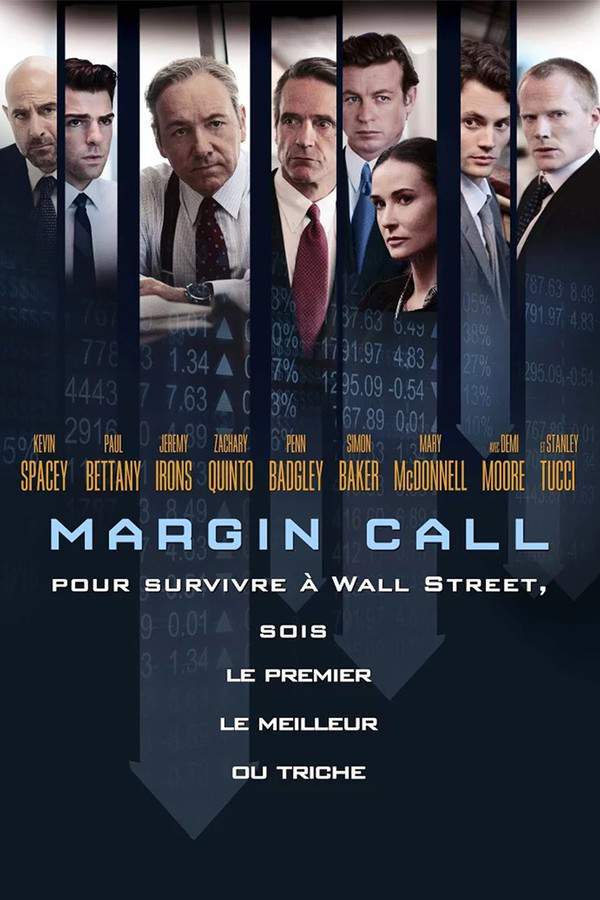
Year: 2011
Runtime: 105 min
Language: English
Director: J.C. Chandor
Budget: $3.5M
During the late hours of the 2008 financial crisis, a young analyst uncovers a potentially devastating risk. His discovery triggers a chain reaction among senior traders and executives at an investment bank. As the crisis escalates, they must grapple with the implications and make difficult decisions that will impact their careers, reputations, and the stability of the financial system. The night becomes a tense battle for survival and a glimpse into the ruthless world of high finance.
Warning: spoilers below!
Haven’t seen Margin Call yet? This summary contains major spoilers. Bookmark the page, watch the movie, and come back for the full breakdown. If you're ready, scroll on and relive the story!
Read the complete plot breakdown of Margin Call (2011), including all key story events, major twists, and the ending explained in detail. Discover what really happened—and what it all means.
Junior risk analyst Seth Bregman, alongside his senior colleague Peter Sullivan and trading desk head Will Emerson, witnesses an unexpected mass layoff orchestrated by a temporary human resources team right on their trading floor, all at the start of an otherwise routine business day. Among those terminated is their boss, Eric Dale, who led risk management operations on the floor. During his exit interview, Dale tries to convey critical information about an ongoing project, but the HR staff are more focused on his swift departure. As he is escorted from the building, he discreetly hands Peter a USB stick and warns him to “be careful” before stepping into the elevator.
Later that evening, Peter delves into Dale’s project and uncovers alarming news: the inherent volatility in their mortgage-backed securities portfolio is set to surpass historical levels. This analysis reveals that due to excessive leverage, a mere 25% decrease in these assets could result in losses greater than the firm’s entire market capitalization. Realizing the urgency of the situation, Peter alerts Will, who in turn connects with floor head Sam Rogers.
The employees remain at the office, engaging in a series of urgent meetings with senior executives, including division head Jared Cohen, chief risk officer Sarah Robertson, and finally CEO John Tuld. Jared proposes a rapid sale of all toxic assets before the market catches wind of their devalued state, a suggestion that John prefers despite Sam’s fervent opposition. Sam cautions both Jared and John that offloading these risky assets will send shockwaves throughout the financial sector, jeopardizing the firm’s relationships with many stakeholders. He also points out that their clients will quickly grasp the situation when they realize the firm is simply unloading toxic mortgage-backed securities without engaging in any form of trade.
In a twist of events, the team eventually tracks down Dale, who has been unreachable since his termination. With the promise of a generous payment and the threat to contest his severance, they convince him to return. In the midst of the chaos, it becomes clear that Sarah, Jared, and John had been aware of the looming risks leading up to this crisis. Tuld plans to present Sarah’s resignation as a scapegoat to their board and staff.
As the market prepares to open, Sam rallies his traders with the incentive of seven-figure bonuses for a drastic 93% reduction in certain mortgage-backed securities through a “fire sale.” He acknowledges that this action will irreparably harm their professional relationships. Meanwhile, Sarah and Dale find themselves in a stifling office, earning hefty pay for doing nothing, while Sarah defensively claims she had indeed warned about the emerging risks, albeit not assertively enough. As Emerson starts executing the necessary trades, tensions rise among counter-parties who grow increasingly restless as the day progresses.
When trading comes to a close, Sam witnesses the same human resources team initiate another round of layoffs within his department. He confronts John, expressing his desire to resign, but John dismisses the severity of the crisis, equating it to past market downturns and asserting that sharp financial fluctuations are merely a facet of the economic landscape. He persuades Sam to stay on for another two years, with promises of significant profit to be gained from the impending crisis. Meanwhile, Peter is seen discussing his projected promotion with Jared, while it seems Seth’s tenure at the firm may soon come to an end.
In a poignant closing scene, Sam is depicted burying his beloved dog on his ex-wife’s lawn, a heart-wrenching reminder of the personal toll amidst the corporate turmoil.
Last Updated: November 07, 2024 at 23:50
Discover curated groups of movies connected by mood, themes, and story style. Browse collections built around emotion, atmosphere, and narrative focus to easily find films that match what you feel like watching right now.
High-stakes suspense as powerful people face disaster behind closed doors.For viewers who enjoyed the high-pressure suspense of Margin Call, this thread features movies like it that explore institutional meltdowns. These tense thrillers depict powerful individuals grappling with ethical collapse and impending disaster in confined, high-stakes environments, similar to the 2008 financial crisis narrative.
Stories in this thread typically follow a linear, fast-paced escalation of a professional crisis. The narrative is driven by urgent meetings, escalating revelations, and characters grappling with moral compromise as they attempt to mitigate or survive a disaster that threatens their organization and personal standing.
These films are grouped together because they share a core experience of tense, high-intensity corporate drama. They feature a claustrophobic atmosphere, a fast pace driven by imminent threat, and a heavy emotional weight centered on moral ambiguity and the cold calculus of survival within powerful institutions.
A single night where characters must confront their own complicity in a broken system.If you liked how Margin Call unfolds over a single tense night, this thread collects movies with similar compressed timelines. These films focus on characters facing rapid ethical collapse and making heavy choices under extreme time pressure, creating a powerful and often bleak viewing experience reminiscent of high-finance survival stories.
The narrative pattern involves a rapid, domino-like sequence of events triggered by a discovery or crisis. Character arcs are compressed, showing a swift journey from initial shock to grim acceptance or moral compromise. The structure emphasizes the relentless pressure of time, leaving little room for reflection and forcing immediate, consequential action.
This thread groups films that use a tight timeline to heighten tension and explore moral decay. The shared experience is one of relentless pacing, high intensity, and a heavy focus on the psychological and ethical unraveling of characters as they scramble to respond to an immediate, systemic threat.
Don't stop at just watching — explore Margin Call in full detail. From the complete plot summary and scene-by-scene timeline to character breakdowns, thematic analysis, and a deep dive into the ending — every page helps you truly understand what Margin Call is all about. Plus, discover what's next after the movie.
Track the full timeline of Margin Call with every major event arranged chronologically. Perfect for decoding non-linear storytelling, flashbacks, or parallel narratives with a clear scene-by-scene breakdown.
Discover the characters, locations, and core themes that shape Margin Call. Get insights into symbolic elements, setting significance, and deeper narrative meaning — ideal for thematic analysis and movie breakdowns.
Get a quick, spoiler-free overview of Margin Call that covers the main plot points and key details without revealing any major twists or spoilers. Perfect for those who want to know what to expect before diving in.
Visit What's After the Movie to explore more about Margin Call: box office results, cast and crew info, production details, post-credit scenes, and external links — all in one place for movie fans and researchers.
Discover movies like Margin Call that share similar genres, themes, and storytelling elements. Whether you’re drawn to the atmosphere, character arcs, or plot structure, these curated recommendations will help you explore more films you’ll love.
Margin Call (2011) Scene-by-Scene Movie Timeline
Margin Call (2011) Movie Characters, Themes & Settings
Margin Call (2011) Spoiler-Free Summary & Key Flow
Movies Like Margin Call – Similar Titles You’ll Enjoy
The Big Short (2015) Full Summary & Key Details
Capital (2013) Ending Explained & Film Insights
Arbitrage (2012) Spoiler-Packed Plot Recap
Boiler Room (2000) Full Summary & Key Details
Money Monster (2016) Ending Explained & Film Insights
Wall Street: Money Never Sleeps (2010) Movie Recap & Themes
Wall Street (1987) Film Overview & Timeline
Mad Money (2008) Plot Summary & Ending Explained
Narrow Margin (1990) Full Movie Breakdown
Assault on Wall Street (2013) Complete Plot Breakdown
The Bank (2002) Spoiler-Packed Plot Recap
Money (1991) Spoiler-Packed Plot Recap
Success at Any Price (1934) Film Overview & Timeline
Crisis (1997) Film Overview & Timeline
Freefall (2009) Detailed Story Recap