Plot Explained Spoilers guaranteed!
Plot Explained

Browse by genre

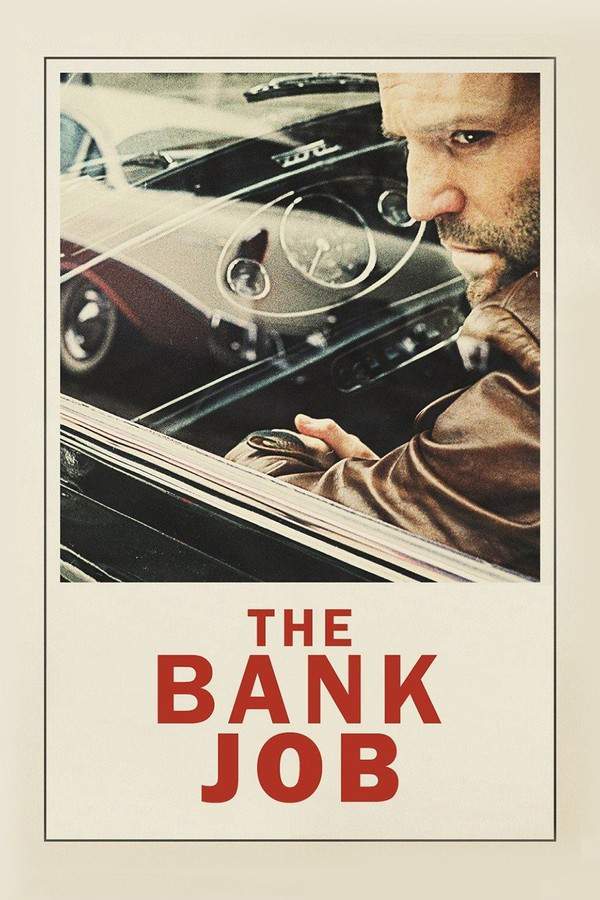
The Bank (2002) movie poster

Plot Summary

The Bank (2002) Plot Summary Explained

Release, runtime and language
2002 · 104 min
Directed by
Robert Connolly

Amidst a society riddled with greed and corruption, Jim Doyle, a gifted mathematician, finds himself immersed in the competitive world of high finance. He works alongside the formidable O’Reilly, a ruthless player in the market. Doyle's innovative formula, capable of predicting market fluctuations, quickly makes him a valuable asset. However, as he rises in prominence, he’s forced to confront his own ethics and the unsettling darkness that accompanies success and power.

On this page (5)
  1. 1 What happens: full plot
  2. 2 Plot questions answered
  3. 3 Movie threads
  4. 4 Movies like The Bank
  5. 5 Every angle

Full plot summary · contains spoilers

What Happens in The Bank: Full Plot Summary

The whole story of The Bank (2002) explained, from the opening scene to the final frame: every key event, every twist and what it all adds up to. Read it as a quick recap before the sequel, to check a scene you missed, or to finally understand what really happened.

The film opens in 1977 with a group of primary school children who listen to a Victoria State Central Bank representative, Mr. Johnson, as he teaches them about saving and the idea of opening their first checking accounts. He explains a long-term dream: if they tuck away money for 25 years, they could end up with a fortune—$727,000—a number that seeds both hope and the fear of what such money might do to their futures.

In the present, the board of Centa Bank pushes CEO Simon O'Reily to find a way to boost profits. His search leads him to the work of mathematician Jim Doyle, whose software, B.T.S.E., uses the fractal geometry of Benoit Mandelbrot to model and predict stock market trends. Doyle is hired and given access to the finest computer hardware, quickly becoming a key asset. He forms a professional friendship with Vincent, who had previously advised O'Reily to bring him aboard, and soon enters a complicated personal relationship with Michelle Roberts, a colleague who openly questions the ethical boundaries of the bank’s ambitions.

Meanwhile, trouble brews for a ordinary couple, Diane and Wayne Davis, who had taken out a loan in a foreign currency and find themselves insolvent. Their strain is intensified when their son dies after an eviction notice meeting. They hire lawyer Stephen O'Connor to challenge the bank, arguing they were not properly informed about the risks of a foreign-currency loan.

At a party hosted by O'Reily, Jim brings Michelle along, and tensions flare when Michelle insults the landlord. The evening reveals that Jim is not completely forthcoming, and the gap between them widens as he guards portions of his past. O'Reily presses Jim for loyalty, proposing a troubling test: Jim would falsely testify in court that he was present as an intern in the bank's loan counseling—effectively casting him as an informant who spoke knowledgeably to the Davises. The aim is to sway the lawsuit in the bank’s favor, but the deception culminates in the loss of the case for the Davises and drives a wedge between Jim and Michelle. This turn pushes Michelle to probe Jim's past more deeply.

As the conflict deepens, Jim reveals to his boss that a stock market crash is imminent, signaling a new wave of pressure on all sides. Michelle travels to Jim's hometown and uncovers a painful truth: Jim's real name is not Jim Doyle but Paul Jackson, and the bank had once terminated his father’s credit, an act that contributed to his father’s suicide. A watcher employed by O'Reily keeps a careful eye on Michelle and relays what he learns, and the tension escalates as O'Reily contemplates stopping the impending stock sale.

That threat turns violent when Wayne Davis bursts into O'Reily's house intending to shoot him. In a bid to prevent the warning that could derail the bank's plans, O'Reily offers Wayne two million dollars if he will let him place a crucial phone call. Realizing the call could be decisive for the bank, Wayne destroys the house's power box to cut the lines and then disappears into the night, leaving the estate to its consequences.

Despite the ominous machinations, the market misreads the situation: instead of crashing, prices begin to rise, and the bank ultimately collapses under the weight of a $50 billion loss. Jim leaves the country, and in a final exchange with Michelle, acknowledges that the money involved has been partly lost and partly redistributed. He asks her to chase after him, but she declines, choosing her own path.

Back in the aftermath, the Davises discover a bank statement showing $727,000 on an ATM screen—a direct callback to the opening credits and a thread that ties the past to the present. They attempt to settle the matter at a nearby branch, only to find that closure is blocked by the bank’s closures ordered by O'Reily. Faced with a morally loaded windfall and a murky future, they decide to keep the money, leaving a quiet note of unsettled justice hanging over the story.

The narrative weaves together themes of ambition, memory, and consequence, tracing how personal histories collide with corporate schemes and how the lure of a promised fortune can reshape lives in unexpected and often irreversible ways.

Last updated: October 09, 2025 at 15:36

Was this helpful?

Plot questions answered

The Bank Plot Explained: Your Questions Answered

The questions people ask most about The Bank (2002): what happens in the confusing scenes, why the characters do what they do, the twists, hidden details and what the ending means. Each answer contains spoilers.

Q1

Why did Jim Doyle agree to falsely testify for the bank?

O'Reily pressured Jim to prove his loyalty by lying under oath, claiming he was present as an intern during the Davises' loan counseling. This was a test of whether Jim would compromise his ethics for the bank. Jim complied, which helped the bank win the lawsuit but destroyed his relationship with Michelle, who witnessed the deception.

  • jim doyle
  • false testimony
  • simon oreily
  • court
  • loyalty test
Q2

What is the significance of the $727,000 in the movie?

In the 1977 opening scene, a bank representative tells schoolchildren that saving $2 per week for 25 years could grow to $727,000. This symbolizes the promise and temptation of wealth. At the end, the Davises discover exactly $727,000 in their account, a direct callback that suggests the system has ultimately redistributed wealth back to ordinary people, though through morally ambiguous means.

  • 727000
  • savings
  • callback
  • ending
  • windfall
Q3

Why didn't the stock market crash as Jim predicted?

Jim warned O'Reily that a crash was imminent, which was the basis for the bank's risky strategy. However, the market misinterpreted the situation and prices rose instead of falling. This unexpected turn caused the bank's scheme to fail spectacularly, leading to a $50 billion loss and the bank's collapse.

  • stock market crash
  • prediction
  • bank collapse
  • losses
Q4

What is Jim Doyle's real name and why did he hide his identity?

Jim Doyle's real name is Paul Jackson. He changed his identity because the bank had once terminated his father's credit, an act that contributed to his father's suicide. This personal tragedy is why Jim harbored deep resentment toward the bank, which Michelle discovered when she investigated his past.

Foreshadowing: Jim's guarded behavior and reluctance to discuss his past hint at a painful history.

  • paul jackson
  • real name
  • identity
  • father suicide
  • hidden past
Q5

Why did Wayne Davis destroy the power box at O'Reily's house?

Wayne Davis broke into O'Reily's house intending to kill him after his son died and his family was evicted. However, when O'Reily offered him $2 million to allow a crucial phone call that would affect the bank's market manipulation, Wayne chose to sabotage the plan entirely. He destroyed the power box to cut all phone lines, preventing the call that could have helped the bank, then escaped into the night.

  • wayne davis
  • power box
  • sabotage
  • house invasion
  • oreily
Q6

Why did Michelle refuse to flee with Jim after the bank collapsed?

When Jim left the country after the bank's collapse, he asked Michelle to come with him, but she refused. This was because she had discovered his true identity as Paul Jackson and his willingness to lie under oath for the bank. Her moral opposition to his actions and the bank's corruption led her to choose independence over their relationship.

Foreshadowing: Earlier tensions between Jim and Michelle, particularly after the coerced lie in court, foreshadowed their eventual breakup.

  • michelle roberts
  • breakup
  • leaving country
  • relationship end
Q7

What caused Centa Bank to collapse and lose $50 billion?

Centa Bank hired Jim Doyle to use his BTS.E software, which was supposed to predict market crashes so the bank could profit. When Jim predicted an imminent crash, the bank built its strategy around this prediction. However, the market rose instead of crashing, causing the bank's positions to fail catastrophically. The bank declared bankruptcy with approximately $50 billion in losses.

  • centa bank
  • bankruptcy
  • 50 billion
  • stock scheme
  • collapse
Q8

Why did the Davises decide to keep the $727,000?

After discovering the $727,000 windfall in their account, the Davises attempted to clarify the matter at a bank branch only to find it closed by order of O'Reily. Facing a system that had previously evicted them and caused their son's death, they chose to keep the money. The decision represents a morally ambiguous form of justice, an ordinary family profiting from the very institution that wronged them.

  • diane wayne davis
  • keep money
  • moral choice
  • windfall
  • justice
Q9

What was Jim Doyle's BTS.E software and how did it work?

BTS.E was Jim Doyle's software that used fractal geometry (based on Benoit Mandelbrot's research) to model and predict stock market trends. The software analyzed patterns in market data to forecast fluctuations, which made Doyle extremely valuable to the bank. His mathematical model was central to the bank's high-risk trading strategy.

  • bts.e software
  • fractal geometry
  • mandelbrot
  • prediction
  • mathematics
Q10

Why did Wayne Davis threaten to shoot O'Reily?

Wayne Davis and his wife Diane had taken out a foreign currency loan from the bank, became insolvent when the market turned, and faced eviction. After their son died tragically following an eviction meeting, Wayne went to O'Reily's house with a gun intending to kill him. The extreme act was Driven by desperation over losing his family home and his child's death.

  • wayne davis
  • shooting threat
  • gun
  • home invasion
  • desperation
Q11

How did the bank contribute to Jim Doyle's father's death?

When Michelle investigated Jim's past in his hometown, she discovered that the bank had terminated his father's credit. This financial action, which likely added to existing personal struggles, contributed to his father's suicide. This tragic history is why Jim used the alias Paul Jackson and harbored deep anger toward the banking system.

Foreshadowing: Jim's guarded nature and reluctance to reveal his background hint at a traumatic personal history.

  • father suicide
  • bank responsibility
  • credit termination
  • paul jackson past

Movie threads

More Movies Like The Bank, by Mood & Story

Curated lists built around what makes The Bank tick: the same mood, the same kind of story or the same emotional payoff. Each list explains why these movies belong together.

Financial Thrillers with Moral Conflict like The Bank

High-stakes corporate dramas that question the cost of ambition and greed. If you liked the ethical decay and high-stakes tension of The Bank, explore more movies like it. This list features gripping financial and corporate dramas where characters face heavy moral choices amidst greed and corruption, delivering stories with a similar dark tone and heavy emotional weight.

  • tense
  • anxious
  • cynical
  • morally ambiguous
  • gripping
  • suspenseful
  • Tone: dark, cynical, tense
  • Pacing: steady, methodical
Why these movies?

The story pattern: These narratives often follow a brilliant individual entering a powerful, corrupt system. Their talent brings initial success, but they soon discover the dark underbelly of their world, forcing a crisis of conscience that challenges their ambition and values.

Why they belong together: Movies in this thread share a focus on the intersection of high finance and moral compromise. They create a consistent mood of anxiety and cynicism, driven by steady pacing, high intensity, and a dark tone that explores the heavy consequences of unchecked ambition.

Movies with Bittersweet Endings and Moral Collapse like The Bank

Stories where characters face the heavy, unresolved consequences of their choices. For viewers who appreciated the morally complex and bittersweet conclusion of The Bank, this collection features similar dramas and thrillers. These films explore weighty ethical conflicts and ambition, culminating in endings that are emotionally heavy and philosophically unresolved, much like this movie.

  • grim
  • morally ambiguous
  • heavy
  • consequential
  • thought-provoking
  • unsettling
  • Tone: dark, bittersweet, morally ambiguous
  • Pacing: steady, consequential
Why these movies?

The story pattern: The journey involves a character's moral descent or compromise, often for ambition or survival, which results in severe consequences for themselves and others. The climax provides a form of reckoning, but the resolution is bittersweet, leaving the audience to ponder the true cost and the imperfect nature of justice.

Why they belong together: These films are connected by their exploration of moral failure and its complex aftermath. They share a heavy emotional weight, a dark-to-bittersweet tone, and a focus on the lingering impact of ethical compromises, creating a thoughtful and unsettling viewing experience.

If you liked this

Movies Like The Bank

Similar movies to The Bank: the same genre, themes or kind of story. Each one comes with its own plot summary, timeline and ending explained.

Browse all movie summaries

Every angle

The Bank (2002) Explained: Plot, Timeline & Characters

Everything about The Bank in one place: what happens in the plot summary, the timeline in chronological order, the characters and meaning and a spoiler-free summary. What's After the Movie adds the cast, box office and post-credit scenes.

Coming soon on iOS and Android

The Plot Explained Movie Summary App

Plot summaries, endings explained and timelines on your phone. Catch up on any movie in minutes, save your favorites and never miss a twist again.

Be the first to know when we launch. Your email stays private, always.

Learn more about the app