Plot Explained Spoilers guaranteed!
Plot Explained

Browse by genre

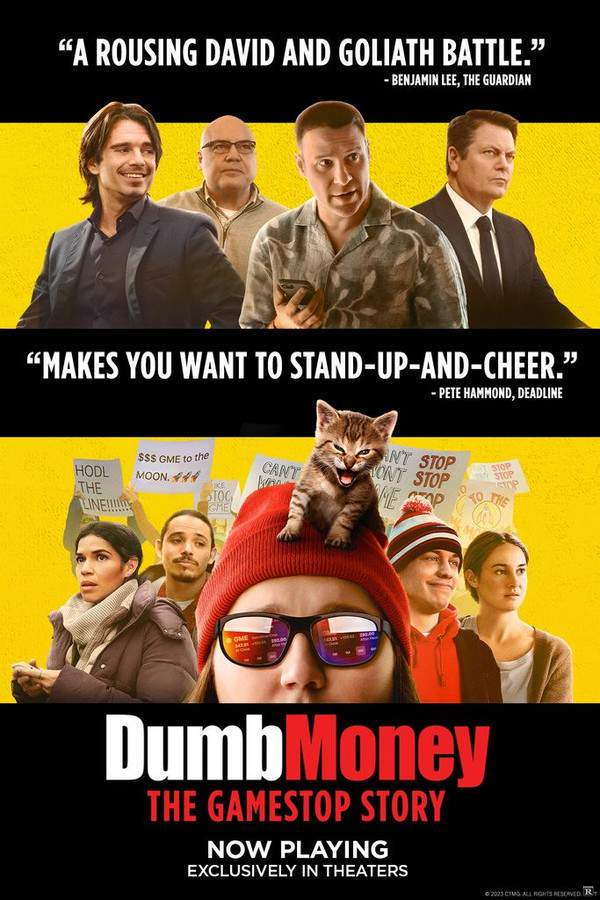
Dumb Money (2023) movie poster

Plot Summary

Dumb Money (2023) Plot Summary & Ending Explained

Release, runtime and language
2023 · 1 h 44 m · English
Echo score 68
JustWatch #3,049
Directed by
Craig Gillespie
Starring
Shailene Woodley, Anthony Ramos, Pete Davidson, Sebastian Stan, Clancy Brown, Paul Dano
Budget
$30M

Based on a true story, ordinary investors band together to challenge powerful Wall Street firms by investing in GameStop, a struggling retailer. Fueled by online communities, their actions trigger an extraordinary stock market surge, impacting financial institutions and captivating the world. Paul Dano portrays Keith Gill, the central figure who initiates this unexpected and chaotic phenomenon, putting everything on the line.

On this page (7)
  1. 1 Where to watch
  2. 2 What happens: full plot
  3. 3 Plot questions answered
  4. 4 How it ends
  5. 5 Movie threads
  6. 6 Movies like Dumb Money
  7. 7 Every angle

Where to watch

Where to Watch Dumb Money (2023)

Where can you watch Dumb Money? Stream, rent or buy it in the US, including on fuboTV, HBO Max and Hulu: current JustWatch availability with up-to-date prices.

Streaming availability powered by JustWatch

Full plot summary · contains spoilers

What Happens in Dumb Money: Full Plot Summary

The whole story of Dumb Money (2023) explained, from the opening scene to the final frame: every key event, every twist and what it all adds up to. Read it as a quick recap before the sequel, to check a scene you missed, or to finally understand what really happened.

Keith Gill, portrayed by Paul Dano, is an average guy trying to make ends meet as a financial analyst at Mass Mutual in Brockton, Massachusetts. Despite his day job, he frequently immerses himself in the vibrant world of the stock market through the SubReddit r/WallStreetBets, where he livestreams his thoughts as the charismatic "Roaring Kitty." Living with his wife, [Caroline](shailene-woodley), played by Shailene Woodley, Keith often faces ridicule from his brother, [Kevin](pete-davidson), a hapless delivery driver portrayed by Pete Davidson, who dismisses his online escapades as frivolous nonsense.

As July 2020 arrives, alongside the ongoing COVID-19 pandemic, Keith makes a pivotal decision after noticing the plummeting stock prices of video game retailer GameStop. Believing it's undervalued at just $3.85 per share, he invests his life savings and sells off $50,000 worth of other stocks to double down on GameStop's potential. He passionately argues that a significant portion of gamers still purchase physical discs and that many buy used games through GameStop. His livestreams gain traction, attracting a growing audience of 412 loyal viewers who heed his stock advice.

As his followers begin buying shares, GameStop's price rises to $10. However, skeptics like Kevin and peers continue to deride the venture. By January 2021, online activity on r/WallStreetBets alerts various hedge funds, including Melvin Capital Management, led by [Gabe Plotkin](seth-rogen), played by Seth Rogen, who have been short-selling GameStop, convinced it’s headed for failure.

In a twist of fate, Keith and the online traders rally to defend the stock against these hedge fund managers, sending GameStop's stock price upwards, reaching $20. Under the belief that GameStop is a lost cause, [Gabe](seth-rogen) shorts an additional 600,000 shares. This prompts a massive movement among retail investors, including [Marcos](anthony-ramos), a GameStop employee played by Anthony Ramos, and a couple, [Riri](myhala-herrold) and [Harmony](talia-ryder), portrayed by Myha'la Herrold and Talia Ryder respectively, to buy up shares, mobilizing the full force of online traders.

Through the Robinhood trading app, this surge causes immense financial turmoil among hedge fund executives, culminating in Keith being celebrated as an unlikely financial wizard as GameStop stock skyrockets to $65, bringing him an astonishing $11 million in paper profits. Frustrated by his success, [Gabe](seth-rogen) watches as Keith’s followers refuse to sell even when the price soars to $123, despite having lost $6.8 billion in short positions.

With retail investors now numbering around 8 million and maintaining their positions, the stock escalates to a staggering $350 a share, catching the attention of prominent financial circles, and even stirring discussions in the White House about the emerging conflict between retail investors and traditional finance.

However, complications arise when r/WallStreetBets faces temporary suspension due to inappropriate content, triggering panic and a sell-off of GameStop shares. The fallout forces Keith’s employers at MassMutual to threaten him with termination unless he resigns. Meanwhile, the Robinhood platform, co-founded by [Vlad Tenev](sebastian-stan) and [Baiju Bhatt](rushi-kota), played by Sebastian Stan and Rushi Kota, respectively, halts all buying of GameStop shares under pressure from Citadel LLC, leading to a dramatic plummet in stock price—from $483 to $140.

This intervention, however, triggers congressional investigations into the hedge funds, trading platforms, and the stock trades themselves, with Keith being interrogated as a supposed manipulator of the fervor surrounding GameStop. In a bold statement, he refutes any allegations of wrongdoing and champions the actions of retail traders.

As the dust settles, Keith remains steadfast in his shares, inspiring his audience to reengage with GameStop trading. The aftermath reveals how the financial landscape has shifted: investments have been lost, people’s lives have changed, and the financial markets are now wary of the power of retail investors. With the hedge funds stripped of their underestimations, Keith enjoys a quieter life as he capitalizes on his opportunity, gifting his brother an expensive car while deciding to step back from his online presence. In a closing remark, it serves as a stark reminder that the once-derided retail traders have irrevocably changed the dynamics of Wall Street.
Last updated: October 25, 2024 at 08:28

Was this helpful?

Plot questions answered

Dumb Money Plot Explained: Your Questions Answered

The questions people ask most about Dumb Money (2023): what happens in the confusing scenes, why the characters do what they do, the twists, hidden details and what the ending means. Each answer contains spoilers.

Q1

Why did Keith Gill invest his life savings in GameStop?

Keith Gill believed GameStop was significantly undervalued at $3.85 per share. He argued that many gamers still purchase physical game discs and that used game sales through GameStop provided the company with ongoing revenue, making it worth far more than its trading price.

  • keith gill
  • gamestop investment
  • undervalued stock
  • roaring kitty
Q2

What is short selling and why did hedge funds lose billions?

Short selling is when investors borrow shares and sell them, hoping to buy them back cheaper later. Hedge funds like Melvin Capital had massive short positions in GameStop, betting the company would fail. When retail investors drove the stock price up instead, the hedge funds were forced to buy shares at inflated prices to cover their losses, resulting in billions in losses.

  • short selling
  • melvin capital
  • hedge funds
  • short squeeze
  • gamestop
Q3

Why did Robinhood stop allowing users to buy GameStop shares?

Robinhood halted buying of GameStop shares under pressure from Citadel LLC, a market maker and major financial institution. This caused the stock price to crash from $483 down to $140, sparking outrage among retail investors who felt the game was rigged against them.

  • robinhood
  • trading halt
  • citadel
  • gamestop crash
  • retail investors
Q4

Why was Keith Gill called before Congress?

Keith Gill was called to testify before Congress because regulators investigated him for potential market manipulation. Lawmakers questioned whether his online influence constituted illegal manipulation of the stock price. Keith firmly denied any wrongdoing, arguing that he simply encouraged people to invest in a company he believed in.

  • congressional hearing
  • keith gill testimony
  • market manipulation
  • sec investigation
Q5

Why did Keith Gill's employer threaten to fire him?

MassMutual threatened to terminate Keith because his trading activities and growing public persona as Roaring Kitty were creating legal and reputational risks for the company. They gave him an ultimatum to resign, which he eventually did.

  • massmutual
  • keith gill employment
  • resignation
  • workplace conflict
Q6

Why did Melvin Capital keep shorting GameStop as the price rose?

Gabe Plotkin and Melvin Capital were convinced GameStop was a failing business doomed to bankruptcy. Despite the stock rising, they doubled down and shorted an additional 600,000 shares, believing the price would eventually collapse. This overconfidence backfired spectacularly when retail investors continued buying.

  • gabe plotkin
  • melvin capital
  • short selling
  • overconfidence
  • gamestop bubble
Q7

What caused r/WallStreetBets to get suspended?

r/WallStreetBets was temporarily suspended from Reddit due to inappropriate content being posted on the subreddit. This brief blackout panicked investors and triggered a wave of selling, contributing to the stock price decline.

  • reddit
  • wallstreetbets
  • subreddit suspension
  • community panic
Q8

Why didn't retail investors sell when GameStop reached $350?

Many retail investors refused to sell even as the price soared because they viewed it as a movement against Wall Street hedge funds. Holding became a statement of solidarity, and some believed the price could go even higher. This diamond hands mentality frustrated the hedge funds waiting for a sell-off.

  • diamond hands
  • retail investors
  • hold strategy
  • wallstreetbets movement
Q9

How did Robinhood profit from the GameStop situation?

Robinhood makes money through payment for order flow, meaning market makers pay them to execute trades. Despite halting retail buying during the crisis, the massive trading volume in GameStop shares generated significant revenue for the platform.

  • robinhood business model
  • payment for order flow
  • market makers
Q10

What happened to Keith Gill after the GameStop controversy?

After the controversy, Keith Gill remained steadfast in holding his GameStop shares. He testified before Congress, received a settlement from MassMutual, and eventually stepped back from his public online presence. He gifted his brother Kevin an expensive car and continued his quiet life with his wife Caroline.

  • keith gill aftermath
  • congress testimony
  • personal outcome
  • family
Q11

Why was GameStop struggling before the stock surge?

GameStop was struggling because the gaming industry was shifting toward digital downloads and online marketplaces, threatening the future of physical game disc retail. This decline made hedge funds confident that GameStop would go bankrupt, leading them to heavily short the stock.

  • gamestop business
  • retail decline
  • digital gaming
  • brick and mortar
Q12

How did the GameStop事件 change Wall Street?

The GameStop saga demonstrated that retail investors, organized through online communities, could collectively challenge institutional Wall Street. It led to congressional hearings, increased scrutiny of short selling practices, and permanently altered the power dynamic between retail and institutional traders.

  • wall street reform
  • retail power
  • market dynamics
  • financial regulation

Ending explained

What Happens at the End of Dumb Money?

How Dumb Money (2023) ends, in short: the final scene, the last twist and what it means for the characters. The full ending explained, with every spoiler, lives on its own page.

Read the full ending explained

Dumb Money concludes with the ongoing impact of the GameStop short squeeze and the personal choices of those involved. After the chaos of the movement, Keith Gill, the central figure, remains unsure whether to sell his shares or hold onto them. In the end, he decides to buy more, feeling fulfilled that he has achieved his goal of challenging the big Wall Street firms and supporting the struggling company he believes in. His decision reflects the broader theme of the story—ordinary individuals taking a stand against powerful financial institutions, even if ultimately the market’s outcome is complicated and mixed. The film ends with Keith celebrating with his brother, signifying his personal victory and the moment when the ordinary crowd managed to make a significant impact on the stock market, challenging the narrative that only big money can control financial destiny. Despite the legal and technical battles that followed—including investigations and the controversial actions of trading platforms like Robinhood—the story highlights the resilience of everyday investors and their desire to fight back against perceived corporate unjustice. The ending leaves viewers with a sense of triumph, ambiguity, and hope for the power of collective action, even when the long-term consequences remain uncertain.

Dumb Money ending explained in full

Movie threads

More Movies Like Dumb Money, by Mood & Story

Curated lists built around what makes Dumb Money tick: the same mood, the same kind of story or the same emotional payoff. Each list explains why these movies belong together.

Modern Underdog Revolts like Dumb Money

Everyday people use new tools to challenge powerful, entrenched systems. Discover movies like Dumb Money where contemporary underdogs fight back. This thread collects films about ordinary people using digital tools and collective action to challenge powerful systems, featuring fast-paced stories of rebellion with tense, bittersweet outcomes.

  • underdog
  • triumphant
  • anxious
  • urgent
  • chaotic
  • cathartic
  • Tone: tense, triumphant, bittersweet
  • Pacing: fast, urgent
Why these movies?

The story pattern: The narrative pattern follows a grassroots movement or an unlikely leader who sparks a widespread challenge against a seemingly unbeatable foe. The journey is marked by rapid escalation, external pressure, and a mix of triumphant victories and sobering costs, reflecting the messy reality of modern rebellion.

Why they belong together: Movies are grouped here for their shared focus on contemporary David-vs-Goliath conflicts, often fueled by technology and social dynamics. They share a tense, urgent tone and a bittersweet emotional mix of catharsis and consequence, creating a specific, relatable underdog experience.

Financial Frenzy Dramas like Dumb Money

High-stakes stories where money, markets, and morality collide. If you liked the market chaos of Dumb Money, explore these financial frenzy dramas. This section features tense, fast-paced movies about high-stakes investing, market upheavals, and the personal dramas ignited by financial gambles, perfect for viewers who enjoy economic thrillers.

  • anxious
  • frenetic
  • urgent
  • chaotic
  • high-stakes
  • tense
  • Tone: tense, urgent, chaotic
  • Pacing: fast, event-driven
Why these movies?

The story pattern: Narratives typically revolve around a high-concept financial event—a bubble, a short squeeze, a risky trade—that spirals out of control. The plot follows multiple perspectives, from ambitious outsiders to powerful insiders, as they navigate the chaotic fallout, exploring themes of greed, power, and chance.

Why they belong together: These movies are united by their subject matter: the volatile world of high finance. They share a specific vibe of urgency and chaos, driven by financial mechanics and moral ambiguity. The pacing is fast, the tone is tense, and the intensity is high, creating a distinct subgenre of drama.

If you liked this

Movies Like Dumb Money

Similar movies to Dumb Money: the same genre, themes or kind of story. Each one comes with its own plot summary, timeline and ending explained.

Browse all movie summaries

Every angle

Dumb Money (2023) Explained: Plot, Ending, Timeline & Characters

Everything about Dumb Money in one place: what happens in the plot summary, the timeline in chronological order, the characters and meaning, the ending explained and a spoiler-free summary. What's After the Movie adds the cast, box office and post-credit scenes.

Coming soon on iOS and Android

The Plot Explained Movie Summary App

Plot summaries, endings explained and timelines on your phone. Catch up on any movie in minutes, save your favorites and never miss a twist again.

Be the first to know when we launch. Your email stays private, always.

Learn more about the app