Plot Explained Spoilers guaranteed!
Plot Explained

Browse by genre

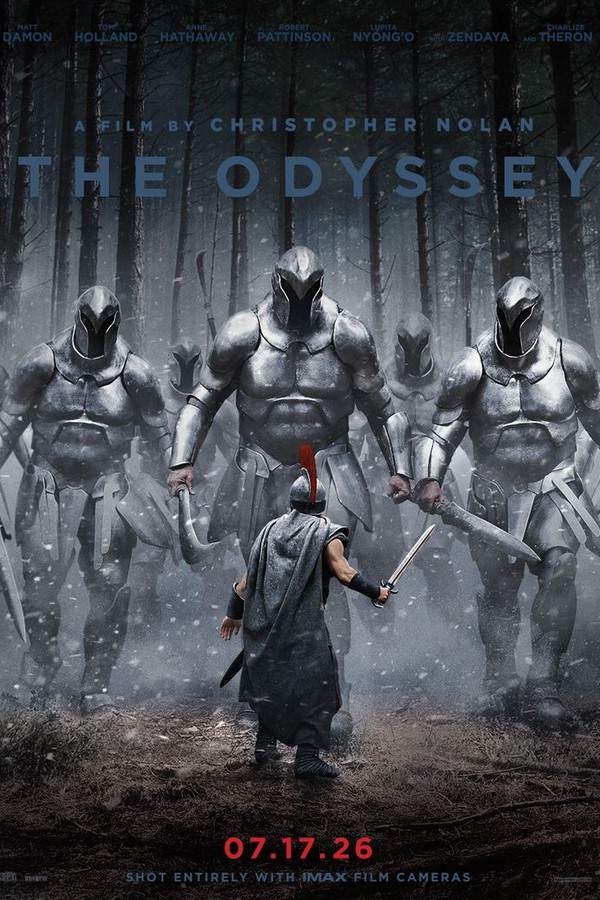
The Odyssey (2026) movie poster

Ending Explained

The Odyssey (2026) Ending Explained – Final Scene & Meaning

Release, runtime and language
2026 · 2 h 52 m · English
Echo score 70
Loading streaming availability…
Directed by
Christopher Nolan
Starring
Charlize Theron, Josh Stewart, Matt Damon, Tom Holland, Lupita Nyong'o, John Leguizamo
Budget
$250M

After the fall of Troy, the legendary king of Ithaca sets out on a long, perilous journey home. Along the way he must contend with capricious gods, fearsome mythological beasts and a succession of harsh trials that test both his cunning and his very humanity, pushing him to the brink.

On this page (8)
  1. 1 Where to watch
  2. 2 What happens at the end
  3. 3 Dreams & reality explained
  4. 4 Final events in order
  5. 5 Ending questions answered
  6. 6 The book behind the movie
  7. 7 Movie threads
  8. 8 Every angle
Loading streaming availability…

Ending explained · contains spoilers

What Happens at the End of The Odyssey?

How The Odyssey (2026) ends, what the final scene means, which earlier moments set it up and how to read the ending if the film leaves it open. The full ending explained, with every spoiler.

Odysseus returns to Ithaca disguised as a beggar, where only his old dog Argos recognizes him before dying. Penelope's contest with Odysseus' bow and the row of axe heads creates the opening for his revenge: he reveals himself, saves Telemachus, and kills Antinous and the other suitors who have consumed his household. He then confesses to Penelope the moral cost of Troy, including the Trojan Horse's violation of Zeus's law by disguising death as a gift. Haunted by an Athena who bears the face of a murdered young woman, he can no longer treat victory, divine favor, or his return as proof of innocence.

Odysseus and Penelope choose self-exile, leaving Telemachus to rule Ithaca rather than restoring the old king to his throne. Odysseus observes that nobody will write down their deeds and that they will survive only through song, while the closing return to the Trojan Horse places his personal homecoming against the collapse his war helped unleash. The ending therefore refuses the simple reward promised by the journey. He reaches his wife and son, but accepting responsibility means surrendering power and living beyond the society that celebrated his cunning. What remains is not an unblemished hero but a contested story that later generations will keep retelling.

Last updated: August 25, 2026 at 14:20

Was this helpful?

2 realities · 3 crossings · contains spoilers

The Odyssey Reality Map: Dreams & Worlds Explained

The film's reality is structured as the mortal realm of Ithaca and the Greek seas, plus a distinct underworld of Hades that Odysseus must physically enter and leave. Circe tells him that reaching Ithaca requires crossing the river Oceanus into Hades, where the shades of the dead reveal information that shapes his homecoming.

How much of the story to show
Top levelRealLevel 11Level 1Real worldThe Mortal WorldThe physical realm of Ithaca, the Greek islands and the seas whereOdysseus's twenty-year voyage and homecoming take place.OdysseusOUnknownHades, the UnderworldThe realm of the dead reached beyond the river Oceanus, where Odysseusencounters the shades of his fallen comrades and the prophet Tiresias.OdysseusO
Who
Read the realities and crossings as text
  • Real world

    The Mortal World

    The physical realm of Ithaca, the Greek islands and the seas where Odysseus's twenty-year voyage and homecoming take place.

  • Unknown

    Hades, the Underworld

    The realm of the dead reached beyond the river Oceanus, where Odysseus encounters the shades of his fallen comrades and the prophet Tiresias.

How the realities connect

  • Way in: The Mortal World → Hades, the Underworld, Crossing the river Oceanus into Hades

    On Circe's advice that reaching Ithaca requires it, Odysseus crosses the river Oceanus and enters the depths of Hades.

    When: During Odysseus's voyage home

  • Way out: Hades, the Underworld → The Mortal World, Chased out of the underworld

    Odysseus leaves Hades and returns to the mortal seas after being chased from the underworld by the ghosts of his own army.

    When: After speaking with the shades in Hades

  • Affects: Hades, the Underworld → The Mortal World, Sinon's shade exposes Antinous's manipulation

    In Hades, the ghost of Sinon reveals that Antinous manipulated him into joining the army, a revelation Odysseus later raises when he confronts Antinous in Ithaca.

    When: After Odysseus's return to Ithaca

The last 4 events

How The Odyssey Ends: The Final Events in Order

The last events of The Odyssey (2026) in chronological order, the run-up to the ending explained above. The complete timeline has all 15 events, scene by scene.

Open the full timeline
  1. The Homecoming in Disguise

    Odysseus comes ashore in disguise, taking the alias 'Sinon'. From Eumaeus he learns that the suitors sent bandits to assassinate Telemachus and Mentor; the bandits kill Mentor, but Odysseus rescues Telemachus and slays the attackers. His loyal old dog Argos dies as it joyfully recognizes its master, and Telemachus quietly deduces the stranger's true identity.

    Where
    Ithaca
  2. Feast, Confrontation, and Confession

    During a feast, the disguised Odysseus confronts Antinous about betraying Sinon, and the furious suitor thrashes him before Telemachus intervenes. After the meal, Odysseus confesses to Penelope his guilt for violating Zeus's law during the sacking of Troy and desecrating Athena's statue after killing her priestess. He reveals that the dreaded 'Sea Peoples' were the Greeks themselves, whose brutality helped ignite the Late Bronze Age collapse, and begs Penelope's forgiveness.

    Where
    Ithaca
  3. The Trial of the Bow

    Penelope instructs the suitors to return at dawn and declares she will remarry whoever can string Odysseus's great bow and shoot an arrow through a row of axe heads. Every suitor fails at the impossible task. When Odysseus takes the bow and succeeds effortlessly, his true identity is revealed before the entire hall.

    When
    At dawn
    Where
    Ithaca
  4. The Reckoning and the Farewell

    The hall erupts in battle, and with Telemachus fighting at his side, Odysseus cuts down the challenging suitors, including the treacherous Antinous. Once the remaining suitors surrender, Odysseus cedes the throne of Ithaca to his son. He then departs with Penelope to seek peace in exile, sailing west to honor his fallen soldiers, with the couple musing that time will forget Odysseus's mistakes.

    Where
    Ithaca

Ending questions answered

The Odyssey Ending: Your Questions Answered

The questions people ask most about the ending of The Odyssey (2026): what the final scene means, how the twist works, what happens to each character and how to read the ending. Each answer contains spoilers.

Q1

Why does Odysseus return to Ithaca disguised as a beggar?

Odysseus comes home in disguise to assess how far the suitors have overrun his palace before committing to violence. Disguise is the same cunning that saved him at Troy, and arriving as a beggar lets him map the conspiracy inside his own walls while protecting Telemachus and Penelope until the right moment to strike.

Foreshadowing: His reliance on deception at the Cyclops' cave ('Nobody') and with the Trojan Horse establishes disguise as his defining survival tactic.

  • odysseus beggar
  • disguise ithaca
  • suitors test
Q2

What is the bow and axe-head contest Penelope sets up for the suitors?

Penelope announces a contest in which a suitor must string Odysseus's old bow and shoot an arrow through a line of twelve aligned axe heads. The challenge is a trap: only Odysseus can perform the feat, so the contest is engineered to force his hand and turn the moment into the opening for the slaughter of the suitors.

Foreshadowing: Penelope's earlier promise to remarry once she finishes a shroud for Laertes establishes the contest as her delaying strategy.

  • penelope bow contest
  • axe heads
  • suitors
  • odysseus bow
Q3

Why does Odysseus confess the truth about the Trojan Horse to Penelope?

After killing the suitors, Odysseus tells Penelope that the Trojan Horse was a violation of Zeus's law because it disguised death as a gift. The confession refuses to celebrate a homecoming built on wartime deception and acknowledges that his 'victory' carried a moral debt he can no longer ignore.

Foreshadowing: His earlier memory of the sacrifice at Aulis already framed the Greek campaign as morally compromised before the horse is built.

  • trojan horse confession
  • zeus law
  • disguised death
  • odysseus guilt
Q4

What does it mean that Athena appears with the face of a murdered young woman?

The Athena who haunts Odysseus after the slaughter carries the face of a young woman whose death enabled his war, almost certainly Iphigenia sacrificed at Aulis. Her image makes divine favor indistinguishable from complicity, stripping Odysseus of any claim that victory proves his innocence.

Foreshadowing: Earlier visions in the underworld already linked Athena's patronage to the human cost of the Greek expedition.

  • athena ghost
  • iphigenia
  • aulis sacrifice
  • divine haunting
Q5

Why does Telemachus rule Ithaca instead of Odysseus reclaiming the throne?

Telemachus inherits the throne because Odysseus deliberately cedes power to him as part of accepting responsibility for Troy's destruction. The succession signals the end of the old heroic order and lets a new generation judge its fathers' deeds rather than inherit Odysseus's compromised legacy.

Foreshadowing: Telemachus's separate journey to find his father in the early acts primes him to govern in his own right.

  • telemachus king
  • ithaca throne
  • odysseus abdication
Q6

Why do Odysseus and Penelope choose exile instead of ruling Ithaca together?

Odysseus and Penelope leave Ithaca because staying would mean re-entering the society that celebrates the very cunning he now repents. Self-exile is the only honest path: it lets them preserve their bond without profiting from a throne built on the Trojan Horse deception and the bloodshed it concealed.

Foreshadowing: Penelope's willingness to test strangers all film long mirrors her readiness to leave Ithaca with the only man she truly trusts.

  • odysseus exile
  • penelope
  • ithaca
  • self-imposed exile
Q7

What does Odysseus mean when he says nobody will write down their deeds?

Odysseus accepts that no official history will vindicate him and that his story will survive only as song shaped by poets. The remark means truth becomes contested memory rather than recorded fact, and that his heroism will be defined by whoever sings it next, not by Odysseus himself.

Foreshadowing: The bardic framing of his earlier flashbacks already told viewers that Odysseus's life is being recounted, not simply lived.

  • song
  • memory
  • oral tradition
  • contested story
  • deeds
Q8

How does the ending connect back to the Trojan Horse?

The film closes by returning to the Trojan Horse, cutting Odysseus's private homecoming against the wider collapse his deception unleashed. The juxtaposition refuses a triumphant reward, insisting that the man who returns is the same mind that built the horse and that personal reunion cannot undo the war's consequences.

Foreshadowing: The Trojan Horse sequence is staged early but framed in a way that invites a second viewing once its human cost becomes visible.

  • trojan horse ending
  • collapse
  • juxtaposition
  • moral cost
Q9

Why does Argos the dog die right after recognizing Odysseus?

Argos, Odysseus's old hunting dog, is the only being who instantly sees through the beggar disguise, and he dies moments after their reunion. His death marks the end of the loyal Ithaca Odysseus left behind twenty years earlier and shows that his return cannot restore anything that once was; it can only begin something new.

Foreshadowing: Argos is briefly shown weak and neglected among the suitors' trash, signaling his role as a living relic of the household's past.

  • argos
  • old dog
  • recognition
  • loyal ithaca
Q10

Why is Odysseus unable to feel at peace after killing the suitors?

Even with his household reclaimed, Odysseus cannot feel vindicated because the haunting Athena forces him to see his success as complicity in Iphigenia's death and in the Trojan Horse's betrayal of divine law. Genuine peace becomes impossible unless he surrenders the throne, the fame, and the heroic identity that made the violence possible in the first place.

Foreshadowing: His refusal to eat or rest among the suitors before the contest already signals that victory will not feel like home.

  • odysseus guilt
  • peace
  • suitors aftermath
  • victory complicity

Movie threads

More Movies Like The Odyssey, by Mood & Story

Curated lists built around what makes The Odyssey tick: the same mood, the same kind of story or the same emotional payoff. Each list explains why these movies belong together.

Mythic voyage and divine trials like in The Odyssey

Epic journeys where gods, monsters, and fate test one hero's endurance. Looking for movies like The Odyssey? These epic adventure and fantasy films share a mythic, perilous journey tone, with heroes facing gods, monsters, and impossible trials at sea or in legendary lands. Expect gorgeous world-building, brutal set-pieces, and somber, atmospheric storytelling reminiscent of Homeric sagas and other grand mythological adventures.

  • epic
  • mythological
  • perilous
  • atmospheric
  • somber
  • heroic
  • Tone: dark, somber, mythic
  • Pacing: variable, episodic and atmospheric
Why these movies?

The story pattern: A hero is cast out of his homeland by forces beyond his control and must traverse a vast, dangerous world where ancient powers actively intervene. The narrative unfolds as a sequence of episodic trials: monstrous encounters, underworld visions, tests of cunning, and moral compromises. The pacing breathes between breathless, violent set-pieces and quiet, reflective beats where the hero questions whether survival is worth the cost. By the end, the hero is fundamentally changed, often stripped of his former identity or throne.

Why they belong together: These films cluster around three shared pillars: a legendary or mythological setting where gods and monsters feel tangible, a journey structured around escalating trials rather than a single confrontation, and a hero whose endurance is tested both physically and spiritually. The tone is consistently dark and atmospheric, with violence that feels ceremonial rather than gratuitous, and endings that rarely arrive as clean victories.

Bittersweet war homecoming and guilt like in The Odyssey

Soldiers coming home carrying the weight of what they did and what they lost. If you liked The Odyssey, these dramas and epics share its core emotional engine: a warrior or exile returning home after years of war, weighed down by guilt, grief, and the suspicion that home no longer wants him. Expect nonlinear storytelling, flashbacks to brutal combat, family drama, identity-stripping disguises, and endings that cost the hero everything he fought for.

  • guilt-ridden
  • haunted
  • exile
  • family loyalty
  • war trauma
  • nonlinear
  • Tone: dark, guilt-ridden, bittersweet
  • Pacing: variable, flashbacks intercut with present-day tension
Why these movies?

The story pattern: The protagonist arrives home as an outsider, often unrecognized, having survived horrors the audience has witnessed through flashbacks. A political or domestic conspiracy complicates the reunion, forcing the hero to navigate between deception and brutal reckoning. Family members, especially a spouse and child, become both motivation and obstacle, and the climax usually requires violence that reopens old wounds. The resolution is bittersweet: peace is bought at the price of further exile, abdication, or the knowledge that history will judge the hero harshly.

Why they belong together: These stories are united by a post-war veteran perspective, a nonlinear structure that cuts between present-day home life and traumatic past campaigns, and a bittersweet or tragic resolution where reunion is never clean. Themes of disguise, identity loss, divided loyalty, and moral reckoning dominate, and the tone sits firmly in dark and heavy territory with relatively low humor. Movies fit when their central question mirrors Odysseus's: can homecoming redeem the cost of survival?

Every angle

The Odyssey (2026) Explained: Plot, Ending, Timeline & Characters

Everything about The Odyssey in one place: what happens in the plot summary, the timeline in chronological order, the characters and meaning, the ending explained and a spoiler-free summary. What's After the Movie adds the cast, box office and post-credit scenes.

Coming soon on iOS and Android

The Plot Explained Movie Summary App

Plot summaries, endings explained and timelines on your phone. Catch up on any movie in minutes, save your favorites and never miss a twist again.

Be the first to know when we launch. Your email stays private, always.

Learn more about the app