

Plot Explained Spoilers guaranteed!
Plot Explained

Browse by genre

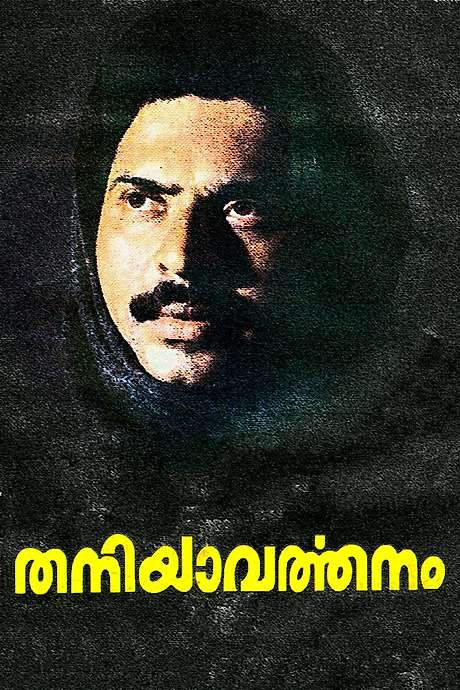
Thaniyavarthanam (1987) movie poster

Timeline

Thaniyavarthanam (1987) Timeline Explained – Every Event in Order

Release, runtime and language
1987 · 119 mins · Malayalam
Directed by
Sibi Malayil
Starring
Mammootty, Babu Namboothiri, Innocent, Valsala Menon, Mukesh, Thilakan

Balan, a teacher, looks after his mentally unstable uncle in a family haunted by a longstanding belief that a curse ensures each generation produces a lunatic. When the uncle dies, the surrounding community, steeped in superstition, quickly assumes Balan is destined to become the next afflicted, amplifying his personal turmoil.

On this page (6)
  1. 1 Where to watch
  2. 2 Events in order (12)
  3. 3 Timeline questions answered
  4. 4 Movie threads
  5. 5 Movies like Thaniyavarthanam
  6. 6 Every angle

Where to watch

Where to Watch Thaniyavarthanam (1987)

Where can you watch Thaniyavarthanam? Stream, rent or buy it in the US: current JustWatch availability with up-to-date prices.

Streaming availability powered by JustWatch

12 events in order · contains spoilers

Thaniyavarthanam Timeline: Events in Chronological Order

Every key event of Thaniyavarthanam (1987) in order, scene by scene, with when and where it takes place. Use it to untangle flashbacks, time jumps and parallel storylines, to refresh your memory before the sequel or to find the exact scene you are thinking of.

  1. Tranquil life in a Kerala joint family

    Balan Master, a school drawing teacher in Government service, enjoys a serene life in a traditional Nair joint family in a rural Kerala village. He shares a home with his wife, two children, his mother, a younger brother Gopi, and a younger sister. The family is rooted in routine and mutual care, even as the elder members cling to superstition and orthodox norms.

    When
    pre-nightmare era
    Where
    Balan's family home, rural Kerala
  2. A generations-old curse and the locked uncle

    The family believes that a male from each generation will go mad due to a past sin—the goddess's idol thrown into a well. Sreedharan, Balan's uncle, is locked in a dark room as he is deemed mentally challenged. The karnavar, the senior male, wields power and makes most decisions, reinforcing the family’s superstition.

    When
    generational past
    Where
    Family house
  3. Talk of who would be next

    After the elder uncle dies, villagers wonder which of Balan or Gopi will be next to succumb to madness. The community scans every action for signs of the curse's return. Rumors and fear spread through the village, casting doubt on Balan’s sanity.

    When
    aftermath of uncle's death
    Where
    Village
  4. Nightmare and sudden suspicion

    One night, Balan experiences a terrifying nightmare that jolts the entire household awake. Elder family members interpret the episode as a sign that Balan is turning mad. News leaks to the village, and the community begins to view his behavior through the lens of inherited lunacy.

    When
    night
    Where
    Balan's home
  5. Village judgment against Balan

    The village condemns Balan as mentally ill, interpreting his movements and choices as proof of the curse's persistence. He applies for an extended medical leave and transfers from service as suspicion and stigma mount. His students and some relatives begin to label him a lunatic.

    When
    immediate aftermath
    Where
    Village and school
  6. Gopi seeks medical reassurance

    Gopi, progressive and educated, urges Balan to seek a medical opinion. They consult a qualified physician who declares Balan sane. Yet the village refuses to accept this verdict and continues to doubt him.

    When
    shortly after leave decision
    Where
    Clinic/physician's office
  7. Wife and children forced to leave

    With suspicion at its peak, Balan's wife is forced to leave the house with their children. The family arranges the marriage of his younger sister, hiding the fact that her elder brother is deemed mentally challenged. The secrecy deepens the stigma and isolates Balan.

    When
    crisis point
    Where
    Balan's home and nearby village
  8. Admission to the asylum

    Balan is admitted to an asylum for treatment and is broken by the experience. He is released after a few days, but the damage is done—mentally and physically—before being confined once more to the darkroom where his uncle once resided. Society continues to hound him even behind closed doors.

    When
    during and after hospital care
    Where
    Asylum; darkroom
  9. Society's suppression and subjugation

    Society hounds him and beats him into subjugation, pressing him to accept a diminished identity. The relentless scrutiny erodes his agency and drives further isolation. The community’s superstition effectively negates his attempts to reclaim normal life.

    When
    post-release
    Where
    Village/public spaces
  10. Murder by mother's act on ritual day

    On the day of the ritual for forgiveness from the goddess, Balan's mother poisons him and ends his life. The act is a final severing of his chance at relief or redemption. She then commits suicide, unable to forgive herself.

    When
    day of ritual
    Where
    Family home
  11. Death and aftermath

    Balan's death seals the tragic cycle of superstition and social control. The ritual's violence becomes a grim testament to the village’s fear and orthodoxy. The mother’s suicide compounds the sense of fatal guilt that haunts the family.

    When
    aftermath
    Where
    Village; family home
  12. Legacy of superstition

    The story closes as a stark critique of how fear of curses and the obsession with controlling kin can destroy promising lives. It exposes the cruelty of traditional hierarchies in a Kerala village. Balan's fate lingers as a warning about the cost of oppressive beliefs.

    When
    epilogue
    Where
    Kerala village

Last updated: October 09, 2025 at 14:25

Was this helpful?

Timeline questions answered

Thaniyavarthanam Timeline Explained: Your Questions Answered

When does it happen, and why in that order? The questions people ask about the chronology of Thaniyavarthanam (1987): time jumps, flashbacks, cause and effect between scenes and the correct order of events, each answered with spoilers.

Q1

Why was Balan suspected of being the next to succumb to madness?

After Balan's uncle Sreedharan died, the village believed the family curse would strike again. The superstition stated that one male from each generation would go mad due to a past sin of throwing the goddess's idol into a well. Since Balan was the elder son, villagers and family elders naturally speculated he would be the next victim, especially after the nightmare incident.

Foreshadowing: The curse was introduced early when the uncle's confinement was first mentioned, establishing the family's fear.

  • curse
  • supernatural
  • mental illness
  • family
  • superstition
  • village
Q2

What happened during Balan's nightmare that triggered the villagers' suspicion?

One night, Balan had a terrifying nightmare that woke the entire household. Elder family members immediately interpreted this as a sign that the curse was manifesting and Balan was turning mad. The news spread quickly through the village, and from that moment, every action Balan took was scrutinized and misread as proof of his impending lunacy.

Foreshadowing: The earlier mention of the family's belief in hereditary madness made the villagers hypervigilant to any unusual behavior.

  • nightmare
  • fear
  • village gossip
  • superstition
  • signs
Q3

Why didn't the village accept that Balan was sane after a doctor confirmed it?

Gopi, Balan's educated younger brother, took him to a physician who examined him and declared him completely sane. However, the village refused to accept this medical verdict. The community preferred to cling to their superstition rather than trust modern medicine, viewing the curse belief as more powerful than any doctor's assessment.

Foreshadowing: The family's deep-rooted superstition was presented as stronger than rational explanation from the beginning.

  • doctor
  • medical
  • sane
  • village
  • superstition
  • rejection
Q4

Why was Balan's wife forced to leave with their children?

As suspicion against Balan reached its peak, the family pressured his wife to leave the house with their two children. The elders feared that staying near a supposedly cursed man would bring shame and danger to the family. This abandonment reflected how completely the community had turned against Balan based on mere speculation.

Foreshadowing: The rigid family hierarchy and the power of the karnavar were established early, showing how traditions could压迫 individuals.

  • wife
  • children
  • family
  • abandonment
  • shame
Q5

Why did the family hide Balan's situation when arranging his sister's marriage?

The family arranged the marriage of Balan's younger sister while deliberately concealing the fact that her elder brother was labeled mentally challenged. They feared that if the groom's family learned about Balan's situation, the marriage would be called off. This secrecy demonstrated how the stigma around the curse affected not just Balan but his entire family's reputation and future.

Foreshadowing: The family's concern for social standing and面子 was shown through their adherence to tradition throughout the story.

  • sister
  • marriage
  • secrecy
  • family honor
  • stigma
Q6

Why did Balan's mother poison him on the day of the ritual?

Balan's mother killed him by giving him poison on the day designated for a ritual seeking forgiveness from the goddess. Overwhelmed by grief, social pressure, and belief in the curse, she saw this as a way to end his suffering and restore family honor. The ritual day was chosen deliberately as an act of mercy and supposed spiritual cleansing, though it was ultimately a tragic expression of the same superstition that destroyed him.

Foreshadowing: The ritual for forgiveness was introduced earlier in the timeline, establishing its significance in the family's spiritual life.

  • mother
  • poison
  • ritual
  • forgiveness
  • mercy killing
  • tragedy
Q7

How did the family's belief in the curse about madness begin?

The family believed their curse originated generations ago when an ancestor committed a sin by throwing the goddess's idol into a well. This act was said to curse the bloodline, causing one male in each generation to become mad. The belief had been passed down through generations and was accepted as unchangeable truth by the community.

Foreshadowing: The locked uncle Sreedharan was introduced as proof of the curse's reality, making the belief appear validated by recent history.

  • curse
  • ancestor
  • sins
  • goddess
  • origin
  • belief
Q8

Why was Balan confined to the same dark room where his uncle lived?

After being released from the asylum, Balan was placed in the same darkroom that once housed his uncle Sreedharan. This confinement represented the family's final acceptance of the curse narrative. The physical space symbolized how Balan had been reduced to the same status as the uncle they considered cursed, trapping him in the role society had assigned.

Foreshadowing: The darkroom was mentioned when describing the uncle's confinement, foreshadowing Balan's eventual fate.

  • darkroom
  • confinement
  • uncle
  • symbolism
  • imprisonment
Q9

What happened to Balan after he was admitted to the asylum?

Balan was admitted to an asylum for treatment, where he was broken both mentally and physically by the experience. He was released after a short period, but the trauma further damaged his already fragile state. Rather than helping him recover, the asylum experience compounded his suffering and made him more vulnerable to the community's continued persecution.

Foreshadowing: The power of the community's judgment was established early, showing how institutional treatment could not overcome social stigma.

  • asylum
  • trauma
  • treatment
  • breakdown
  • institution
Q10

How did the village community contribute to Balan's downfall?

The village played a crucial role in destroying Balan by spreading rumors, scrutinizing his every action, and refusing to accept medical evidence of his sanity. Their collective belief in the curse created a self-fulfilling prophecy - by treating Balan as mad, they pushed him toward isolation and despair. The community's adherence to superstition proved more powerful than reason or compassion.

Foreshadowing: The timeline showed how village gossip escalated quickly after the nightmare, demonstrating the community's collective behavior.

  • village
  • community
  • gossip
  • superstication
  • social pressure

Movie threads

More Movies Like Thaniyavarthanam, by Mood & Story

Curated lists built around what makes Thaniyavarthanam tick: the same mood, the same kind of story or the same emotional payoff. Each list explains why these movies belong together.

Slow burn psychological unease like in Thaniyavarthanam

Stories where quiet tension and suspicion create a suffocating atmosphere. If you appreciated the gradual, suffocating tension in Thaniyavarthanam, explore these movies that master the slow burn. These films use deliberate pacing to build psychological dread, often focusing on characters being consumed by suspicion, superstition, or internal demons, resulting in a similarly heavy and tense viewing experience.

  • slow burn
  • oppressive
  • psychological
  • anxious
  • claustrophobic
  • somber
  • Tone: bleak, tense, melancholic
  • Pacing: slow burn, deliberate
Why these movies?

The story pattern: Narratives in this thread typically follow a linear, cause-and-effect progression where an initial belief or suspicion gradually gains power, leading to an inevitable and often tragic conclusion. The focus is not on sudden shocks but on the cumulative weight of apprehension and the inescapable nature of a grim fate.

Why they belong together: Movies are grouped here for their shared commitment to a slow, methodical pacing that amplifies psychological tension. They create a coherent, oppressive mood where the viewer feels the same claustrophobic anxiety and impending doom as the protagonist, making the emotional payoff deeply impactful.

Tragedies of superstition and social stigma like in Thaniyavarthanam

Films where irrational beliefs and community prejudice lead to personal ruin. For viewers moved by the theme of destructive superstition in Thaniyavarthanam, this section highlights similar movies. These films explore how irrational fears, gossip, and societal prejudice can systematically destroy an individual, offering powerful critiques of tradition and mob mentality within close-knit communities.

  • tragic
  • desperate
  • somber
  • melancholic
  • anxious
  • oppressive
  • Tone: bleak, tragic, desperate
  • Pacing: steady, character-driven
Why these movies?

The story pattern: The narrative pattern involves an individual confronting a deeply ingrained, collective belief system. The community, not a single villain, becomes the source of conflict. The story charts the protagonist's futile struggle against these immovable forces, highlighting the tragedy of being condemned by the very people they are part of.

Why they belong together: These films are united by their central theme: the devastating human cost of superstition and social ostracism. They share a bleak tone and heavy emotional weight, focusing on the psychological destruction of a protagonist trapped by the narrow-mindedness of their world.

If you liked this

Movies Like Thaniyavarthanam

Similar movies to Thaniyavarthanam: the same genre, themes or kind of story. Each one comes with its own plot summary, timeline and ending explained.

Browse all movie summaries

Every angle

Thaniyavarthanam (1987) Explained: Plot, Timeline & Characters

Everything about Thaniyavarthanam in one place: what happens in the plot summary, the timeline in chronological order, the characters and meaning and a spoiler-free summary. What's After the Movie adds the cast, box office and post-credit scenes.

Coming soon on iOS and Android

The Plot Explained Movie Summary App

Plot summaries, endings explained and timelines on your phone. Catch up on any movie in minutes, save your favorites and never miss a twist again.

Be the first to know when we launch. Your email stays private, always.

Learn more about the app