Plot Explained Spoilers guaranteed!
Plot Explained

Browse by genre

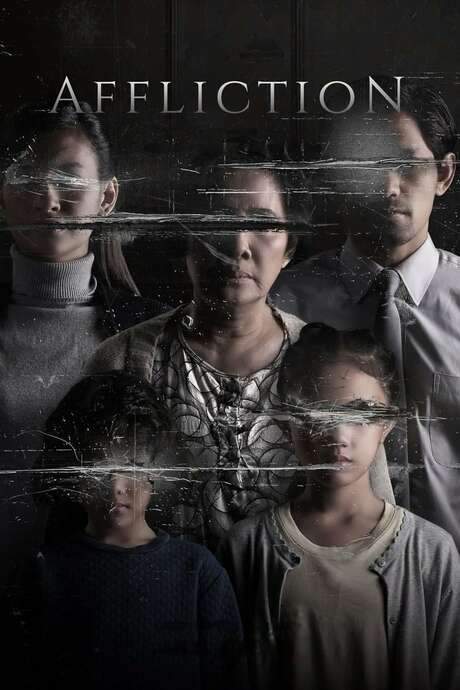
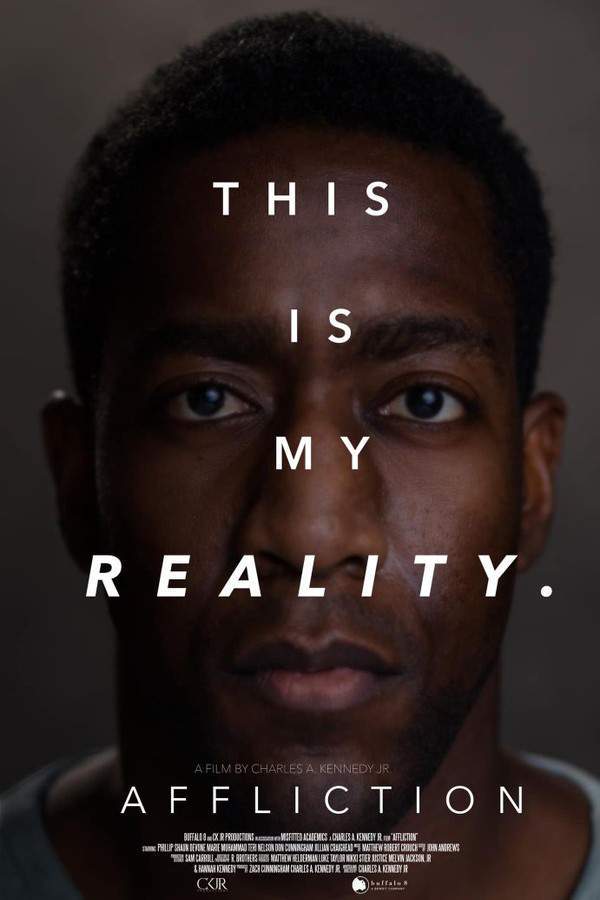
Affliction (1998) movie poster

Plot Summary

Affliction (1998) Plot Summary Explained

Release, runtime and language
1998 · 114 min · English
Loading streaming availability…
Directed by
Paul Schrader
Starring
Sissy Spacek, Nick Nolte
Budget
$6M

A young writer struggling with schizophrenia finds his perception of reality increasingly distorted, making it difficult to separate his fiction from the truth. He capitalizes on his condition for professional success, but this ultimately leads to a descent into a dark and disorienting world where the line between imagination and reality vanishes, jeopardizing his grasp on sanity.

On this page (6)
  1. 1 Where to watch
  2. 2 What happens: full plot
  3. 3 Plot questions answered
  4. 4 Movie threads
  5. 5 Movies like Affliction
  6. 6 Every angle
Loading streaming availability…

Full plot summary · contains spoilers

What Happens in Affliction: Full Plot Summary

The whole story of Affliction (1998) explained, from the opening scene to the final frame: every key event, every twist and what it all adds up to. Read it as a quick recap before the sequel, to check a scene you missed, or to finally understand what really happened.

Rolfe Whitehouse begins the film by recounting Wade Whitehouse, Nick Nolte, a small-town policeman in New Hampshire, and his alleged "strange criminal behavior" along with his disappearance. On Halloween night, Wade meets his daughter Jill, but he is late and the evening is shadowed by disharmony. Jill calls her mother, Wade's ex-wife, to come and pick her up. When she arrives, Wade shoves her husband against their car and watches them drive away with Jill. Wade vows to hire a lawyer to gain custody of his daughter.

The next day, Wade rushes to the scene of a crime. Jack Hewitt, a local hunting guide, claims that Evan Twombley, with whom he was hunting, accidentally shot and killed himself. The police side with Jack, but Wade grows suspicious, convinced that Twombley was killed by Jack. When he learns that Twombley was scheduled to testify in a lawsuit, his suspicion slowly hardens into conviction.

A while later, Wade and his girlfriend Margie Fogg, Sissy Spacek, arrive at the house of Wade's alcoholic father, Glen Whitehouse, whose abusive treatment of Wade and Rolfe as children is revealed in flashbacks throughout the film. Wade finds his mother lying dead in her bed from hypothermia. Glen reacts to her death with little surprise, and later gets drunk at her wake and gets into a fight with Wade.

Rolfe, who has come home for the funeral, initially suggests Wade's murder theory could be correct, but later renounces himself from the presumption. Nonetheless, Wade becomes obsessed with the conviction. When Wade learns that town Selectman Gordon Lariviere is buying up property all over town with help from a wealthy land developer named Mel Gordon, also Twombley's son-in-law, he makes solving these incidents his personal mission. Suffering from a painful toothache and becoming increasingly socially detached, he behaves more and more unpredictably. He follows Jack, convinced that Jack is running away from something and is involved in a conspiracy. After a car chase, a nervous Jack finally pulls over, threatens Wade with a rifle, shoots out his tires, and drives off.

Finally, Wade is fired for harassing Jack and trashing Lariviere's office. He collects Jill from her mother's house, where his ex-wife furiously castigates him over his plans to sue for full custody. At a local restaurant, after being verbally abused, he attacks the bartender in front of his daughter. Then Wade takes Jill home to find Margie leaving him. Wade grabs Margie and begs her to stay, but Jill rushes up and tries to stop the fight. In response, Wade angrily pushes Jill, giving her a bloody nose, forcing both her and Margie to drive off.

Glen, Wade's father, congratulates him for finally acting as a "real man." The latent aggression between the men culminates in another fight in which Wade hits his father with the butt of a rifle, accidentally killing him. Wade burns the corpse in the barn, sits down at the kitchen table and starts drinking.

Rolfe's narration reveals that Wade eventually murdered Jack and left town (possibly to Canada, where Jack's truck was found three days later), never to return. Rolfe relates that the town later became part of a huge ski resort partly organized by Gordon Lariviere, but he had nothing to do with either Jack or Twombley. Rolfe concludes that someday a vagrant resembling Wade might be found frozen to death, and that will be the end of the story.
Last updated: October 09, 2025 at 15:45

Was this helpful?

Plot questions answered

Affliction Plot Explained: Your Questions Answered

The questions people ask most about Affliction (1998): what happens in the confusing scenes, why the characters do what they do, the twists, hidden details and what the ending means. Each answer contains spoilers.

Q1

Why does Wade become convinced Jack killed Twombley?

Wade becomes suspicious because Twombley was scheduled to testify in a lawsuit, giving him a clear motive to eliminate someone. Additionally, Wade notices Jack acting strangely after the incident, running away and displaying nervous behavior, which feeds Wade's conviction that the accidental shooting story is a cover-up. This suspicion hardens into an obsession that consumes the rest of the film.

  • wade whitehouse
  • jack hewitt
  • twombley
  • investigation
  • conspiracy
Q2

Why does Glen show no surprise at his wife's death?

Glen's lack of surprise stems from his alcoholism and emotional detachment. Flashbacks reveal he was an abusive husband and father, and his cold reaction suggests he may have neglected her to the point of allowing her death. The film implies Glen was more concerned with drinking than caring for his wife, making her death from hypothermia almost inevitable to him.

Foreshadowing: Earlier scenes show Glen consistently prioritizing alcohol over his wife's wellbeing.

  • glen whitehouse
  • wife death
  • hypothermia
  • alcoholism
  • abuse
Q3

Why does Wade kill his father Glen?

Wade kills Glen during a fight that erupts after Glen taunts him for finally acting like a 'real man.' The fight represents the culmination of decades of abuse Wade suffered as a child. When Wade strikes his father with the rifle butt, it's intended as a release of pent-up rage, but the blow is fatal. Wade then burns the body in the barn and sits drinking, showing the act has destroyed whatever remained of his sanity.

Foreshadowing: Throughout the film, flashbacks show Glen's brutal treatment of young Wade, building toward this violent confrontation.

  • wade whitehouse
  • glen whitehouse
  • father
  • killing
  • abuse
  • violence
Q4

Why does Margie leave Wade?

Margie leaves because Wade has become increasingly unpredictable and violent. After Wade is fired and suffers a public breakdown at the restaurant, he returns home aggressive and desperate. When Margie attempts to leave, Wade grabs her and begs her to stay, demonstrating the toxic, controlling dynamic that has developed. His behavior has become dangerous, forcing Margie to flee for her own safety.

  • margie fogg
  • wade whitehouse
  • leaving
  • relationship
  • domestic violence
Q5

Why does Wade push his daughter Jill?

Wade pushes Jill during a confrontation with Margie when Jill tries to intervene. Wade's mental state has deteriorated significantly, he's lost his job, his obsession has isolated him, and he's experiencing a complete breakdown. When Jill rushes to protect Margie, Wade's anger erupts indiscriminately, resulting in him shoving his daughter and giving her a bloody nose.

  • wade whitehouse
  • jill
  • daughter
  • violence
  • push
  • nosebleed
Q6

What was the connection between Twombley, Mel Gordon, and the property deals?

Mel Gordon was Twombley's son-in-law, making him directly connected to the dead man. Wade learns that Gordon Lariviere, the town Selectman, is buying up property with help from Mel Gordon. This connection fuels Wade's conspiracy theory that the murder (if it was murder) was tied to the land development scheme, though Rolfe's narration later reveals Gordon had nothing to do with Jack or Twombley's death.

  • mel gordon
  • twombley
  • gordon lariviere
  • property
  • development
  • conspiracy
Q7

What happens to Wade at the end of the movie?

Rolfe's narration reveals Wade likely murdered Jack Hewitt before disappearing. Jack's truck is later found in Canada three days after Wade's disappearance. Rolfe speculates that someday a frozen vagrant resembling Wade might be found dead, implying Wade met a grim end, either from the elements or as a fugitive. The film ends with the town moving on, developed into a ski resort, while Wade's story ends in darkness.

  • wade whitehouse
  • jack hewitt
  • murder
  • disappearance
  • canada
  • frozen
Q8

What was the significance of Wade's toothache?

Wade's painful toothache serves as a physical manifestation of his deteriorating mental state. The pain coincides with his growing obsession and withdrawal from normal life. As his behavior becomes more erratic, the toothache represents the internal decay paralleling his psychological unraveling, the pain becomes unbearable just as his life spirals out of control.

  • toothache
  • pain
  • deterioration
  • symptom
  • mental state
Q9

Why does Rolfe change his mind about Wade's theory?

Rolfe initially entertains Wade's murder theory because the circumstances around Twombley's death do seem suspicious. However, after further reflection and perhaps witnessing Wade's increasingly unhinged behavior, Rolfe abandons the theory. Rolfe's narration suggests he recognizes that Wade's obsession has overwhelmed his judgment, Wade was seeing conspiracy everywhere, not just in Twombley's case.

  • rolfe whitehouse
  • doubt
  • theory
  • wade
  • sanity
  • judgment
Q10

Why is Wade fired from his job?

Wade is fired for two reasons: he harasses Jack Hewitt by constantly following and confronting him, and he trashes Gordon Larivier's office in his pursuit of evidence. These actions, stalking a suspect and vandalizing a public official's workplace, cross the line from obsessive investigation to criminal behavior, leading to his termination as a police officer.

  • wade whitehouse
  • fired
  • job
  • police
  • harassment
  • office
Q11

Why does Jack shoot out Wade's tires during the car chase?

Jack shoots out Wade's tires because he feels threatened and harassed. Wade has been following Jack for weeks, convinced he's involved in a conspiracy. When Jack finally stops, he's nervous and threatened by Wade's persistent questioning. Rather than explaining himself, Jack escalates the confrontation by shooting the tires and driving away, which further убеждаes Wade that Jack has something to hide.

  • jack hewitt
  • car chase
  • rifle
  • tires
  • confrontation
  • wade
Q12

How does Glen's abuse affect Wade as an adult?

Glen's childhood abuse of Wade creates a template for violence that repeats in Wade's own life. Wade repeats his father's patterns, he drinks heavily, becomes violent, and treats the women in his life badly. The film shows abuse as generational: Glen's 'real man' taunts when Wade finally uses violence suggest Wade has become his father. The cycle only breaks when Wade kills Glen, but the pattern has already destroyed Wade's family.

Foreshadowing: Flashbacks throughout the film show Glen beating young Wade with belts and fists, establishing the abusive dynamic.

  • abuse
  • glen
  • wade
  • childhood
  • violence
  • cycle
  • father

Movie threads

More Movies Like Affliction, by Mood & Story

Curated lists built around what makes Affliction tick: the same mood, the same kind of story or the same emotional payoff. Each list explains why these movies belong together.

Movies about mental unraveling like Affliction

Stories where reality bends and a character's sanity completely collapses. If you liked the intense psychological breakdown in Affliction, explore these movies about characters descending into paranoia and madness. These similar drama and thriller stories feature a steady, heavy unraveling of the mind, often ending in bleak tragedy.

  • psychological
  • unsettling
  • paranoia
  • claustrophobic
  • grim
  • anxious
  • Tone: bleak, oppressive
  • Pacing: steady, methodical
Why these movies?

The story pattern: These narratives follow a character, often an artist or isolated figure, as their grip on reality weakens. External events or internal trauma act as a catalyst, causing their perception to become increasingly distorted, which typically leads to destructive actions and a tragic, unredemptive conclusion.

Why they belong together: Movies are grouped here for their shared, heavy focus on mental deterioration as the central plot driver. They create an oppressive, anxious mood through a steady pacing that builds dread, culminating in a bleak ending that offers no escape for the protagonist.

Gritty small-town crime stories like Affliction

Gritty stories where local corruption and violence shatter a fragile community. Find more movies like Affliction that explore bleak crime and corruption in a small-town setting. These similar mystery thrillers often feature a steady pace, heavy emotional themes, and a protagonist whose personal demons collide with the town's dark secrets.

  • grim
  • fatalistic
  • gritty
  • corruption
  • isolating
  • somber
  • Tone: grim, fatalistic
  • Pacing: steady, unfolding
Why these movies?

The story pattern: A suspicious death or crime in a tight-knit, often isolated community pulls a morally conflicted or traumatized protagonist into an investigation. Their pursuit of truth unearths systemic corruption and personal vendettas, leading to violent confrontations and a conclusion that offers no justice, only further tragedy.

Why they belong together: These films are united by their grim, fatalistic atmosphere and focus on the destructive impact of secrets within a confined setting. They share a steady, deliberate pacing that builds tension towards an inevitable, bleak outcome, often exploring themes of legacy, violence, and moral collapse.

If you liked this

Movies Like Affliction

Similar movies to Affliction: the same genre, themes or kind of story. Each one comes with its own plot summary, timeline and ending explained.

Browse all movie summaries

Every angle

Affliction (1998) Explained: Plot, Timeline & Characters

Everything about Affliction in one place: what happens in the plot summary, the timeline in chronological order, the characters and meaning and a spoiler-free summary. What's After the Movie adds the cast, box office and post-credit scenes.

Coming soon on iOS and Android

The Plot Explained Movie Summary App

Plot summaries, endings explained and timelines on your phone. Catch up on any movie in minutes, save your favorites and never miss a twist again.

Be the first to know when we launch. Your email stays private, always.

Learn more about the app