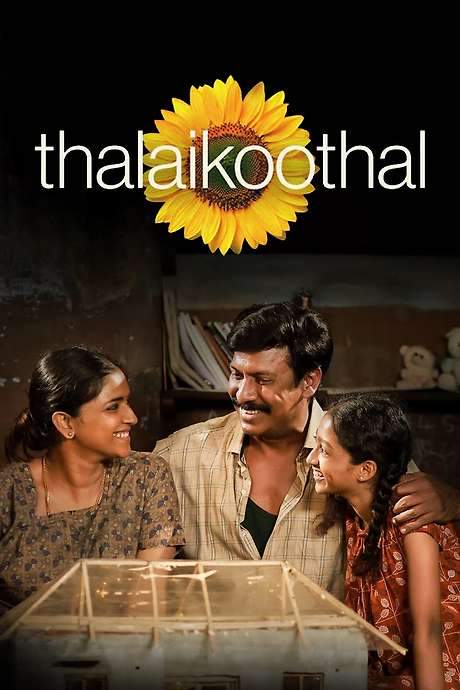
Pazhani, Samuthirakani, is a middle‑aged man who lives with his wife Kalaiselvi, Vasundhara Kashyap, and their daughter, while caring for his bedridden, comatose father Muthu, Kalai Selvan. To support his family and pursue his father’s care, Pazhani drops his own work and takes a night shift as an ATM security guard. Kalaiselvi grows increasingly frustrated with how his attention remains tied to his father, and she must take a factory job at a matchstick plant to keep the household afloat. The couple’s finances are strained after Pazhani borrows a large sum from a local moneylender to fund Muthu’s treatment, and the lender’s harassment only grows louder. When Pazhani’s father‑in‑law hints at performing thalaikoothal on the ailing elder to ease the burden, Pazhani resists—yet the threat of debt and social pressure gnaws at him. On top of this, Pazhani turns to a local demigod for a cure or blessing, and his pledge to throw a village feast if his father improves becomes a guiding thread through a life of escalating stakes. One day, Muthu opens his eyes and begins to recognize the people around him, lifting Pazhani’s spirits and prompting him to borrow again to arrange the communal celebration, even as he secretly pledges the house documents to the moneylender to cover mounting expenses.
The film unfolds in a non‑linear fashion, weaving in flashbacks to Muthu’s youth. In these memories, younger Muthu, Kathir, falls in love with Pechi, a lower‑caste washerwoman, Katha Nandi. Against the rigid social expectations of the time, they pursue a bond that leads toward marriage. However, before the ceremony can take place, Pazhani’s grandfather interrupts, attacking Pechi and severing her finger, pulling Muthu away and shattering the couple’s hopes. The emotional blow reverberates through the family; when the elder Pazhani recalls this incident, he slips back into the coma and loses consciousness again, deepening the tangled web of memory and present‑day fear. The memory of that forbidden love haunts Muthu’s image in Pazhani’s family, and the weight of ancestral trauma presses on Pazhani’s decisions.
Back in the present, the moneylender returns, attempting to measure the house for sale while Pazhani’s wife’s relatives interfere. Kalaiselvi interrupts the proceedings, and she discovers that Pazhani had pledged the house documents to the lender without telling her, leading to a bitter argument that ends with her leaving the family with their daughter. Pazhani’s father‑in‑law and brother‑in‑law reappear with a Swami and press Pazhani to perform Thalaikoothal on his father, arguing that there is no hope for recovery. Kalaiselvi strengthens her threat to leave if he does not go along, pushing Pazhani to a painful decision. Faced with the pressure and the possibility of losing his wife and child, he reluctantly agrees to keep caring for his father rather than resort to killing him. The family’s bonds fracture as Kalaiselvi and their daughter depart, and the nightmares Pazhani experiences reveal his deepest fears about losing them.
In a grim turn, the decision is carried out under a ritual guise: the elder Muthu is given an oil bath, forced to drink coconut water, and laid to sleep on the floor with the others believing it to be a peaceful end. Yet the plan is not to allow a natural death; the next day a poison injection finishes the job, and Muthu’s death is staged as a natural cremation. Pechi, now an aged memory and a silent witness to the tragedy, visits the funeral but leaves unrecognized by the party. A shattered Pazhani takes a fragment of his father’s remains from the graveyard and, with a quiet reverence, plants a banyan tree to honor him. The act becomes a living memorial that will outlast the family’s troubles.
The family moves to the city to rebuild their lives, with Pazhani continuing to care for his daughter as best he can. Years later, a conversation on a bus reveals the truth about the thalaikoothal incident to Pazhani’s daughter, a revelation that shapes her perspective on her father and their shared history. The final frames sweep forward to a tranquil moment beneath the now‑grown banyan tree, where Pazhani and his daughter share time together, acknowledging the past while attempting to move forward. The film’s ending lingers on the tree’s massive, spreading roots—a poignant symbol of memory, guilt, and the stubborn resilience of family ties.