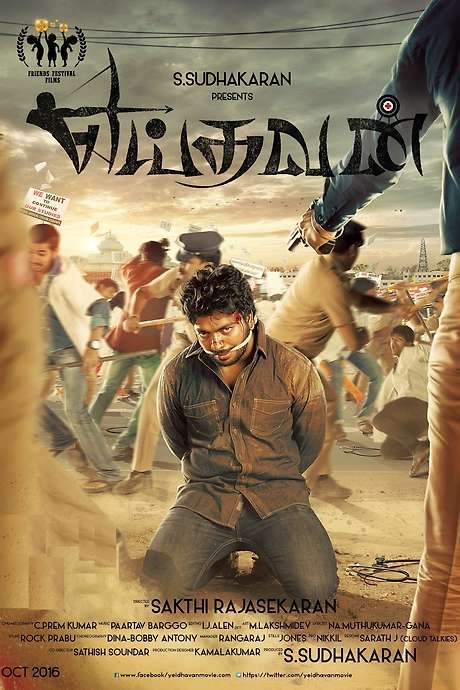
PRV Veerapandiyan, alias PRV, is an influential figure in the Ramanathapuram district who steers a sprawling set of businesses that reach from the bustling heart of Rameswaram to far-flung corners of the region. PRV is portrayed by Samuthirakani. He parented four sons—Ramachandran, Sivachandran, Jayachandran, and Ravichandran, known as Ravi—each grown into their own roles within the family business. Ravi loves his brothers deeply, but the dynamics within the clan are complicated: his three elder brothers regard him as their half-brother, a status that quietly colors their interactions and decisions. The trio keep most of the main operations, while Ravi tends to the less glamorous side—lower-income properties and the buses that shuttle people around their network.
Long before the present-day struggles, Samuthiram, PRV’s old confidant from their days in Rameswaram, becomes a pivotal figure in this tale of loyalty, ambition, and revenge. Samuthiram carries a grave grievance: the death of his younger son Pandi, a tragedy he holds against PRV’s family. The twin strands of vengeance and justice collide when Pandi kills Ravi’s classmate by hurling him off the Ramanathapuram-Rameswaram Pamban bridge. Legal channels narrow the path to justice, and Ravi, a classmate of the victim, pursues the case until Pandi is arrested. A fragile truce is proposed by Samuthiram in a private meeting with PRV, but the elder brothers refuse to accept such a settlement because the victim belonged to a different caste. The family’s refusal to honor the truce sets off a chain of violent encounters: during a confrontational meeting between the two families, Pandi tries to shoot Ravi; in response, Thiyagarajan takes matters into his own hands and kills Pandi. The next day, Lingam—who will later become a central figure in the feud—escapes from the act of vengeance by dragging Thiyagarajan into the sea, earning his own seven-year imprisonment for the murder.
Amidst these bloodlines, Ravi also discovers a personal thread of happiness: he falls for Jebamalar, who reciprocates his feelings. The peace of this romance is short-lived but seeds an intricate web of loyalties and conflicts that will ripple through the family. When Lingam is released from prison, Ravi realizes that Lingam’s return is not a mere reunion but a looming threat to his entire family. To protect them, Ravi quietly moves to shield his kin, knowing that Lingam’s hunger for revenge runs deeper than a simple disagreement.
Complications multiply as Ravi learns of a growing relationship involving his half-niece, Ramachandran’s daughter Selvi—known as Paappa—and a Muslim boy named Raheem. Ravi accepts this romance, urging Paappa to tread carefully rather than making impulsive decisions. Yet Paappa’s wish to elope with Raheem takes flight with the help of Jebamalar, drawing sharp condemnation from the caste-fanatic elders who blame Ravi for not acting quickly enough. The family fractures at the funeral of PRV: Ravi’s half-brothers bar him from seeing his father for one last time, while Lingam and Samuthiram are allowed to pay their respects. The emotional weight of the moment underscores the fault lines within the family, and Muthaaram—PRV’s second wife—finds the situation utterly intolerable, hurling accusations at her stepsons.
The pressure breaks the veneer of harmony when Ramachandran orders Paappa’s death in an attempt to safeguard his own honor and status after a blow to the family’s standing. This harsh act pushes Ravi to the edge, and he resolves to take matters into his own hands to locate Paappa. After a long, arduous search, Ravi finds Paappa in Nagore, but Raheem has gone missing. He brings Paappa home, only to confront Ramachandran, who makes a brutal attempt to kill her in a misguided bid to restore the family’s honor. Ravi intervenes, stopping Ramachandran and making it clear that the only way forward is to save the family, not to erase it.
With the crisis intensifying, Ravi’s brothers form a tenuous alliance with Lingam in a bid to exterminate Ravi and his immediate household. The plot against him heats up as Lingam’s men close in, cruelly targeting Paappa and Muthaaram. Yet Ravi’s determination does not waver. He tracks down Raheem, who Lingam had kidnapped, and reunites Raheem with Raheem’s parents, restoring a fragile sense of balance to the household.
One night, Lingam’s assault comes for Ravi’s family while he is away. Paappa and Muthaaram fight to stop the intruders, but Lingam’s intrusion leaves them injured and hospitalized. In a moment of raw truth, Ravi reveals that he has chosen to sever ties with the family that once denied him belonging. The admission is heavy with grief and consequence, and Ramachandran begins to feel the weight of the rift he has caused. Yet forgiveness begins to glimmer as a reconciliation slowly surfaces between Ravi and Ramachandran, hinting at the possibility of rebuilding trust.
The conflict takes a brutal turn when Lingam abducts Jayachandran’s child, a move that pushes Samuthiram to the brink. Samuthiram, angered by Lingam’s willingness to harm a child rather than confront the brothers directly, interrupts Lingam’s plan long enough for Paappa to escape with Samuthiram’s intervention. Ravi rushes to the island where Lingam confronts him in a dramatic showdown. The two men clash in a struggle for the family’s fate, and Ravi gains the upper hand, eventually deciding to spare Lingam because he is about to become a father himself. This act of restraint marks the turning point that ends the long-running feud.
In the aftermath, Paappa and Raheem are reconciled with Ramachandran, and the PRV brothers come to terms with Ravi as their brother. The film closes on a note of tentative harmony: a family fractured by caste and vengeance has found a path toward unity, with Ravi stepping firmly into a role of belonging among his brothers that had seemed out of reach for so long. The narrative emphasizes forgiveness, the heavy cost of pride, and the possibility of rebuilding bonds when love, loyalty, and courage converge to override centuries of grievance.