


Plot Explained Spoilers guaranteed!
Plot Explained

Browse by genre

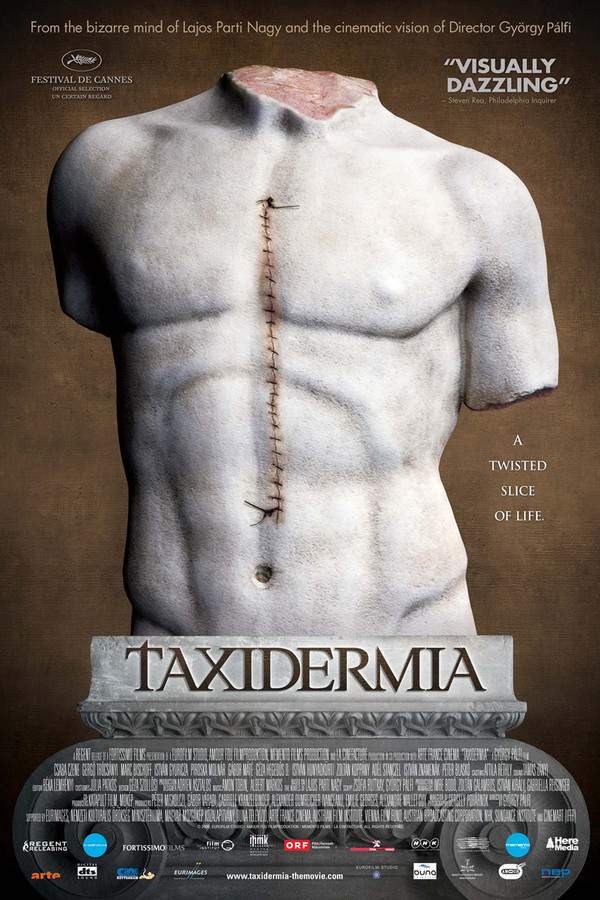
Taxidermia (2009) movie poster

Characters & Themes

Taxidermia (2009) Characters, Setting & Themes Explained

Release, runtime and language
2009 · 91 min · Hungarian
Directed by
György Pálfi

Three generations of men are portrayed with unusual obsessions and desires. The grandfather is consumed by recollections of war, while the father compulsively overeats in a desperate pursuit of accomplishment. His son, however, seeks an unattainable ideal of lasting perfection through the art of taxidermy, attempting to preserve life in a static, eternal form.

On this page (7)
  1. 1 Where to watch
  2. 2 Characters explained (4)
  3. 3 Where & when it takes place
  4. 4 Themes & meaning (3)
  5. 5 Character & meaning questions
  6. 6 Movie threads
  7. 7 Every angle

Where to watch

Where to Watch Taxidermia (2009)

Where can you watch Taxidermia? Stream, rent or buy it in the US, including on Here TV: current JustWatch availability with up-to-date prices.

Streaming availability powered by JustWatch

4 main characters · contains spoilers

Taxidermia Characters Explained: Who Is Who

The main characters of Taxidermia (2009), heroes and villains: what drives them, how they change over the course of the story and what each of them reveals about the film's bigger ideas.

  • Morosgoványi Vendel

    Morosgoványi Vendel is a character trapped in despair and oppression at a military outpost. His life is filled with humiliation, leading him to escape into vivid fantasies. Ultimately, his tragic demise serves as a catalyst for the twisted legacy that follows.

    • 😞 Tragedy
    • ⚔️ Oppression
  • Öreg Balatony Kálmán

    Öreg Balatony Kálmán is a tyrannical officer whose cruelty shapes the lives around him. His oppressive nature leaves a profound impact on Vendel and later his own son, as he raises Kálmán in a restrictive and grotesque environment.

    • 👮 Tyranny
    • 🤴 Authority
  • Balatony Kálmán

    Balatony Kálmán distinguishes himself as a speed-eating champion, driven by his ambition and influenced by generational pressures. His journey is marked by intense training and personal conflicts as he navigates the perils of fame and family expectations.

    • 🥇 Aspiration
    • 🍔 Competition
  • Balatony Lajoska

    Balatony Lajoska serves as a poignant contrast to his parents, embodying the struggles of living within a dysfunctional family. His frail demeanor juxtaposes their corpulence and leads him to a tragic end, marking the film's descent into the absurd.

    • 🧑‍🎨 Artistry
    • 🚶‍♂️ Resilience

Last updated: October 22, 2024 at 21:35

Was this helpful?

Setting

Where and When Does Taxidermia Take Place?

The setting of Taxidermia (2009): the year and time period, the places and locations, and how they shape the characters, the mood and the tension of the story.

Time period

The movie spans several years and focuses on distinct generations, highlighting the transformative socio-cultural changes in Hungary over time. The timeline encapsulates a blend of personal struggles and shifts in societal norms, culminating in a surreal and absurd climax.

Location

Hungary, Military Outpost

The movie takes place in a desolate military outpost in Hungary, characterized by its oppressive atmosphere and harsh living conditions. It serves as a backdrop for the exploration of themes like misery and survival, as the characters navigate their difficult lives in this constrained environment.

  • 🪖 Military
  • 🌄 Location

Last updated: October 22, 2024 at 21:35

Was this helpful?

3 major themes

Taxidermia Meaning: Themes & Message Explained

What is Taxidermia (2009) really about? The emotional, social and philosophical themes the film keeps returning to, its symbolism and the message beneath the surface.

  • Death & Morbidity

    The film explores themes of death and morbidity, as seen through the grotesque fate of several characters. Lajoska's journey culminates in a shocking act of self-taxidermy that emphasizes the absurdity of life and death, blurring the lines between reality and macabre fantasy.

  • Consumption

    Consumption plays a significant role in the narrative, illustrating the characters' relationships with food, body image, and societal pressure. Kálmán's obsession with speed-eating reflects not just a sport but a form of excess that impacts family dynamics.

  • Surrealism

    The film employs surreal and absurdist elements to convey its themes. The drastic shifts between reality and fantasy highlight the characters' psychological struggles, showcasing bizarre scenarios that force viewers to confront uncomfortable truths about life.

Last updated: October 22, 2024 at 21:35

Was this helpful?

Character & theme questions

Taxidermia Characters & Meaning: Your Questions Answered

The questions people ask about Taxidermia (2009): who the characters really are, their relationships, what the symbols mean, where it takes place and what the movie is really about. Each answer contains spoilers.

Q1

Where is the story set?

The film takes place in a desolate military outpost in Hungary, characterized by its oppressive atmosphere and harsh living conditions. This grim setting serves as the backdrop for exploring themes of misery and survival, with the constrained environment reflecting the characters' psychological states.

  • hungary
  • military outpost
  • setting
  • desolate
Q2

What time period does the movie cover?

The movie spans several years across distinct generations, highlighting transformative socio-cultural changes in Hungary. While no specific era is named, the narrative tracks the generational shifts from the grandfather's war memories through to the son's era.

  • time period
  • hungary
  • generations
  • history
Q3

What does taxidermy symbolize in the film?

Taxidermy represents an unattainable quest for lasting perfection and eternal preservation. The son's obsession with preserving life in static form embodies the film's exploration of humanity's futile attempts to defeat death and capture permanence, ultimately leading to the absurd act of self-taxidermy.

  • taxidermy
  • preservation
  • perfection
  • death theme
Q4

How does the film explore death and morbidity?

Death and morbidity are central themes, with the film presenting grotesque fates for several characters. The story culminates in Lajoska's shocking act of self-taxidermy, which blurs the lines between reality and macabre fantasy, emphasizing the absurdity of life and death.

  • death
  • morbidity
  • self-taxidermy
  • macabre
Q5

What role does consumption play in the story?

Consumption is a major theme reflecting characters' relationships with food, body image, and societal pressure. Kálmán's speed-eating obsession represents not just a competitive sport but a form of excess that damages family dynamics and serves as a coping mechanism for deeper personal struggles.

  • consumption
  • food
  • speed eating
  • obesity
  • excess
Q6

Why does the film use surrealist and absurdist elements?

The film employs surreal and absurdist elements to convey psychological struggles and confront uncomfortable truths. The drastic shifts between reality and fantasy showcase the characters' distorted mindsets, with bizarre scenarios serving as metaphors for their obsessions and inner turmoil.

  • surrealism
  • absurdist
  • fantasy
  • reality
  • psychological
Q7

Who are the main characters?

The film follows three generations of men: the grandfather Vendel, trapped in despair at a military outpost; his son Kálmán, a tyrannical speed-eating champion; and Kálmán's son Lajoska, a frail young man drawn to taxidermy as a quest for permanence.

  • characters
  • vendel
  • kálmán
  • lajoska
  • generations
Q8

Who is Morosgoványi Vendel?

Morosgoványi Vendel is the first generation depicted in the film, a soldier trapped in despair at a Hungarian military outpost. His life is filled with humiliation, leading him to escape into vivid fantasies. His tragic demise serves as the catalyst for the twisted legacy that follows in subsequent generations.

  • vendel
  • soldier
  • military
  • fantasies
  • despair
Q9

Who is Balatony Kálmán?

Balatony Kálmán is the second generation, a speed-eating champion whose ambition is shaped by generational pressures. His intense training and pursuit of fame in competitive eating reflect his drive to accomplish something significant, though this obsession comes at a great personal and family cost.

  • kálmán
  • speed eating
  • champion
  • ambition
  • competition
Q10

Who is Balatony Lajoska?

Balatony Lajoska represents the third generation, serving as a poignant contrast to his corpulent parents. His frail demeanor and dysfunctional family background lead him to seek meaning through taxidermy, ultimately resulting in his tragic and absurd end.

  • lajoska
  • frail
  • taxidermy
  • family
  • tragic
Q11

What connects the three generations of men?

Each generation is defined by an unusual obsession: the grandfather by war trauma and fantasy, the father by competitive eating, and the son by taxidermy. This pattern of obsessive behavior suggests a cyclical legacy of attempting to find meaning or permanence through extreme pursuits.

  • generations
  • obsession
  • legacy
  • cycle
  • pattern
Q12

What is the tone and genre of the movie?

Taxidermia is a dark dramatic horror with comedic elements, characterized by unrelenting grimness and disturbing imagery. The tone consistently explores obsession and futility without relief or redemption, using dark absurdity to address uncomfortable truths about human nature.

  • tone
  • genre
  • dark
  • horror
  • comedy
  • absurd

Movie threads

More Movies Like Taxidermia, by Mood & Story

Curated lists built around what makes Taxidermia tick: the same mood, the same kind of story or the same emotional payoff. Each list explains why these movies belong together.

Movies with grotesque body horror and surreal themes like Taxidermia

Surreal films where the human body becomes a canvas for obsession and decay. Discover movies like Taxidermia that explore the grotesque and surreal relationship between the physical body and psychological turmoil. These films often use shocking imagery and body horror to depict obsession, decay, and the darkly absurd corners of human experience.

  • grotesque
  • surreal
  • unsettling
  • macabre
  • absurd
  • body horror
  • Tone: dark, surreal, macabre
  • Pacing: steady, methodical
Why these movies?

The story pattern: Stories in this thread often feature characters whose physical transformations or obsessions reflect their internal struggles. The narrative progresses through surreal and symbolic events, leading to conclusions that are as bleak as they are inevitable, emphasizing the futility or tragedy of the characters' pursuits.

Why they belong together: Movies are grouped here for their shared commitment to using the grotesque and the bodily as a primary narrative device. They create a cohesive experience through a dark, surreal tone, high intensity, and a thematic focus on the physical manifestations of psychological despair.
Multi-generational stories of trauma and obsession like Taxidermia

Multi-generational stories where family legacies of obsession lead to bleak ends. If you liked the multi-generational structure of Taxidermia, explore these films that delve into family legacies of trauma, obsession, and futility. These complex narratives show how the sins and struggles of the past manifest in the lives of descendants, often leading to bleak outcomes.

  • grim
  • oppressive
  • desperate
  • tragic
  • family legacy
  • generational
  • Tone: grim, bleak, desperate
  • Pacing: steady, epic
Why these movies?

The story pattern: The narrative pattern follows a family across decades, with each generation inheriting and reinterpreting the same core flaws or traumas. The structure is often deliberate and steady, allowing the full weight of the legacy to accumulate, culminating in an ending that feels both shocking and fated.

Why they belong together: These films are united by their structural ambition and thematic depth, using the multi-generational framework to explore cycles of despair. They share a complex narrative, a bleak tone, and a heavy emotional weight, creating a powerful sense of inevitability and tragic legacy.

Every angle

Taxidermia (2009) Explained: Plot, Timeline & Characters

Everything about Taxidermia in one place: what happens in the plot summary, the timeline in chronological order, the characters and meaning and a spoiler-free summary. What's After the Movie adds the cast, box office and post-credit scenes.

Coming soon on iOS and Android

The Plot Explained Movie Summary App

Plot summaries, endings explained and timelines on your phone. Catch up on any movie in minutes, save your favorites and never miss a twist again.

Be the first to know when we launch. Your email stays private, always.

Learn more about the app