Plot Explained Spoilers guaranteed!
Plot Explained

Browse by genre

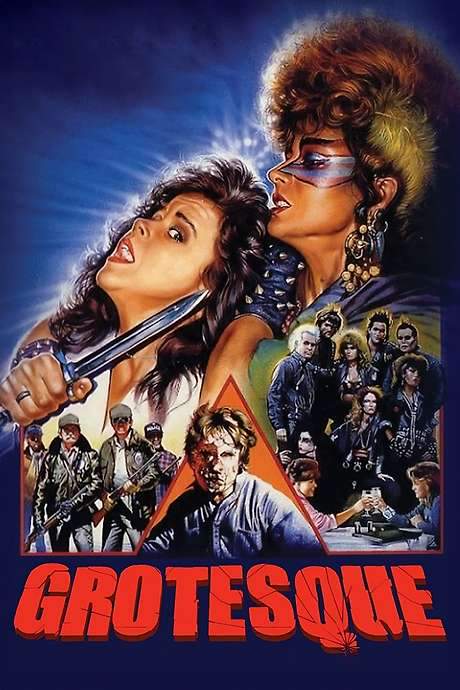
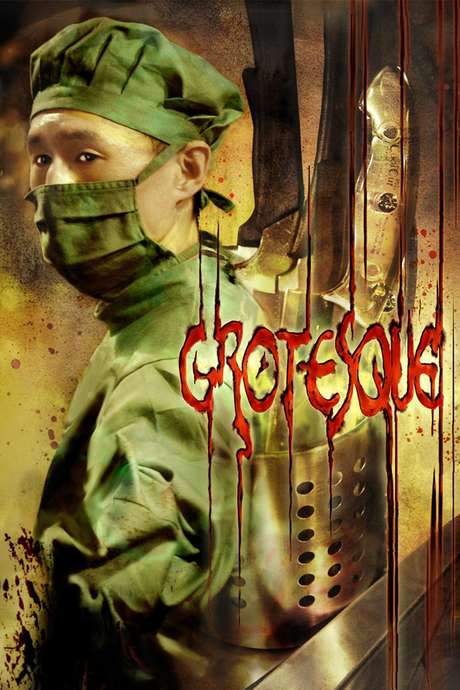
Grotesque (2009) movie poster

Plot Summary

Grotesque (2009) Plot Summary Explained

Release, runtime and language
2009 · 73 mins · Japanese
Loading streaming availability…
Directed by
Koji Shiraishi
Starring
Hiroaki Kawatsure, Shigeo Ôsako, Tsugumi Nagasawa

An unnamed doctor, accustomed to having everything he desires, finds his cravings turning increasingly extreme and depraved. He kidnaps a young couple in the prime of their lives, forcing them into a sadistic game of torment that steadily erodes their hope for survival, as each cruel trial pushes them toward utter despair.

On this page (6)
  1. 1 Where to watch
  2. 2 What happens: full plot
  3. 3 Plot questions answered
  4. 4 Movie threads
  5. 5 Movies like Grotesque
  6. 6 Every angle
Loading streaming availability…

Full plot summary · contains spoilers

What Happens in Grotesque: Full Plot Summary

The whole story of Grotesque (2009) explained, from the opening scene to the final frame: every key event, every twist and what it all adds up to. Read it as a quick recap before the sequel, to check a scene you missed, or to finally understand what really happened.

On a tense first date, Aki Miyashita and Kazuo Kojima are abruptly abducted from the street and wake up shackled in a basement whose walls are covered in plastic. A sadistic, enigmatic man takes pleasure in degrading, torturing, and mutilating them, all while maintaining a chilling air of calm sophistication. He punctures, severs, and maims in a calculated sequence, inflicting pain that is intense and controlled, yet he periodically switches to moments of unsettling medical care to prolong their lives for his own disturbing purposes. The torment is brutal and methodical, done with a doctor’s precision and a taste for refinement—he is wealthier and more cultured than his actions would ever suggest, preferring classical music, fine wine, and elegant clothes, with a rotting odor lingering behind his polished exterior.

The captor’s routine alternates between abuse and care, and the pair gradually realize he possesses professional medical training and meticulous habits. He relocates them to a space that resembles a modern, pristine hospital room, where the “doctor” tends to their wounds and speaks with unsettling courtesy about his wealth and future plans. Throughout this ordeal, the couple clings to each other, trying to interpret his motives and seek any possible chance of escape, while the man catalogs every detail of their lives and their relationship as if studying them for a perverse form of gratification.

Eventually, the captor proposes a final, perverse test of love. He suggests that if they can win their freedom by meeting an impossible set of demands, they will be released and he will surrender his fortune as compensation for the suffering inflicted. The plan hinges on an extreme act of endurance and sacrifice, and the tension peaks as the couple confront the reality that their only hope lies in mutual trust and stubborn resolve to endure.

Tragically, the ordeal ends in tragedy. Kazuo succumbs to injuries and exhaustion before the doctor’s final manipulation seals the outcome, and Aki is killed in the climactic confrontation. In the somber epilogue, the killer—who survives despite his grave actions—returns to the road, appearing composed and perfume-scented as he resumes his hunt for another victim. The bodies are finally laid to rest in the quiet forest, their burial marked by the simple presence of a pair of scissors placed atop their graves, a stark symbol of the twisted ritual he has carried out.

The aftermath hints at a chilling endurance of the predator, who remains alive, restless, and ready to seek his next target, even as the world moves forward. This harrowing tale centers on power, control, and the fragile bond between two people who face an unthinkable test together, only to be undone by a calculating, refined killer whose true nature remains hauntingly calm and seemingly unstoppable.
Last updated: October 07, 2025 at 08:26

Was this helpful?

Plot questions answered

Grotesque Plot Explained: Your Questions Answered

The questions people ask most about Grotesque (2009): what happens in the confusing scenes, why the characters do what they do, the twists, hidden details and what the ending means. Each answer contains spoilers.

Q1

Why does the doctor kidnap and torture the couple?

The doctor is driven by extreme sadistic impulses and a compulsion for total control over his victims. He treats the entire ordeal as a perverse psychological study, cataloging every detail of their lives and relationship for his gratification. His refined taste in classical music, wine, and fashion contrasts with his brutal actions, revealing a calculated predator who derives pleasure from both physical torment and mental domination.

Foreshadowing: From the start, his polished appearance and calm demeanor hint at a deeply disturbed psychological profile.

  • doctor motives
  • sadistic killer
  • torture reasons
  • psychological horror
Q2

Why does the doctor alternate between torturing them and caring for their wounds?

The doctor uses his professional medical training to prolong their suffering intentionally. By tending to their wounds between torture sessions, he keeps them alive and conscious specifically so they can experience more pain. This cycle of abuse and false compassion reflects his twisted desire to maintain complete psychological control, he plays the roles of both attacker and savior.

Foreshadowing: Early on, he demonstrates medical precision while inflicting injury, establishing his dual nature.

  • medical torture
  • alternating abuse
  • prolonging suffering
  • psychological manipulation
Q3

What is the final test the doctor proposes?

The final test is a cruel, near-impossible challenge designed to break their bond. The doctor tells them they can earn freedom if Aki can cut her own ropes while Kazuo attempts to reach her under extreme conditions. The setup is engineered to be virtually impossible, exposing the predator's twisted rules where escape was never truly offered, only the illusion of hope.

Foreshadowing: His earlier pattern of offering false promises establishes that this final test is another manipulation.

  • final test
  • impossible challenge
  • escape game
  • love test
Q4

Why does the doctor offer them freedom and his fortune?

The offer is a psychological manipulation tactic rather than genuine remorse. By promising wealth and release, he creates false hope that makes their eventual suffering more devastating when he inevitably breaks the promise. The entire proposal serves to deepen their despair and exert final control over their emotional state.

Foreshadowing: His calm sincerity during the offer contrasts with his earlier brutality, revealing his deceptive nature.

  • false promise
  • manipulation
  • fortune offer
  • psychological trap
Q5

How do Aki and Kazuo die in the climax?

In the climactic confrontation, Aki is killed after she defiantly insults the doctor, provoking his rage. Kazuo, still alive, manages to stab the doctor in a final act of resistance but succumbs to his injuries shortly after. Both victims die, their attempt to escape ends in tragedy, though Kazuo's final blow leaves the doctor wounded.

Foreshadowing: The escalating tension throughout the captivity builds toward this violent confrontation.

  • climax death
  • Aki dies
  • Kazuo dies
  • final confrontation
Q6

Why does the doctor bury the couple and leave scissors on their graves?

The burial follows traditional Japanese methods, showing the doctor's distorted sense of ritual. The scissors placed on their tombs serve as a symbolic reminder of his twisted game, they represent the tools of their ordeal and his continued dominance even after death. This ritualistic act underscores the methodical, ceremonial nature of his violence.

Foreshadowing: His earlier attention to detail and refined tastes hint at this ritualistic behavior.

  • burial
  • scissors symbol
  • ritual
  • japanese tradition
Q7

Does the doctor die at the end?

No, the doctor survives. In the epilogue, he is shown moving with difficulty after being stabbed by Kazuo, but he recovers enough to bury the couple and continue his predatory activities. His survival emphasizes the bleak tone of the film, justice is denied, and the killer remains a threat.

Foreshadowing: His clinical precision in tending to wounds earlier suggests he's skilled at survival.

  • doctor survival
  • killer lives
  • no justice
  • bleak ending
Q8

What happens in the final scene? Does the doctor get another victim?

After burying the couple, the doctor returns to his car, using perfume to mask his rotting scent. He then spots a young girl walking by and pursues her, resuming his hunt. The screen cuts as he goes after his next target, confirming the cycle of violence continues with another innocent victim.

Foreshadowing: His earlier pattern of returning to predation after each ordeal establishes this repetition.

  • ending scene
  • next victim
  • cycle of violence
  • continued predation
Q9

Why is the doctor so calm and refined despite his brutal actions?

The doctor's calmness reflects his calculated, methodical approach to sadism. His refined tastes in classical music, wine, and elegant clothing aren't contradictions but extensions of his personality, he views his torture as an art form. This sophistication makes him more disturbing because he approaches violence with the same precision and appreciation as any cultural pursuit.

Foreshadowing: From his first appearance, his polished exterior contrasts with the brutality, establishing this duality.

  • calm killer
  • refined sadist
  • sophistication
  • dual nature
  • cultured predator
Q10

What keeps Aki and Kazuo hoping throughout their captivity?

Their hope stems from their love for each other and the doctor's false promises of freedom and compensation. They support each other emotionally and vow to stay together once released, using their relationship as a source of strength. However, this hope becomes weaponized against them, the doctor exploits their bond to intensify their psychological suffering.

Foreshadowing: Their genuine connection during the first date establishes their emotional foundation.

  • love and hope
  • couple bond
  • false hope
  • mutual support

Movie threads

More Movies Like Grotesque, by Mood & Story

Curated lists built around what makes Grotesque tick: the same mood, the same kind of story or the same emotional payoff. Each list explains why these movies belong together.

Claustrophobic Captivity Horror Movies like Grotesque

Stories of confinement where survival hinges on a sadistic captor's whims. If you liked the relentless, confined terror of Grotesque, you'll find more movies with a similar vibe here. This list features intense horror and thriller stories where characters are held captive, facing systematic psychological and physical torture from a calculating antagonist in oppressive, claustrophobic settings.

  • claustrophobic
  • sadistic
  • oppressive
  • hopeless
  • captivity
  • torture
  • Tone: dark, bleak
  • Pacing: steady, methodical
Why these movies?

The story pattern: Narratives typically follow a straightforward, linear structure where a captor subjects one or more victims to a series of cruel games or tortures. The focus is on the escalating brutality and the erosion of hope, often culminating in a bleak conclusion that offers no escape or justice.

Why they belong together: Movies are grouped here based on their shared setting of extreme confinement, the central theme of power and control, and an overwhelming mood of sadistic, methodical torment. They deliver a consistently high-intensity, oppressive viewing experience defined by despair.

Movies about Methodical Sadists like the killer in Grotesque

Character studies of calculated cruelty and the psychology of a tormentor. For viewers who found the doctor's chilling calmness in Grotesque compelling, this list gathers similar movies centered on methodical and psychologically driven villains. These films explore the depths of sadism through characters who orchestrate torment with precision, resulting in a dark, heavy, and intellectually disturbing experience.

  • sadistic
  • methodical
  • psychological
  • cold
  • calculating
  • villain-centric
  • Tone: dark, clinical
  • Pacing: steady, calculated
Why these movies?

The story pattern: The narrative pattern is often villain-centric, following the antagonist's meticulously planned actions as they test the limits of their victims and their own depravity. The plot is a steady, calculated progression of cruelty, emphasizing the 'game' or 'experiment' aspect over chaotic violence, leading to an inevitable conclusion of absolute despair.

Why they belong together: These films are united by their focus on a specific type of antagonist: the intelligent, calm, and methodical sadist. The similarity lies in the tone—clinical and dark—and the pacing, which is steady and deliberate, making the cruelty feel even more impactful and horrifying.

If you liked this

Movies Like Grotesque

Similar movies to Grotesque: the same genre, themes or kind of story. Each one comes with its own plot summary, timeline and ending explained.

Browse all movie summaries

Every angle

Grotesque (2009) Explained: Plot, Timeline & Characters

Everything about Grotesque in one place: what happens in the plot summary, the timeline in chronological order, the characters and meaning and a spoiler-free summary. What's After the Movie adds the cast, box office and post-credit scenes.

Coming soon on iOS and Android

The Plot Explained Movie Summary App

Plot summaries, endings explained and timelines on your phone. Catch up on any movie in minutes, save your favorites and never miss a twist again.

Be the first to know when we launch. Your email stays private, always.

Learn more about the app