Plot Explained Spoilers guaranteed!
Plot Explained

Browse by genre

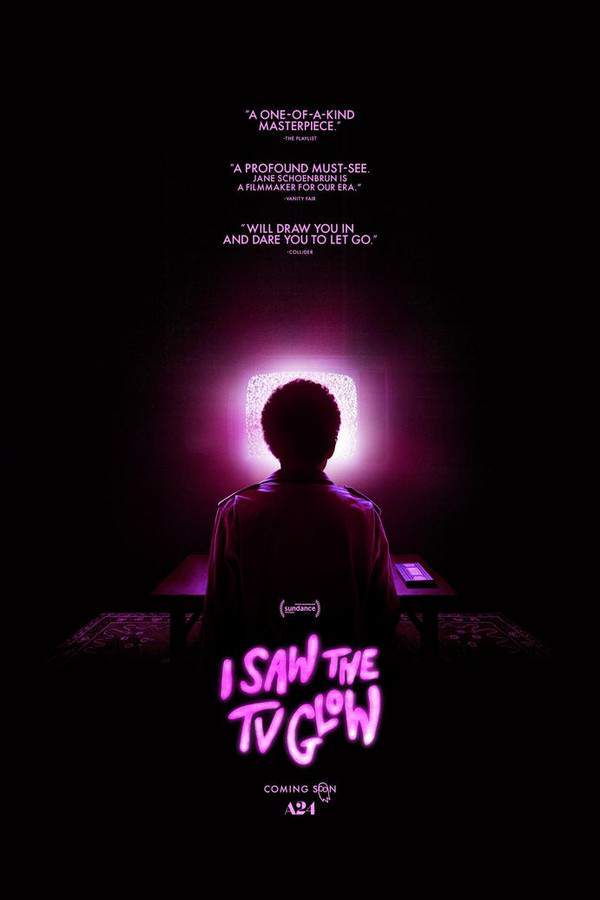
I Saw the TV Glow (2024) movie poster

Plot Summary

I Saw the TV Glow (2024) Plot Summary & Ending Explained

Release, runtime and language
2024 · 1 h 40 m · English
Echo score 70
Loading streaming availability…
Directed by
Jane Schoenbrun
Starring
Justice Smith, Elizabeth Scopel, Conner O'Malley, Danielle Deadwyler, Albert Birney, Helena Howard
Budget
$10M

A teenager named Owen finds his perception of reality unraveling as he becomes increasingly obsessed with a mysterious late-night television program. The show’s unsettling imagery and cryptic messages seem to bleed into his everyday life, blurring the line between the real world and a disturbing alternate reality. As Owen’s connection to the program deepens, he descends into a state of uncertainty and escalating fear.

On this page (7)
  1. 1 Where to watch
  2. 2 What happens: full plot
  3. 3 Plot questions answered
  4. 4 How it ends
  5. 5 Movie threads
  6. 6 Movies like I Saw the TV Glow
  7. 7 Every angle
Loading streaming availability…

Full plot summary · contains spoilers

What Happens in I Saw the TV Glow: Full Plot Summary

The whole story of I Saw the TV Glow (2024) explained, from the opening scene to the final frame: every key event, every twist and what it all adds up to. Read it as a quick recap before the sequel, to check a scene you missed, or to finally understand what really happened.

In 1996, a timid seventh grader named Owen found an unexpected connection with Maddy, a ninth grader, when he stumbled upon her deeply engaged in an episode guide for the young adult show "The Pink Opaque." The series depicted the psychic journeys of Isabel and Tara, as they battled against the sinister forces commanded by the shadowy figure known as Mr. Melancholy. Captivated by the allure of the show, Owen seized the opportunity to sneak over to Maddy's house to watch an episode with her and her friend Amanda.

However, just two years later, tragedy struck when Owen faced the grim reality of his mother Brenda battling a terminal illness. With his father's disapproving views on "The Pink Opaque," dismissing it as a mere "show for girls," and an early bedtime curfew weighing down on him, Owen struggled to keep up with the series. Maddy, in a display of compassion, began recording episodes for Owen, ensuring he wouldn’t miss a single moment.

As his mother's condition deteriorated, Owen became increasingly isolated, unable to share his love for the series with anyone, including his father Frank. This loneliness triggered him to reach out to Maddy; she confided her own pain, revealing the harsh rumors that had marginalized her at school—a false allegation concerning Amanda. When Owen confronted his own feelings, he admitted to Maddy that he was uncertain about his sexual identity, hinting at the turmoil brewing within him. Meanwhile, Maddy faced her own demons, enduring abuse from her stepfather.

Time marched on, bringing Owen more heartache with his mother's passing and the abrupt cancellation of "The Pink Opaque" after five seasons, leaving him to grapple with the bittersweet transience of joy. A decade later, still under his father's oppressive presence, Owen worked at a local theater to survive. When Maddy appeared once more, her tear-smeared face told a story of despair as she shared her aspirations to leave her troubled past behind. Yet, as fate would have it, Owen faltered and she slipped away into the night.

Years dragged on, suffocating Owen under the weight of his monotonous life. One pivotal evening, Maddy returned, beckoning him back to the enchanting realm of "The Pink Opaque." This encounter reignited memories of the show’s devastating finale, where Owen realized his own mortality and the urgent need to confront reality. As the credits rolled, desperation consumed him as he thrust his head through the TV screen in a fervent plea for liberation from his dreary existence. Frank rushed to rescue him, only for Owen to scream, “This isn't my home! You're not my father!” before regurgitating luna juice, echoing the dark magic that had ensnared Isabel and Tara in the show’s closing moments.

The haunting solitude of her troubled past lingered with Maddy in arid Phoenix, Arizona, as she sought refuge amidst the banalities of a mall job. In a moment of desperation, she devised a chilling plan to pay an unidentified figure to bury her alive, an act of rebirth that would ultimately transform her consciousness into Tara. She insisted that their current predicament was merely an ephemeral moment in Mr. Melancholy's mysterious midnight realm, where time’s grasp contorted the mind.

With unwavering resolve, Maddy returned to save Owen from a fate similar to hers. Yet, her earnest pleas fell on deaf ears as he reconfirmed his retreat from vulnerability, leaving her in perpetual obscurity. The uncertainty of what lay ahead haunted him, whispering promises of an alternate existence, almost within reach.

Time proved to be merciless; it soon claimed Frank after a debilitating stroke, leaving Owen to live on in the shadows of memories within their family home. He claimed to have discovered solace in this new phase of life, adorned with the innocence of children. Amidst the monotony of working at a family entertainment center, he stumbled upon "The Pink Opaque" on a streaming platform, only to find it had devolved into a quaint and childish rendition.

Two decades elapsed, leaving Owen’s body weary from chronic asthma and the heavy burden of sorrow. During a birthday occasion at the same entertainment center, the emotional dam within him burst, revealing a soul grappling with mortality, expressing his fears of succumbing to death itself. As he cried out, his pleas were met with unsettling indifference from the guests and co-workers. In a state of despair, he isolated himself in the bathroom, resorting to self-mutilation, revealing a glowing TV screen nestled within his chest.

Embracing his grotesque fixation, Owen emerged from the shadows, offering insincere apologies for his outburst, attributing it to recent medication changes. Unaware of his profound struggle, the partygoers continued their festivities, leaving Owen to face the abyss that enveloped his existence.

Last updated: November 17, 2024 at 15:45

Was this helpful?

Plot questions answered

I Saw the TV Glow Plot Explained: Your Questions Answered

The questions people ask most about I Saw the TV Glow (2024): what happens in the confusing scenes, why the characters do what they do, the twists, hidden details and what the ending means. Each answer contains spoilers.

Q1

Why does Owen scream "This isn't my home! You're not my father!"

Owen screams this during his psychological break because the fictional show "The Pink Opaque" has completely consumed his sense of reality. After watching the devastating finale where characters escape by entering the TV, Owen desperately tries to break through his own screen, believing he can escape his bleak life. The phrase represents his genuine belief that his real self belongs in the show's world, not in his father's oppressive household. He literally regurgitates luna juice (the magical substance from the show), confirming his psychological fusion with the show's mythology.

Foreshadowing: The show's finale, which Owen watches just before this moment, depicts Isabel and Tara escaping reality by entering the TV, directly inspiring his attempt.

  • owen
  • frank
  • father
  • breakdown
  • reality escape
  • pink opaque
Q2

Why does Maddy plan to bury herself alive?

Maddy plans to bury herself alive in Phoenix as a deliberate rebirth ritual to transform her consciousness into Tara, one of the main characters from "The Pink Opaque." She believes their current lives are merely an ephemeral moment in Mr. Melancholy's midnight realm, and this literal death will allow her to escape into the show's reality. The plan represents her complete surrender to the show's mythology as a way to escape her troubled past, including abuse from her stepfather and social marginalization.

Foreshadowing: Earlier in the film, Maddy tells Owen that the show's world is more real than their actual lives, establishing her belief system.

  • maddy
  • buried alive
  • phoenix
  • tara
  • rebirth
  • pink opaque
Q3

What does the glowing TV screen in Owen's chest mean?

The glowing TV screen embedded in Owen's chest is a literal physical manifestation of how completely "The Pink Opaque" has consumed his being. It symbolizes that he can no longer distinguish between reality and the show - the show literally lives inside him now. This disturbing image represents the final stage of his psychological dissolution, where escapism has mutated into a grotesque physical transformation with no possibility of escape or catharsis.

Foreshadowing: Owen's earlier attempt to thrust his head through the TV screen during his mental break foreshadows this complete fusion.

  • owen
  • chest
  • tv
  • glowing
  • ending
  • symbolism
Q4

What is "The Pink Opaque" show about?

"The Pink Opaque" is a fictional young adult show that aired for five seasons, featuring the psychic journeys of two girls, Isabel and Tara, as they battle against sinister forces commanded by Mr. Melancholy. The show involves magical elements like luna juice and creates a mythology where characters can escape their reality by entering the TV. It serves as both an actual show within the film and a metaphor for escapism and alternate realities.

Foreshadowing: The show's premise of characters escaping their world through the TV directly parallels Owen and Maddy's desires.

  • pink opaque
  • show
  • isabel
  • tara
  • mr melancholy
  • luna juice
Q5

Why does Owen become so obsessed with "The Pink Opaque"?

Owen becomes obsessed with "The Pink Opaque" because it represents an escape from his difficult reality. As a timid teenager, he finds a genuine connection with Maddy through the show while dealing with his mother's terminal illness, his father's disapproval, and his own struggles with sexual identity. The show becomes his sole source of joy during profound personal loss, and this obsession deepens over decades as a coping mechanism against his monotonous, oppressive life.

Foreshadowing: Owen's initial bonding with Maddy over the show in 1996 establishes its role as his primary emotional refuge.

  • owen
  • obsession
  • escapism
  • childhood
  • maddy
  • pink opaque
Q6

What is luna juice in the movie?

Luna juice is a dark magical substance from "The Pink Opaque" show that appears during the climactic finale. In the show's mythology, characters consume luna juice as part of the process of escaping reality through the TV. When Owen regurgitates luna juice after his breakdown, it signifies that he has physically internalized the show's magic and believes he is undergoing the same transformation the characters experience.

Foreshadowing: The show's finale depicts characters using luna juice to escape, which Owen witnesses just before his breakdown.

  • luna juice
  • pink opaque
  • finale
  • magic
  • mythology
Q7

Why does Maddy want to become Tara from the show?

Maddy wants to become Tara because she sees her current life as a painful trap. She has endured abuse from her stepfather, faced cruel rumors at school, and feels utterly trapped in her circumstances. By believing she can transform into Tara through the burial ritual, she hopes to escape to what she perceives as a more real, meaningful existence within "The Pink Opaque"'s universe. This represents her complete investment in the show as an alternative to her troubled reality.

Foreshadowing: Maddy's earlier statement that the show is "more real" than their lives establishes this desire.

  • maddy
  • tara
  • identity
  • transformation
  • escape
  • pink opaque
Q8

Why does Owen's father hate "The Pink Opaque"?

Owen's father Frank dismisses "The Pink Opaque" as a "show for girls" and enforces an early bedtime curfew that prevents Owen from watching it. This disapproval represents Frank's broader control over Owen's life and his inability to understand his son's needs during the traumatic period of his mother's illness. The conflict symbolizes the broader theme of Owen being trapped by his father's expectations and unable to pursue what brings him genuine joy.

Foreshadowing: This early tension between father and son establishes the oppressive household dynamic that drives Owen toward escapism.

  • frank
  • father
  • disapproval
  • curfew
  • pink opaque
  • control
Q9

Why does the cancellation of "The Pink Opaque" affect Owen so deeply?

The cancellation of "The Pink Opaque" devastates Owen because the show was his primary source of hope and connection during his mother's illness and after her death. Losing the show means losing his main escape from reality and his bond with Maddy. The cancellation coincides with his mother's passing, making it another devastating loss in a short period, reinforcing his sense of abandonment and intensifying his psychological withdrawal.

Foreshadowing: The timing of the cancellation right after his mother's death amplifies its emotional impact.

  • cancellation
  • pink opaque
  • grief
  • loss
  • childhood
Q10

What is Owen's struggle with his sexual identity in the movie?

Owen hints at uncertainty about his sexual identity when he admits to Maddy that he's confused about his feelings. This internal struggle occurs during an already traumatic period of his mother's illness and adds to his sense of isolation. He cannot discuss this with his disapproving father, making Maddy his only confidant. This aspect of his identity contributes to his feeling of being different and trapped, reinforcing his connection to the show as an escape from societal expectations.

Foreshadowing: Owen's admission to Maddy about his confusion occurs during their heart-to-heart about personal struggles.

  • owen
  • identity
  • sexuality
  • confusion
  • maddy
  • isolation
Q11

How does the line between "The Pink Opaque" and reality blur?

The line blurs as Owen's obsession deepens over decades. The show's mythology - particularly the idea that characters can escape into the TV - begins to feel more real to Owen than his own life. By the ending, Owen physically manifests the show inside himself with the glowing TV chest, and he genuinely believes he can escape his reality through the screen, just like the fictional characters. This represents complete psychological dissolution where fiction and reality become indistinguishable.

Foreshadowing: The show's finale directly inspires Owen's attempt to break through his own TV, marking the turning point.

  • reality
  • fantasy
  • blurring
  • psychosis
  • pink opaque
  • escape
Q12

Why does Owen hurt himself at the birthday party?

Owen self-mutilates in the bathroom during a birthday celebration at the family entertainment center because he finally breaks down under the weight of decades of unprocessed grief, loneliness, and existential despair. His bottled-up emotions about his mother's death, his father's control, his missed connection with Maddy, and his fear of mortality overflow. The self-harm represents his final desperate attempt to express the internal pain that has been building throughout his stagnant, oppressive life.

Foreshadowing: His earlier emotional outburst during the party, where he cries about dying, directly precedes this moment.

  • owen
  • self-harm
  • birthday
  • breakdown
  • despair
  • loneliness

Ending explained

What Happens at the End of I Saw the TV Glow?

How I Saw the TV Glow (2024) ends, in short: the final scene, the last twist and what it means for the characters. The full ending explained, with every spoiler, lives on its own page.

Read the full ending explained

In the surreal and dreamlike world of I Saw the TV Glow, the ending is a powerful metaphor for the journey of self-acceptance, especially for someone exploring their gender identity. Owen, who has spent years feeling trapped in a life that doesn’t reflect his true self, finally faces a moment of raw honesty when he cuts open his chest and finds a glowing TV inside him. This haunting image symbolizes that his true identity—the person he’s always been deep down—is still inside, waiting to be acknowledged. It’s a visceral reminder that his truth has never truly left; it’s just been hidden beneath societal expectations and fear.

Owen’s act of opening himself up isn’t just a literal breakdown; it’s a metaphor for the process of self-discovery and coming to terms with one’s identity. The glowing TV inside becomes a beacon of hope, suggesting that there’s still time to embrace who he truly is. Though society’s rejection and internalized shame linger, Owen’s apology to those around him signifies the ongoing struggle and the courage it takes to be authentic. The surreal imagery and ambiguous ending emphasize that the journey toward self-acceptance is ongoing, and that even in the face of despair, recognizing one’s inner truth is an essential step. Ultimately, the film leaves us with a sense of possibility—that within the darkness and confusion, there is a light waiting to be seen and illuminated.

I Saw the TV Glow ending explained in full

Movie threads

More Movies Like I Saw the TV Glow, by Mood & Story

Curated lists built around what makes I Saw the TV Glow tick: the same mood, the same kind of story or the same emotional payoff. Each list explains why these movies belong together.

Movies about reality dissolving obsessions like I Saw the TV Glow

Stories where an obsession blurs the line between reality and fiction. If you liked the psychological unraveling and blurred realities in I Saw the TV Glow, explore more movies where a character's obsession leads to a breakdown of perception. These films often feature lonely protagonists, complex narratives, and a deeply disorienting, melancholic mood.

  • disorienting
  • anxious
  • obsessive
  • melancholic
  • dreamlike
  • claustrophobic
  • Tone: melancholic, disorienting, anxious
  • Pacing: slow, deliberate
Why these movies?

The story pattern: These narratives typically follow a lonely or isolated protagonist as they become consumed by an external influence—be it a TV show, a book, a person, or a belief. The story structure often mirrors the protagonist's mental state, becoming increasingly ambiguous as the boundaries between their internal world and external reality collapse, usually without a clear resolution.

Why they belong together: Movies in this thread share a core thematic focus on identity crisis and the fragility of reality, conveyed through a melancholic tone and slow pacing that allows the psychological unease to build. They connect through their exploration of obsession and the resulting profound alienation.

Bleak and melancholic LGBTQ+ themed movies like I Saw the TV Glow

Quiet, heavy dramas exploring LGBTQ+ identity through a lens of alienation. For viewers who appreciated the heavy emotional weight and queer themes of alienation in I Saw the TV Glow, this collection highlights similar movies. These films often deal with identity crises, isolation, and grief, delivering a poignant, melancholic, and ultimately bleak experience.

  • melancholic
  • lonely
  • oppressive
  • heavy
  • nostalgic
  • alienated
  • Tone: melancholic, bleak, heavy
  • Pacing: slow, contemplative
Why these movies?

The story pattern: The narrative pattern often involves a protagonist grappling with their identity in an environment that is unsupportive or hostile. Their journey is less about triumphant self-discovery and more about the quiet, painful weight of being misunderstood or unable to live authentically, frequently culminating in a bleak or ambiguous ending that underscores their enduring sense of alienation.

Why they belong together: These films are grouped by their shared focus on LGBTQ+ themes explored through a specific emotional filter: a heavy, melancholic tone, slow pacing, and a generally bleak outlook. They resonate through their authentic portrayal of the pain and loneliness associated with identity crises.

If you liked this

Movies Like I Saw the TV Glow

Similar movies to I Saw the TV Glow: the same genre, themes or kind of story. Each one comes with its own plot summary, timeline and ending explained.

Browse all movie summaries

Every angle

I Saw the TV Glow (2024) Explained: Plot, Ending, Timeline & Characters

Everything about I Saw the TV Glow in one place: what happens in the plot summary, the timeline in chronological order, the characters and meaning, the ending explained and a spoiler-free summary. What's After the Movie adds the cast, box office and post-credit scenes.

Coming soon on iOS and Android

The Plot Explained Movie Summary App

Plot summaries, endings explained and timelines on your phone. Catch up on any movie in minutes, save your favorites and never miss a twist again.

Be the first to know when we launch. Your email stays private, always.

Learn more about the app