










Plot Explained Spoilers guaranteed!
Plot Explained

Browse by genre

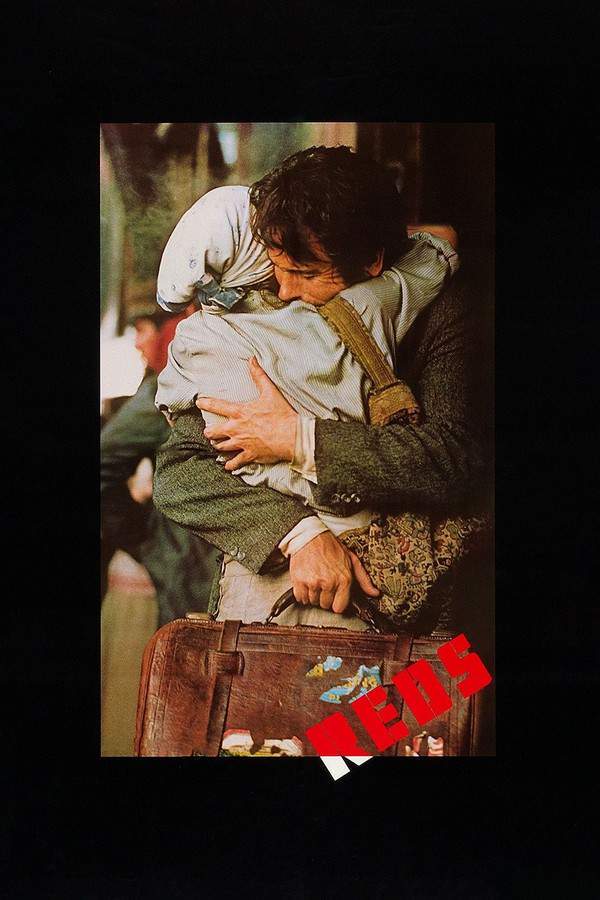
Reds (1981) movie poster

Timeline

Reds (1981) Timeline Explained – Every Event in Order

Release, runtime and language
1981 · 195 min · English
JustWatch #3,832 15
Starring
Diane Keaton, Warren Beatty
Budget
$32M

During the Russian Revolution, American journalist John Reed immerses himself in the events, documenting the upheaval and reporting on the Bolshevik cause. As he chronicles the revolution, he experiences love and loss, and his own political convictions deepen. The film explores themes of idealism, sacrifice, and the profound impact of historical events on individual lives, portraying a pivotal moment in history through the eyes of a passionate observer.

On this page (6)
  1. 1 Where to watch
  2. 2 Events in order (15)
  3. 3 Timeline questions answered
  4. 4 Movie threads
  5. 5 Movies like Reds
  6. 6 Every angle

Where to watch

Where to Watch Reds (1981)

Where can you watch Reds? Stream, rent or buy it in the US, including on MGM Plus, Hoopla and Kanopy: current JustWatch availability with up-to-date prices.

Streaming availability powered by JustWatch

15 events in order · contains spoilers

Reds Timeline: Events in Chronological Order

Every key event of Reds (1981) in order, scene by scene, with when and where it takes place. Use it to untangle flashbacks, time jumps and parallel storylines, to refresh your memory before the sequel or to find the exact scene you are thinking of.

  1. Portland introduction: Bryant meets Reed

    In Portland, Oregon, Louise Bryant, a married journalist and suffragist, attends a lecture by radical journalist John Reed and is captivated by his idealism. They strike up an intense connection when he agrees to an interview that lasts all night. The encounter plants the seed for Bryant's future as a political writer and activist.

    When
    1915
    Where
    Portland, Oregon
  2. All-night interview reveals her calling

    The all-night interview deepens Bryant's sense that writing is her escape and purpose. She comes away convinced that Reed's world of radical ideas is worth pursuing. This moment begins her transformation from domestic life toward political journalism.

    When
    1915
    Where
    Portland, Oregon
  3. Move to Greenwich Village; meeting Goldman and O'Neill

    Bryant moves to Greenwich Village to join Reed and becomes acquainted with a vibrant community of activists and artists. She meets Emma Goldman and Eugene O'Neill, expanding her feminist and radical circles. The cultural energy of the Village reshapes her ambitions.

    When
    1915-1916
    Where
    Greenwich Village, New York City
  4. Provincetown years: writing and theater

    The couple relocates to Provincetown to focus on writing and immerse themselves in the local theater scene. Bryant gains recognition as a feminist and radical writer, while Reed dives into labor activism with the IWW Reds. The seaside town becomes a creative and political hub for them.

    When
    1915-1916
    Where
    Provincetown, Massachusetts
  5. Reed heads to St. Louis for the 1916 Democratic National Convention

    Reed travels to St. Louis to cover the 1916 Democratic National Convention, expanding his footprint as a radical journalist. Bryant remains in Provincetown, where she continues to write and grow as a political voice. The trip widens their professional and ideological horizons.

    When
    1916
    Where
    St. Louis, Missouri
  6. Affair and secret marriage: O'Neill and Croton-on-Hudson

    During Reed's absence, Bryant begins an affair with Eugene O'Neill. When Reed returns and learns of it, he confronts his lingering feelings for her. They marry in secret and set up a home in Croton-on-Hudson, trying to balance passion with political commitment.

    When
    1916-1917
    Where
    Croton-on-Hudson, New York
  7. Bryant sails to Europe; Reed travels there too

    Reed confesses his infidelities, and Bryant sails for Europe to work as a war correspondent. Reed travels there as well, and the two are soon reunited in a shared pursuit of reporting. Their renewed collaboration deepens their personal and political bond.

    When
    1917
    Where
    Europe
  8. Reunited in Europe; travel to Russia amid 1917 revolution

    Together they travel to Russia, swept up in the fall of the czar and the events of the 1917 Revolution. The experience imprints a radical inflection on both their careers and their relationship. The couple's work becomes inseparable from the upheaval around them.

    When
    1917
    Where
    Russia
  9. Return to the United States; Ten Days That Shook the World

    Returning to the United States, Reed writes Ten Days That Shook the World. Louise is called to testify before the Overman Committee, signaling a new era of political scrutiny in America. Their lives become a blend of literary achievement and public controversy.

    When
    Late 1910s (1919-1920)
    Where
    United States
  10. Left Wing rise and party realignments

    Reed joins the Socialist Party of America's Left Wing and is elected to a majority of its National Executive Committee seats. The Left Wing is soon blocked and expelled, and the party fractures into rival groups. Reed forms the Communist Labor Party of America, declaring a more militant path.

    When
    1919-1920
    Where
    United States
  11. Plans to return to Russia; Christmas promise

    Wanting official recognition from the Soviet Comintern, Reed plans a return to Russia despite Bryant's warning that it could end their relationship. He departs with a Christmas deadline looming, signaling both ambition and personal risk. The couple's fates become increasingly intertwined with international politics.

    When
    1919-1920
    Where
    United States/Russia
  12. Illicit border crossing into Finland; imprisonment

    Travel to Russia becomes illegal, forcing Reed to enter Finland and sneak across the border. He becomes disillusioned with Bolshevik rule and attempts to leave, but is imprisoned in Finland after trying to cross back. Louise seeks help from the U.S. government, but the government refuses due to his sedition charges.

    When
    1920
    Where
    Finland
  13. Louise goes to Finland; prisoner exchange brings Reed back to Russia

    Louise travels illegally to Finland to be with Reed, but by the time she arrives, he has been moved back to Russia as part of a prisoner exchange. She continues to pursue his welfare as their fates spiral through the geopolitics of the era.

    When
    1920
    Where
    Finland/Russia
  14. Petrograd years: Comintern and reunion attempts

    In Petrograd, Reed works as a propagandist for the Comintern and shares an apartment with Emma Goldman, who was deported to the Soviet Union. Unaware of Louise's journey, Reed repeatedly sends telegrams to New York, growing frustrated by the silence. Louise eventually travels to Petrograd to reunite with him.

    When
    1920-1921
    Where
    Petrograd
  15. Tragic death: final days with Reed

    Emma Goldman explains where Reed has gone to deliver a speech in Baku. On the way back, White Army forces attack Reed's train; he survives but falls ill with typhus. Louise stays by his side as he dies in his hospital bed, a poignant end to their turbulent partnership.

    When
    1920-1921
    Where
    Petrograd (and en route to Baku)

Last updated: October 09, 2025 at 15:44

Was this helpful?

Timeline questions answered

Reds Timeline Explained: Your Questions Answered

When does it happen, and why in that order? The questions people ask about the chronology of Reds (1981): time jumps, flashbacks, cause and effect between scenes and the correct order of events, each answered with spoilers.

Q1

Why did Louise Bryant have an affair with Eugene O'Neill while John Reed was away?

Louise Bryant began her affair with Eugene O'Neill during Reed's absence in 1916 while he covered the Democratic National Convention in St. Louis. The affair occurred during a period when Reed's relentless political activism pulled him away from their relationship, leaving Bryant feeling emotionally isolated. When Reed returned and learned of the liaison, he chose to forgive her and they married in secret, indicating that despite his own infidelities, his love for Bryant remained strong enough to overcome the betrayal.

Foreshadowing: Earlier in Provincetown, Bryant had already begun to feel the tension between her own ambitions and Reed's all-consuming dedication to political causes.

  • louise bryant
  • eugene o-neill
  • affair
  • marriage
  • emotional isolation
Q2

Why did John Reed continue his political work despite his failing health?

John Reed was warned by doctors to limit travel and stress after one of his kidneys was removed due to a disorder, yet he consistently set aside medical advice to pursue his revolutionary mission. Reed's intense idealism and conviction that his work documenting and advancing the Bolshevik cause was historically necessary drove him to prioritize political engagement over personal health. His determination to reach Russia, join the Comintern, and help steer America toward communism outweighed concerns for his physical wellbeing.

Foreshadowing: Reed's character was established early as someone whose passion for radical change consumed him entirely, making it inevitable he would push himself beyond safe limits.

  • john reed
  • health
  • typhus
  • kidney
  • political activism
  • idealism
Q3

What was the Overman Committee and why was Louise Bryant summoned to testify?

The Overman Committee was a U.S. Senate subcommittee investigating German and Bolshevik influence in American politics during the Red Scare of 1919-1920. Louise Bryant was summoned to testify because of her close association with John Reed and their documented involvement in radical political activities, including their work in Russia during the Revolution. Her appearance before the committee represented the increasing political scrutiny facing radicals in America during this period.

Foreshadowing: The couple's return from Russia with Reed's influential book 'Ten Days That Shook the World' had brought them significant public attention, making them targets for government investigation.

  • overman committee
  • testimony
  • senate
  • bolshevism
  • red scare
  • political persecution
Q4

Why was John Reed imprisoned in Finland?

John Reed was imprisoned in Finland after attempting to cross the border illegally when travel to Russia became restricted. When Reed sought to enter the Soviet Union to obtain formal recognition from the Comintern for his Communist Labor Party, he found normal routes blocked. He sneaked into Finland to reach Russia, but upon arrival became disillusioned with Bolshevik authoritarianism. When he attempted to leave Finland, he was arrested for crossing the border without proper documentation and imprisoned.

Foreshadowing: The timeline shows Reed's growing dissatisfaction with Bolshevik rule began after he actually entered Soviet territory, making his imprisonment a consequence of his changed political perspective.

  • finland
  • imprisonment
  • border crossing
  • communism
  • comintern
  • illegal travel
Q5

Why did Louise Bryant travel illegally to Finland to help John Reed?

Louise Bryant traveled illegally to Finland in 1920 after John Reed was imprisoned there, seeking to secure his release. When she asked the U.S. government for assistance, she was refused because Reed had been indicted for sedition in his absence. With no legal avenues remaining, Louise took the desperate step of entering Finland without proper documentation, hoping to find a way to free her husband. By the time she arrived, however, Reed had already been transferred back to Russia as part of a prisoner exchange.

Foreshadowing: The couple's earlier promise that Reed would return by Christmas had long passed, showing how deeply their fates had become entangled with international politics.

  • finland
  • illegal travel
  • prisoner exchange
  • louise bryant
  • government refusal
  • sedition
Q6

Why did John Reed become disillusioned with Bolshevism?

John Reed became disillusioned with Bolshevism after experiencing the reality of Soviet rule firsthand while living in Petrograd. Despite being a committed supporter of the revolution, Reed grew critical of the authoritarian methods the Bolsheviks employed, including suppression of dissent and centralized control. His time in Russia revealed a gap between the revolutionary ideals he had championed and the actual governance practices of the Soviet state, leading to his deepening frustration.

Foreshadowing: Reed had entered Russia filled with revolutionary fervor, but the timeline marks his disillusionment as occurring precisely after he gained direct exposure to Bolshevik rule.

  • bolshevism
  • disillusionment
  • soviet union
  • authoritarianism
  • petrograd
  • communism
Q7

How did John Reed die and what were his final days like?

John Reed died of typhus in a Petrograd hospital in 1920-1921 after surviving a White Army raid on his train. After the attack, Reed fell severely ill with typhus and was hospitalized. Louise Bryant remained by his side throughout his final days, and he died while she was briefly away fetching water, with his hand resting in hers when she returned. His death marked the end of a life dedicated to documenting revolutionary change and to his personal relationship with Bryant.

Foreshadowing: The White Army attack on Reed's train, which he survived, established the dangerous conditions of his final journey.

  • typhus
  • death
  • petrograd
  • white army
  • hospital
  • louise bryant
  • final days
Q8

What was 'Ten Days That Shook the World' and why was it important?

'Ten Days That Shook the World' is John Reed's firsthand account of the Russian October Revolution, published in 1919. The book chronicles the ten days in October 1917 when the Bolsheviks seized power, providing detailed observations of the revolutionary events he witnessed directly. The work became one of the most influential primary accounts of the Russian Revolution in English and established Reed as a significant political writer, though it also drew scrutiny from American authorities investigating radical activities.

Foreshadowing: Reed's commitment to documenting the revolution was established early in his relationship with Bryant, making this book the culmination of years of journalistic work.

  • ten days that shook the world
  • book
  • russian revolution
  • bolsheviks
  • october revolution
  • publishing
Q9

Why did Emma Goldman live with John Reed in Petrograd?

Emma Goldman lived with John Reed in Petrograd because she had been deported from the United States to the Soviet Union. Goldman, a famous anarchist and political activist, was expelled from America for her radical activities. When Reed was stationed in Petrograd as a propagandist for the Comintern, Goldman was already there, and they shared a rented apartment. Goldman played a key role in helping Louise Bryant locate Reed when she eventually traveled to Russia to reunite with him.

Foreshadowing: The couple had met Goldman earlier in Greenwich Village, establishing a connection that would resurface in Russia.

  • emma goldman
  • petrograd
  • deportation
  • apartment
  • anarchist
  • comintern
Q10

Why did Louise Bryant decide to work as a war correspondent in Europe?

Louise Bryant decided to work as a war correspondent in Europe after John Reed confessed his infidelities to her. The revelation damaged their relationship and contributed to her decision to distance herself from Reed by pursuing her own career as an international journalist. Working as a war correspondent in Europe allowed Bryant to establish herself as a serious political writer independent of Reed, while also continuing the political journalism they had both embraced.

Foreshadowing: The affair with Eugene O'Neill had already created distance between them, and Reed's confession further strained their marriage.

  • war correspondent
  • europe
  • louise bryant
  • journalism
  • infidelity
  • independence
Q11

What was the White Army attack on John Reed's train?

The White Army attack occurred when anti-Bolshevik forces raided John Reed's train as he traveled back to Petrograd from delivering a speech in Baku. The White Army was composed of anti-communist forces fighting during the Russian Civil War. Reed survived the attack, though the experience further weakened his already declining health. Shortly after surviving this incident, he contracted typhus and would die from the disease.

Foreshadowing: Reed's dangerous work as a Comintern propagandist placed him directly in the crossfire of the Russian Civil War.

  • white army
  • train attack
  • baku
  • petrograd
  • russian civil war
  • survival
Q12

Why did John Reed form the Communist Labor Party of America?

John Reed formed the Communist Labor Party of America after the Socialist Party of America's Left Wing, which he led, was expelled from the party. The Socialist Party's old guard refused to concede control to the more radical Left Wing faction, leading to the entire left faction being expelled. Reed then formed the new party as a more militant alternative, dedicated to advancing communist goals in America and seeking formal recognition from the Soviet Comintern.

Foreshadowing: The factional conflicts within the Socialist Party had been building since Reed was elected to the National Executive Committee majority.

  • communist labor party
  • socialist party
  • left wing
  • expulsion
  • faction
  • comintern
  • politics

Movie threads

More Movies Like Reds, by Mood & Story

Curated lists built around what makes Reds tick: the same mood, the same kind of story or the same emotional payoff. Each list explains why these movies belong together.

Epic Historical Romances with Tragic Endings like Reds

Grand love stories set against the backdrop of world-changing events, ending in sorrow. For viewers who enjoyed the passionate but doomed love story in Reds. This collection features movies like Reds, where grand historical dramas serve as the backdrop for intense romantic relationships that are ultimately sacrificed to the tides of history, resulting in a powerfully sad and reflective ending.

  • epic
  • romantic
  • tragic
  • somber
  • passionate
  • historical
  • Tone: melancholic, romantic, tragic
  • Pacing: steady, epic
Why these movies?

The story pattern: The narrative follows passionate lovers whose relationship is defined and challenged by their involvement in a significant historical movement or conflict. Their personal ideals and love are pitted against the harsh realities of revolution or war, culminating in a tragic loss that underscores the cost of their convictions.

Why they belong together: Movies in this thread share a core structure: a sweeping historical scale, a central and fervent romance, and an ending that is profoundly sad, often due to death or ideological sacrifice. The emotional journey is heavy, blending the excitement of a cause with the heartbreak of personal loss.

Movies about Political Idealism and Disillusionment like Reds

Stories of fervent believers whose ideals are challenged by the brutal reality of revolution. If you liked the exploration of political passion and its costs in Reds, this thread finds similar movies. Discover stories like Reds about journalists, activists, and revolutionaries whose fervent idealism is tested by the complex and often tragic realities of the political movements they champion.

  • idealistic
  • somber
  • urgent
  • reflective
  • political
  • tragic
  • Tone: somber, urgent, reflective
  • Pacing: steady, character-driven
Why these movies?

The story pattern: The narrative arc follows a protagonist's journey from enthusiastic belief in a political ideology to a state of sobering disillusionment. This change is catalyzed by witnessing violence, betrayal, or the simple failure of ideals to manifest in reality, often at great personal sacrifice.

Why they belong together: These films are united by their focus on the emotional and intellectual journey of political awakening and its consequences. They share a high-stakes, intense atmosphere, a steady, reflective pacing that allows for deep character study, and a heavy emotional weight stemming from the collision of dreams with reality.

If you liked this

Movies Like Reds

Similar movies to Reds: the same genre, themes or kind of story. Each one comes with its own plot summary, timeline and ending explained.

Browse all movie summaries

Every angle

Reds (1981) Explained: Plot, Timeline & Characters

Everything about Reds in one place: what happens in the plot summary, the timeline in chronological order, the characters and meaning and a spoiler-free summary. What's After the Movie adds the cast, box office and post-credit scenes.

Coming soon on iOS and Android

The Plot Explained Movie Summary App

Plot summaries, endings explained and timelines on your phone. Catch up on any movie in minutes, save your favorites and never miss a twist again.

Be the first to know when we launch. Your email stays private, always.

Learn more about the app