Plot Explained Spoilers guaranteed!
Plot Explained

Browse by genre

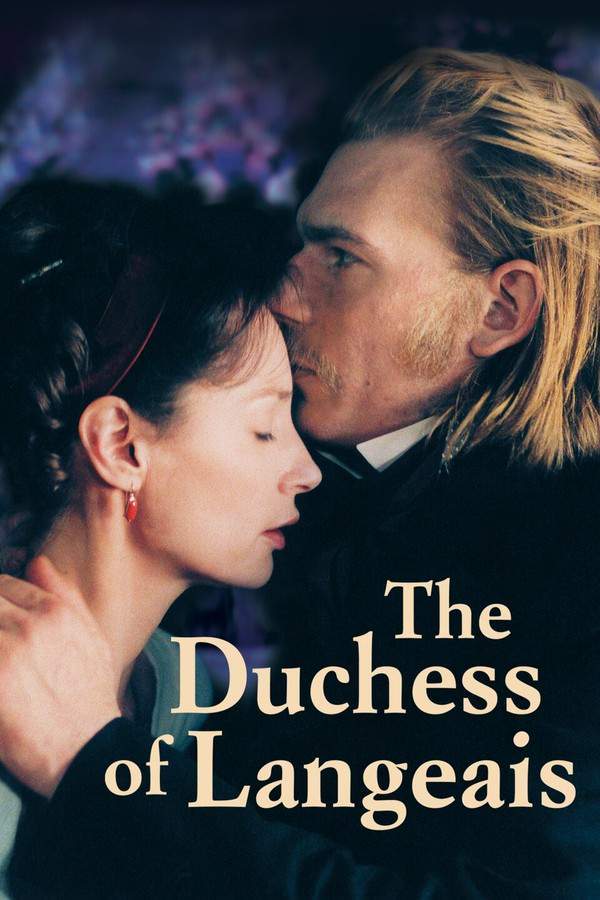
The Duchess of Langeais (2008) movie poster

Plot Summary

The Duchess of Langeais (2008) Plot Summary Explained

Release, runtime and language
2008 · 137 min · French
Loading streaming availability…
Directed by
Jacques Rivette

Amidst the lavish Parisian society of the 1820s, the captivating Duchess of Langeais enjoys manipulating the affections of those around her. Her playful games of seduction are challenged when she encounters General Armand de Montriveau, whose sincere feelings complicate her calculated approach. A passionate and turbulent affair develops between them, awakening Antoinette's own capacity for love. However, pride and unspoken desires threaten to keep them apart, potentially destroying any chance of happiness for these entangled lovers.

On this page (5)
  1. 1 Where to watch
  2. 2 What happens: full plot
  3. 3 Plot questions answered
  4. 4 Movie threads
  5. 5 Every angle
Loading streaming availability…

Full plot summary · contains spoilers

What Happens in The Duchess of Langeais: Full Plot Summary

The whole story of The Duchess of Langeais (2008) explained, from the opening scene to the final frame: every key event, every twist and what it all adds up to. Read it as a quick recap before the sequel, to check a scene you missed, or to finally understand what really happened.

Armand de Montriveau, a general who served under Napoleon but found himself insignificant during the Restoration, has pursued his beloved Antoinette de Langeais to a convent in Majorca, where she has cloaked herself as a nun. He manages to secure a meeting with her by claiming to be her brother, but upon their encounter, she reacts dramatically, exclaiming that he is her lover, leading to his swift expulsion from the convent.

As the narrative unfolds, we flash back to their initial encounter at a lively Parisian party, where Antoinette is captivated by Armand’s fascinating stories of his adventures in Egypt. This sparks her interest, prompting her to invite him to her town house while her husband is away. During one memorable visit, she even greets him in her nightgown, feigning illness to draw him closer. A natural coquette, she relishes her hold over Armand while consistently rebuffing any intimate advances. She deftly reminds him of her marriage and invokes piety, asserting that any affair would be sinful.

Over time, Armand begins to engage in her playful manipulation, becoming unpredictable and tempestuous himself. In a bold gesture, he and his masked friends abduct her, threatening her with torture to test her compliance. Just as she appears on the verge of capitulation, he releases her, and soon after, he withdraws from corresponding with her, even neglecting the letters she sends. In her desperation, Antoinette delivers an ultimatum: he must meet her or she will vanish from his life forever. However, he fails to meet her, and shortly thereafter, she disappears from Paris altogether.

The story takes a darker turn as we return to Armand and his friends, who, after facing rejection at the convent, decide to raid the place under the cover of night to rescue Antoinette. When they finally reach her chamber, they are met with a heart-rending sight: she lies lifeless, giving a tragic end to their tumultuous romance.

Last updated: November 08, 2024 at 16:40

Was this helpful?

Plot questions answered

The Duchess of Langeais Plot Explained: Your Questions Answered

The questions people ask most about The Duchess of Langeais (2008): what happens in the confusing scenes, why the characters do what they do, the twists, hidden details and what the ending means. Each answer contains spoilers.

Q1

Why did Antoinette de Langeais become a nun?

After Armand stopped responding to her letters and failed to meet her after her ultimatum, Antoinette fled Paris in despair. She retreated to a convent in Majorca and took religious vows, effectively removing herself from the world that had rejected her. Her transformation into a nun represents both her heartbreak and her attempt to find meaning after her passionate affair collapsed.

  • antoinette
  • nun
  • convent
  • majorca
  • religious vows
Q2

Why did Armand de Montriveau stop writing to Antoinette?

After releasing Antoinette from the abduction, Armand withdrew from their correspondence. The exact reason is not explicitly stated in the summary, but his pattern of becoming unpredictable and emotionally turbulent suggests he was testing whether Antoinette would pursue him genuinely or continue her games. His silence was likely a strategic move to gauge her true feelings, but it backfired catastrophically.

Foreshadowing: Earlier in their relationship, Armand had begun mirroring Antoinette's manipulative tactics, becoming tempestuous himself.

  • armand
  • letters
  • correspondence
  • withdrawal
Q3

What happened after Armand abducted Antoinette?

After the abduction, Armand released Antoinette when she appeared ready to capitulate to his demands. Rather than pursuing reconciliation, he withdrew completely, stopping all correspondence and ignoring her letters. This sudden abandonment left Antoinette desperate, leading her to issue the ultimatum that ultimately triggered the tragedy.

Foreshadowing: The abduction itself was a test of her loyalty, revealing the toxic dynamic that would ultimately destroy them.

  • abduction
  • torture
  • release
  • retreat
Q4

Why did Antoinette give Armand an ultimatum?

Antoinette issued her ultimatum out of desperation after being completely ignored by Armand. She threatened to vanish from his life forever unless he met with her. This was her final attempt to force a response from him, as his prolonged silence had left her emotionally devastated. When he failed to appear, she followed through on her threat.

Foreshadowing: Throughout their relationship, Antoinette controlled the pace through teasing and rebuffing, her ultimatum represented a reversal of this control, putting the decision entirely in Armand's hands.

  • ultimatum
  • desperation
  • disappearance
  • vanish
Q5

How did Antoinette de Langeais die?

The summary indicates Antoinette was found lifeless in her chamber at the convent. While the exact cause of death is not detailed, the context suggests she died of a broken heart, succumbing to despair, grief, and the emotional toll of her tragic circumstances rather than any external cause.

Foreshadowing: The entire narrative arc builds toward this tragic conclusion, with Antoinette's retreat to a convent already signaling her withdrawal from life.

  • death
  • convent
  • tragic ending
  • lifeless
Q6

Why did Armand raid the convent?

After being expelled from the convent when Antoinette publicly declared him her lover, Armand and his friends decided to rescue her by force. His desperation to reclaim her, combined with the emotional turmoil of rejection, drove him to orchestrate the nighttime raid. The rescue attempt represents his final, reckless gesture to recover what he had lost.

Foreshadowing: Armand's journey to Majorca itself demonstrated his obsessive determination, traveling across borders to find Antoinette after she disappeared from Paris.

  • rescue
  • raid
  • convent
  • night
  • desperation
Q7

Why did Antoinette constantly reject Armand despite her interest?

Antoinette was a skilled coquette who derived satisfaction from wielding power over her admirers. Her consistent rebuffs, citing her marriage and religious piety, were manipulative tactics rather than genuine moral objections. She enjoyed keeping Armand in a state of desire while maintaining control. However, her own feelings eventually became genuine, creating internal conflict between her enjoyment of the game and her authentic emotions.

Foreshadowing: Even when she greets him in her nightgown feigning illness, she quickly reasserts boundaries, demonstrating her pattern of drawing close then pushing away.

  • coquettish
  • manipulation
  • rejection
  • marriage
  • piety
Q8

Why did Armand visit Antoinette at the convent in Majorca?

Armand traveled to Majorca specifically to find Antoinette after she disappeared from Paris. He had pursued her across borders, demonstrating the obsessive nature of his feelings. He secured a meeting by claiming to be her brother, but the ruse failed when she immediately exposed him as her lover, leading to his expulsion.

Foreshadowing: The story opens with this desperate search, establishing Armand's determination to reclaim the woman he lost.

  • majorca
  • convent
  • visit
  • search
Q9

What triggered Antoinette's disappearance from Paris?

Antoinette vanished from Paris after Armand failed to meet her following her ultimatum. His continued absence after she risked everything by demanding a meeting proved devastating to her. Believing he had truly rejected her, she fled Paris and retreated to the convent in Majorca, effectively ending their relationship.

Foreshadowing: Her ultimatum explicitly warned that she would disappear if he failed to meet her, he ignored her warning and she followed through.

  • paris
  • disappearance
  • ultimatum
  • flee
Q10

Why does the movie start at the convent before showing the Paris party?

The film employs a flashback structure, beginning with Armand's desperate search at the convent and then rewinding to show how their relationship began in Paris. This narrative technique creates dramatic irony, the audience knows from the start that Antoinette has already retreated to a convent, while building toward the tragic discovery of her death. It emphasizes the irreversibility of their fate.

  • flashback
  • narrative structure
  • opening

Movie threads

More Movies Like The Duchess of Langeais, by Mood & Story

Curated lists built around what makes The Duchess of Langeais tick: the same mood, the same kind of story or the same emotional payoff. Each list explains why these movies belong together.

Obsessive period romances like The Duchess of Langeais

Tragic romances where forbidden desire clashes with rigid societal rules. For viewers who liked the tragic romance in The Duchess of Langeais, this collection features movies about obsessive passion constrained by 19th century society. Discover similar stories of forbidden love, emotional manipulation, and the heavy price of defying social norms in historical dramas and literary adaptations.

  • tragic romance
  • forbidden love
  • obsessive passion
  • social constraints
  • period drama
  • emotional manipulation
  • Tone: melancholic, tragic, passionate
  • Pacing: slow, deliberate
Why these movies?

The story pattern: These narratives typically follow a pattern of intense attraction between characters from different social spheres, where their passion becomes a form of rebellion. The story unfolds as their love is tested by external pressures, gossip, and their own internal conflicts of pride and desire, often culminating in a separation or tragic end that underscores the power of societal conventions.

Why they belong together: Movies are grouped here for their shared focus on the volatile mix of obsessive love and social constraints. They feature a melancholic tone, heavy emotional weight, and explore how characters are torn between personal fulfillment and public duty, creating a specific, emotionally charged viewing experience.


Slow burn character tragedies like The Duchess of Langeais

Character-driven dramas where pride and misunderstanding lead to irreversible sorrow. If you appreciated the slow, deliberate pacing and tragic character arc in The Duchess of Langeais, this list features movies where pride and emotional games lead to self-destruction. Find similar melancholic dramas with heavy emotional weight, complex character psychology, and sorrowful conclusions that linger long after the credits roll.

  • slow burn
  • tragic
  • character study
  • psychological
  • somber
  • melancholic
  • Tone: melancholic, somber, desperate
  • Pacing: slow, psychological
Why these movies?

The story pattern: The narrative pattern involves a gradual build-up of emotional tension between complex characters. Key moments of potential reconciliation are missed due to pride or misunderstanding, creating a cascade of consequences. The pacing is slow to emphasize the interior turmoil, and the story arc is a downward spiral towards an inevitably sad ending that feels both earned and devastating.

Why they belong together: These films are united by their melancholic tone, slow pacing, and focus on internal, psychological conflict leading to tragedy. They share a high intensity derived from emotional volatility rather than action, and a heavy emotional weight that leaves a lasting impression of sorrow and reflection.

Every angle

The Duchess of Langeais (2008) Explained: Plot, Timeline & Characters

Everything about The Duchess of Langeais in one place: what happens in the plot summary, the timeline in chronological order, the characters and meaning and a spoiler-free summary. What's After the Movie adds the cast, box office and post-credit scenes.

Coming soon on iOS and Android

The Plot Explained Movie Summary App

Plot summaries, endings explained and timelines on your phone. Catch up on any movie in minutes, save your favorites and never miss a twist again.

Be the first to know when we launch. Your email stays private, always.

Learn more about the app