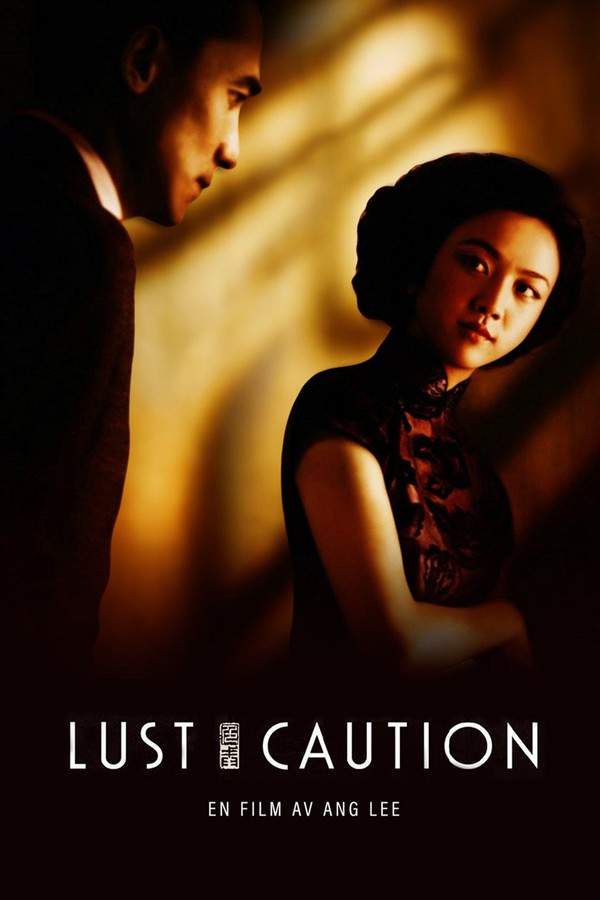
Shen Shao-Hua, Brigitte Lin is trapped in a strict world where love is punished and personal pain is turned into prose. Set in the turbulent 1940s, during Japanese-occupied Northeast China, her father’s harsh judgment for falling in love with a classmate sends her into confinement in the attic. A desperate suicide attempt becomes a turning point, and she channels her overwhelming emotions into writing. After her father dies, Shao-Hua emerges as a modestly famous novelist, continually refining a semi-autobiographical work that blends memory, resilience, and the quiet ache of a life lived under occupation.
One day, an admiring reader reaches out—a letter from Chang Neng-Tsai, Ronald Chin Han, a cultural official tied to the occupying regime. Despite learning of his background, Shao-Hua finds herself drawn to him. Chang, though not personally indebted by blood, moves through a world where assassination attempts by nationalists are a constant threat, and he quietly aids their movements by relocating people who need to disappear. The tension between duty, longing, and danger threads through their burgeoning relationship.
Meanwhile, Shao-Hua’s childhood friend Yueh-Feng, Maggie Cheung, arrives troubled after clashes with a revolutionary boyfriend. The three form an uneasy, fleeting bond as they navigate fear and desire under the weight of a collapsing regime. A day trip exposes them to the brutal crackdowns at a checkpoint, a stark reminder of the war’s reach into everyday life. Although Chang’s travel papers seem to shield them, his identity is exposed. Yueh-Feng, repelled by what she sees as betrayal, walks away with a bitterness that fractures the fragile trust among them, leaving a lasting ache in Shao-Hua’s world.
After Japan’s surrender, the Nationalist government begins to weed out traitors. Neng-Tsai flees to a rural village, disguising himself as the partner of a local widow to survive. Shao-Hua eventually tracks him down, only to be crushed by the sight of him living with another woman to endure the hardship. Heartbroken, she returns to Yueh-Feng, but the past refuses to stay buried. Neighbors gossip and inform on them, and a raid by thugs tests their loyalty and courage. Yueh-Feng’s protective courage sustains the two women, though she is injured in the clash.
Their quiet world is unsettled further by Yu, a neighbor and a soft-spoken businessman who has long harbored unspoken feelings for Shao-Hua, Richard Ng Yiu-Hon. He steps in to help, offering steady support as the political landscape grows ever more dangerous. Not long after, Yueh-Feng and her revolutionary partner are killed amid an anti-government protest, deepening Shao-Hua’s sense of loss and the burden of memory she carries.
Shao-Hua endures with Yu at her side, and she eventually encounters a washed-out Neng-Tsai again, now a man shaped by hardship. As the Communist victory looms, Yu trades his gold for two tickets on the last boat to Taiwan in a bid to escape with Shao-Hua. Yet she makes a different choice, passing her ticket to Neng-Tsai and watching him sail away, while Yu remains steadfast beside her. In another act of quiet devotion, Shao-Hua chooses to stay, choosing companionship and the life she has built over personal escape.
The years pass in a steady, almost ceremonial rhythm—Shao-Hua lives out her days in quiet obscurity, turning the page on a life marked by love, loss, and a relentless pursuit of self-expression. Forty years later, Neng-Tsai returns to the mainland in search of his lost love, but the journey ends with him discovering a copy of Shao-Hua’s completed novel. The final image is a testament to a life braided with memory and endurance, where writing becomes both witness and solace for a generation weathering upheaval.