Plot Explained Spoilers guaranteed!
Plot Explained

Browse by genre

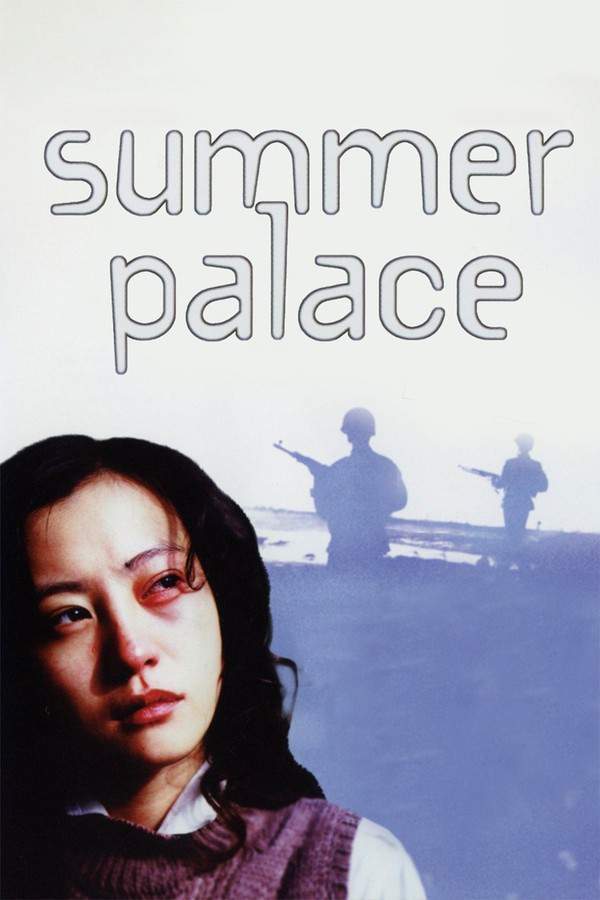
Summer Palace (2008) movie poster

Plot Summary

Summer Palace (2008) Plot Summary Explained

Release, runtime and language
2008 · 158 min · German
Directed by
Ye Lou

In Beijing, Wei, a young woman from the countryside, finds her life unexpectedly intertwined with Zhou, a fervent student. Their intense and passionate romance blossoms amidst political upheaval. As their relationship faces challenges and separation, Wei experiences heartbreak and new romantic possibilities. Ultimately, they are brought back together against the backdrop of a revolutionary period, forcing them to confront their feelings and the changing world around them.

On this page (5)
  1. 1 What happens: full plot
  2. 2 Plot questions answered
  3. 3 Movie threads
  4. 4 Movies like Summer Palace
  5. 5 Every angle

Full plot summary · contains spoilers

What Happens in Summer Palace: Full Plot Summary

The whole story of Summer Palace (2008) explained, from the opening scene to the final frame: every key event, every twist and what it all adds up to. Read it as a quick recap before the sequel, to check a scene you missed, or to finally understand what really happened.

Two young lovers navigate the intricacies of their tumultuous, passionate relationship against a backdrop of intense political upheaval. The story centers around Yu Hong, portrayed by Hao Lei, a beautiful girl from the countryside who decides to leave her familiar village, her family, and her first love to pursue her studies at Beijing University. Here, she discovers an exhilarating world filled with sexual freedom and self-exploration. It is at the university that she meets Zhou Wei, played by Guo Xiaodong, a fellow student who draws her into a whirlwind of emotions that neither of them can fully grasp or control.

As their relationship deepens, it transforms into a chaotic mixture of dangerous games, filled with betrayals and provocations. The political climate around them becomes increasingly charged as students rally for freedom and democracy, their demonstrations echoing the turmoil in Yu and Zhou's personal lives. The passionate connection they share is tested as the protests spiral into chaos, ultimately causing them to lose each other in the social maelstrom of panicked crowds. During this tumultuous upheaval, Zhou is sent to a summer military camp, and after his release, he makes the significant decision to flee to Berlin, attempting to escape the memories of Yu and the weight of his homeland.

However, the unrest is not confined to China alone; in Germany, as the Berlin Wall crumbles, Zhou finds himself grappling with his own demons—haunted by the remnants of his love for Yu. After a time away, he returns to China, where he discovers Yu has settled in a quaint small town. They reunite, but both are now transformed individuals facing an uncertain future in a world that has fundamentally changed. As they attempt to rediscover their connection, they must confront the haunting question: can they endure together in a landscape reshaped by turmoil, or will they ultimately find themselves solitary in a world that no longer feels familiar to either of them? This poignant tale of love amidst chaos raises thought-provoking questions about the resilience of human connections and the possibilities of reconciliation in the face of overwhelming odds.

Last updated: January 14, 2025 at 19:25

Was this helpful?

Plot questions answered

Summer Palace Plot Explained: Your Questions Answered

The questions people ask most about Summer Palace (2008): what happens in the confusing scenes, why the characters do what they do, the twists, hidden details and what the ending means. Each answer contains spoilers.

Q1

Why does Yu Hong leave her village for Beijing?

Yu Hong leaves her village, family, and first love to pursue her studies at Beijing University. She seeks to escape her familiar rural life and discover her identity in a more liberated environment, driven by a desire for self-exploration and freedom from her previous constraints.

Foreshadowing: Early scenes establish Yu's longing for something beyond her village life, hinting at her willingness to abandon everything familiar.

  • yu hong
  • beijing university
  • village
  • leaving home
  • escape
Q2

What causes Yu Hong and Zhou Wei to separate during the protests?

As the student demonstrations for freedom and democracy escalate into chaos, the city descends into panic. During this turmoil, Yu and Zhou become separated in the crowds and lose contact with each other, marking a pivotal moment where the political upheaval destroys their relationship.

Foreshadowing: Their turbulent relationship had already been tested by betrayals and provocations, making them vulnerable to external forces tearing them apart.

  • protests
  • separation
  • beijing
  • chaos
  • tiananmen
Q3

Why does Zhou Wei go to Berlin after the protests?

After being sent to a summer military camp as part of the government's crackdown on dissent, Zhou decides to flee to Berlin. He seeks to escape both his homeland and the painful memories of his turbulent relationship with Yu, hoping for a fresh start away from the trauma of the protests and their separation.

Foreshadowing: Zhou's earlier emotional instability and the intensity of his feelings for Yu foreshadow his need to run from everything that reminds him of their past.

  • zhou wei
  • berlin
  • escape
  • military camp
  • exile
Q4

What happens to Zhou Wei after the protests collapse?

Following the collapse of the protests, Zhou is sent to a summer military camp as part of the government's crackdown on student dissent. After his release from the camp, he makes the significant decision to flee to Berlin, attempting to escape the memories of Yu and the weight of his homeland.

Foreshadowing: The escalating crackdowns on students throughout the protests foreshadow Zhou's eventual detention and forced relocation.

  • military camp
  • protest aftermath
  • zhou wei
  • detention
Q5

Why does Zhou Wei return to China?

Despite finding himself in Berlin during the fall of the Berlin Wall, a moment symbolizing liberation, Zhou remains haunted by his memories of Yu. He returns to China not simply as a physical journey, but as an emotional reckoning with his past and unresolved feelings for her.

Foreshadowing: Even in Berlin, surrounded by historic change, Zhou's thoughts remain fixated on Yu, hinting that his escape was never truly about geographical distance.

  • return to china
  • zhou wei
  • memory
  • haunted
  • emotional reckoning
Q6

What is Yu Hong doing when Zhou finds her again?

When Zhou returns to China, he discovers that Yu has settled in a small town, living a quieter life far from the chaos of Beijing. She has transformed from the adventurous university student into a more subdued, changed individual, and their reunion forces both to confront how much they have altered.

Foreshadowing: Yu's earlier desire for freedom and self-discovery suggests she would eventually seek peace away from the turbulence that defined her youth.

  • yu hong
  • small town
  • reunion
  • changed
  • settlement
Q7

How does the political unrest affect Yu Hong and Zhou Wei's relationship?

The political protests create an external force that mirrors and amplifies the chaos in their personal relationship. Their intense, passionate love is tested as the demonstrations spiral into chaos, ultimately causing their separation when they lose each other in the panicked crowds. The political backdrop becomes inseparable from their emotional turmoil.

Foreshadowing: The film repeatedly parallels their personal conflicts with the larger political climate, showing how neither can escape the upheaval around them.

  • political unrest
  • protests
  • democracy
  • impact on relationship
  • chaos
Q8

Will Yu Hong and Zhou Wei end up together?

The ending remains ambiguous. After reuniting in the small town, both Yu and Zhou must confront how profoundly they have changed and whether their relationship can survive in a world that has fundamentally transformed. The film leaves their future uncertain, emphasizing the melancholic theme that some connections may be impossible to fully repair after such trauma.

Foreshadowing: The recurring motif of separation and the pervasive sense of loss throughout the film foreshadow the uncertain conclusion.

  • ending
  • reunion
  • together
  • ambiguous future
  • hope
Q9

Who is Yu Hong's first love that she leaves behind?

Yu Hong leaves behind a first love in her village when she departs for Beijing University. This relationship represents the life she is abandoning, a familiar, rural existence, in order to pursue self-discovery and freedom at university, setting the pattern of leaving people behind for new experiences.

Foreshadowing: Yu's willingness to abandon her first love establishes her character as someone driven to escape her past, which later manifests in her complex dynamic with Zhou.

  • first love
  • village
  • yu hong
  • past relationship
Q10

What is the summer military camp Zhou Wei is sent to?

After the student protests collapse and the government cracks down on dissent, Zhou is sent to a summer military camp. This represents the government's effort to neutralize involved students through forced military training and ideological reassignment, serving as both punishment and a way to separate Zhou from his previous life and political activities.

Foreshadowing: The increasing tension and crackdowns throughout the protests directly lead to Zhou's detention, showing how the political environment closes in on the characters.

  • military camp
  • government crackdown
  • student dissent
  • zhou wei
Q11

What does the fall of the Berlin Wall mean for Zhou Wei?

While living in Berlin, Zhou witnesses the fall of the Berlin Wall in 1989. This historic event, symbolizing liberation and the collapse of oppressive systems, represents a bitter irony for Zhou, he has escaped to a place experiencing freedom while remaining psychologically trapped by his past with Yu. The event highlights that external freedom does not guarantee emotional liberation.

Foreshadowing: Zhou's decision to flee to Berlin was an attempt to escape his problems, but the parallel political upheavals in both China and Germany suggest that no location offers true escape from personal turmoil.

  • berlin wall
  • 1989
  • liberation
  • zhou wei
  • symbolic

Movie threads

More Movies Like Summer Palace, by Mood & Story

Curated lists built around what makes Summer Palace tick: the same mood, the same kind of story or the same emotional payoff. Each list explains why these movies belong together.

Romances Shaped by Revolution like Summer Palace

Passionate relationships that unfold within the turbulence of political upheaval. Movies like Summer Palace where a powerful love story is set against a backdrop of political turmoil. If you liked the way personal passions intertwined with historical forces, you'll find similar turbulent and emotionally heavy romantic dramas here.

  • passionate
  • turbulent
  • historical
  • intense
  • revolutionary
  • nostalgic
  • Tone: intense, melancholic
  • Pacing: variable, spanning years
Why these movies?

The story pattern: Stories in this thread follow lovers whose relationship is forged and tested during periods of significant social or political unrest. The external chaos of the world mirrors their internal emotional volatility, creating a narrative where personal and political conflicts are deeply intertwined, often spanning years and leading to separations and reunions.

Why they belong together: Movies are grouped here because they share a core focus on a passionate, often turbulent romance that cannot be separated from its historical moment. They blend a heavy emotional weight with high intensity, using the political setting not just as a backdrop but as an active force shaping the characters' destinies.

Melancholic Journeys of Lost Love like Summer Palace

Stories of love lost and found, colored by nostalgia and regret. For viewers who enjoyed the reflective, nostalgic tone of Summer Palace. These films feature stories about powerful first loves, long separations, and ambiguous reunions, delivering a heavy emotional experience focused on memory and what might have been.

  • melancholic
  • nostalgic
  • bittersweet
  • reflective
  • intimate
  • heartbreaking
  • Tone: melancholic, nostalgic, reflective
  • Pacing: variable, reflective
Why these movies?

The story pattern: The narrative pattern involves a non-linear or decade-spanning structure that contrasts youthful passion with adult reflection. Central characters are often haunted by a past lover, leading to a reunion that forces them to confront buried feelings and the passage of time, typically resulting in an emotionally heavy and ambiguous conclusion.

Why they belong together: These films are grouped by their shared focus on the melancholy of lost love and the power of memory. They feature a variable pacing that moves between past intensity and present reflection, a consistently heavy emotional weight, and an overall tone of bittersweet nostalgia.

If you liked this

Movies Like Summer Palace

Similar movies to Summer Palace: the same genre, themes or kind of story. Each one comes with its own plot summary, timeline and ending explained.

Browse all movie summaries

Every angle

Summer Palace (2008) Explained: Plot, Timeline & Characters

Everything about Summer Palace in one place: what happens in the plot summary, the timeline in chronological order, the characters and meaning and a spoiler-free summary. What's After the Movie adds the cast, box office and post-credit scenes.

Coming soon on iOS and Android

The Plot Explained Movie Summary App

Plot summaries, endings explained and timelines on your phone. Catch up on any movie in minutes, save your favorites and never miss a twist again.

Be the first to know when we launch. Your email stays private, always.

Learn more about the app