Plot Explained Spoilers guaranteed!
Plot Explained

Browse by genre

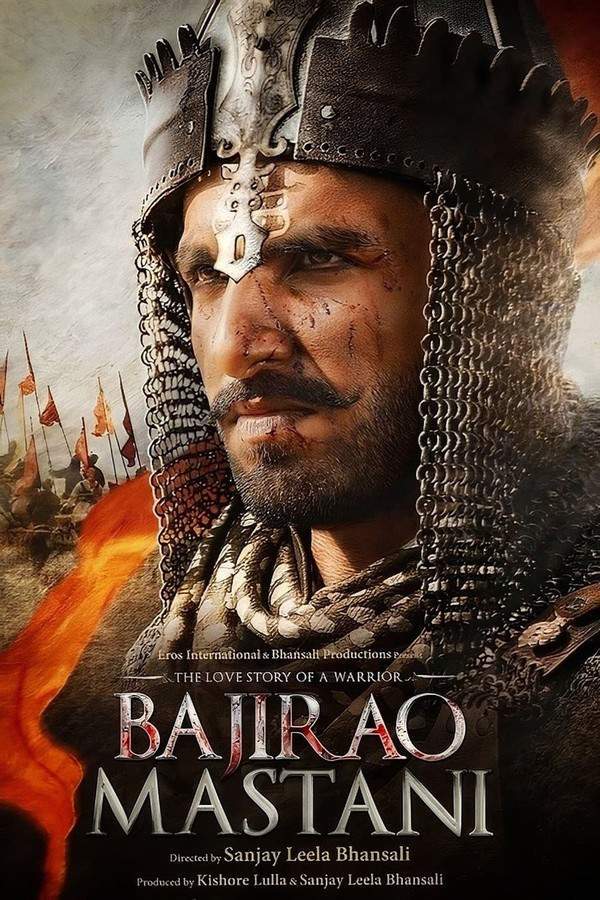
Bajirao Mastani (2015) movie poster

Plot Summary

Bajirao Mastani (2015) Plot Summary Explained

Release, runtime and language
2015 · 158 min · Hindi
JustWatch #18,991 2
Directed by
Sanjay Leela Bhansali

A valiant Peshwa, Bajirao, finds himself caught in a complex love triangle between his arranged marriage and his passionate connection with Mastani, a strong-willed princess. Their forbidden romance challenges societal norms and family loyalties, forcing Bajirao to balance his duty to his dynasty with the intense desire he feels for Mastani. He must confront the disapproval of his family and navigate the difficult choices that arise from their unconventional relationship.

On this page (6)
  1. 1 Where to watch
  2. 2 What happens: full plot
  3. 3 Plot questions answered
  4. 4 Movie threads
  5. 5 Movies like Bajirao Mastani
  6. 6 Every angle

Where to watch

Where to Watch Bajirao Mastani (2015)

Where can you watch Bajirao Mastani? Stream, rent or buy it in the US, including on Amazon Video, Apple TV Store and Google Play Movies: current JustWatch availability with up-to-date prices.

Streaming availability powered by JustWatch

Full plot summary · contains spoilers

What Happens in Bajirao Mastani: Full Plot Summary

The whole story of Bajirao Mastani (2015) explained, from the opening scene to the final frame: every key event, every twist and what it all adds up to. Read it as a quick recap before the sequel, to check a scene you missed, or to finally understand what really happened.

In the early 18th century, the court of Maratha Chhatrapati Shahu (Mahesh Manjrekar) from the Satara Empire is in search of a new Peshwa, akin to a modern prime minister. Despite Shripad Rao (Aditya Pancholi) declaring himself as the Pant Pratinidhi, it is Ambaji Pant (Milind Soman) who elects to nominate a young and ambitious Bajirao (Ranveer Singh). To test his skills, Shripad challenges Bajirao to slice a peacock feather with an arrow, a task Bajirao accomplishes with precision, thus earning the esteemed title of Shrimant Peshwa.

Fast forward ten years, Bajirao’s wife Kashibai (Priyanka Chopra) receives a visit from her widowed friend Bhanu ([Snehlata Girish Vasaikar]). Bhanu’s husband was executed on accusations of spying on Bajirao, stirring a sense of foreboding in her as she mourns her lost love. "Just as I long for my husband," she warns, "Kashi, too, will one day yearn for Bajirao."

While journeying to Sironja, Bajirao encounters an emissary from Bundelkhand. This emissary, Mastani (Deepika Padukone), the daughter of Rajput King Chhatrasal ([Benjamin Gilani]), turns out to be a skilled warrior. She seeks Bajirao's assistance against invading forces, and he, duly impressed, aids her in victory. Chhatrasal celebrates this achievement, inviting Bajirao to join them for Holi. Over the festivities, Bajirao and Mastani form a deep bond, culminating in him gifting her his dagger, which symbolizes marriage among the Bundelkhand Rajputs.

Once back in Pune, Kashi greets Bajirao with a grand tour of their recently constructed Shaniwar Wada, including the magnificent Aaina Mahal (hall of mirrors), designed so she can catch glimpses of him from her quarters. Motivated by love, Mastani soon arrives in Pune but faces disdain from Bajirao’s mother Radhabai (Tanvi Azmi), who confines her to the palace's courtesan quarters. Enduring this bitter treatment, Mastani dances for Bajirao on Parava. Radhabai offers her nothing more than a dancer's position, denying her acceptance into the family. Resolute, Mastani approaches the King, expressing her desire to be with Bajirao, before retreating to wait for him at a secluded ruin across the river. In a dramatic moment during a storm, Bajirao crosses the river, admonishing her for her relentless hope, only to declare her as his second wife, despite the potential turmoil that lies ahead.

Bajirao departs to challenge the Nizam of Deccan (Raza Murad), facing impossible odds yet emerging victorious upon his return. However, tragedy strikes when a pregnant Kashi witnesses an embrace between Bajirao and Mastani, who is also with child. Distraught, Kashi leaves for her mother’s home, returning later with a newborn son named Raghunath in joyous celebration. Mastani, too, gives birth to a son, whom they name Krishna Rao. Yet complications arise when the head Brahmin priest, Krishnaji Bhatt, refuses to hold the naamkaran for the child, compelling Bajirao to rename him Shamsher Bahadur.

As time passes, tensions rise when Kashi's eldest son, Balaji Baji Rao (alias Nana Saheb played by [Ayush Tandon]), returns from Satara, harboring resentment towards Mastani for allegedly fracturing his mother's marriage. The situation escalates when Kashibai learns of a treacherous plot to harm Mastani and her son during a festival. Reluctantly, she informs Bajirao, who responds heroically to save them from impending danger.

In a tragic turn, after Shiva Bhatt, another Brahmin priest, is murdered by Krishnaji Bhatt, Bajirao’s rage leads him to construct Mastani Mahal for her protection and honor. Yet, turmoil brews within his own family as Radhabai and Nana Saheb conspire against Mastani and her child. After Bajirao's solitary victory against Nasir, he learns of the betrayal, collapsing from his injuries as he grasps the gravity of their deception.

In desperation, Kashi implores Radhabai for Mastani’s release, but Balaji Baji Rao's cruel decision to burn the letter leads to their tragic fate. Ultimately, Bajirao, lost in visions and delirium, succumbs to his illness, while Mastani, held captive, meets her demise, leaving the world to mourn their ill-fated love, united only in death as destiny had long decreed.
Last updated: November 02, 2024 at 12:05

Was this helpful?

Plot questions answered

Bajirao Mastani Plot Explained: Your Questions Answered

The questions people ask most about Bajirao Mastani (2015): what happens in the confusing scenes, why the characters do what they do, the twists, hidden details and what the ending means. Each answer contains spoilers.

Q1

Why did Bajirao choose Mastani over his duties as Peshwa?

Bajirao was captivated by Mastani's exceptional skills as a warrior when he first met her in Sironja. Her courage, beauty, and the deep bond they formed during the Holi celebrations created an intense emotional connection that overwhelmed his sense of duty. Despite knowing it would cause familial turmoil, Bajirao declared Mastani his second wife during a storm, unable to resist the passion he felt for her.

Foreshadowing: The early encounter between Bajirao and Mastani foreshadows their intense connection, as he immediately aids her against invading forces and is impressed by her warrior abilities.

  • bajirao
  • mastani
  • love
  • peshwa
  • duty
  • passion
Q2

How did Radhabai treat Mastani after she arrived in Pune?

Upon arriving in Pune, Mastani faced severe disdain from Bajirao's mother Radhabai, who confined her to the palace's courtesan quarters and refused to accept. Radhabai offered Mastani only a dancer her into the family's position, denying her any recognition as Bajirao's wife. Despite this harsh treatment, Mastani persisted, eventually approaching the King directly to express her desire to be with Bajirao.

Foreshadowing: The initial meeting between Mastani and Radhabai establishes the antagonistic relationship that would ultimately lead to tragic consequences.

  • mastani
  • radhabai
  • pune
  • courtesan
  • dancer
  • family
Q3

Why did the Brahmin priest refuse to perform the naming ceremony for Mastani's son?

The head Brahmin priest Krishnaji Bhatt refused to hold the naamkaran (naming ceremony) for Mastani's son, viewing her as an outsider and inappropriate union. This religious and social condemnation forced Bajirao to rename his son Shamsher Bahadur instead of the originally intended name, highlighting the societal rejection of his marriage to Mastani.

Foreshadowing: The priest's refusal early on signals the religious and social barriers that would ultimately doom Bajirao and Mastani's relationship.

  • brahmin
  • priest
  • naming
  • ceremony
  • mastani
  • shamsher
Q4

Why did Balaji Baji Rao (Nana Saheb) hate Mastani so much?

Balaji Baji Rao, Kashibai's eldest son, returned from Satara harboring deep resentment towards Mastani, believing she had fractured his mother's marriage. He viewed Mastani as the reason for his mother's suffering and the breakdown of the family unity. This resentment fueled his participation in the conspiracy against Mastani and her child.

Foreshadowing: Balaji Baji Rao's return from Satara marks the beginning of the organized family opposition against Mastani.

  • balaji
  • bajirao
  • nana saheb
  • mastani
  • resentment
  • family
Q5

How did Bajirao die and what happened to Mastani?

Bajirao succumbed to illness while grieving the betrayal by his own family. After learning of Radhabai and Nana Saheb's conspiracy to harm Mastani, Bajirao collapsed from his injuries and died in delirium. Mastani, held captive during this time, ultimately met her demise as well, and the two lovers were united only in death, fulfilling the tragic destiny of their ill-fated love.

Foreshadowing: The tragic ending was foreshadowed early by Bhanu's warning to Kashibai about yearning for her husband, as well as the constant foreboding atmosphere throughout the narrative.

  • bajirao death
  • mastani death
  • tragedy
  • fate
  • captivity
Q6

What did the dagger Bajirao gave Mastani symbolize?

When Bajirao gifted Mastani his dagger during the Holi celebrations in Bundelkhand, it symbolized marriage according to Bundelkhand Rajput customs. This gesture represented Bajirao's formal commitment to Mastani, making it a significant cultural marker of their relationship even though it was not recognized by Bajirao's own family or society.

Foreshadowing: The dagger gift marks the beginning of their formal commitment, setting the stage for the conflicts that would arise when this union was rejected in Pune.

  • dagger
  • gift
  • marriage
  • bundelkhand
  • rajput
  • symbol
Q7

Why did Kashibai inform Bajirao about the plot to harm Mastani?

Despite her heartbreak over Bajirao and Mastani's relationship, Kashibai learned of a treacherous plot to harm Mastani and her son during a festival. Though her own son Nana Saheb was involved in the conspiracy, Kashibai chose to inform Bajirao, demonstrating her fundamental goodness and inability to condone murder, even towards her rival.

Foreshadowing: Kashibai's decision to warn Bajirao highlights her moral character, contrasting with the conspirators' ruthlessness.

  • kashibai
  • conspiracy
  • bajirao
  • warning
  • mastani
  • child
Q8

What happened when Kashi implored Radhabai for Mastani's release?

When Kashibai desperately implored Radhabai to release Mastani, her son Balaji Baji Rao made the cruel decision to burn the letter requesting help. This act of betrayal sealed Mastani's fate, preventing any rescue and directly contributing to the tragic outcome for both Mastani and Bajirao.

Foreshadowing: The letter burning represents the final point where the conspiracy overcame any possibility of redemption or rescue.

  • letter
  • burning
  • radhabai
  • kashi
  • release
  • conspiracy
Q9

What is the significance of Shaniwar Wada and Aaina Mahal in the story?

Shaniwar Wada was the grand palace Bajirao and Kashibai built in Pune, featuring the magnificent Aaina Mahal (hall of mirrors). This palace represents Kashibai's love and devotion, as she designed it specifically so she could catch glimpses of Bajirao from her quarters. Later, Bajirao constructed Mastani Mahal for Mastani, further complicating the household dynamics.

Foreshadowing: The palaces symbolize the competing loyalties in Bajirao's life and the physical manifestation of his divided heart.

  • shaniwar wada
  • mahal
  • palace
  • pune
  • kashibai
  • bajirao
Q10

Why did Bajirao challenge the Nizam of Deccan?

Bajirao embarked on a mission to challenge the Nizam of Deccan, facing seemingly impossible odds but emerging victorious upon his return. This military victory strengthened his status as Peshwa but also intensified tensions within his household, as his absence and triumph further complicated the already fragile family dynamics between Kashibai and Mastani.

Foreshadowing: Bajirao's victory against the Nizam represents his prowess as a leader, yet it also underscores the personal costs of his absences from home.

  • nizam
  • deccan
  • battle
  • victory
  • peshwa
  • military
Q11

Why did Kashibai leave for her mother's home while pregnant?

Kashibai, while pregnant, witnessed an intimate embrace between Bajirao and Mastani, who was also with child. Overwhelmed by this betrayal, Kashibai left for her mother's home. She later returned with her newborn son Raghunath, but this departure marked a significant rift in her relationship with Bajirao.

Foreshadowing: Kashibai's departure establishes the emotional fracture that would persist throughout the film, contributing to the family divisions.

  • kashibai
  • pregnant
  • leave
  • mother
  • raghunath
  • betrayal
Q12

Why did Bajirao build Mastani Mahal?

After Brahmin priest Shiva Bhatt was murdered by Krishnaji Bhatt, Bajirao's rage led him to construct Mastani Mahal as a protective residence for Mastani and to honor her. This palace was meant to provide safety and dignity for Mastani in the face of social and family opposition, though it ultimately could not prevent her tragic fate.

Foreshadowing: Mastani Mahal represents Bajirao's futile attempt to protect Mastani within the constraints of his society.

  • mastani mahal
  • palace
  • protection
  • honor
  • bajirao
  • construction

Movie threads

More Movies Like Bajirao Mastani, by Mood & Story

Curated lists built around what makes Bajirao Mastani tick: the same mood, the same kind of story or the same emotional payoff. Each list explains why these movies belong together.

Tragic historical epics like Bajirao Mastani

Sweeping historical sagas where grand romance is crushed by duty and society. If you were captivated by the grand, heartbreaking romance in Bajirao Mastani, explore these movies. This section features similar historical dramas where passionate, forbidden love stories clash with duty and tradition, leading to epic and melancholic conclusions.

  • tragic
  • epic
  • passionate
  • melancholic
  • yearning
  • oppressive
  • Tone: melancholic, tragic, passionate
  • Pacing: steady, epic build
Why these movies?

The story pattern: The narrative follows a powerful couple whose intense, often immediate connection is forbidden by their station, family loyalties, or cultural expectations. Their love becomes a political act, sparking conflict and condemnation. The story builds steadily towards an inevitable, melancholic conclusion where personal desire is ultimately sacrificed to the demands of a larger system, resulting in a deeply sad but poignant ending.

Why they belong together: These films are grouped by their shared core of a majestic historical setting, a central romance of high passion and high stakes, and a consistently melancholic tone that builds to a tragic, emotionally heavy conclusion. They blend epic scale with intimate personal tragedy.

Duty versus desire dramas similar to Bajirao Mastani

Stories where profound personal love conflicts with overwhelming societal or familial duty. For viewers who appreciated the core conflict in Bajirao Mastani, this list features movies with similar heavy emotional themes. Discover stories where characters face heartbreaking choices between their passionate personal desires and their binding duties to family, honor, or society.

  • intense
  • dramatic
  • poignant
  • tragic
  • psychological
  • oppressive
  • Tone: melancholic, intense, dramatic
  • Pacing: steady, character-driven
Why these movies?

The story pattern: The narrative revolves around a protagonist whose identity is built on a foundation of duty, which is shattered by the arrival of a powerful, unconventional love. The story explores the devastating consequences of this conflict, pitting intimate happiness against public responsibility and familial approval. The pacing is steady, methodically building the tension of the impossible choice, which often leads to betrayal, psychological torment, and a bittersweet or outright sad resolution.

Why they belong together: These films share a heavy emotional weight and a high-intensity dramatic core driven by the theme of 'duty vs. desire.' They feature a melancholic tone, complex character conflicts, and a focus on the personal sacrifice required when love challenges deeply entrenched societal or familial structures.

If you liked this

Movies Like Bajirao Mastani

Similar movies to Bajirao Mastani: the same genre, themes or kind of story. Each one comes with its own plot summary, timeline and ending explained.

Browse all movie summaries

Every angle

Bajirao Mastani (2015) Explained: Plot, Timeline & Characters

Everything about Bajirao Mastani in one place: what happens in the plot summary, the timeline in chronological order, the characters and meaning and a spoiler-free summary. What's After the Movie adds the cast, box office and post-credit scenes.

Coming soon on iOS and Android

The Plot Explained Movie Summary App

Plot summaries, endings explained and timelines on your phone. Catch up on any movie in minutes, save your favorites and never miss a twist again.

Be the first to know when we launch. Your email stays private, always.

Learn more about the app