Plot Explained Spoilers guaranteed!
Plot Explained

Browse by genre

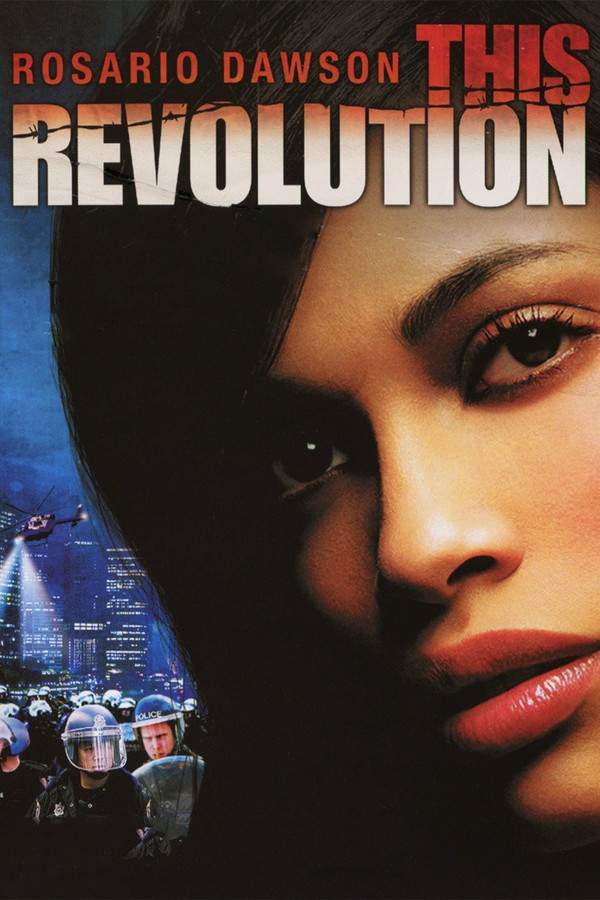
This Revolution (2005) movie poster

Plot Summary

This Revolution (2005) Plot Summary Explained

Release, runtime and language
2005 · 95 min · English
Directed by
Stephen Marshall

A news cameraman documenting the Republican National Convention finds himself connecting with a woman struggling with profound loss. Her personal tragedy sparks a desire for change, mirroring the activism he's recording. Their paths intertwine as they both confront their own revolutions.

On this page (5)
  1. 1 What happens: full plot
  2. 2 Plot questions answered
  3. 3 Movie threads
  4. 4 Movies like This Revolution
  5. 5 Every angle

Full plot summary · contains spoilers

What Happens in This Revolution: Full Plot Summary

The whole story of This Revolution (2005) explained, from the opening scene to the final frame: every key event, every twist and what it all adds up to. Read it as a quick recap before the sequel, to check a scene you missed, or to finally understand what really happened.

The film opens with what seems to be documentary-style footage capturing the intensity of protests during the 2004 Democratic Convention in Boston. As the story unfolds, we realize that Jake, played by actor (insert actor's name), is behind the camera, sharing the footage with Chloe, portrayed by actor (insert actor's name), who works at BCN and is also his love interest. However, their relationship is fraught with challenges; while Chloe is driven by ambition and her desire for success, Jake remains committed to uncovering the truth.

With the Republican Convention looming in New York City, BCN tasks Jake with covering the "war" erupting in the streets. Drawing from his past experiences as one of the first "embedded" journalists in Iraq, Jake is eager to report on the chaos. Leading up to the convention, he, along with his soundman Dexter, interviews a variety of individuals, including a conspiracy theorist convinced that Bush orchestrated 9/11 and the passionate rapper Immortal Technique, who expresses outrage over the systemic disrespect faced by black people and other minorities at the hands of law enforcement.

Amidst this, Jake forges a bond with Richie, a young man who raises homing pigeons alongside his father Cruz, currently serving in Iraq. Their friendship grows while Jake also becomes involved with Richie's mother Tina, who shares with him the tragic news of her husband’s death, a sorrowful truth that Richie remains blissfully unaware of.

As Jake immerses himself in the unfolding protests and those who partake in them—particularly a group that dons masks to protect their anonymity—he believes he is performing a noble service. However, BCN and its programming head, Bob Kramer, a former journalist turned businessman focused on corporate success, have ulterior motives. They aim to aid Homeland Security in monitoring potential threats, raising questions about the true nature of media and its role in such sociopolitical conflicts.

Last updated: October 25, 2024 at 09:02

Was this helpful?

Plot questions answered

This Revolution Plot Explained: Your Questions Answered

The questions people ask most about This Revolution (2005): what happens in the confusing scenes, why the characters do what they do, the twists, hidden details and what the ending means. Each answer contains spoilers.

Q1

Why does BCN want to help Homeland Security monitor protesters?

BCN's programming head Bob Kramer, a former journalist turned businessman, has transformed the network into a tool for corporate interests. Rather than pursuing truthful journalism, BCN deliberately positions cameras at protests to feed footage to Homeland Security, helping authorities identify and track demonstrators. This reveals the film's critique of how media organizations can become complicit in government surveillance, using the guise of news coverage to enable state monitoring of citizens exercising their right to protest.

Foreshadowing: Early scenes show BCN prioritizing dramatic protest footage over nuanced political coverage, hinting at their ulterior motives.

  • bcn
  • homeland security
  • bob kramer
  • media conspiracy
  • surveillance
  • corporate media
Q2

Why does Tina tell Jake about her husband's death instead of Richie?

Tina shares the tragic news of her husband Cruz's death in Iraq with Jake because she is struggling to cope with her grief alone and desperately needs someone to confide in. She cannot bring herself to tell Richie, her young son, the truth about his father's fate, choosing instead to protect him from the painful reality. By telling Jake, she momentarily releases the burden of this devastating secret, though it creates emotional tension as Jake now carries knowledge that could profoundly affect Richie.

Foreshadowing: Tina's initial interactions with Jake show her emotional weight and isolation, suggesting she is harboring a significant secret.

  • tina
  • cruz
  • richie
  • death
  • grief
  • iraq
  • secret
Q3

Why do the protesters wear masks in the film?

The protesters wear masks to protect their anonymity from surveillance. This reflects real-world protest movements where participants fear being identified by law enforcement or corporate entities. The film uses this detail to highlight the tension between governmental monitoring and citizens' desire for privacy while exercising their political expression. Jake's involvement with this masked group underscores his growing commitment to the protest cause, despite, or perhaps because of, the risks involved.

Foreshadowing: The documentary-style opening footage emphasizes the tension between protesters and authorities, establishing why anonymity becomes necessary.

  • masks
  • protesters
  • anonymity
  • surveillance
  • security
  • protest movement
Q4

How does Jake's experience as an embedded journalist affect his reporting?

Jake's past experience as one of the first embedded journalists in Iraq shapes his perspective and approach to covering the protests. Having witnessed the reality of war firsthand, he feels a deep commitment to documenting truth and exposing injustice. This background drives his determination to cover the convention protests meaningfully, contrasting sharply with BCN's corrupt agenda. His embedded experience also creates moral tension, as he questions his own role in potentially being used as a tool for surveillance while believing he is serving a noble purpose.

Foreshadowing: The timeline notes Jake's background in Iraq as a key motivation for his assignment at the convention.

  • jake
  • embedded journalist
  • iraq
  • truth
  • reporting
  • media ethics
Q5

Why is Jake's relationship with Chloe complicated?

Jake and Chloe's relationship is strained because they have fundamentally different values and priorities. Jake is dedicated to uncovering truth and meaningful journalism, while Chloe is ambitious and focused on climbing the success ladder at BCN. Their professional冲突 translates into personal tension, Jake's integrity conflicts with Chloe's willingness to compromise for career advancement. This dynamic reflects the broader theme of moral compromise in the media industry, as their differing approaches to journalism represent competing ideals in a corrupt system.

Foreshadowing: Early scenes establish their conflicting motivations through separate scenes showing Jake sharing footage while Chloe pursues career goals.

  • jake
  • chloe
  • relationship
  • ambition
  • truth
  • media career
Q6

What happens to Cruz in Iraq?

Cruz, Richie's father and Tina's husband, dies in Iraq while serving as a soldier. His death is revealed when Tina shares the heartbreaking news with Jake. The tragedy is particularly poignant because Richie, who raises homing pigeons with his father, remains blissfully unaware of his father's fate. This element of the story adds emotional depth, highlighting how war's consequences ripple through families and create layers of unspoken grief, especially affecting those left behind, like Tina, who must carry the burden of loss alone.

Foreshadowing: Richie's connection to his father through the pigeons foreshadows the emotional impact when the truth emerges.

  • cruz
  • richie
  • tina
  • death
  • iraq
  • war
  • pigeons
Q7

What is the significance of the homing pigeons in the story?

The homing pigeons represent home, connection, and the hope of return. Richie raises pigeons with his father Cruz, making them a symbol of their bond and family unity. When Cruz dies in Iraq, the pigeons take on deeper meaning, they become a poignant reminder of his absence and the promise of homecoming that will never be fulfilled. The pigeons also contrast the personal, human stories behind the protests with the larger political chaos, grounding the narrative in individual loss.

Foreshadowing: Jake's friendship with Richie develops around the pigeons, establishing their symbolic importance before the death is revealed.

  • pigeons
  • homing pigeons
  • richie
  • cruz
  • home
  • symbolism
  • family
Q8

What does the film say about media's role in government surveillance?

The film presents a critical examination of how media organizations can become instruments of government surveillance. BCN's deliberate placement of cameras to aid Homeland Security demonstrates how news coverage can be weaponized against the very people it should serve. The film questions journalistic ethics and corporate motives, suggesting that profit-driven media will compromise democratic principles when pressured by government interests. This critique extends to the broader conversation about press freedom and the responsibility of journalists in a climate of fear and surveillance.

Foreshadowing: The contrast between Jake's noble intentions and BCN's corrupt agenda sets up the media critique throughout the film.

  • media
  • surveillance
  • government
  • homeland security
  • bcn
  • journalism
  • ethics
  • corporate
Q9

What does Immortal Technique's interview contribute to the story?

The interview with rapper Immortal Technique provides the film with authentic activist voice and amplifies the themes of systemic injustice. He expresses outrage over the disrespect faced by black people and minorities at the hands of law enforcement, giving the protests concrete ideological grounding. This moment reflects the film's commitment to showcasing diverse perspectives within the protest movement, moving beyond abstract politics to highlight real grievances about racial inequality and police brutality.

Foreshadowing: The interview appears during Jake's pre-convention coverage, establishing the passionate undercurrent driving the protests.

  • immortal technique
  • interview
  • protest
  • injustice
  • minorities
  • police
  • activism
Q10

Why does Jake interview the conspiracy theorist about 9/11?

Jake interviews a conspiracy theorist who believes Bush orchestrated 9/11 to demonstrate the range of perspectives within the protest movement. This inclusion shows that the protests attract various ideologies and motivations, not just legitimate political dissent but also fringe theories. By presenting this interview without judgment, the film reflects the chaotic, multi-faceted nature of political activism and raises questions about truth, conspiracy, and the boundaries of legitimate protest.

Foreshadowing: The interview occurs during the pre-convention interview montage, establishing the diverse voices Jake documents.

  • conspiracy theorist
  • 9/11
  • interview
  • protest
  • perspective

Movie threads

More Movies Like This Revolution, by Mood & Story

Curated lists built around what makes This Revolution tick: the same mood, the same kind of story or the same emotional payoff. Each list explains why these movies belong together.

Urgent Journalism Movies like This Revolution

Stories where the search for truth puts journalists in the crosshairs. If you liked the tense, on-the-ground reporting in This Revolution, explore more movies about journalists caught in political firestorms. These films capture the grit, ethical conflicts, and relentless pace of uncovering truth amidst chaos, perfect for fans of immersive political thrillers.

  • urgent
  • gritty
  • paranoid
  • critical
  • anxious
  • exhausting
  • Tone: tense, critical, paranoid
  • Pacing: fast, urgent
Why these movies?

The story pattern: These narratives often follow a journalist or filmmaker whose professional assignment becomes deeply personal. As they dig deeper, they uncover systemic corruption or injustice, forcing them to confront powerful enemies and question their own role as an observer. The plot is driven by a race to get the story out before being silenced.

Why they belong together: They share a high-intensity, fast-paced vibe centered on media ethics and the pursuit of truth. The tone is consistently tense and critical, placing the viewer squarely in the middle of a breaking news event with heavy emotional and physical stakes.
Movies about Personal and Political Revolutions like This Revolution

Characters whose personal tragedies collide with larger societal fights. Fans of This Revolution's blend of intimate grief with sweeping activism will find similar stories here. These movies explore how individual loss and awakening are amplified by the turbulence of street protests, government distrust, and the fight for change.

  • anxious
  • thought-provoking
  • urgent
  • gritty
  • emotional
  • critical
  • Tone: tense, heavy, thought-provoking
  • Pacing: fast, driven
Why these movies?

The story pattern: The story follows a protagonist who is initially disconnected or cynical, often grappling with a profound personal loss. Their path crosses with a political activist or event, forcing them to see their private struggle as part of a larger systemic issue. Their personal revolution—overcoming grief, finding courage—unfolds in parallel with the public one.

Why they belong together: They are connected by a 'MIXED' focus on heavy emotional weight, tense atmospheres, and the central theme of a personal journey catalyzed by political turmoil. The pacing is often fast, reflecting the urgency of both the internal and external conflicts.

If you liked this

Movies Like This Revolution

Similar movies to This Revolution: the same genre, themes or kind of story. Each one comes with its own plot summary, timeline and ending explained.

Browse all movie summaries

Every angle

This Revolution (2005) Explained: Plot, Timeline & Characters

Everything about This Revolution in one place: what happens in the plot summary, the timeline in chronological order, the characters and meaning and a spoiler-free summary. What's After the Movie adds the cast, box office and post-credit scenes.

Coming soon on iOS and Android

The Plot Explained Movie Summary App

Plot summaries, endings explained and timelines on your phone. Catch up on any movie in minutes, save your favorites and never miss a twist again.

Be the first to know when we launch. Your email stays private, always.

Learn more about the app