Plot Explained Spoilers guaranteed!
Plot Explained

Browse by genre

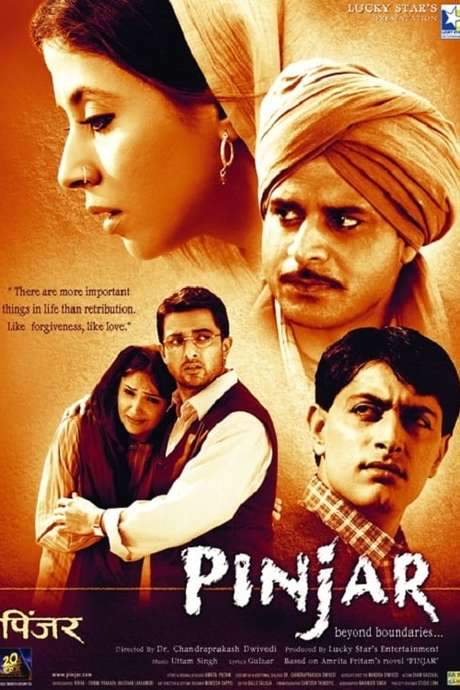
Pinjar (2003) movie poster

Plot Summary

Pinjar (2003) Plot Summary Explained

Release, runtime and language
2003 · 188 mins · Hindi
Loading streaming availability…
Directed by
Chandra Prakash Dwivedi
Starring
Lillete Dubey, Seema Biswas, Dina Pathak, Sanjay Suri, Alok Nath, Kulbhushan Kharbanda

In the turbulent days before the 1947 Partition, a young Hindu woman is kidnapped by a Muslim man. She is thrust into a forced marriage and compelled to adapt to life in a newly drawn nation as the borders between India and Pakistan are established, confronting identity, loss and survival.

On this page (6)
  1. 1 Where to watch
  2. 2 What happens: full plot
  3. 3 Plot questions answered
  4. 4 Movie threads
  5. 5 Movies like Pinjar
  6. 6 Every angle
Loading streaming availability…

Full plot summary · contains spoilers

What Happens in Pinjar: Full Plot Summary

The whole story of Pinjar (2003) explained, from the opening scene to the final frame: every key event, every twist and what it all adds up to. Read it as a quick recap before the sequel, to check a scene you missed, or to finally understand what really happened.

Set against the upheaval of the 1947 Partition, Puro is introduced as a bright, hopeful young Hindu woman coming of age within a loving family. She is engaged to a compassionate, upstanding man, Ramchand, and life seems poised for a quiet, secure future. The serenity is shattered on a day out with her younger sister, Rajjo, when a mysterious man named Rashid abducts her. The film peels back a long-simmering feud between their families: long ago, Puro’s relatives had dispossessed Rashid’s family of property, and an uncle of Puro’s had abducted and raped Rashid’s aunt, a brutal act that shadows every attempt at reconciliation.

Rashid’s family hands him a mission of revenge, but he cannot summon cruelty toward Puro; he finds himself drawn to her, a pull that unsettles the violent duty he’s been asked to perform. One night, Puro seizes the chance to escape and returns to her parents. Yet the reunion is crushingly cold: her parents refuse to take her back, fearing the stain on the family name and the social consequences of a daughter who spent days in a man’s house. They shut their doors, leaving Puro to face an agonizing choice. With nowhere else to turn, she returns to Rashid, who waits nearby and understands the unbearable position she’s been thrust into.

Months pass, and in a bid to stabilize their world, Puro’s family arranges marriages that knot together two daunting lineages. Trilok, the son of Puro’s kin, is betrothed to Lajjo, Ramchand’s younger sister, while Rajjo enters into a union with Ramchand’s cousin. At the same time, Rashid and Puro marry, starting a marital life that is marked by tenderness tempered by the weight of their families’ histories. A devastating miscarriage later punctuates their fragile bond, underscoring how fragile happiness can be amid such upheaval.

As British rule exits and the subcontinent reels from partition, the exodus and the riots push families to safety. Ramchand, his parents, and Lajjo struggle to flee toward India, while others in their circle depart for safety. The chaos claims Lajjo’s safety when she is kidnapped by rioters, a blow that intensifies the peril and grief casting a shadow over all the characters. Puro learns of Lajjo’s plight from Ramchand, and with Rashid’s steadfast support, she discovers Lajjo and helps her escape to Lahore, where Trilok and Ramchand arrive to receive her with a mix of relief and sorrow.

In Lahore, Trilok explains a painful option: if Puro wishes, she could begin a new life, because Ramchand remains ready to accept her even now. Puro’s response is resolute and moving: after everything that has happened, she declares that she has found her place, and her future lies with the life she has built beside Rashid. Ramchand meets her stance with quiet empathy, recognizing the depth of her commitment. Rashid, though heartbroken, steps back to allow her happiness to unfold, attempting to blend into the crowd to facilitate her departure with her family. Yet Puro seeks him out one last time, and the two share a tearful farewell as they part ways with Ramchand, Trilok, and Lajjo forever.

Throughout, the film threads together themes of duty, love, loyalty, and the moral cost of choosing one path when others demand another. It portrays a woman who, amid the social upheaval and violence of partition, makes a definitive choice about where her heart truly belongs, even as the men who love her wrestle with their own conflicting loyalties. The story lingers in the tension between leaving behind what is familiar and the courage it takes to hold fast to a chosen future, all set against a backdrop where history reshapes lives in irrevocable ways.

Last updated: October 09, 2025 at 15:21

Was this helpful?

Plot questions answered

Pinjar Plot Explained: Your Questions Answered

The questions people ask most about Pinjar (2003): what happens in the confusing scenes, why the characters do what they do, the twists, hidden details and what the ending means. Each answer contains spoilers.

Q1

Why was Puro kidnapped by Rashid?

Puro was kidnapped as an act of revenge. Rashid's family had a long-simmering feud with Puro's family, her relatives had once dispossessed Rashid's family of property, and an uncle of Puro's had abducted and raped Rashid's aunt. Rashid's family handed him the mission to settle this old score.

Foreshadowing: The film establishes the families' bitter history early, showing how past violence echoes forward into the Partition era.

  • kidnapping
  • revenge
  • familial feud
  • Rashid
  • Puro
Q2

Why didn't Rashid harm Puro after kidnapping her?

Rashid couldn't bring himself to be cruel to Puro. Though he was tasked with revenge, he found himself drawn to her dignity and courage. Instead of enforcing the violent duty his family demanded, he began protecting her and gradually softened toward vengeance.

Foreshadowing: During the abduction scene, Rashid's hesitation signals his internal struggle between family duty and his growing compassion.

  • Rashid
  • compassion
  • revenge
  • kidnapping
  • transformation
Q3

Why did Puro return to Rashid after escaping?

Puro had nowhere else to go. When she escaped and returned to her parents, they refused to take her back, fearing the social stigma and damage to family honor. With her own family closed off to her, she was forced to go back to the only person who offered her protection.

Foreshadowing: Her parents' cold rejection at the door sets up the desperate circumstances that drive her back.

  • Puro
  • rejection
  • family honor
  • social stigma
  • nowhere else to go
Q4

Why did Puro's parents refuse to take her back?

Puro's parents rejected her because of family honor and social consequences. They believed that a daughter who had spent days in a man's house would tarnish their name and harm the sisters' marriage prospects. Their fear of societal judgment outweighed their love for their daughter.

Foreshadowing: The film's opening establishes the traditional, honor-bound society that makes such rejection plausible.

  • parents
  • family honor
  • social stigma
  • rejection
  • shame
Q5

What caused Puro's miscarriage?

Puro became pregnant during her time with Rashid but suffered a miscarriage. The loss occurred against the backdrop of the ongoing upheaval, violence, and emotional trauma she had endured, the stress of her circumstances contributed to this personal tragedy.

Foreshadowing: The fragile state of their relationship is established early, with Puro enduring significant emotional and physical hardship.

  • miscarriage
  • pregnancy
  • loss
  • trauma
  • upheaval
Q6

How did Puro rescue Lajjo from the rioters?

When Lajjo was kidnapped during the Partition chaos, Puro learned of her danger and took action. With Rashid's steadfast support and assistance, she located Lajjo and helped her escape to Lahore, where Trilok and Ramchand were waiting.

Foreshadowing: Puro's growing bond with Rashid throughout the film makes his support in this rescue mission credible.

  • Lajjo
  • rescue
  • rioters
  • Lahore
  • Rashid help
Q7

Why did Puro choose to stay with Rashid instead of returning to Ramchand?

After everything she endured, being cast out by her family, building a life with Rashid, losing her pregnancy, and surviving the Partition chaos, Puro found her place with Rashid. Despite Ramchand offering to accept her again, she declared her future lay with the life she had built beside Rashid. Her choice reflects genuine emotional attachment rather than circumstance.

Foreshadowing: The gradual development of their relationship, marked by Rashid's kindness and protection, makes her choice emotionally logical.

  • Puro
  • Rashid
  • Ramchand
  • choice
  • love
  • commitment
Q8

Why did Rashid help Puro leave with her family if he loved her?

Though heartbroken, Rashid prioritized Puro's happiness over his own feelings. He blended into the crowd and facilitated her departure with Ramchand, Trilok, and Lajjo. His love was selfless, he wanted her to have the chance at a new life, even though it meant losing her forever.

Foreshadowing: Throughout the film, Rashid consistently puts Puro's wellbeing above his own desires and family obligations.

  • Rashid
  • sacrifice
  • love
  • selflessness
  • departure
Q9

What was the historical conflict between Puro's family and Rashid's family?

The feud stemmed from long before the Partition. Puro's relatives had dispossessed Rashid's family of property, and Puro's uncle had abducted and raped Rashid's aunt, a brutal act that poisoned relations between the families for generations and set the stage for the kidnapping revenge.

Foreshadowing: The film reveals this history through dialogue early on, explaining why Rashid's family demanded vengeance.

  • historical feud
  • property dispute
  • family violence
  • revenge
  • ancestral conflict
Q10

How did the Partition impact the main characters?

The Partition forced families to flee as violence erupted across Punjab. Ramchand, his parents, and Lajjo struggled to reach India while others in their circle headed to safety. The chaos resulted in Lajjo's kidnapping, widespread displacement, and ultimately scattered the families across the newly drawn borders between India and Pakistan.

Foreshadowing: The film establishes the looming Partition tension from the opening scenes, showing how historical events drive personal tragedy.

  • Partition
  • Punjab
  • exodus
  • riots
  • displacement
  • border
Q11

Why did the families arrange new marriages after Puro's kidnapping?

In the months following Puro's kidnapping, the families sought to restore stability and forge new bonds through arranged marriages. Trilok (Puro's kin) married Ramchand's sister Lajjo, while Rajjo married Ramchand's cousin. Rashid and Puro also married, creating a complex web of connections that tied together feuding lineages despite past violence.

Foreshadowing: The marriages represent attempts to heal rifts and move forward, though old wounds remain present.

  • marriage
  • arranged
  • family bonds
  • reconciliation
  • social order

Movie threads

More Movies Like Pinjar, by Mood & Story

Curated lists built around what makes Pinjar tick: the same mood, the same kind of story or the same emotional payoff. Each list explains why these movies belong together.

Epic historical survival stories like Pinjar

Intimate stories of individuals caught in the violent sweep of major historical events. If you were moved by Pinjar's depiction of personal tragedy during the Partition, explore other movies that place human resilience at the center of massive historical upheavals. These films often share a heavy emotional weight and a bittersweet or somber tone, capturing the indomitable will to survive.

  • heart-wrenching
  • oppressive
  • somber
  • grieving
  • tense
  • epic
  • Tone: somber, heart-wrenching
  • Pacing: steady, epic scope
Why these movies?

The story pattern: These stories often follow an ordinary protagonist whose life is irrevocably shattered by large-scale political or social turmoil. The narrative charts their journey of adaptation and endurance, focusing on the loss of identity, home, and loved ones, and the difficult compromises made for survival against a backdrop of historical inevitability.

Why they belong together: Movies in this thread are united by their central theme of individual perseverance within a vast historical canvas. They share a high emotional intensity, a dark or somber tone, and a focus on the human cost of history, creating a deeply immersive and heart-wrenching viewing experience.

Movies about resilience after trauma like Pinjar

Stories of characters finding a painful, complex peace after enduring profound suffering. For viewers who appreciated Pinjar's portrayal of Puro's painful adaptation and complex resolution, this section highlights films about characters rebuilding their lives after immense suffering. These movies often feature heavy emotional weight, a steady pacing that allows for deep character exploration, and endings that are bittersweet yet affirm the strength of the human spirit.

  • heart-wrenching
  • somber
  • melancholic
  • grieving
  • resigned
  • hopeful glimmer
  • Tone: bittersweet, melancholic
  • Pacing: steady, character-driven
Why these movies?

The story pattern: The narrative pattern involves a protagonist enduring a life-shattering event—such as loss, violence, or forced displacement—and the subsequent, non-linear process of coping. The story explores themes of identity crisis, social stigma, and personal sacrifice, culminating in an ending that is not purely happy or sad, but acknowledges the scars while finding a measure of hard-won agency and peace.

Why they belong together: These films are grouped together by their shared focus on the long-term psychological impact of trauma and the nuanced portrayal of recovery. They resonate through their heavy emotional weight, complex character arcs, and a tone that balances darkness with glimpses of resilience, leading to conclusions that feel authentic and deeply moving.

If you liked this

Movies Like Pinjar

Similar movies to Pinjar: the same genre, themes or kind of story. Each one comes with its own plot summary, timeline and ending explained.

Browse all movie summaries

Every angle

Pinjar (2003) Explained: Plot, Timeline & Characters

Everything about Pinjar in one place: what happens in the plot summary, the timeline in chronological order, the characters and meaning and a spoiler-free summary. What's After the Movie adds the cast, box office and post-credit scenes.

Coming soon on iOS and Android

The Plot Explained Movie Summary App

Plot summaries, endings explained and timelines on your phone. Catch up on any movie in minutes, save your favorites and never miss a twist again.

Be the first to know when we launch. Your email stays private, always.

Learn more about the app